
Thunder Bay · United States · Wreck
Cornelia B. Windiate
Ghost schooner upright at 56 m, masts still standing
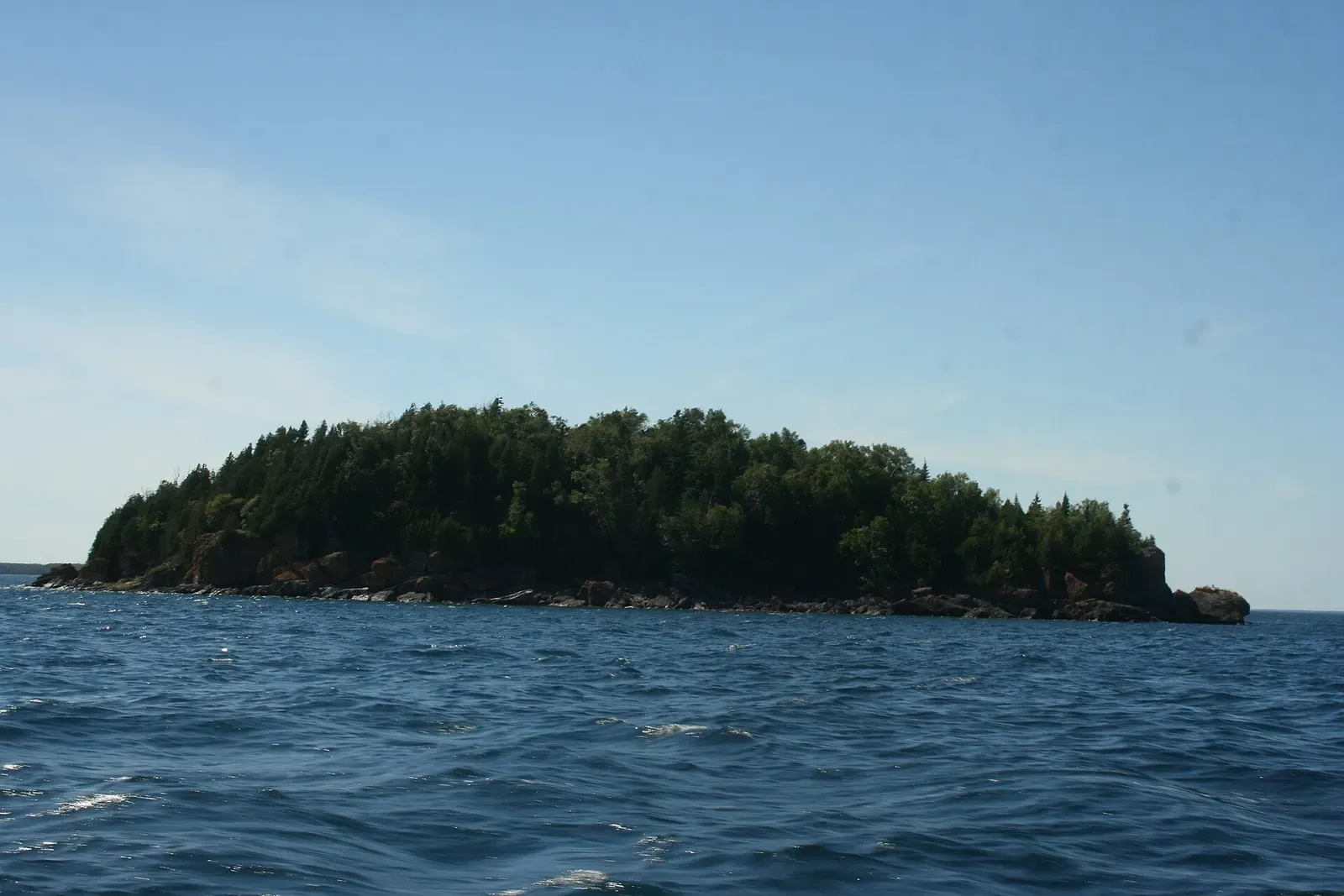
Area photo: NOAA's National Ocean Service · CC BY 2.0
A three-masted schooner that disappeared with all hands in November 1875 and was not found until divers located it in 1986, sitting upright in 56 metres with its masts still standing and the crew's lifeboat resting nearby. Cold fresh water has held the ship close to the way it went down, cargo still in the holds. This is a technical dive, well past recreational depth.
Also known as Windiate.
Where it is and how deep
45.3254° N, 83.2184° WPublished position for this site.
The dive
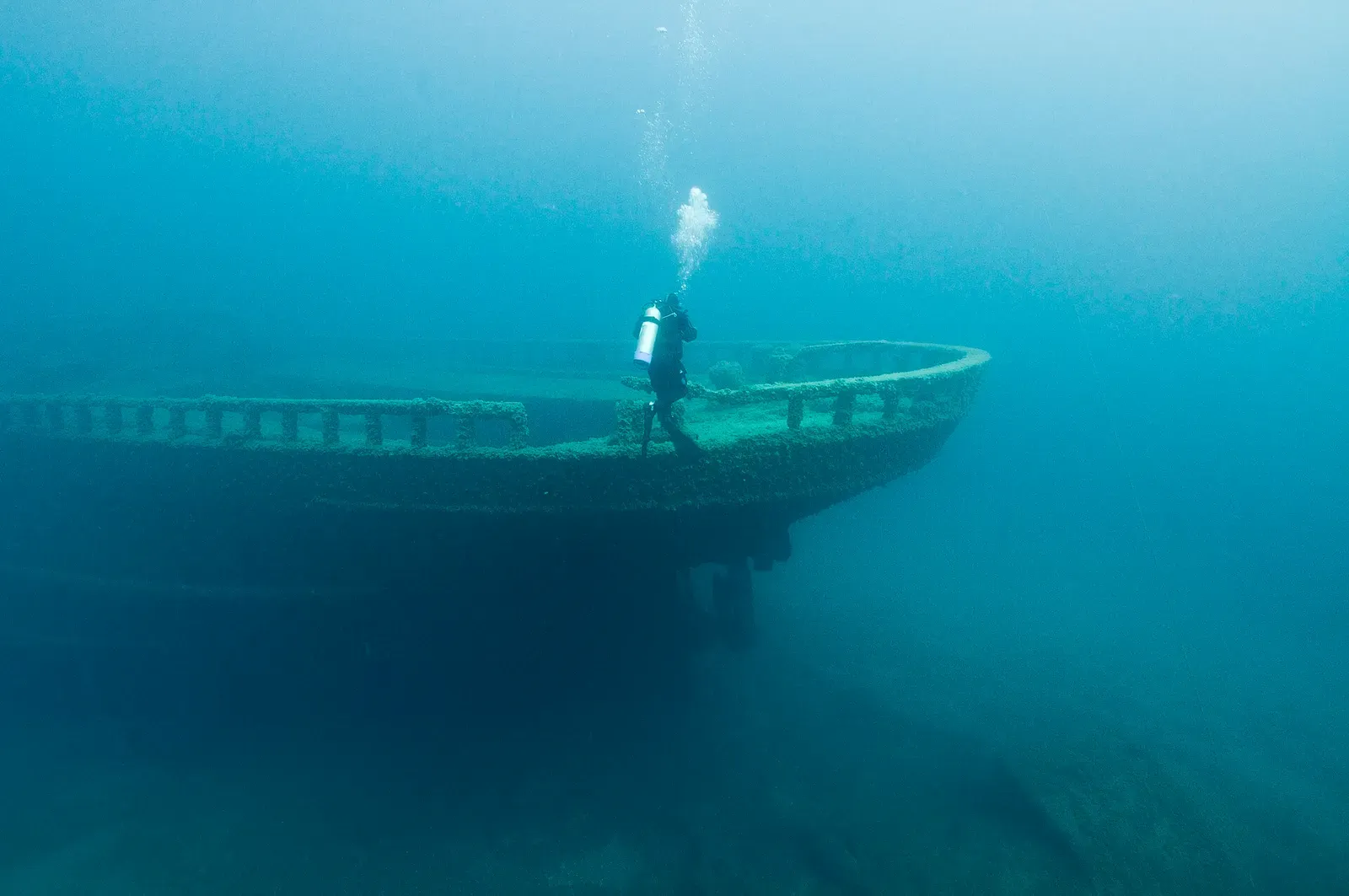
This is a technical dive and it gets planned as one: 56 metres in fresh water cold enough to have preserved the ship, on mix, with staged decompression, run from a charter. The descent is long and the wreck arrives out of the dark all at once — a 42-metre wooden schooner sitting upright on the bottom with three masts still standing and rigging on them.
Work the ship rather than the depth. The hull is upright and intact, the cargo is still in the holds, and the crew's lifeboat lies quietly nearby; the ship went down with all hands. Bottom time at 56 metres is short and the ascent is long, so most teams pick one part of the ship — bow, deck, stern — and leave the rest for another dive.
Nothing here is touched. Cornelia B. Windiate lies inside Thunder Bay National Marine Sanctuary, where every wreck is protected, and it is the completeness of the ship rather than any single artefact that makes it worth the gas: an 1875 schooner more or less as it sank. Plan a conservative profile with redundant gas, and treat the wreck as a fixed reference to navigate by rather than something to swim through.
The wreck
- Vessel
- Cornelia B. Windiate
- Type
- Wooden three-masted schooner
- Length
- 42 m (138 ft)
- Built
- 1874
- Sunk
- 1875
- Cause
- Foundered with all hands, likely overloaded with grain and weighted down by ice from heavy spray
- Lies
- Upright in 56 m with masts still standing and the crew's lifeboat resting nearby
Cornelia B. Windiate was built in 1874 by Thomas Windiate at Manitowoc, Wisconsin, and sailed in late November 1875 carrying 21,000 bushels of wheat, more than the schooner should have taken. Spray from huge waves may have coated it with layers of ice, adding a crushing weight to the overloaded ship. It vanished with all hands, and until divers found the wreck in 1986, few believed the Cornelia B. Windiate had ever made it to Lake Huron at all.
Marine life and season
The sources we used don't single out particular species here.
| Jan | Feb | Mar | Apr | May | Jun | Jul | Aug | Sep | Oct | Nov | Dec |
|---|---|---|---|---|---|---|---|---|---|---|---|
| Off-season | Off-season | Off-season | Off-season | Fair | Good | Prime | Prime | Prime | Fair | Off-season | Off-season |
Season follows Thunder Bay: The season runs late May to early October, with July and August warmest; the lake is unworkably cold and rough otherwise.
Know before you go
- The wreck lies at 56 metres in cold fresh water, past every recreational limit: mixed gas, redundancy, decompression training and a drysuit are entry requirements rather than optional extras.
- The masts are still standing, which is a genuine entanglement and disorientation risk at a depth where solving a problem is expensive. Stay clear of the standing gear and carry a cutting tool.
Dive videos
The Cornelia B. Windiate · Trash Panda Wreck Divers on YouTube
Cornelia B. Windiate 360° - Presque Isle, Michigan · LaplaceDiver on YouTube
Questions divers ask
How deep is the Cornelia B. Windiate?+
The schooner sits upright in 56 metres of water, which is beyond recreational limits. It is a technical dive: mixed gas, staged decompression and genuine cold-water experience are the price of admission.
Why is the Windiate called a ghost ship?+
It sailed in November 1875 and simply disappeared with all hands, and few believed it had reached Lake Huron until divers found the wreck in 1986 — upright, masts standing, cargo still secure in the holds and the crew's lifeboat lying nearby.
Sources
- Cornelia B. Windiate Shipwreck — NOAA Thunder Bay National Marine Sanctuary
- Cornelia B. Windiate — Wikipedia
In The Logbook
- Cold-water diving: is it worth the drysuit?Cold water · 8 min read
- Deep wreck diving: where recreational stopsWrecks · 8 min read
- Air, nitrox or trimix: which gas, and when?Gear & kit · 15 min read
More dive sites in Thunder Bay
Wreck
Steering wheel and chained windlass on a broken schooner
Wreck
The sanctuary's largest wreck, 162 m and inverted
Wreck
An intact 1848 schooner on an even keel at 56 m
Wreck
Three masts still on deck at 63 m
Upright steel freighter with engine and boilers still in place
Wreck
A Great Lakes freighter lying inverted at 53 m
An 1862 schooner in 18 m on a mooring buoy
A burned steamer in 5.5 m, readable from the surface
Similar dives elsewhere
Drum seiner lost in 2005, now home to marine life at 34 m
Wreck
Aeolus
North Carolina Wrecks · United States
A cable ship broken into three pieces by Hurricane Fran
Remains of the largest wooden steamer on the Great Lakes, in 5 m
.jpg)
Bowsprit still extending from an 1852 hull at 32 m