Weymouth & Portland · United Kingdom · Wreck
Alex Van Opstal
A 1939 mine casualty broken across a 30 m seabed
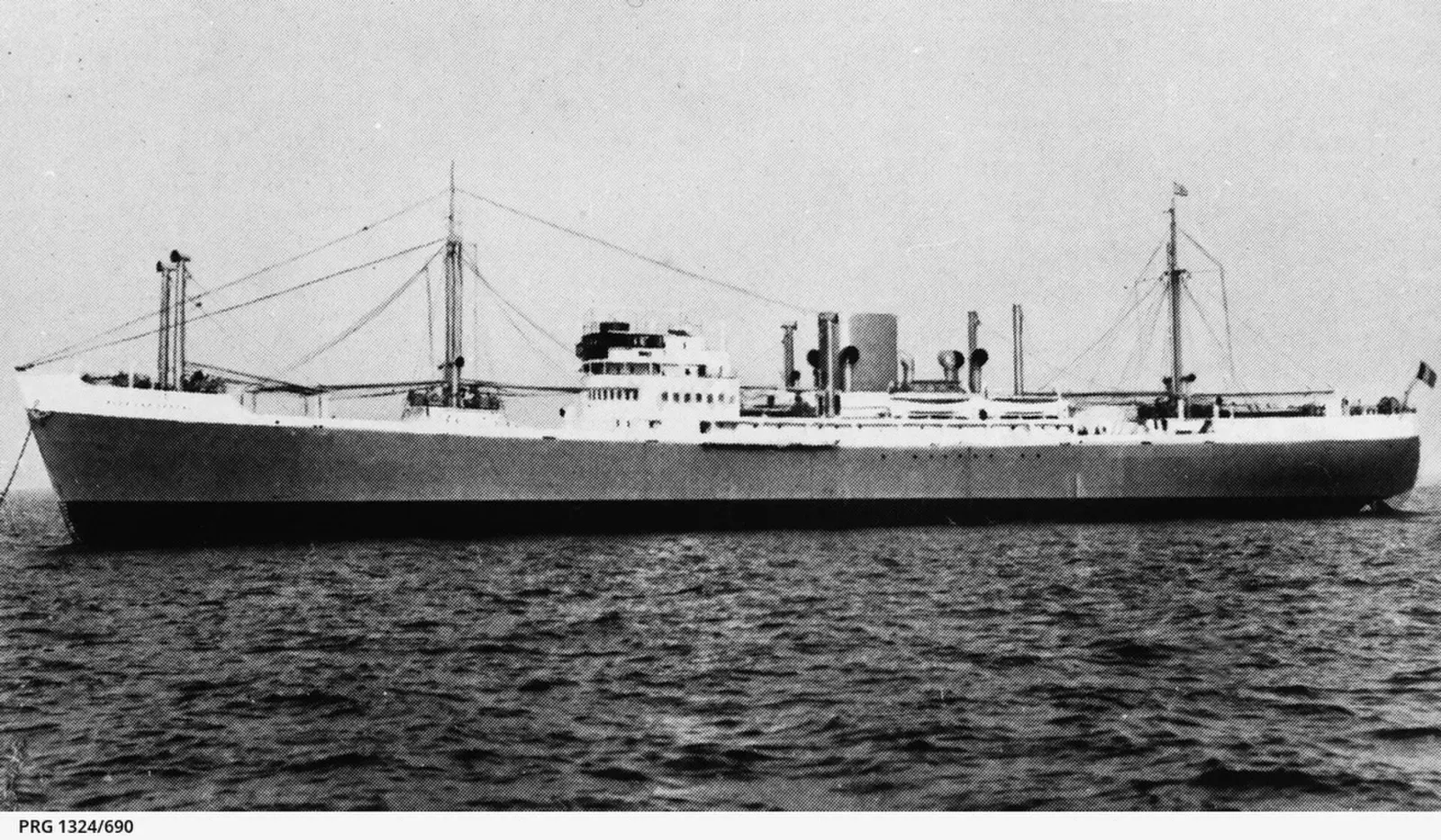
The Alex Van Opstal was a 5,965-ton Belgian motor ship, sunk by a mine on 15 September 1939, 15 days after the German invasion of Poland. She is broken now: the bow is tipped almost 90 degrees to port and the stern section lies around 100 m from the rest of the wreck on a 30 m seabed. Strong currents run here, so she is a slack-water dive only.
Also known as Alex van Opstal, SS Alex Van Opstal.
Where it is and how deep
50.5406° N, 2.2689° WPublished position for this site.
The dive
Charter boats generally hook a shotline across the bow, which is tipped over almost 90 degrees to port, so the first structure you meet is a hull lying on its side rather than an open deck. The starboard side rises a good 5 m from the 30 m seabed, which gives the wreck enough relief to follow without losing it, and the sand around the hull is the reference to come back to.
From the bow the ship reads as broken structure and girders rather than a ship shape. Conger eels live under the girders, crabs and lobster work the same cover, and shoals of fish move across the top of it. The stern section broke off and now lies around 100 m from the rest of the wreck, far enough that reaching it is a separate plan rather than an extension of this one. Strong currents mean the dive is timed to slack water and finished back on the shot.
The wreck
- Vessel
- Alex Van Opstal
- Type
- Belgian motor ship, 5,965 tons
- Sunk
- 1939
- Cause
- Sunk by a mine on 15 September 1939
- Lies
- Broken on a 30 m seabed, bow tipped almost 90 degrees to port, stern section around 100 m away
The Alex Van Opstal was a 5,965-ton Belgian motor ship, barely two years old, returning from New York to Antwerp when she was diverted to Weymouth for inspection. A mine sank her on 15 September 1939, 15 days after the German invasion of Poland, making her an early casualty of the Second World War; the explosion broke her back forward of the bridge and the crew of 49 and eight passengers were all rescued by the Greek steamship Atlanticos. The wreck has broken up on the 30 m seabed since, the stern section settling around 100 m from the rest of her.
Marine life and season
- Reef fish swarms
- Macro critters
| Jan | Feb | Mar | Apr | May | Jun | Jul | Aug | Sep | Oct | Nov | Dec |
|---|---|---|---|---|---|---|---|---|---|---|---|
| Fair | Fair | Fair | Good | Good | Prime | Prime | Prime | Prime | Good | Fair | Fair |
Season follows Weymouth & Portland: Sea temperature runs from about 7 °C in February to 17 °C in August; winter gales off the Atlantic rather than the cold are what stop the boats.
Know before you go
- Strong currents exist in the area, so the wreck must be dived during slack tide and the window sets the length of the dive.
Photos from Alex Van Opstal
Unknown · Public domain
Unknown · Public domain
Sources
- Alex Van Opstel (Wreck) - Scubago — Scubago
- Wreck Tour 152: The Alex Van Opstal — Divernet
- Alex van Opstal — Skin Deep Diving
Photo credits
- Black-and-white side view of the motor ship Alex Van Opstal at sea by Unknown authorUnknown author, Public domain, via Wikimedia Commons
- Postcard photo of the motor vessel Alex Van Opstal moored in harbour by Unknown, Public domain, via Wikimedia Commons
- Alex Van Opstal alongside a dockside crane gantry, ready to depart Antwerp by Unknown, Public domain, via Wikimedia Commons
More dive sites in Weymouth & Portland
Wreck
A flat bow-section wreck at 17 to 20 m with reef alongside
Shore entry over shingle into boulders and kelp to 15 m
Wreck
An 1868 paddle steamer upright beside the Portland breakwater
Wreck
Boilers at 24 m on the edge of the Shambles Bank
Wreck
A 1918 torpedo loss at 36 to 38 m on clean sand
Wreck
An upright submarine hull under a coat of plumose anemones
Wreck
Torpedo tubes and a 3in gun on a submarine at 40 m
Wreck
A shallow wreck inside the breakwater for a first wreck dive
Similar dives elsewhere
The island's only intact wreck, on her side in 25 metres

A 1912 steamer at 30 m, propeller still standing

Tiger Moth biplanes were in her holds when she went down
.jpeg)


Seventy-two metres of plating under a coat of anemones