Weymouth & Portland · United Kingdom · Wreck
HMS M2
An upright submarine hull under a coat of plumose anemones
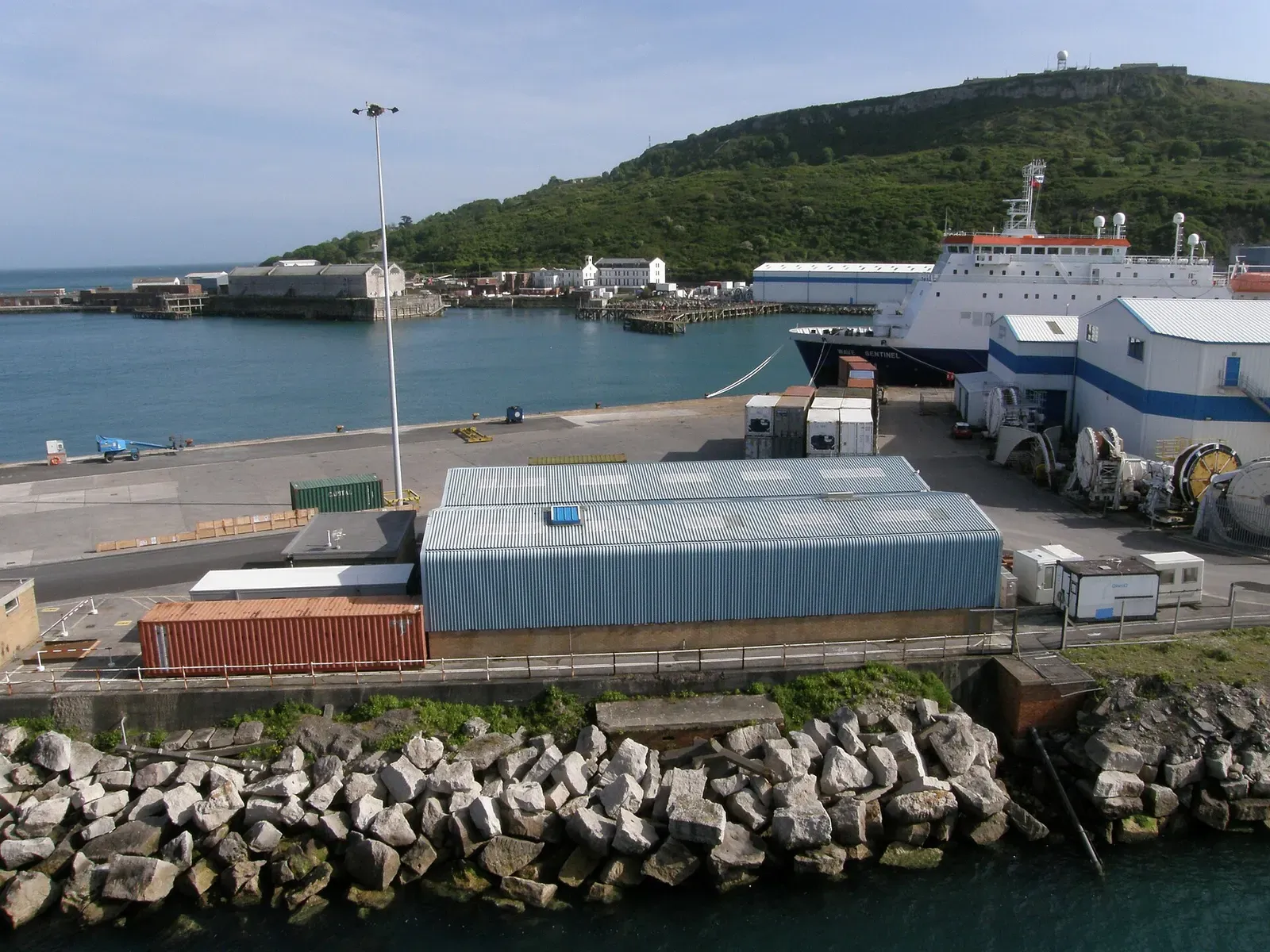
Area photo: Jacko · CC BY-SA 2.0
HMS M2 was a Royal Navy M-class submarine converted to carry a seaplane, and she was lost in Lyme Bay off Portland on 26 January 1932 when the hangar door was opened to launch her aircraft. She lies upright, the top of her conning tower at about 20 m and her keel around 30 m down at low tide. She is a protected place under the Protection of Military Remains Act 1986, so the dive stays outside the hull.
Also known as M2.
Where it is and how deep
50.5767° N, 2.5655° WPublished position for this site.
The dive
You drop down the shotline onto a submarine sitting upright on the bottom. The top of the conning tower is the shallowest structure at about 20 m, the keel rests roughly 30 m down at low tide and the sand around her is at about 32 m, so the whole dive sits inside a narrow band of depth. Plumose anemones cover the plating heavily enough that the shape of the boat reads through them rather than bare steel.
Work the length of the hull and back rather than trying to cover ground. Conger eels lie out in the draining channels of the deck, crabs move over the plating, and large shoals of fish hang above the wreck. HMS M2 holds designation as a protected place under the Protection of Military Remains Act 1986, so nothing is lifted, moved or entered and the dive stays outside the hull. Local currents and tides govern the timing, and the ascent goes back up the shot.
The wreck
- Vessel
- HMS M2
- Type
- Royal Navy M-class submarine aircraft carrier
- Length
- 90 m (295 ft)
- Sunk
- 1932
- Cause
- Flooded through the hangar door, opened to launch her seaplane
- Lies
- Upright on the seabed, conning tower at about 20 m, keel near 30 m
HMS M2 was a Royal Navy M-class submarine, completed in 1919 and converted in 1927 to carry and launch a small seaplane from a hangar forward of the conning tower. She was wrecked in Lyme Bay on 26 January 1932 with the loss of all hands, the accident put down to water entering through the hangar door, which had been opened to launch the aircraft shortly after surfacing. She is 90 m long, lies upright, and the wreck is designated a protected place under the Protection of Military Remains Act 1986: no disturbance, no salvage and no entry into the hull.
Marine life and season
- Reef fish swarms
- Macro critters
| Jan | Feb | Mar | Apr | May | Jun | Jul | Aug | Sep | Oct | Nov | Dec |
|---|---|---|---|---|---|---|---|---|---|---|---|
| Fair | Fair | Fair | Good | Good | Prime | Prime | Prime | Prime | Good | Fair | Fair |
Season follows Weymouth & Portland: Sea temperature runs from about 7 °C in February to 17 °C in August; winter gales off the Atlantic rather than the cold are what stop the boats.
Know before you go
- Local currents and tides restrict when the wreck can be dived; the dive is planned around the tide and run on the shotline.
- The wreck is a protected place under the Protection of Military Remains Act 1986: no disturbance, no salvage and no entry into the hull.
Questions divers ask
How deep is the HMS M2 wreck?+
The top of the conning tower is at about 20 m and the keel rests roughly 30 m below the surface at low tide, so the dive runs between those two figures.
Sources
- M2 (Wreck) - Scubago — Scubago
- HMS M2 (1918) — Wikipedia
- HMS M2 — Skin Deep Diving
More dive sites in Weymouth & Portland
A 1939 mine casualty broken across a 30 m seabed
Wreck
A flat bow-section wreck at 17 to 20 m with reef alongside
Shore entry over shingle into boulders and kelp to 15 m
Wreck
An 1868 paddle steamer upright beside the Portland breakwater
Wreck
Boilers at 24 m on the edge of the Shambles Bank
Wreck
A 1918 torpedo loss at 36 to 38 m on clean sand
Wreck
Torpedo tubes and a 3in gun on a submarine at 40 m
Wreck
A shallow wreck inside the breakwater for a first wreck dive
Similar dives elsewhere
The island's only intact wreck, on her side in 25 metres

A 1912 steamer at 30 m, propeller still standing

Tiger Moth biplanes were in her holds when she went down
,_Portland_Harbour.jpg)
Seventy-two metres of plating under a coat of anemones