
Pacific Islands · Micronesia
Yap
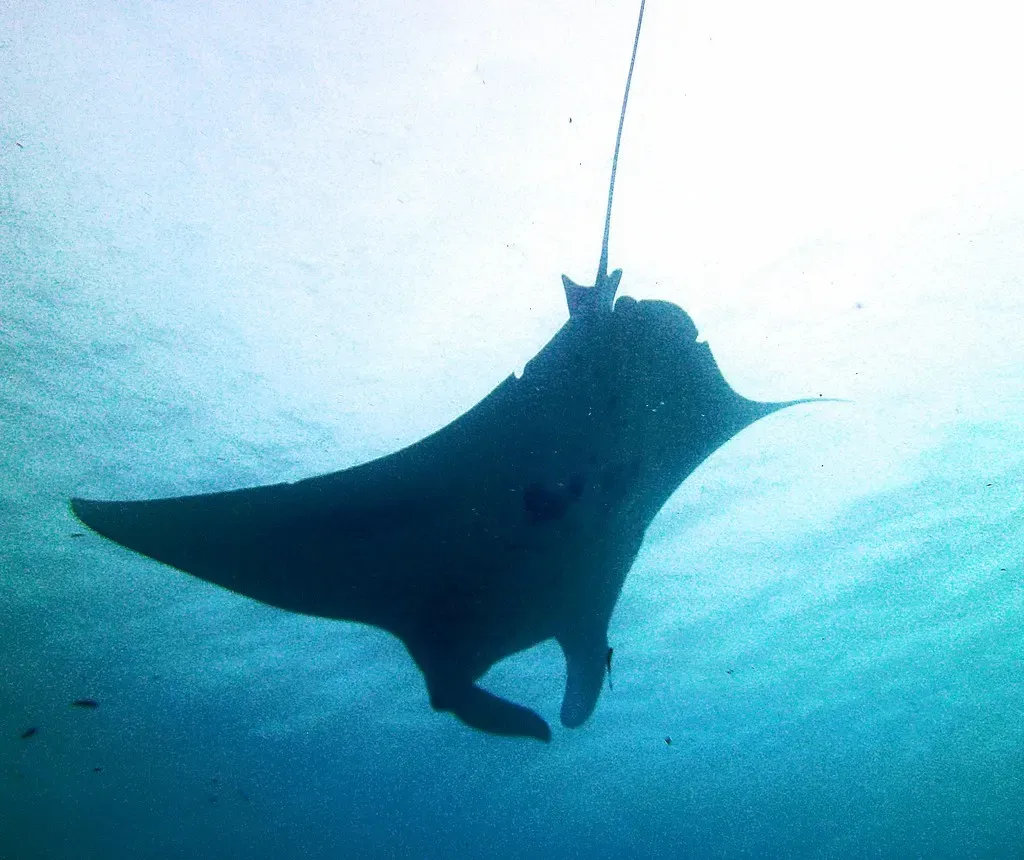
Resident manta rays cruise cleaning stations on nearly every dive.
Photo: Jeff Hemminger · CC BY-SA 3.0
Yap's mangrove-lined channels host a resident population of reef manta rays that visit cleaning stations at Mi'il Channel and Goofnuw Channel on a near-daily basis, drawn by the tidal flow that stirs plankton through the passes. Divers also find mandarinfish displaying at dusk over rubble patches, macro life tucked into the reef, and gentle drift dives along the outer wall. Yap remains low-key and resort-based, with far fewer boats than Palau's more famous sites.
About diving in Yap
A Yap dive day is mostly about waiting well. The manta dives are set by the tide rather than by a departure time; you drop into a channel, settle onto sand or rubble a set distance back from the station and stay put. The animals arrive when they arrive. Briefings are firm about not swimming at them and not letting bubbles rise into them, because these are individually catalogued residents and the whole arrangement depends on them not being pushed off their cleaning spots.
The islands sit inside a barrier reef, and the diving divides sharply between the inside and the outside of it. Channel dives are murky by tropical standards, because the tidal water carries the plankton that brings the mantas in at all, and the ground underneath is sand, rubble and scattered coral heads rather than scenery. Outside the reef the water clears and the dive becomes a drift along wall, cuts and overhangs. The channels sit on opposite sides of the island, so wind and tide decide which one gets used.
That makes this a specialist trip rather than a varied one. Divers happy to spend three mornings on the same patch of rubble waiting for the same animals get a great deal out of it, and so do macro photographers, who have the dusk and rubble dives close to town to work with. Sharks here are incidental rather than the draw, and there is no wreck diving to speak of. Reefs and the land above them are held by individual villages, and operators dive by arrangement with them, which is worth knowing ashore too.
Best time to dive Yap
| Jan | Feb | Mar | Apr | May | Jun | Jul | Aug | Sep | Oct | Nov | Dec | |
|---|---|---|---|---|---|---|---|---|---|---|---|---|
| Season | Prime | Prime | Prime | Good | Good | Fair | Fair | Fair | Fair | Good | Good | Prime |
| Sea surface | 29°C84°F | 28°C82°F | 29°C84°F | 29°C84°F | 30°C86°F | 30°C86°F | 30°C86°F | 30°C86°F | 30°C86°F | 30°C86°F | 30°C86°F | 29°C84°F |
| Daytime high | 29°C84°F | 29°C84°F | 29°C84°F | 29°C84°F | 30°C86°F | 30°C86°F | 29°C84°F | 29°C84°F | 29°C84°F | 29°C84°F | 30°C86°F | 30°C86°F |
| Rain | 166 mm6.5 in | 134 mm5.3 in | 128 mm5.0 in | 140 mm5.5 in | 188 mm7.4 in | 242 mm9.5 in | 333 mm13.1 in | 298 mm11.7 in | 306 mm12.0 in | 310 mm12.2 in | 189 mm7.4 in | 188 mm7.4 in |
| Jan | Feb | Mar | Apr | May | Jun |
|---|---|---|---|---|---|
| Prime | Prime | Prime | Good | Good | Fair |
| Sea surface | |||||
| 29°C84°F | 28°C82°F | 29°C84°F | 29°C84°F | 30°C86°F | 30°C86°F |
| Daytime high | |||||
| 29°C84°F | 29°C84°F | 29°C84°F | 29°C84°F | 30°C86°F | 30°C86°F |
| Rain | |||||
| 166 mm6.5 in | 134 mm5.3 in | 128 mm5.0 in | 140 mm5.5 in | 188 mm7.4 in | 242 mm9.5 in |
| Jul | Aug | Sep | Oct | Nov | Dec |
|---|---|---|---|---|---|
| Fair | Fair | Fair | Good | Good | Prime |
| Sea surface | |||||
| 30°C86°F | 30°C86°F | 30°C86°F | 30°C86°F | 30°C86°F | 29°C84°F |
| Daytime high | |||||
| 29°C84°F | 29°C84°F | 29°C84°F | 29°C84°F | 30°C86°F | 30°C86°F |
| Rain | |||||
| 333 mm13.1 in | 298 mm11.7 in | 306 mm12.0 in | 310 mm12.2 in | 189 mm7.4 in | 188 mm7.4 in |
2011–2025 averages. Sea surface: NOAA Coral Reef Watch, measured at the surface, so deeper water can run colder. Daytime high and rain: NASA POWER.
Mantas are present year-round, but the Dec-Mar dry season brings calmer seas and clearer water for photographing the cleaning stations.
Best months: January, February, March, December
Yap water temperature and weather by month
The sea surface stays between 28 and 30 °C (82–86 °F) all year. Most rain falls from June to October, peaking at about 330 mm (13 in) in July; March is the driest. Daytime highs sit around 29 °C (84 °F) all year. The coldest water here is about 27 °C (81 °F), so pack a 3 mm, or even a 2 mm, suit.
Dive types & marine life
Reef mantas work the cleaning stations in every month, and the December-to-March prime stretch is when courtship trains are most often reported and when the water is clearest for photographing them. Reef sharks, turtles, eagle rays and jacks show along the outer wall, mandarinfish display at dusk over the rubble near town, and the channel edges hold nudibranchs and other small subjects.
- Drift
- Reef
- Muck & macro
- Night
- Manta rays
- Reef sharks
- Sea turtles
- Eagle rays
- Nudibranchs
- Mandarinfish
- Trevally & jacks
Best dive sites in Yap
Channel & pass
Every manta in or out passes through one narrow restriction
Channel & pass
Mantas and eagle rays in the outer reaches of a tidal cut
Channel & pass
A landing craft, a torpedo and a circus boat in one channel
Three manta cleaning stations in one stretch of channel
Swim-through chimneys lit by skylights in the coral
O'Keefe's Canyon
Coral canyon with macro life and occasional reef sharks.
How to get to Yap
Yap International is a few minutes from Colonia and is served by limited flights from Guam, which have at times continued to Palau; Colonia is where the handful of dive resorts sit. Diving is nearly all boat-based, though a few sites near town, including the mandarinfish dusk dive, are short hops or shore entries.
Photos from Yap
Betty Wills · CC BY-SA 4.0
Betty Wills · CC BY-SA 4.0
Dive videos
Yap Manta Rays (HD) | JONATHAN BIRD'S BLUE WORLD · BlueWorldTV on YouTube
Diving in YAP, Micronesia, South Pacific with sharks and manta rays · Thomas Bayer on YouTube
Photo credits
- School of reef fish schooling along a coral wall near Yap by Jeff Hemminger, CC BY-SA 3.0, via Wikimedia Commons
- Pink anemonefish hovering above its host anemone at Manta Ray Bay, Yap by Betty Wills, CC BY-SA 4.0, via Wikimedia Commons
- Pair of yellow-and-blue nudibranchs on orange coral at Manta Ray Bay, Yap by Betty Wills, CC BY-SA 4.0, via Wikimedia Commons
Embed
Run a dive centre, club or blog? Embed this map of 1 dive sites near Yap on your own page.
In The Logbook
- When is slack water? Tides for diversOcean science · 7 min read
- Deep wreck diving: where recreational stopsWrecks · 8 min read
- Drift diving: how to read and ride a currentDrift & current · 8 min read
- Cavern and cenote diving without cave trainingCaves & caverns · 8 min read
- Where to dive with manta rays, month by monthBig animals · 8 min read
Similar destinations
Wrecks from two wars touching in Apra Harbor, plus the Blue Hole sinkhole
Pacific Islands
A hundred kilometres of barrier reef with almost no divers on it
Pacific Islands
Kosrae
Micronesia
Unbroken hard coral on an island that sees a few hundred divers a year

.jpeg)


Molokini's crater wall and Lānaʻi's skylit lava caverns