Yap · Micronesia · Channel & pass · Reef · Pinnacle
Valley of the Rays
Three manta cleaning stations in one stretch of channel
Photo: amanderson2 · CC BY 2.0
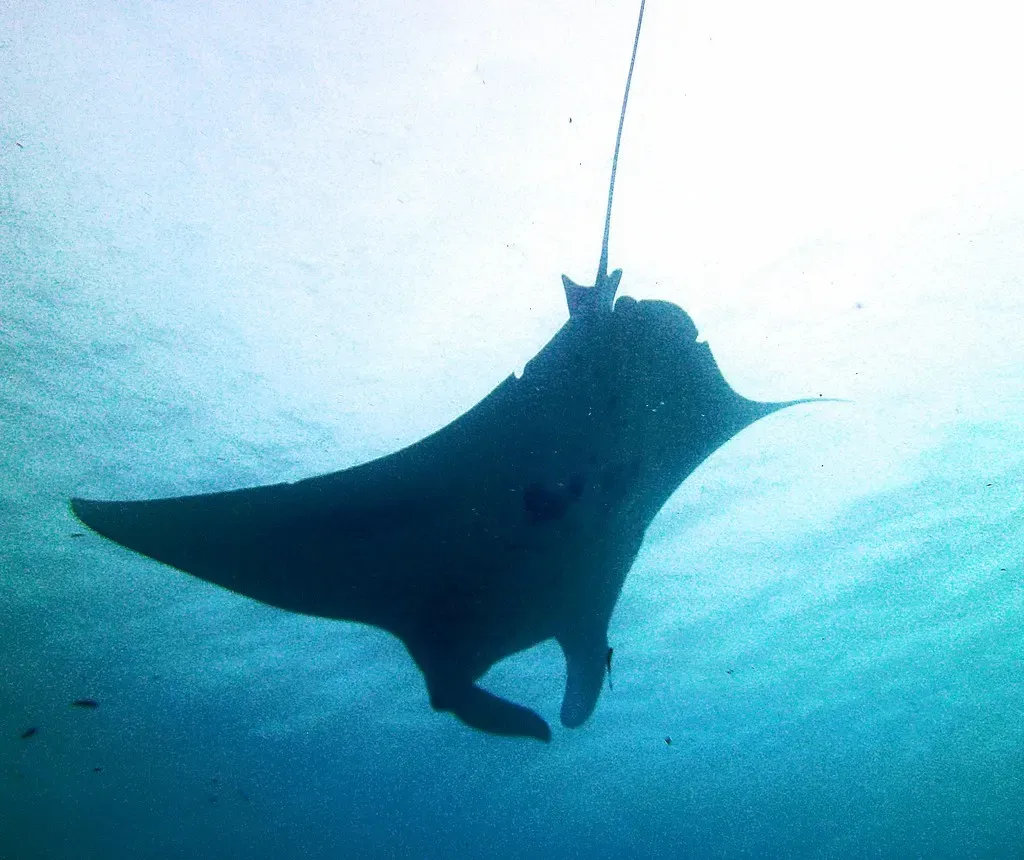
Three manta cleaning stations sit within one stretch of channel here, and the boats tie into moorings on the south side to dive them. Mantas enter in the morning to be cleaned, the profile stays between 15 m and 22 m, and whitetip sharks are common along the bottom while you wait.
Also known as Valley of the Rays - Manta Dive.
Where it is and how deep
No published position for this site — the map shows Yap and its other sites; operators know the mooring.
The dive
Mantas are the primary attraction and they set the schedule: they enter the channel in the morning to be cleaned, so the boats are on the moorings early. The dive is shallow by Yap standards, 15 m to 22 m, and it is spent mostly stationary on the bottom at a briefed distance from whichever station is working that morning.
The centre of the valley is dominated by a huge formation of lettuce coral called the Merry-Go-Round, the largest of the cleaning stations here. On the north side of the channel, the Maap side, a smaller lettuce coral formation does the same job and is known as the Carwash. About 20 m east of the Carwash stands Manta Rock, a large coral pinnacle rising to within 10 m of the surface, the third station in the valley.
Which station gets used depends on the day, so the briefing puts you where the animals have been working, and you stay where the guide puts you: out of the mantas' approach and off the living coral. Between passes there is the bottom of the channel to watch, where it is common to see several whitetip sharks. Visibility runs 9 m to 25 m, and the current, which can turn very strong here at times, is the one thing to keep an eye on while you are settled and waiting.
Marine life and season
- Manta rays
- Reef sharks
| Jan | Feb | Mar | Apr | May | Jun | Jul | Aug | Sep | Oct | Nov | Dec |
|---|---|---|---|---|---|---|---|---|---|---|---|
| Prime | Prime | Prime | Good | Good | Fair | Fair | Fair | Fair | Good | Good | Prime |
Season follows Yap: Mantas are present year-round, but the Dec-Mar dry season brings calmer seas and clearer water for photographing the cleaning stations.
Know before you go
- The current can be very strong here at times; when the flow is running the dive starts at one mooring and finishes downstream at another rather than swimming back against it.
Dive videos
Yap Valley of the Rays April 2009 · jregan1106 on YouTube
Questions divers ask
What time of day are mantas seen?+
In the morning. The mantas enter the channel then to be cleaned, which is why boats take the moorings early and the dive is scheduled around it rather than around a fixed departure time.
How deep is Valley of the Rays?+
Between 15 m and 22 m. Manta Rock, the third cleaning station, rises to within 10 m of the surface, so parts of the site are shallower than the channel floor.
Sources
- Valley of the Rays - Manta Dive site — Manta Ray Bay Resort / Yap Divers
Photo credits
- A reef manta ray glides overhead, its dark silhouette backlit by the sun. by amanderson2, CC BY 2.0, via Openverse
In The Logbook
- Where to dive with manta rays, month by monthBig animals · 8 min read
More dive sites in Yap
Channel & pass
Every manta in or out passes through one narrow restriction
Channel & pass
Mantas and eagle rays in the outer reaches of a tidal cut
Channel & pass
A landing craft, a torpedo and a circus boat in one channel
Swim-through chimneys lit by skylights in the coral
Similar dives elsewhere
A manta cleaning station at the mouth of a channel cut in 1908

Eagle rays over the sand in a cut through the reef
Channel & pass
Avapehi Pass
Huahine · French Polynesia
Adult grey reef sharks breed in the swell-driven current

Tuna, wahoo and gray reef sharks over a reef bridge