Mediterranean · Spain
Mallorca — Alcúdia, Pollença & Cap de Formentor
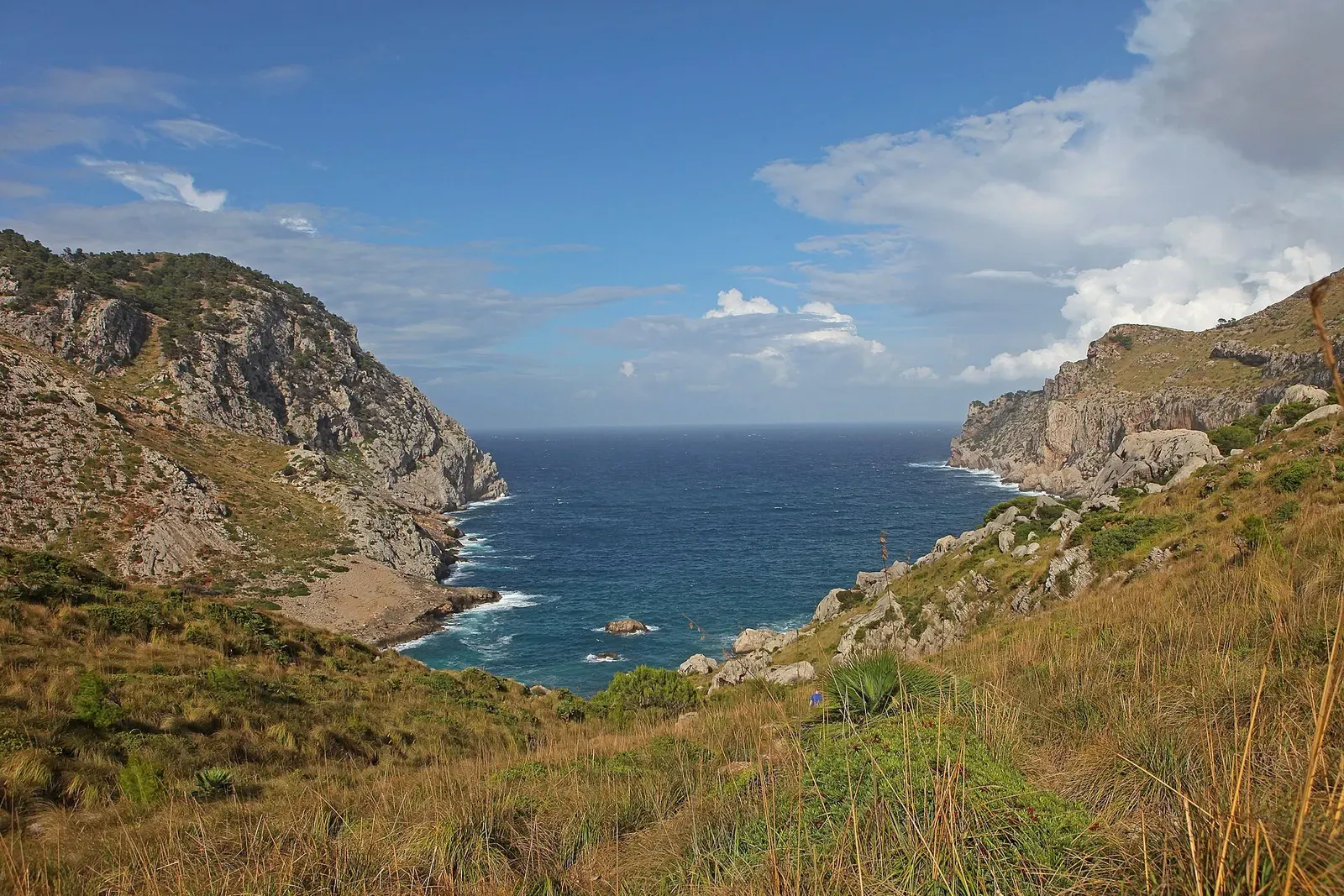
Formentor's cliff walls and a maze of shallow tunnels, run from Port de Pollença
Photo: Bengt Nyman · CC BY 3.0
The north end of Mallorca, from Alcúdia Bay round Cap Pinar and the Bay of Pollença to the cliffs of Cap de Formentor, is dived from three centres in Port de Pollença and Alcúdia town rather than from Palma. The cape is the draw: vertical walls at Cap de Formentor, Es Colomer and Cap de Catalunya drop to 40 m, while the sheltered side holds the Tunnels of Love, a maze of parallel swim-throughs at 2 to 7 m, the boulder ruins of Castell de Cala Murta and the Andrea Ferrara wreck at 38 m. There is no marine reserve on this coast; the diving is terrain rather than fish.
About diving in Mallorca — Alcúdia, Pollença & Cap de Formentor
The boats leave from the towns, not the cape. Scuba Mallorca and Tramuntana Diving both work from the Port de Pollença marina, and SCUBANEO is on Avenida Mal Pas in Alcúdia, running daily double-dive trips into Alcúdia Bay; the Formentor sites lie north across the Bay of Pollença. A boat day is two tanks at two different sites, seven days a week through the main season, and the centres collect guests staying in Port de Pollença, Pollença or Alcúdia without charge. Shore diving fills the gaps: Cala Sant Vicenç to 14 m, Captain Caveman at 12 m, Erotica and The Bridge at 16 m, with Alcanda used for course training. Night dives and nitrox are available on request.
The centres list 30 to 45 named sites around the Bay of Pollença, Cap Pinar and Cap de Formentor, and most of them are about rock. The Tunnels of Love is a labyrinth of parallel tunnels at 2 to 7 m; Castell de Cala Murta is a field of giant boulders cut with arches; Luis Candela and Jeronimo Cave are hung with stalactites. On the exposed side the cape changes: Cap de Formentor, Es Colomer and Cap de Catalunya are vertical walls into blue water with boulders at 40 m, and Es Colomer is current-swept. The Andrea Ferrara wreck, found in 2019, sits well preserved at 38 m. Posidonia and sand hold seahorses, cuttlefish, octopus and rays at Punta de L'Avançada; congers and shrimp live in the caves.
It suits divers who want landscape, overhead and walls from a quiet base, and anyone after cave or technical training: SCUBANEO teaches both, and some tunnel sites require certification beyond Open Water. Beginners are not shut out: Cala Murta is described as calm as a swimming pool, and Erotica is a cave dive open to novices. What the coast lacks is protection: the centres' site notes list barracuda, rays and cave life rather than the large groupers of Balearic reserve diving. Divers after fish density should book southwest Mallorca, where the El Toro and Malgrats reserve sits off Santa Ponça, or Menorca, 75 minutes by ferry from Alcúdia, with reserves at Illa de l'Aire and its north coast.
When to dive Mallorca — Alcúdia, Pollença & Cap de Formentor
| Jan | Feb | Mar | Apr | May | Jun | Jul | Aug | Sep | Oct | Nov | Dec |
|---|---|---|---|---|---|---|---|---|---|---|---|
| Fair | Fair | Fair | Fair | Good | Prime | Prime | Prime | Prime | Good | Fair | Fair |
May to October is the season, with boats out daily; the Alcúdia centre dives all year. Water peaks at 26°C in August and falls to 14–15°C in February and March; winter is wet and windy.
Dive types & marine life
Barracuda school around the arch at Formentor Island, and the posidonia and sand at Punta de L'Avançada hold cuttlefish, octopus, rays and seahorses. Conger eels, moray eels, scorpionfish and shrimp live in the caves, with nudibranchs outside Swiss Cheese, and rays and stargazers lie in the sand at Cala Sant Vicenç. With no reserve on this coast, grouper are not reported as a feature.
- Wall
- Cave & cavern
- Reef
- Wreck
- Night
- Barracuda
- Octopus & cuttlefish
- Nudibranchs
- Stingrays
- Macro critters
Notable dive sites in Mallorca — Alcúdia, Pollença & Cap de Formentor
Wreck
The Ghost Ship: an intact 20 m motor-sailboat on sand at 38 m
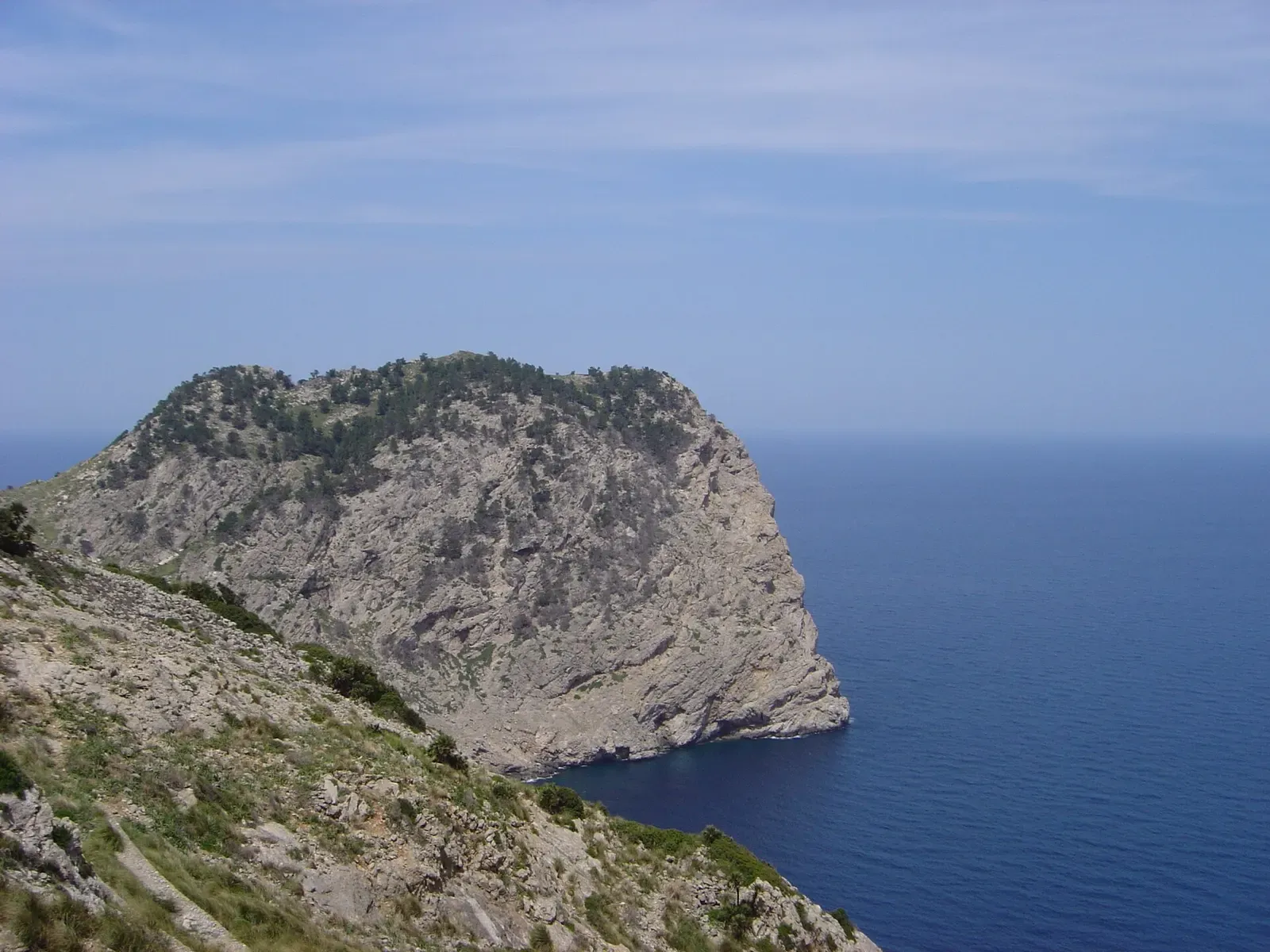
Drop-off to 40 m with boulders and swim-throughs on an exposed cape
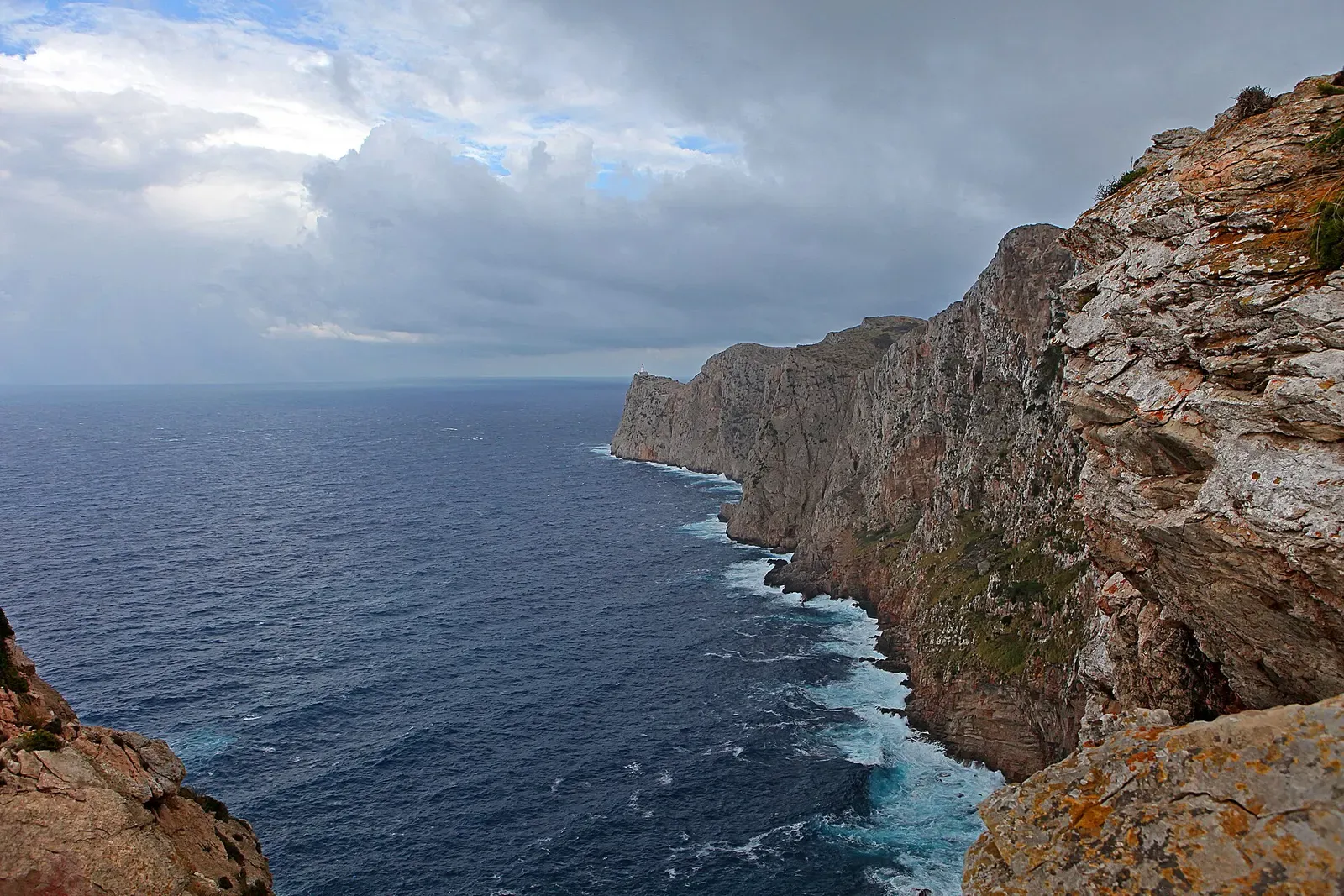
Vertical walls to 50 m with barracuda schools and hunting amberjack
Cave & cavern
Surface inside a stalactite-hung air chamber reached through a gallery
Cave & cavern
Narrow swim-throughs and a small air pocket inside the rock, 18 m max
Cave & cavern
Vertical chimneys with sunbeams in a 12 m shore-entry cavern
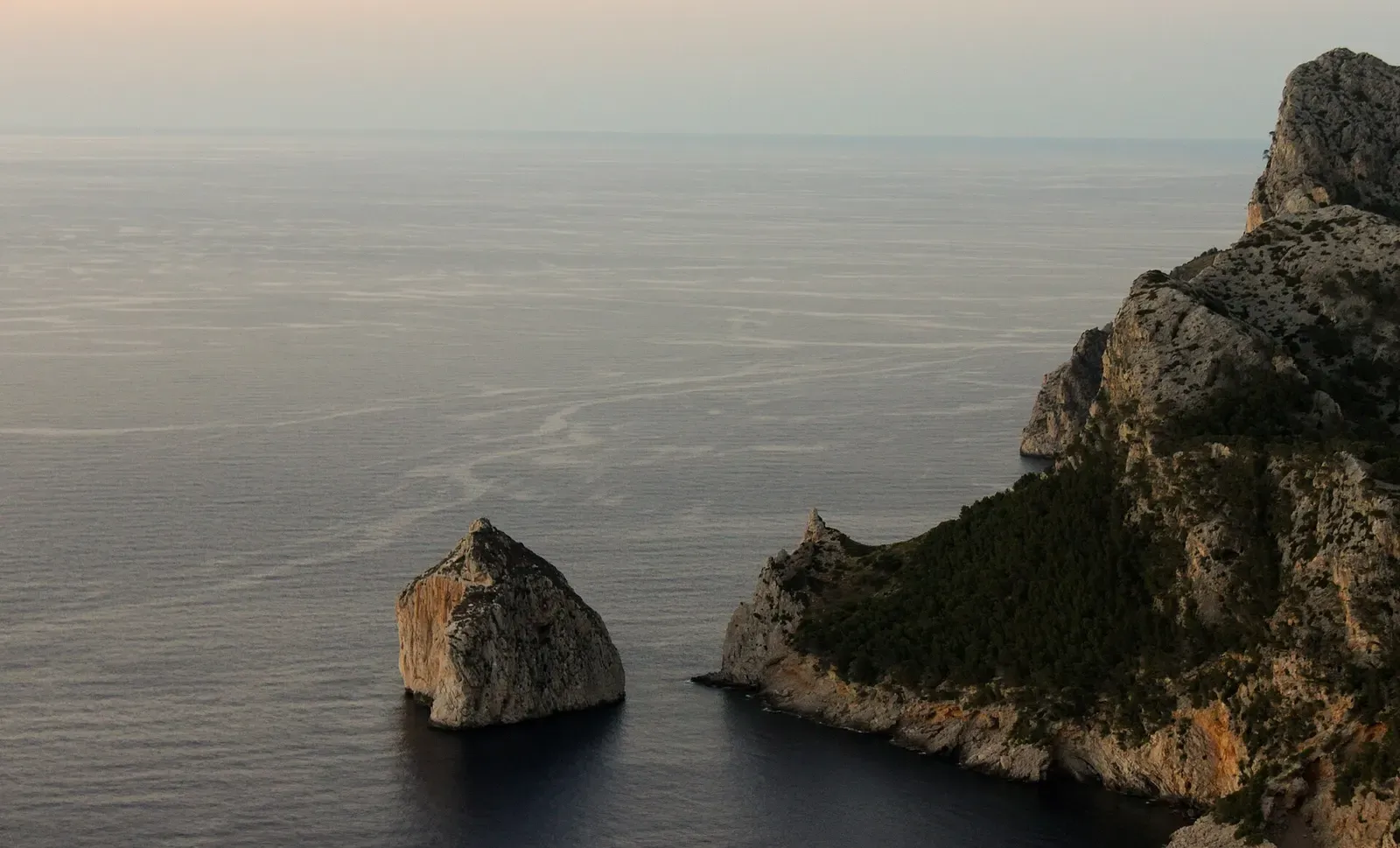
A long arch descending the wall next to the Formentor islet
An arch and a cave with barracuda schools, over sand and posidonia
Seahorses, cuttlefish and rays in the sand and posidonia at 12 m
Cave & cavern
A cavern with multiple entrances at 4 m and a deep-water tunnel below
Cave & cavern
Parallel tunnels between 2 and 7 m, lit electric blue from the openings
Castell de Cala Murta
Giant boulders at the mouth of Cala Murta stacked like castle ruins, with arches, swim-throughs and shafts of light.
Getting there
Palma is 55–60 km away by the Ma-13; TIB bus 302 reaches Alcúdia in an hour and bus 301 reaches Port de Pollença in 80 minutes. Port d'Alcúdia also has Balearia ferries from Barcelona in 3 hours 30 minutes and a 75-minute crossing to Ciutadella on Menorca. Two centres are at the Port de Pollença marina and one in Alcúdia town; all offer free pickup in those towns.
Photos from Mallorca — Alcúdia, Pollença & Cap de Formentor
Dronepicr · CC BY 3.0
Photo credits
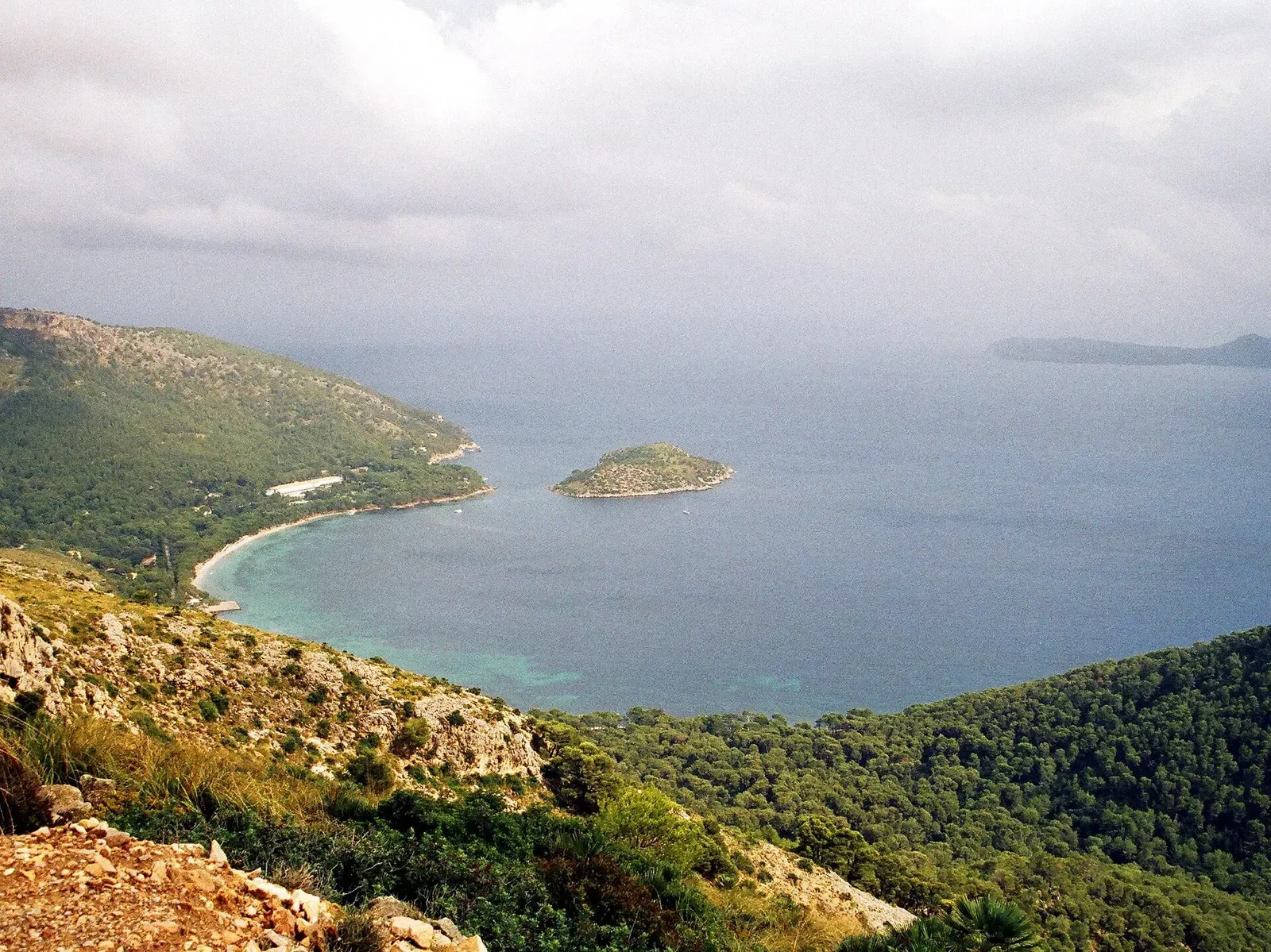
- Rugged limestone headland and cliffs on Mallorca's rocky north coast above the sea. by Bengt Nyman, CC BY 3.0, via Wikimedia Commons
- A sandy cove beach beneath pine-covered hills near Cap de Formentor, Mallorca. by Dronepicr, CC BY 3.0, via Wikimedia Commons
Similar destinations
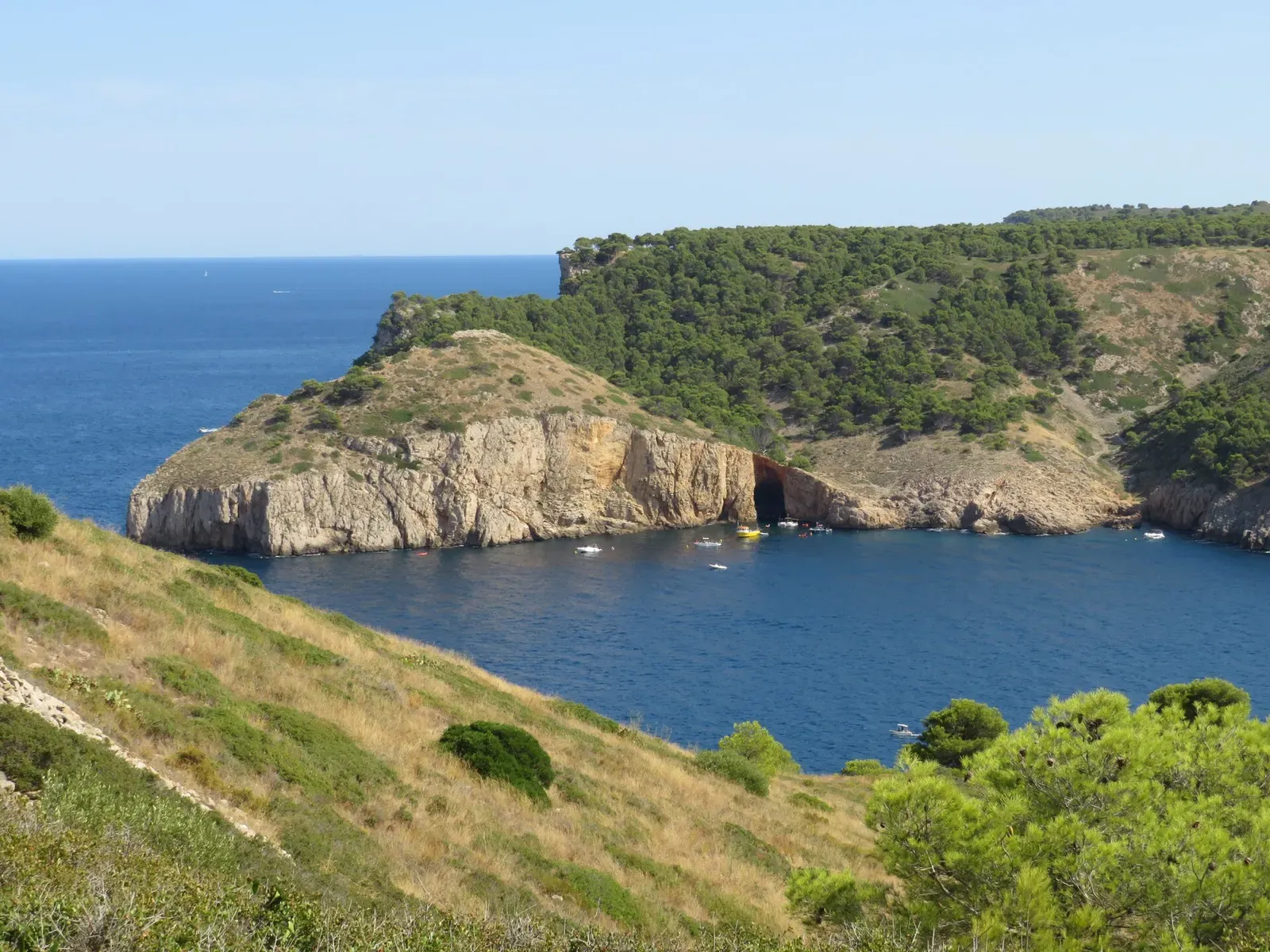
Tunnels, walls and a shallow wreck under the Montgrí cliffs, dived from L'Escala

Fossil elephant tusks inside a cave whose entrance is now at 10 m
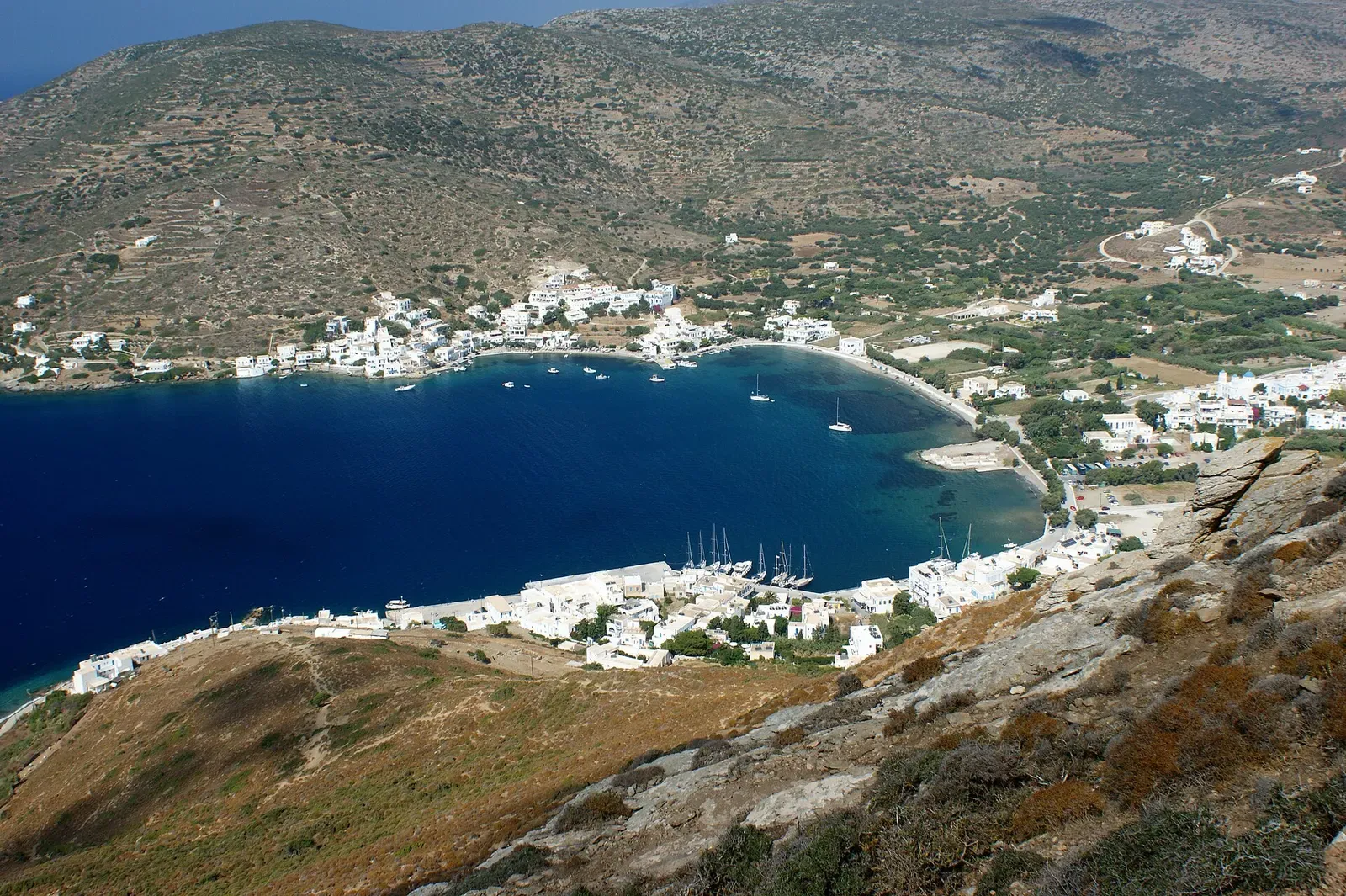
A 40 m wall under the monastery filmed in The Big Blue
.jpg)
.jpeg)
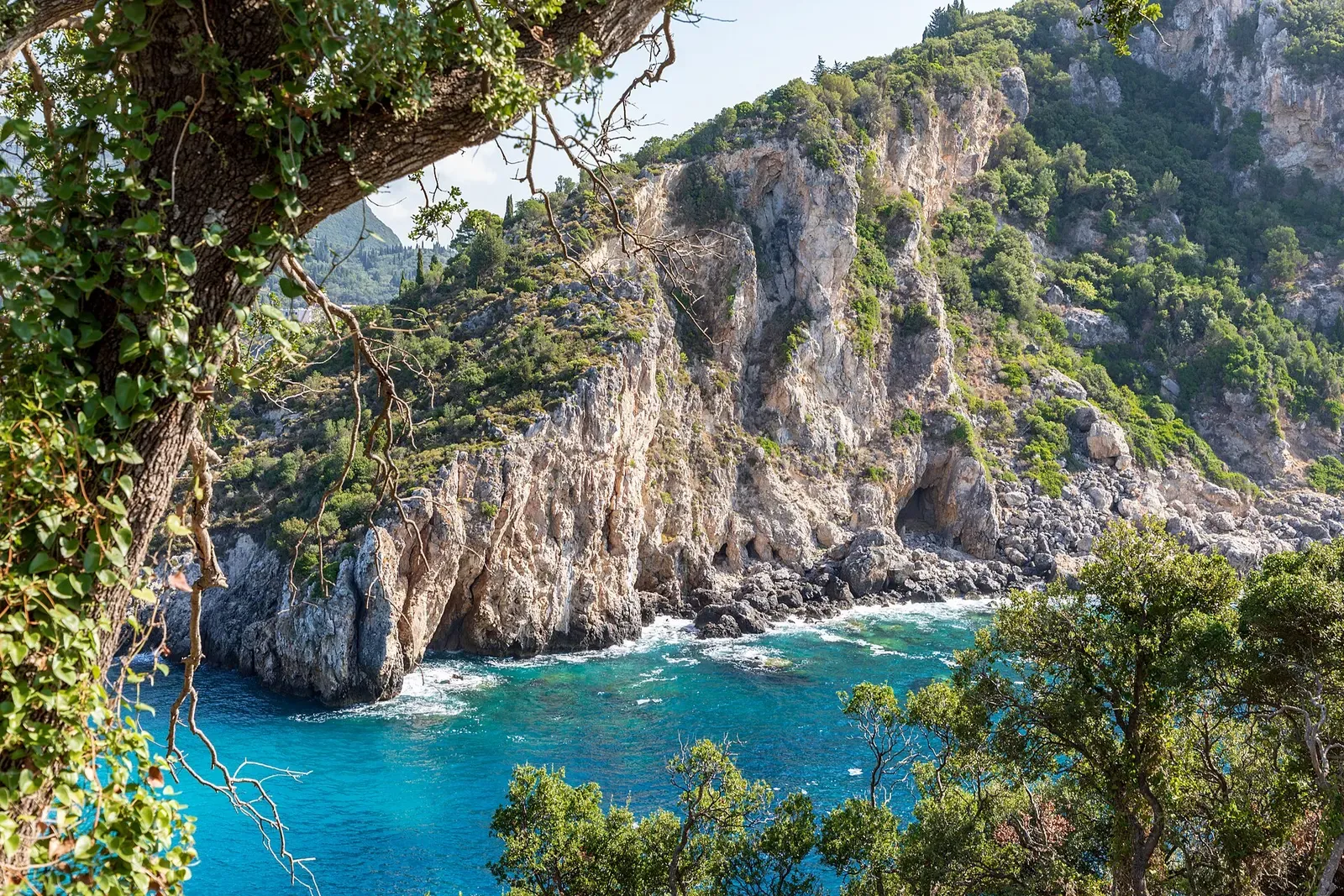
A cluster of cavern dives at Paleokastritsa, wrecks and reefs off the north-east coast