Mediterranean · Greece
Corfu
A cluster of cavern dives at Paleokastritsa, wrecks and reefs off the north-east coast
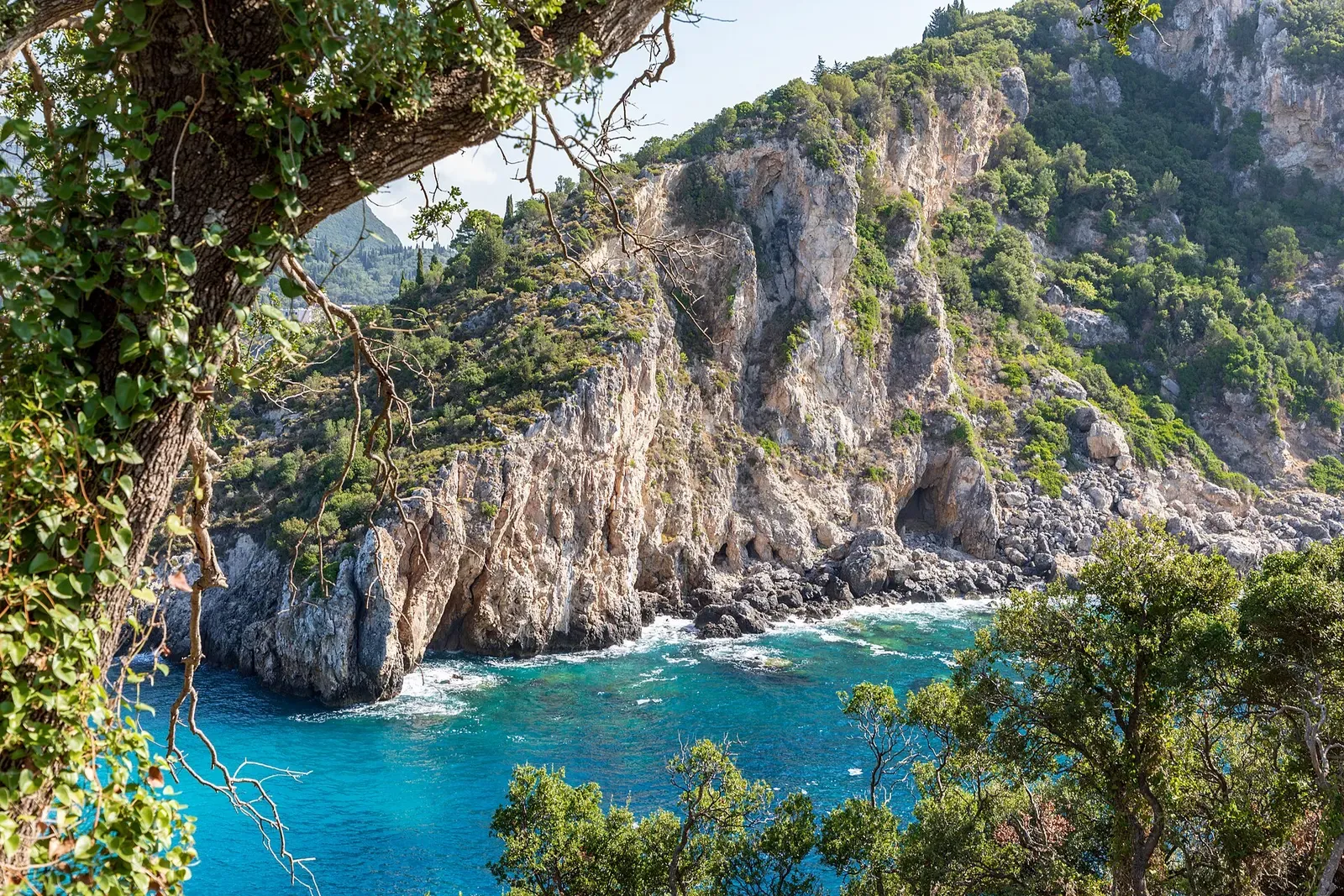
Photo: Dietmar Rabich · CC BY-SA 4.0
Corfu is dived from two coasts. Paleokastritsa in the west holds the cavern cluster the island is known for: the roofless Hole of Ha inside a mountain, the Chimney rising from 28 m to a top at 5 m, and the Donald's Place wall with its best features at 20 to 25 m. Nissaki on the north-east coast works Agni reef from 1.5 to 30 m, the Kalami and Kouloura reefs at 27 and 30 m, and a set of wrecks between 26 and 43 m. The deep Kolovri reef complex south of Paleokastritsa is kept for advanced divers.
About diving in Corfu
The island is one destination with two embarkation points about 16 km apart. Achilleon Diving Center has run out of Paleokastritsa on the west coast since 2001, with Corfu Dive Club based at the Elly Beach Hotel inside the same gulf since 2010; most of their sites are a short hop, with Skeloudi five minutes from shore and only Kolovri needing a longer run of under 30 minutes. Apollo Dive Center works the north-east coast from Nissaki, ten minutes by boat from Corfu port, with a 15-minute ride to Agni. Beginners can start straight off the sand at Agia Triada Beach, which shelves gradually from the shore.
The west-coast rock is what sets Corfu apart: dive-site listings call it the cavern diving capital of the world, and the Hole of Ha is an easy cavern that runs inside a mountain with no roof, so the trees around the opening are visible from below. The Chimney is a literal vertical shaft from 28 m to 5 m, kept for cave-certified divers. Donald's Place adds a drop-off and a cracked, crevassed wall where morays peer from the holes. Off Nissaki the ground is reef and steel: Agni reef runs from 1.5 to 30 m with a wreck at 40 m, a WWI steamer's anchor and chain lie at 26 m, the Anonymous Wreck sits at 32 m, and the City of Peraus ferry rests at about 43 m.
It suits divers who want caverns and swim-throughs without cave training, since the Hole of Ha is rated easy, plus beginners on the shore entries and shallow reefs. Advanced divers get Kolovri, an offshore complex averaging 30 m that demands CMAS two-star or AOW, where the current can turn strong for a day or two after a mistral blow; depth and boat traffic are the flagged hazards elsewhere. Dedicated wreck divers have steel here but nothing intact and famous, and are better served by the Zenobia at Larnaca; those after big animals should look past the Ionian entirely.
When to dive Corfu
| Jan | Feb | Mar | Apr | May | Jun | Jul | Aug | Sep | Oct | Nov | Dec |
|---|---|---|---|---|---|---|---|---|---|---|---|
| Off-season | Off-season | Off-season | Fair | Fair | Good | Prime | Prime | Prime | Good | Fair | Off-season |
No operator publishes opening months; ratings follow seatemperature.info's Corfu monthlies (below 18°C Nov-Mar, 26.4°C peak in August), with April kept open on operators' own spring dive reports.
Dive types & marine life
Typical Mediterranean rock life: groupers, sea bream, octopus, cuttlefish, starfish and urchins on the reefs, morays in the wall crevices at Donald's Place, and scorpionfish, spider crabs and nudibranchs at Agni. Dolphins are common off the north-east coast but shy, and sea turtles are seen there often enough that operators call them not so rare.
- Reef
- Wall
- Wreck
- Cave & cavern
- Drift
- Night
- Dolphins
- Sea turtles
- Groupers
- Octopus & cuttlefish
- Nudibranchs
- Macro critters
Notable dive sites in Corfu
Reef
A reef from 1.5 to 30 m with a wreck at 40 m beyond, dived day and night
Reef
A clear-water reef 100 m offshore below the Aggelokastro castle
Wreck
An unidentified wreck at 32 m, reached down a slope from 10 m
Cave & cavern
A vertical cave shaft from 28 m to a top at 5 m
Wall
A cracked, crevassed wall with morays in the holes
Pinnacle
A rock rising from over 40 m to break the surface
Reef
A deep offshore reef complex averaging 30 m
Wall
A long rock tube runs straight through the cape
A north-east-coast wall averaging 18 m, bottoming out at 30 m
Reef
A beach-entry house reef by the Nissaki marina, averaging 12 m
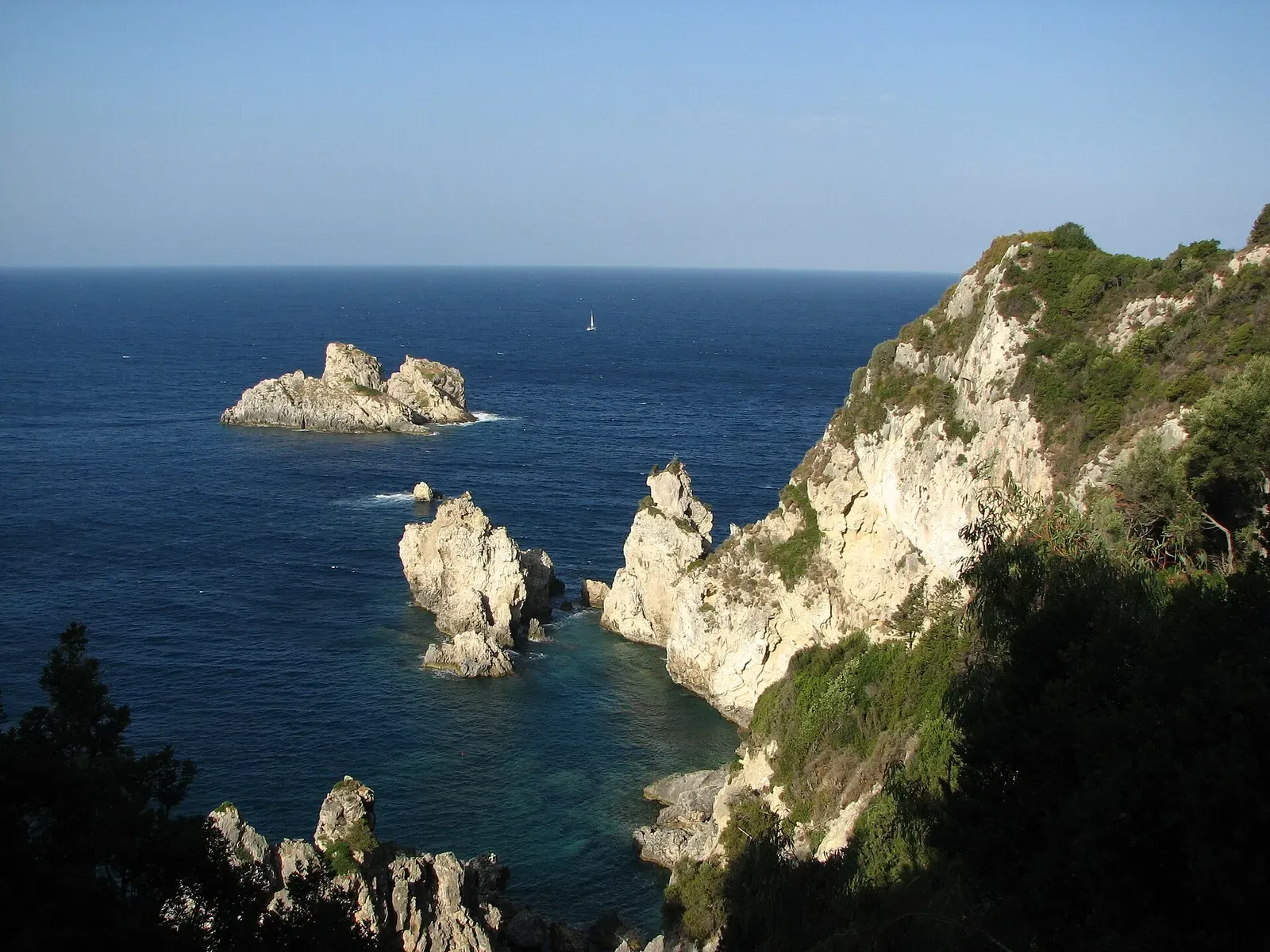
An islet whose walls drop towards 60 m, five minutes from shore
Reef
A lost steamer's anchor and chain at 26 m, plus two big caves
Hole of Ha
Easy cavern dive inside a mountain with no roof; the trees around the opening are visible from below.
Getting there
Corfu International Airport (CFU) is 2 km south of Corfu Town, about a ten-minute drive. Ferries arrive from Italy, from Albania and from the Greek mainland ports of Igoumenitsa and Patras. The dive centres are at Paleokastritsa on the west coast and Nissaki on the north-east coast.
Photos from Corfu
Trish Hartmann from Tampa, Florida, USA · CC BY 2.0
Joe deSousa · CC0
Greby-Johann · CC0
Photo credits
- Steep, tree-topped limestone cliffs above a turquoise cove at Paleokastritsa, Corfu. by Dietmar Rabich, CC BY-SA 4.0, via Wikimedia Commons
- Shallow, clear water over a rocky, weed-covered seabed beside a large boulder at Palaiokastritsa. by Trish Hartmann from Tampa, Florida, USA, CC BY 2.0, via Wikimedia Commons
- Swimmers in a turquoise cove beneath pale cliffs at the Paleokastritsa sea caves, Corfu. by Joe deSousa, CC0, via Wikimedia Commons
- A diver enters a sunlit underwater cavern opening at Peristeres, Corfu. by Greby-Johann, CC0, via Openverse
Similar destinations

Granite seamounts rising to the surface off Sardinia's south-east corner

Fossil elephant tusks inside a cave whose entrance is now at 10 m

A hot spring vents into the sea off Karaada's caves
,_Paleokastritsa_--_2018_--_1235.jpg)
.jpg)
.jpg)
Tunnels, walls and a shallow wreck under the Montgrí cliffs, dived from L'Escala