Mediterranean · Italy
Catania & the Cyclops Islands
Basalt sea stacks, resident morays and an ancient-anchor trail off Aci Trezza
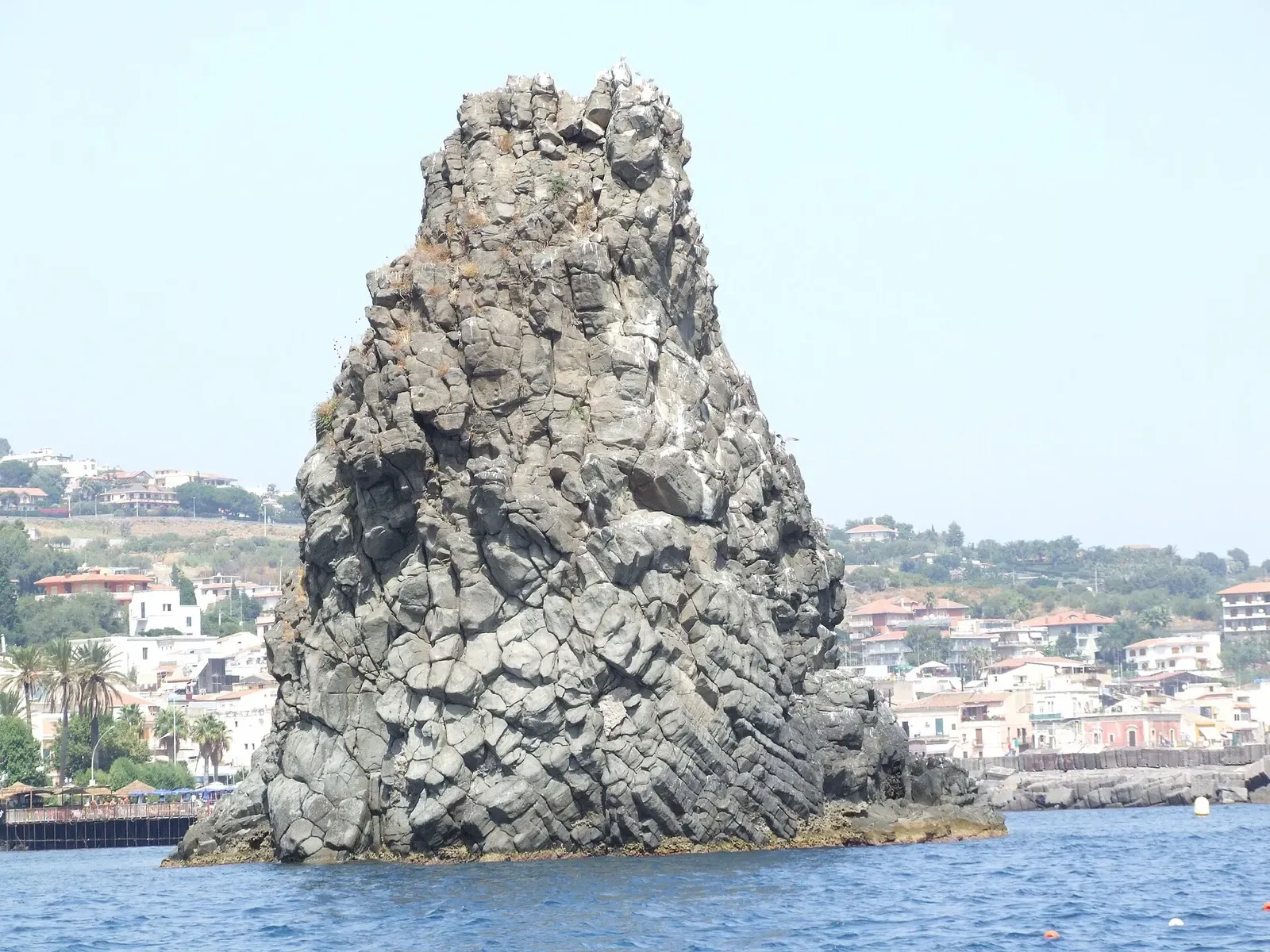
Photo: Castielli · CC BY-SA 3.0
The Isole Ciclopi marine protected area, established in 1989 around the basalt sea stacks off Aci Trezza, holds Catania's diving: eight marked itineraries on lava rock, mostly between 10 and 25 m, nearly all dived by boat or RIB. I Panettoni's basalt outcrops shelter morays and lobsters, a guided archaeological trail passes eight ancient anchors, and the capsized Terni wreck lies at 38–42 m a few minutes by boat off Catania.
About diving in Catania & the Cyclops Islands
A diving day here runs out of Catania, Aci Castello or Aci Trezza and stays short-range. Almost every itinerary goes by boat — even L'Antico Macello, in the water right off the Aci Castello promenade, is dived only by boat — while Faraglione Piccolo can be entered from shore for a night dive. Il Faro Diving boards at fixed times through the day, and the Terni wreck sits a few minutes' boat ride off Catania. Group diving inside the protected area must go through centres authorised by the reserve, and the strip around Isola Lachea and Faraglione Grande, marked by five yellow buoys, is closed to scuba outright.
The ground is lava. Basalt outcrops, boulder landslides and sea stacks sit on mixed sand and rock mostly between 10 and 25 m, with the two lighthouse-side itineraries dropping to 40 m. Big morays and lobsters hold the crevices at I Panettoni; groupers, brown meagre and large octopus are resident at Casa del Principe; and Il Castello adds rays, torpedo rays, anglerfish and shy pearly razorfish over the sand. The Percorso Archeologico threads past eight ancient anchors, from the first century BC to admiralty types, on a line led by reserve staff.
The area suits divers based in or near Catania who want easy, protected rock diving with a wreck and a drift at the experienced end: six of the eight marked itineraries are rated easy, and L'Antico Macello and Faraglione Piccolo double as night dives. The summer drift at Punta Aguzza runs medium current and requires an experienced guide, and the Terni wreck at 38–42 m demands advanced and deep training.
When to dive Catania & the Cyclops Islands
| Jan | Feb | Mar | Apr | May | Jun | Jul | Aug | Sep | Oct | Nov | Dec |
|---|---|---|---|---|---|---|---|---|---|---|---|
| Fair | Fair | Fair | Good | Good | Prime | Prime | Prime | Prime | Good | Fair | Fair |
Dived year-round; late summer and autumn add pelagics at Capo Molini, and winter water drops to about 14°C.
Dive types & marine life
Morays and lobsters are reliable in the basalt crevices, and groupers, brown meagre and large octopus are resident at Casa del Principe. Summer brings schools of seabream and salps, and in late summer and autumn large pelagics pass the drop-off at Faro di Capo Molini. Pearly razorfish are the signature sighting at Il Castello.
- Reef
- Wreck
- Drift
- Night
- Groupers
- Octopus & cuttlefish
- Stingrays
- Reef fish swarms
- Macro critters
Notable dive sites in Catania & the Cyclops Islands
Resident groupers, morays and large octopus below a prince's old residence
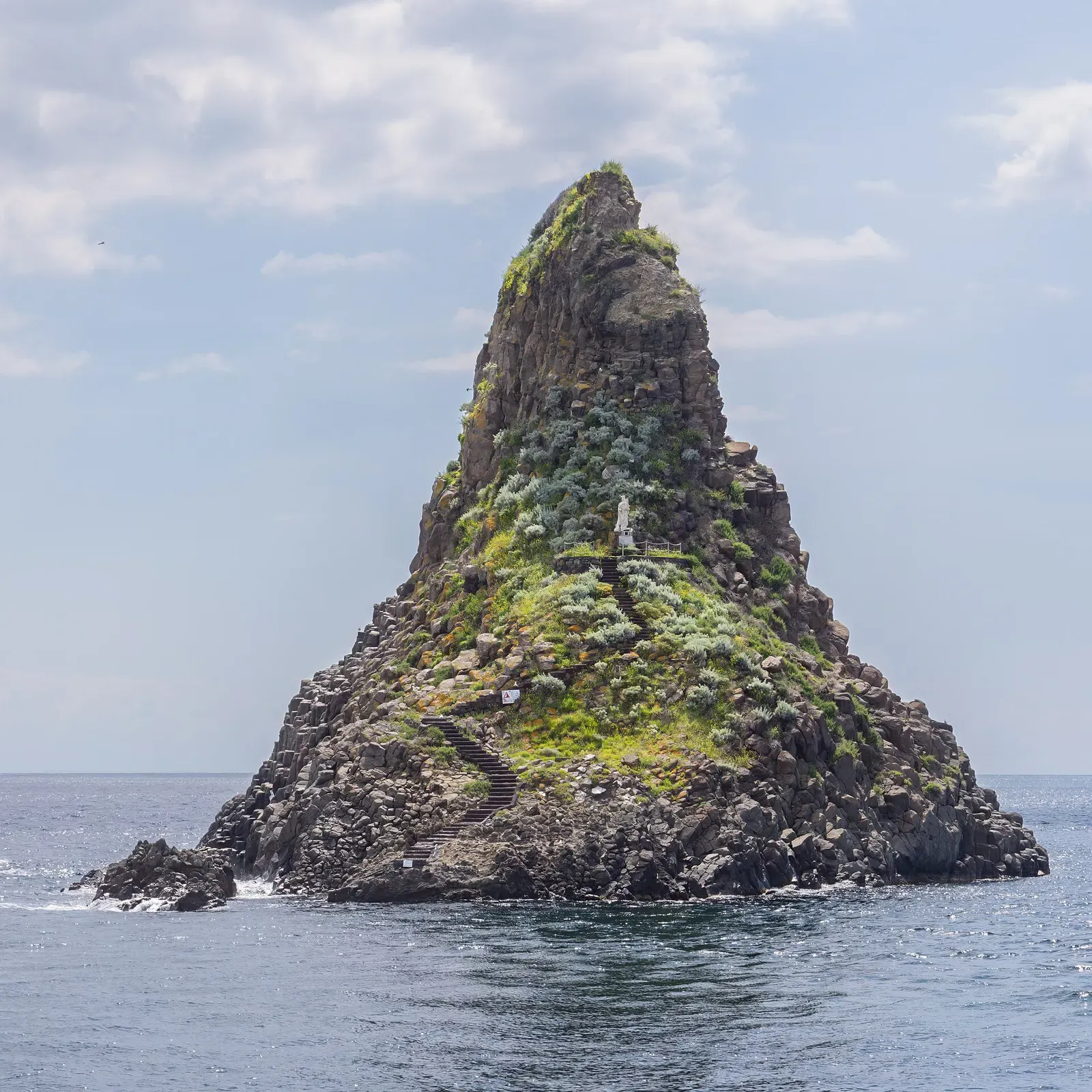
The Mediterranean's largest anemone, Alicia mirabilis, on a night-diveable shoal
Basalt platform dropping steeply to 40 m under the lighthouse
Reef
Big morays in the cracked basalt of three rounded outcrops
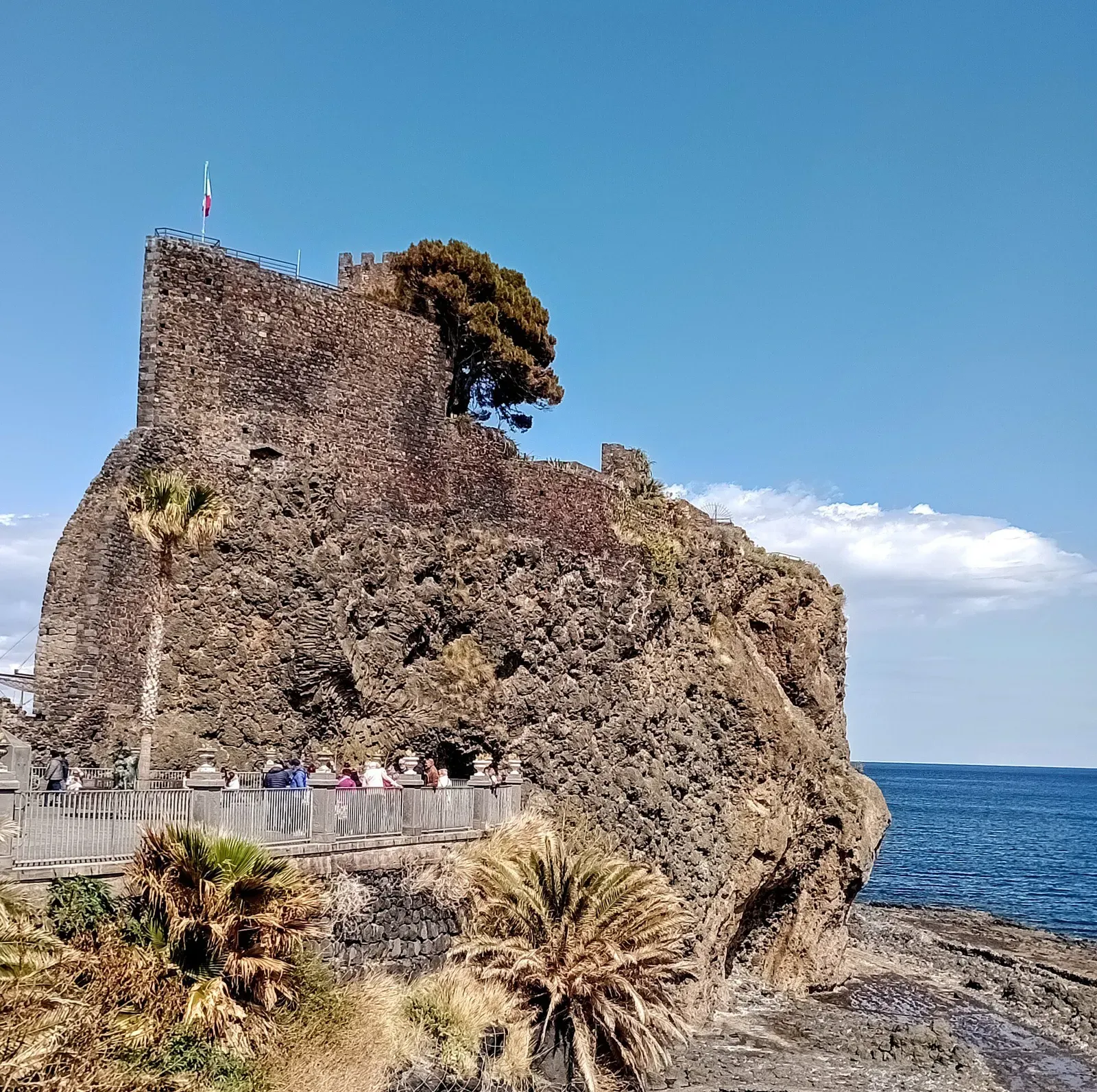
Pearly razorfish over the sand below the Norman castle
Reef
Large cerianthids in four colours on night explorations of the sand
Eight ancient anchors on a fixed line, 1st century BC to admiralty types
Reef
Shoal complex and summer drift on the reserve's southern boundary
Wreck
Capsized 50 m wreck at the foot of an underwater cliff, 38–42 m
Getting there
Catania Fontanarossa airport is a few kilometres from the reserve; AMT city bus 534 and AST intercity buses link Catania to Aci Trezza. Centres sit in Catania itself (Jonio Pro-Dive, at Camping Junio) and on the Aci Castello seafront (DNA Divers).
Photos from Catania & the Cyclops Islands
gnuckx · CC BY 2.0
gnuckx · CC BY 2.0
Wilson44691 · CC0
gnuckx · CC BY 2.0
Photo credits
- A tall column of basalt rock rises from the sea off Aci Trezza, with the town visible along the shore behind it. by Castielli, CC BY-SA 3.0, via Wikimedia Commons
- Boats sit in calm water at dusk in the harbour at Acitrezza, with the town's lights reflected on the surface. by gnuckx, CC BY 2.0, via Wikimedia Commons
- A pointed sea stack is silhouetted against the sky as the moon rises low over the water beside it. by gnuckx, CC BY 2.0, via Wikimedia Commons
- A medieval castle with a crenellated tower sits atop a dark volcanic-rock cliff above the sea. by Wilson44691, CC0, via Wikimedia Commons
- Three moss-covered rock stacks stand together in the sea off the coast in warm evening light. by gnuckx, CC BY 2.0, via Wikimedia Commons
Similar destinations
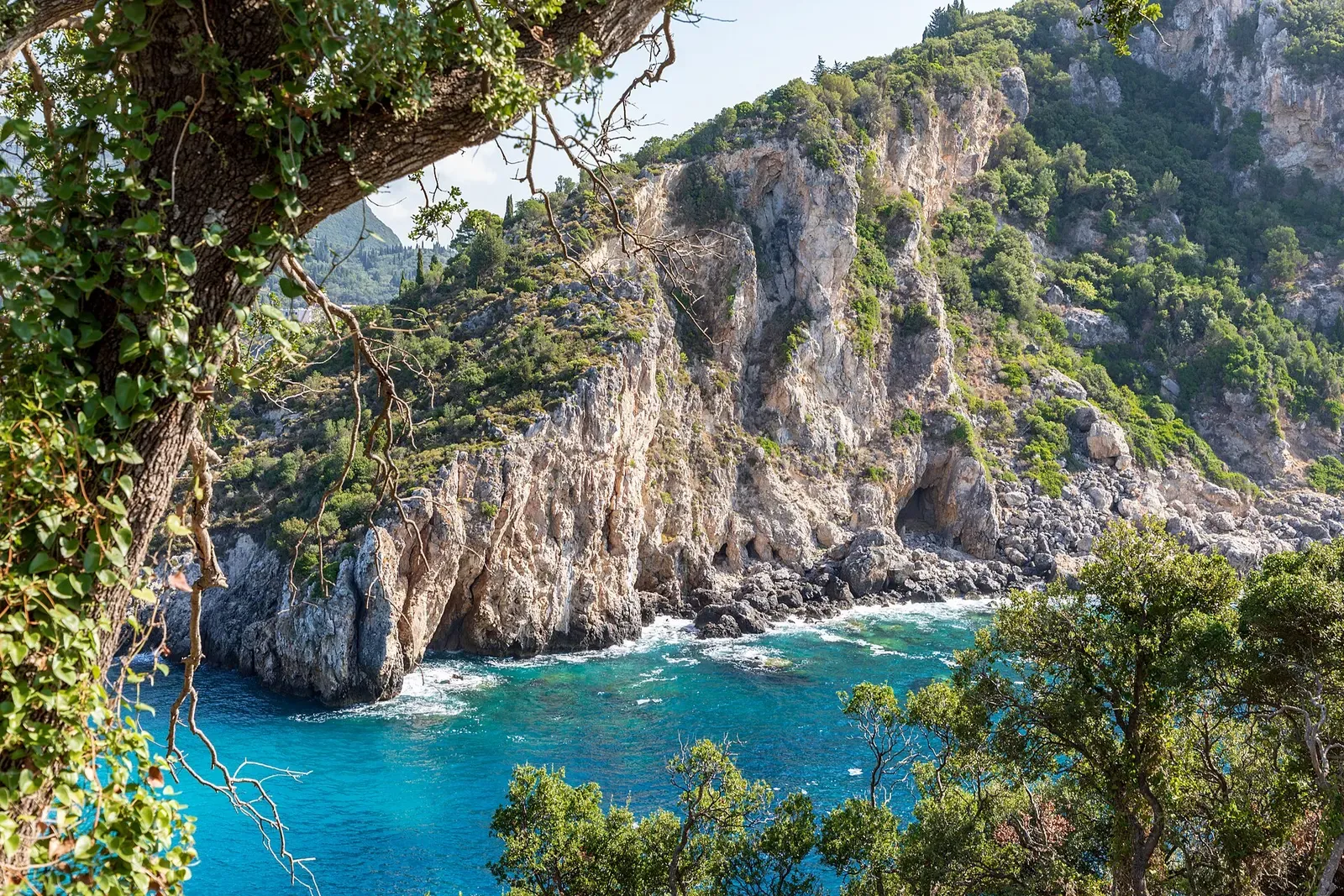
A cluster of cavern dives at Paleokastritsa, wrecks and reefs off the north-east coast
The Baron Gautsch, mined in 1914, lying at 28–40 m between Pula and Rovinj
Reserve walls at Bergeggi island and cert-gated gorgonian secche offshore


.jpg)
.jpg)

.jpg)
Granite seamounts rising to the surface off Sardinia's south-east corner