
Atlantic · Senegal
Dakar & Ngor
Snapper shoals and barracuda swirl over basalt at Africa's westernmost point
Dakar's Cap-Vert peninsula is the westernmost point of mainland Africa, and its long-established dive clubs work rocky reefs, volcanic islets and wrecks within minutes of the city. The cool Canary Current meets tropical Atlantic water here, mixing temperate and tropical species: dense snapper and barracuda shoals, groupers, rays and passing turtles over boulder fields and basalt drop-offs. The Îles de la Madeleine, a tiny national park of columnar basalt, and the Tacoma wreck anchor the site list.
About diving in Dakar & Ngor
Dakar dives out of the city, and the day is shaped by that. The clubs cluster at the peninsula's northwest tip around Ngor, Les Almadies and Yoff, boats are small and mostly loaded off the beach, and a two-tank morning leaves the rest of the day free. A handful of sheltered coves work as shore entries, but nearly everything on the list is a boat dive, built around short hops between islets, capes and wreck sites rather than long crossings.
Underwater it is rock rather than reef: ledges, sand channels and stone under sponge and encrusting growth, with enough small life on it to reward anyone who slows down. Water runs to about 28°C at the warm end of the year and drops to 17–21°C once upwelling sets in, so pack more suit than 14°N suggests. Visibility moves with it, from around 20 m in the clear months to 5 m or so when the cold green water arrives, and the same site can feel like two places across a season.
Wrecks fill out the rest of the list, dived as swim-arounds rather than penetrations, and nothing here goes deep - 30 m covers the deepest of it. The overall character sits nearer temperate Atlantic diving than the tropics: volume of fish over structure, changeable water, and little in the way of coral cover. It rewards divers already in Dakar for work or for the surf off Ngor, and anyone happier tracking shoals across stone than counting coral species.
Best time to dive Dakar & Ngor
| Jan | Feb | Mar | Apr | May | Jun | Jul | Aug | Sep | Oct | Nov | Dec | |
|---|---|---|---|---|---|---|---|---|---|---|---|---|
| Season | Fair | Fair | Fair | Fair | Fair | Good | Good | Good | Good | Prime | Prime | Good |
| Sea surface | 21°C70°F | 19°C66°F | 19°C66°F | 20°C68°F | 22°C72°F | 25°C77°F | 27°C81°F | 28°C82°F | 29°C84°F | 29°C84°F | 27°C81°F | 24°C75°F |
| Daytime high | 28°C82°F | 28°C82°F | 27°C81°F | 27°C81°F | 27°C81°F | 28°C82°F | 29°C84°F | 29°C84°F | 30°C86°F | 31°C88°F | 31°C88°F | 29°C84°F |
| Rain | 7 mm0.3 in | 14 mm0.6 in | 25 mm1.0 in | 11 mm0.4 in | 2 mm0.1 in | 42 mm1.7 in | 103 mm4.1 in | 199 mm7.8 in | 170 mm6.7 in | 52 mm2.0 in | 15 mm0.6 in | 7 mm0.3 in |
| Jan | Feb | Mar | Apr | May | Jun |
|---|---|---|---|---|---|
| Fair | Fair | Fair | Fair | Fair | Good |
| Sea surface | |||||
| 21°C70°F | 19°C66°F | 19°C66°F | 20°C68°F | 22°C72°F | 25°C77°F |
| Daytime high | |||||
| 28°C82°F | 28°C82°F | 27°C81°F | 27°C81°F | 27°C81°F | 28°C82°F |
| Rain | |||||
| 7 mm0.3 in | 14 mm0.6 in | 25 mm1.0 in | 11 mm0.4 in | 2 mm0.1 in | 42 mm1.7 in |
| Jul | Aug | Sep | Oct | Nov | Dec |
|---|---|---|---|---|---|
| Good | Good | Good | Prime | Prime | Good |
| Sea surface | |||||
| 27°C81°F | 28°C82°F | 29°C84°F | 29°C84°F | 27°C81°F | 24°C75°F |
| Daytime high | |||||
| 29°C84°F | 29°C84°F | 30°C86°F | 31°C88°F | 31°C88°F | 29°C84°F |
| Rain | |||||
| 103 mm4.1 in | 199 mm7.8 in | 170 mm6.7 in | 52 mm2.0 in | 15 mm0.6 in | 7 mm0.3 in |
2011–2025 averages. Sea surface: NOAA Coral Reef Watch, measured at the surface, so deeper water can run colder. Daytime high and rain: NASA POWER.
Upwelling from about December to May cools water to 17-21°C and dims visibility; October-November is the warm, clear window.
Best months: October, November
Dakar & Ngor water temperature and weather by month
The sea surface runs from 19 °C (66 °F) in March to 29 °C (84 °F) in September. It is 24 °C (75 °F) or warmer from June to December. Most rain falls from July to September, peaking at about 200 mm (7.9 in) in August; it stays largely dry from November to May. Daytime highs reach 31 °C (88 °F) in October and drop to 27 °C (81 °F) in March. The coldest water here is about 17 °C (63 °F), so pack a 7 mm suit with a hood, or a semi-dry.
Dive types & marine life
Barracuda and snapper shoals hold over the wrecks and capes all year, with groupers, stingrays and eagle rays working the rock and sand and turtles passing through. October and November bring the warmest, clearest water and the best of the fish action; the cooler upwelling months from roughly December to May turn the diving greener and more macro, nudibranchs included.
- Reef
- Wreck
- Barracuda
- Groupers
- Stingrays
- Eagle rays
- Sea turtles
- Nudibranchs
- Reef fish swarms
Best dive sites in Dakar & Ngor
Wreck
A coal barge at 30 to 37 m, its coal cargo still in the wreck
Wall
Gorgonian fields at 35 to 40 m, with rays and tuna passing
A narrow passage and rocky drop-off between two volcanic islets
Wreck
A 38 m wreck the Dakar club names but does not describe
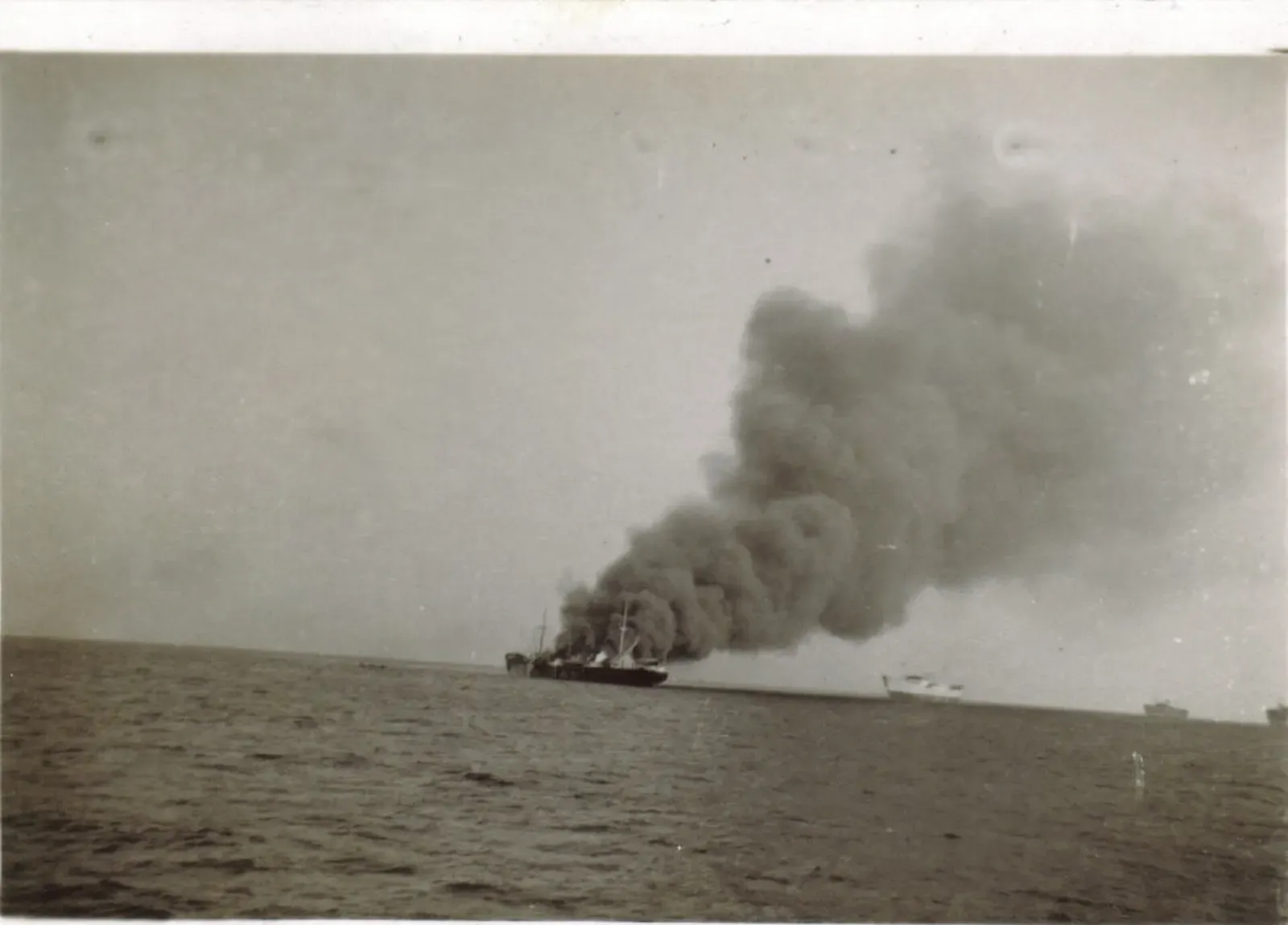
A 1940 cargo wreck at 14 m, a few hundred metres off Gorée Island
Ngor Island
Sheltered rocky reefs off the surf island, the peninsula's training ground.
Pointe des Almadies
Reef running off the continent's westernmost tip, swept by mixing currents.
How to get to Dakar & Ngor
Blaise Diagne International (DSS) sits some 45 km southeast of the city; allow an hour or more on the motorway to the peninsula, longer in Dakar traffic. Divers base in Ngor, Les Almadies or Yoff, close to the clubs, where French is the working language. Everything is shore entry or short day boats, with no liveaboards.
Photos from Dakar & Ngor
Jeff Attaway from Abuja, Nigeria · CC BY 2.0
Dive videos
Amazing Wreck Dive in Dakar (the Étoile Rouge) · Samiy Diver on YouTube
Photo credits
- Aerial view of Ngor Island's fishing village and beach in a turquoise bay dotted with small boats by Jeff Attaway from Abuja, Nigeria, CC BY 2.0, via Wikimedia Commons
- Small fishing boats anchored in Ngor Bay's turquoise water in front of the beach and village by Jeff Attaway from Abuja, Nigeria, CC BY 2.0, via Wikimedia Commons
Embed
Run a dive centre, club or blog? Embed this map of 5 dive sites near Dakar & Ngor on your own page.
In The Logbook
- Why is some sea green instead of blue?Ocean science · 8 min read
- Gas density: why deep air gets hard to breatheBody & health · 8 min read
- WWII wrecks you can dive, by theatreWrecks · 7 min read
Similar destinations

Around three hundred charted wrecks, most of them shallower than 20 m

.jpg)
Atlantic and Mediterranean dives on one island
Atlantic
Algarve — Ocean Revival
Portugal
Four Portuguese Navy ships scuttled together on one sand plain
Atlantic
Azores — São Miguel
Portugal
The WWII Liberty ship Dori in 21m, minutes off Ponta Delgada