
Atlantic · Bermuda
Bermuda
Around three hundred charted wrecks, most of them shallower than 20 m
Photo: c&rdunn · CC BY-SA 2.0
Bermuda sits alone in the North Atlantic on a shallow reef platform that has wrecked ships for four centuries — around three hundred are charted, most of them in under 20 m of water. That combination of density and depth is unusual: the Cristóbal Colón, a 150 m Spanish liner lost in 1936, lies scattered between 9 and 16 m, and the Hermes sits upright and intact at 24 m. The island also holds the northernmost coral reef system in the world, sustained by the Gulf Stream.
About diving in Bermuda
Wreck diving here is boat diving. Shops work from the West End around the Royal Naval Dockyard and from the East End near St George's and Hamilton Parish, and each tends to run to the sites on its own side of the platform rather than steaming across the island. Morning two-tank trips are the standard product, and with little depth to burn through, surface intervals stay short and bottom times run long. A few inshore bays take a walk-in entry, but the wrecks that define the place all need a boat. It is a summer business: boats largely stand down from late autumn and go back to work in spring.
The island is the eroded cap of an extinct volcano, and the platform around it is broad, flat and shallow — coral heads, sand channels and the boilers, rims of reef that break the surface along the south shore. Sites sort into three kinds: boilers and swim-throughs close inshore, the wreck grounds out on the platform, and the outer edge where the shelf tips into deep water. Navigation matters more than depth, since one coral head looks much like the next once you leave the mooring line.
Shallow water changes how a wreck dives. Sunlight reaches the whole structure, so a hull reads as reef: plates carpeted in growth, holds standing open, fish holding in the shade under a boiler. Some sites are flattened debris fields crossed on a compass bearing, others are ships you can circle in one dive, and how much survives usually comes down to how exposed the position is. Historic wrecks are protected under Bermudian law, so operators dive them look-but-don't-touch and artefacts stay where they lie.
It suits divers who like structure and history and are content without big animals: recent qualifiers, families splitting a week between beaches and boats, photographers after wide-angle wreck shots in bright water. Reef swim-throughs and caverns add variety, and the island also holds flooded cave systems, dived only by cave-trained divers with permission rather than as part of any day-boat schedule. What Bermuda is not is cheap — diving is one attraction among several here, not the reason most visitors come.
Best time to dive Bermuda
| Jan | Feb | Mar | Apr | May | Jun | Jul | Aug | Sep | Oct | Nov | Dec | |
|---|---|---|---|---|---|---|---|---|---|---|---|---|
| Season | Off-season | Off-season | Fair | Good | Prime | Prime | Prime | Prime | Prime | Good | Fair | Off-season |
| Sea surface | 21°C70°F | 20°C68°F | 20°C68°F | 20°C68°F | 22°C72°F | 25°C77°F | 28°C82°F | 29°C84°F | 28°C82°F | 26°C79°F | 24°C75°F | 22°C72°F |
| Daytime high | 22°C72°F | 22°C72°F | 21°C70°F | 22°C72°F | 24°C75°F | 27°C81°F | 29°C84°F | 29°C84°F | 29°C84°F | 27°C81°F | 25°C77°F | 23°C73°F |
| Rain | 117 mm4.6 in | 106 mm4.2 in | 90 mm3.5 in | 70 mm2.8 in | 93 mm3.7 in | 100 mm3.9 in | 70 mm2.8 in | 116 mm4.6 in | 119 mm4.7 in | 142 mm5.6 in | 90 mm3.5 in | 117 mm4.6 in |
| Jan | Feb | Mar | Apr | May | Jun |
|---|---|---|---|---|---|
| Off-season | Off-season | Fair | Good | Prime | Prime |
| Sea surface | |||||
| 21°C70°F | 20°C68°F | 20°C68°F | 20°C68°F | 22°C72°F | 25°C77°F |
| Daytime high | |||||
| 22°C72°F | 22°C72°F | 21°C70°F | 22°C72°F | 24°C75°F | 27°C81°F |
| Rain | |||||
| 117 mm4.6 in | 106 mm4.2 in | 90 mm3.5 in | 70 mm2.8 in | 93 mm3.7 in | 100 mm3.9 in |
| Jul | Aug | Sep | Oct | Nov | Dec |
|---|---|---|---|---|---|
| Prime | Prime | Prime | Good | Fair | Off-season |
| Sea surface | |||||
| 28°C82°F | 29°C84°F | 28°C82°F | 26°C79°F | 24°C75°F | 22°C72°F |
| Daytime high | |||||
| 29°C84°F | 29°C84°F | 29°C84°F | 27°C81°F | 25°C77°F | 23°C73°F |
| Rain | |||||
| 70 mm2.8 in | 116 mm4.6 in | 119 mm4.7 in | 142 mm5.6 in | 90 mm3.5 in | 117 mm4.6 in |
2011–2025 averages. Sea surface: NOAA Coral Reef Watch, measured at the surface, so deeper water can run colder. Daytime high and rain: NASA POWER.
May to October is the season, and July to September is the heart of it: the water averages about 27 to 28 °C and summer visibility is often better than 30 m, ideal for wide-angle wreck work. May and June are quieter and cooler, about 21 °C in May and 24 °C in June, and October still averages about 26 °C. From November the sea cools steadily to its low of about 19 °C in March, and winter sends cold fronts and North Atlantic storms across the island; diving is still possible in a drysuit, but it is the exception rather than the rule. April is the shoulder month, as the water begins to warm and the season restarts. Tarpon are on the reefs from September to March.
Best months: May, June, July, August, September
Bermuda water temperature and weather by month
The sea surface runs from 20 °C (68 °F) in March to 29 °C (84 °F) in August. It is 24 °C (75 °F) or warmer from June to November. Rain falls through the year, about 100 mm (3.9 in) a month on average, with October the wettest. Daytime highs reach 29 °C (84 °F) in August and drop to 21 °C (70 °F) in March. The coldest water here is about 18 °C (64 °F), so pack a 5 mm suit.
Dive types & marine life
Wreck fish are the constant: grouper under plating, barracuda hanging above it, small reef fish massed over the coral heads all season. Juvenile green turtles graze the inshore grass flats and stingrays work the sand channels, while octopus and nudibranchs reward slow looking, especially on night dives through the warm May-to-October run.
- Wreck
- Reef
- Cave & cavern
- Wall
- Night
- Sea turtles
- Groupers
- Barracuda
- Reef fish swarms
- Octopus & cuttlefish
- Nudibranchs
- Stingrays
Best dive sites in Bermuda
- 1
Hermes
Intact 50 m buoy tender scuttled on sand at 24 m; one of the most popular and photogenic wrecks here.
- 2
Mary Celestia
Civil War blockade runner lost in 1864, lying at 17 m with one paddlewheel frame still upright.
- 3
King George
A 52 m dredger retired in 1930 and scuttled, upright and mostly intact at 18 m, holds and catwalks open.
- 4
Cristóbal Colón
The largest wreck here: a 152 m Spanish liner lost in 1936, spread across the reef from 5 to 18 m.
- 5
North Carolina
Iron barque wrecked on New Year's Day 1880; bow and stern stand in 8 to 14 m, deadeyes still in rows.
- 6
Iristo
Freighter that sank in 1937 swerving to avoid the Colón; boilers, a fire engine and a propeller at 17 m.
- 7
Constellation
Four-masted schooner lost in 1943 at about 9 m; its cargo of cement bags inspired The Deep.
- 8
Montana
Civil War paddle steamer lost in 1863 at 10 m, paddlewheel frames and boilers encased in coral.
Site guides
Wreck
Thousands of petrified cement bags across the reef at 9 m
Wreck
Nearly 152 metres of liner (500 feet), broken across the reef in under 20 m
Wreck
An intact ship on sand at 24.4 m, wheelhouse at 13.7 m
Wreck
A paddlewheel frame standing upright like a small Ferris wheel
Wreck
Two paddlewheel frames and two boilers under coral at 12 m
Wreck
A bowsprit and rows of deadeyes still standing in 13.7 m
How to get to Bermuda
Everyone arrives by air into L.F. Wade International or by cruise ship, most of which berth at the Dockyard. Divers usually base at one end of the island and dive that end's wrecks: St George's for the East End, the Dockyard side for the West, Hamilton and the south shore for a bit of both. Visitors cannot hire an ordinary car, so getting about means bus, ferry, taxi or scooter.
Photos from Bermuda
c&rdunn · CC BY-SA 2.0
c&rdunn · CC BY-SA 2.0
c&rdunn · CC BY-SA 2.0
c&rdunn · CC BY-SA 2.0
Dive videos
Diving the Hermes Wreck Bermuda (The Bermuda Triangle!) · BlueWorldTV on YouTube
Discover Bermuda's MYSTERIOUS Cruise Ship Wreck The Cristobal Colon · Blue Horizon Diving on YouTube
Questions divers ask
Are all of Bermuda's wrecks open to divers?+
No. The Historic Wrecks Act 2001 protects every wreck in Bermuda's waters, and it is illegal to interfere with or remove anything without a licence. Divers visit the wrecks the Custodian of Wrecks lists as open to the public, and many of those have eco-moorings so boats never anchor on the reef.
What certification do I need to dive Bermuda's wrecks?+
Open Water covers most of them: the Constellation, Montana and North Carolina lie in 8 to 14 m, and the Cristóbal Colón is no deeper than 18 m. The Hermes sits on sand at 24 m, which suits Advanced divers, and going inside any wreck calls for wreck training.
What is the water temperature in Bermuda?+
From about 19 °C in March, the coldest month, to about 28 °C in August. Summer water runs between 22 and 28 °C across the May-to-October season, so a thin suit works from July to September, while winter diving is possible in a drysuit.
How do visitors get around Bermuda to dive?+
L.F. Wade International Airport has direct flights from the US, Canada and the UK. Visitors cannot rent an ordinary car, so taxis, buses, ferries and scooters do the work. It pays to stay near the wrecks on the list: the older ones lie mostly off the West End, the more modern ones off the east side.
Is there reef diving in Bermuda as well as wrecks?+
Yes. Hundreds of square miles of reef ring the island, with black grouper, tarpon from September to March and black sea hares. Cathedral has a swim-through cave full of glassy sweepers, and Hangover Hole is a maze of tunnels and arches.
Sources
- Top Bermuda Shipwreck Dives — Bermuda Tourism Authority
- Wreck diving in Bermuda — DIVE Magazine
- Bermuda — Scuba Diving
- Diving in Bermuda — PADI
- Shipwreck Legislation — Department of Environment and Natural Resources, Bermuda
- Open Shipwrecks and Protected Moorings Program — Government of Bermuda
- Bermuda 100 Challenge — UC San Diego
- Hamilton water temperature — World Sea Temperatures
- Bermuda — Wikivoyage
- Bermuda — Wikipedia
Photo credits
- Two scuba divers hover beside the steel hull of a shipwreck in clear, sunlit Bermuda water. by c&rdunn, CC BY-SA 2.0, via Openverse
- A diver with bright yellow fins swims past a sunlit wreck hull crowded with small reef fish in Bermuda. by c&rdunn, CC BY-SA 2.0, via Openverse
- A barracuda hangs over mounds of coral thick with sponge and small reef fish off Bermuda. by c&rdunn, CC BY-SA 2.0, via Openverse
- A diver hovers beside a cluster of orange soft coral sea rods on a Bermuda reef. by c&rdunn, CC BY-SA 2.0, via Openverse
- A diver with green fins swims through a narrow coral canyon lit by sunlight from above. by c&rdunn, CC BY-SA 2.0, via Openverse
Embed
Run a dive centre, club or blog? Embed this map of 6 dive sites near Bermuda on your own page.
In The Logbook
- Ships sunk on purpose, and where to dive themWrecks · 14 min read
- WWII wrecks you can dive, by theatreWrecks · 7 min read
- Your first wreck dive: what to expect and whereFirst dives · 6 min read
Similar destinations
Atlantic
Tenerife
Spain
Black sand and lava arches metres from shore, with resident pilot whales
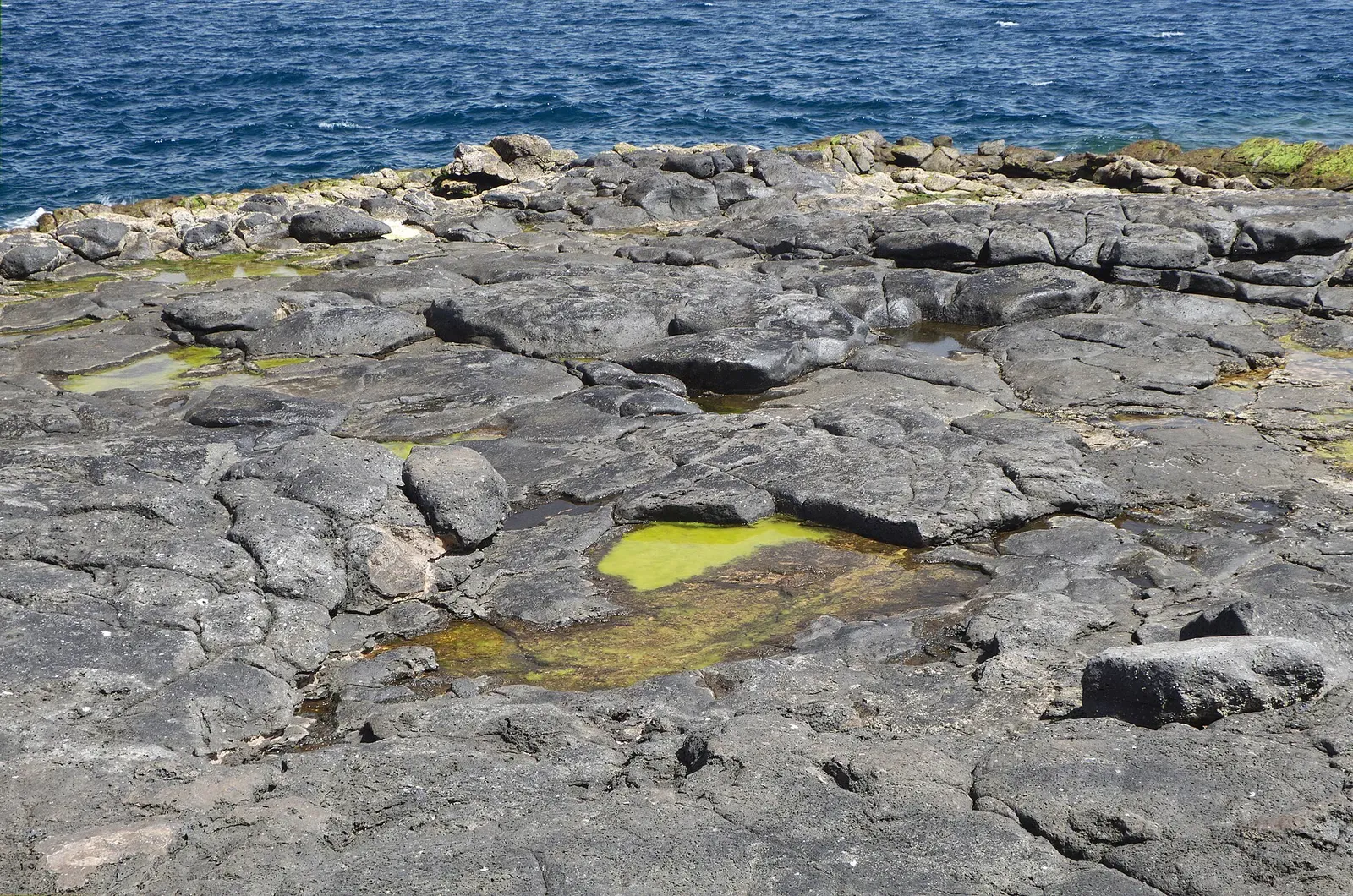
A 1.5 km volcanic reef stepping from 7 m to past 40 m off Caleta de Fuste
Atlantic
Azores — São Miguel
Portugal
The WWII Liberty ship Dori in 21m, minutes off Ponta Delgada

Lava arches, canyons and tunnels reachable from a rocky beach entry