Atlantic · Portugal
Algarve — Ocean Revival
Four Portuguese Navy ships scuttled together on one sand plain
Between 2012 and 2013 the Portuguese Navy sank four decommissioned vessels on a sand plain off Portimão, laid out close enough together that fit divers can link two on a single dive. The frigate Hermenegildo Capelo and the hydrographic ship Almeida Carvalho are the largest, sitting upright with masts reaching to 15 m and hulls on the seabed at 30 m. Prepared for diving before scuttling, they have wide-open interiors and are now thick with fish.
About diving in Algarve — Ocean Revival
Every dive starts at a marina. Boats leave Portimão for a short run offshore, tie into one of the site's mooring buoys, and divers go down the line onto a known point of the ship, so there is no navigation puzzle and no drift to manage. Two-tank mornings are the standard product, with the surface interval spent aboard. Nitrox is worth taking, because the profiles are square: you drop to working depth quickly and stay there for most of the dive.
The hulls sit on open sand rather than on reef, and that changes how they read. Nothing competes with the ship for attention, the pale bottom throws light back up under the superstructure, and each one appears as a silhouette well before any detail resolves. They differ mainly in scale: the two smaller vessels can be circled and understood in a single dive, while the larger pair take several visits before the layout makes sense, so a day is usually built by pairing one big ship with one small one.
Openings were cut and fittings stripped before the ships went down, and that matters more for what it allows than for how it looks: corridors you can turn round in, doorways without doors, square cuts in the deck dropping daylight into the compartments beneath, so a line can be run with the exit in sight. Most centres teach wreck courses on the ships themselves. The steel photographs well too, with masts, bridge wings and deck fittings still reading clearly under the growth picked up since scuttling.
It suits divers who like structure and are comfortable at recreational depth in Atlantic water; a semi-dry earns its keep outside high summer, and boats do get cancelled when the swell builds. Newer divers get plenty from deck level, and from the natural limestone reef and caves off Lagos to the west, which many centres pair with the wrecks across a few days. The season runs April to October, thins out in March and November, and stops between December and February.
Best time to dive Algarve — Ocean Revival
| Jan | Feb | Mar | Apr | May | Jun | Jul | Aug | Sep | Oct | Nov | Dec | |
|---|---|---|---|---|---|---|---|---|---|---|---|---|
| Season | Off-season | Off-season | Fair | Good | Good | Prime | Prime | Prime | Prime | Good | Fair | Off-season |
| Sea surface | 16°C61°F | 15°C59°F | 15°C59°F | 16°C61°F | 17°C63°F | 18°C64°F | 19°C66°F | 20°C68°F | 20°C68°F | 20°C68°F | 18°C64°F | 17°C63°F |
| Daytime high | 18°C64°F | 18°C64°F | 19°C66°F | 22°C72°F | 25°C77°F | 28°C82°F | 29°C84°F | 29°C84°F | 27°C81°F | 26°C79°F | 21°C70°F | 19°C66°F |
| Rain | 70 mm2.8 in | 63 mm2.5 in | 114 mm4.5 in | 81 mm3.2 in | 41 mm1.6 in | 10 mm0.4 in | 1 mm0.0 in | 1 mm0.0 in | 20 mm0.8 in | 101 mm4.0 in | 108 mm4.3 in | 86 mm3.4 in |
| Jan | Feb | Mar | Apr | May | Jun |
|---|---|---|---|---|---|
| Off-season | Off-season | Fair | Good | Good | Prime |
| Sea surface | |||||
| 16°C61°F | 15°C59°F | 15°C59°F | 16°C61°F | 17°C63°F | 18°C64°F |
| Daytime high | |||||
| 18°C64°F | 18°C64°F | 19°C66°F | 22°C72°F | 25°C77°F | 28°C82°F |
| Rain | |||||
| 70 mm2.8 in | 63 mm2.5 in | 114 mm4.5 in | 81 mm3.2 in | 41 mm1.6 in | 10 mm0.4 in |
| Jul | Aug | Sep | Oct | Nov | Dec |
|---|---|---|---|---|---|
| Prime | Prime | Prime | Good | Fair | Off-season |
| Sea surface | |||||
| 19°C66°F | 20°C68°F | 20°C68°F | 20°C68°F | 18°C64°F | 17°C63°F |
| Daytime high | |||||
| 29°C84°F | 29°C84°F | 27°C81°F | 26°C79°F | 21°C70°F | 19°C66°F |
| Rain | |||||
| 1 mm0.0 in | 1 mm0.0 in | 20 mm0.8 in | 101 mm4.0 in | 108 mm4.3 in | 86 mm3.4 in |
2011–2025 averages. Sea surface: NOAA Coral Reef Watch, measured at the surface, so deeper water can run colder. Daytime high and rain: NASA POWER.
May–Oct is the settled season with the clearest water; Atlantic swell and cold water shut most operations over winter.
Best months: June, July, August, September
Algarve water temperature and weather by month
The sea surface runs from 15 °C (59 °F) in February to 20 °C (68 °F) in September. Most rain falls from October to April, peaking at about 110 mm (4.3 in) in March; it stays largely dry from June to September. Daytime highs reach 29 °C (84 °F) in August and drop to 18 °C (64 °F) in January. The coldest water here is about 15 °C (59 °F), so pack a 7 mm suit with a hood, or a semi-dry.
Dive types & marine life
The hulls are well colonised now: bream and horse mackerel swirl over the superstructure, grouper and conger hold in the shadowed compartments, and octopus and cuttlefish work the deck edges. Barracuda gather overhead, and stingrays and flatfish lie on the sand around the ships. Fish density is best from June to September; nudibranchs are easier to find in the cooler shoulder months.
- Wreck
- Reef
- Night
- Octopus & cuttlefish
- Barracuda
- Nudibranchs
- Macro critters
- Reef fish swarms
- Stingrays
- Groupers
Best dive sites in Algarve — Ocean Revival
Reef
Anchors from three centuries jammed in the rock
A round reef of craters and troughs in 13 m
Wall
A rock wall of troughs, worked with a torch
Reef
Sheltered rock in 5 to 12 m, ten minutes out
Wreck
A 64 m survey ship, 12 m in the beam, quoted at 30 to 33 m
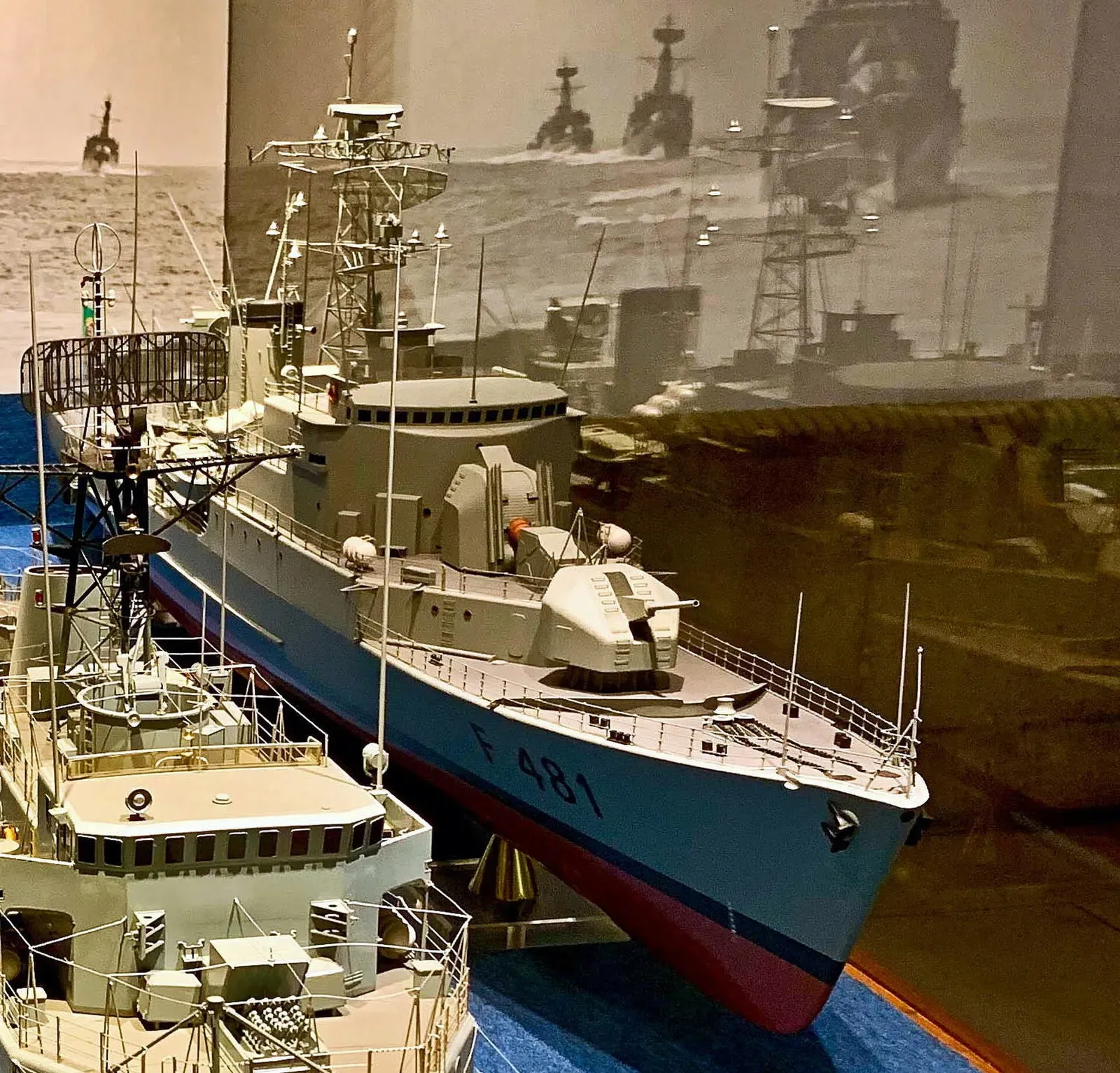
A Portuguese Navy frigate, 102.7 m, sunk in 30 m off Portimão
Wreck
A navy corvette scuttled in 2012, quoted at 28 m
Wreck
A navy patrol boat scuttled in 2012, quoted at 28 m
Porous rock wall packed with conger and moray holes
Wall
Canyons between big stones off Porto de Mós
Cave & cavern
Linked tunnel passages under the Ponta da Piedade rock
Wreck
A five-bladed propeller in the middle of a broken trawler
Wall
A south-facing wall under multi-coloured gorgonians
Ponta da Piedade
Natural limestone reef and caves off Lagos, the area's non-wreck dive.
How to get to Algarve — Ocean Revival
Faro is the airport, with a straightforward motorway run west to Portimão, where the boats leave from the marina. Portimão, Praia da Rocha, Alvor and Lagos all work as bases and sit within about half an hour of each other. Everything is boat diving, sold as morning two-tank trips, so a car is convenient rather than necessary.
Dive videos
Ocean Revival project/ wreck dives - Portimão/Algarve · Dives Por Aí on YouTube
DIVING THE OCEAN REVIVAL PARK IN PORTIMAO, PORTUGAL · Redmer Kooistra (Red) on YouTube
Embed
Run a dive centre, club or blog? Embed this map of 12 dive sites near Algarve on your own page.
In The Logbook
- Hearing underwater: why sound has no directionOcean science · 14 min read
- Ships sunk on purpose, and where to dive themWrecks · 14 min read
- How a dive computer calculates no-stop timeBody & health · 10 min read
- Air, nitrox or trimix: which gas, and when?Gear & kit · 15 min read
Similar destinations

Around three hundred charted wrecks, most of them shallower than 20 m
Atlantic
Tenerife
Spain
Black sand and lava arches metres from shore, with resident pilot whales
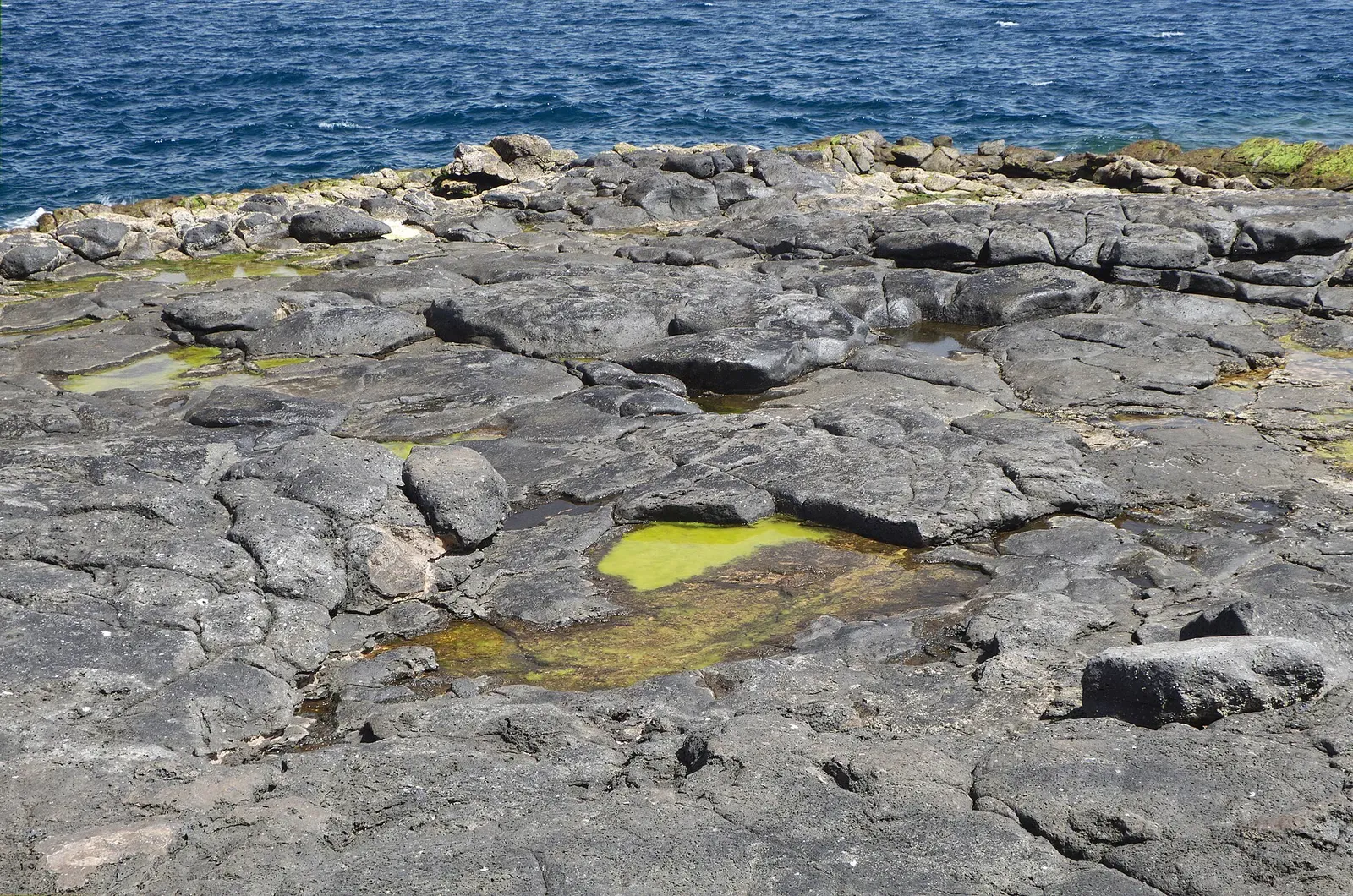
A 1.5 km volcanic reef stepping from 7 m to past 40 m off Caleta de Fuste
Atlantic
Azores — São Miguel
Portugal
The WWII Liberty ship Dori in 21m, minutes off Ponta Delgada