
Red Sea & Gulf of Aden · Israel
Eilat
A shore-entry reef and a scuttled missile boat inside a 12 km coastline
Photo: Yonatan Dodin · CC BY 4.0
Eilat occupies a 12 km sliver of coast at the head of the Gulf of Aqaba, and almost all of its diving is from shore. The Coral Beach Nature Reserve protects a fringing reef within wading distance of the beach, and the missile boat Satil was scuttled off the marina in 1994 and now sits upright at 24 m. Corals here survive summer heat that bleaches reefs elsewhere, which has made the gulf a focus of climate research and given divers an unusually resilient reef.
About diving in Eilat
Diving here runs on car keys rather than boat schedules. The centres sit along the southern shore road, you kit up beside the vehicle or on the sand and walk in, and inside the nature reserve fixed bridges carry divers over the reef table so nobody wades across living coral. That makes the day elastic: several dives fit easily, the surface interval is a coffee up the road, and a night dive uses the same entry you used at midday. Summer is comfortable in the water; it is the walk back to the car in July that hurts.
Underwater it is a fringing reef, a shallow table with a drop at its edge and a slope running out to sand, so dives are an out-and-back along the contour rather than a drift. The reef face carries the depth, and you can hold 25 m on the slope or spend the whole dive at 10, with navigation as simple as keeping the coral on one shoulder. The scuttled missile boat off the marina, normally reached by boat, is the one piece of hard structure in a place otherwise made entirely of reef.
The reef is also a research subject. Corals in the Gulf of Aqaba hold up to summer heat that has bleached reefs elsewhere, and the leading explanation, that the population was filtered by a thermal bottleneck as it recolonised the gulf, remains a hypothesis rather than settled fact; an inter-university marine science institute sits on the shore beside the reserve, and that presence is part of the place. Local pressure is a separate question from heat, since nutrients, port traffic and coastal development all shape what you see. What the diving will not give you is current, open-water drop-offs or big animals.
Best time to dive Eilat
| Jan | Feb | Mar | Apr | May | Jun | Jul | Aug | Sep | Oct | Nov | Dec | |
|---|---|---|---|---|---|---|---|---|---|---|---|---|
| Season | Good | Good | Prime | Prime | Prime | Good | Good | Good | Prime | Prime | Prime | Good |
| Sea surface | 22°C72°F | 22°C72°F | 22°C72°F | 22°C72°F | 24°C75°F | 25°C77°F | 27°C81°F | 28°C82°F | 27°C81°F | 26°C79°F | 25°C77°F | 23°C73°F |
| Daytime high | 24°C75°F | 27°C81°F | 31°C88°F | 35°C95°F | 39°C102°F | 40°C104°F | 41°C106°F | 41°C106°F | 39°C102°F | 36°C97°F | 30°C86°F | 26°C79°F |
| Rain | 10 mm0.4 in | 10 mm0.4 in | 8 mm0.3 in | 15 mm0.6 in | 1 mm0.0 in | 0 mm0.0 in | 0 mm0.0 in | 0 mm0.0 in | 4 mm0.2 in | 4 mm0.2 in | 8 mm0.3 in | 9 mm0.4 in |
| Jan | Feb | Mar | Apr | May | Jun |
|---|---|---|---|---|---|
| Good | Good | Prime | Prime | Prime | Good |
| Sea surface | |||||
| 22°C72°F | 22°C72°F | 22°C72°F | 22°C72°F | 24°C75°F | 25°C77°F |
| Daytime high | |||||
| 24°C75°F | 27°C81°F | 31°C88°F | 35°C95°F | 39°C102°F | 40°C104°F |
| Rain | |||||
| 10 mm0.4 in | 10 mm0.4 in | 8 mm0.3 in | 15 mm0.6 in | 1 mm0.0 in | 0 mm0.0 in |
| Jul | Aug | Sep | Oct | Nov | Dec |
|---|---|---|---|---|---|
| Good | Good | Prime | Prime | Prime | Good |
| Sea surface | |||||
| 27°C81°F | 28°C82°F | 27°C81°F | 26°C79°F | 25°C77°F | 23°C73°F |
| Daytime high | |||||
| 41°C106°F | 41°C106°F | 39°C102°F | 36°C97°F | 30°C86°F | 26°C79°F |
| Rain | |||||
| 0 mm0.0 in | 0 mm0.0 in | 4 mm0.2 in | 4 mm0.2 in | 8 mm0.3 in | 9 mm0.4 in |
2011–2025 averages. Sea surface: NOAA Coral Reef Watch, measured at the surface, so deeper water can run colder. Daytime high and rain: NASA POWER.
Divable all year; Mar–May and Sep–Nov are most comfortable, while July and August are extremely hot on the surface.
Best months: March, April, May, September, October, November
Eilat water temperature and weather by month
The sea surface runs from 22 °C (72 °F) in February to 28 °C (82 °F) in August. It is 24 °C (75 °F) or warmer from May to November. Rain is scarce: about 70 mm (2.8 in) falls in a typical year. Daytime highs reach 41 °C (106 °F) in July and drop to 24 °C (75 °F) in January. The coldest water here is about 21 °C (70 °F), so pack a 5 mm suit.
Dive types & marine life
This is small-stuff diving. Reef fish are dense and permanent, while octopus, cuttlefish, nudibranchs and well-camouflaged frogfish reward slow searching and show best after dark. Groupers hold around the wreck and turtles cross the reef table, though neither is a given on a single dive. Little of it is seasonal; Mar-May and Sep-Nov are simply the most comfortable months.
- Reef
- Wall
- Wreck
- Night
- Muck & macro
- Reef fish swarms
- Nudibranchs
- Macro critters
- Sea turtles
- Octopus & cuttlefish
- Frogfish
- Groupers
Best dive sites in Eilat
A fenced reef you walk into, with a slope out to 35 m
Reef
Black Sea bottlenose dolphins that are not trained to perform
Sand slope
A garden-eel colony on sand between 6 m and 18 m
Reef
Coral canyons to 16 m, then a wall that keeps dropping
Artificial reef
Coral-encrusted pillars off a beach opened in 2017
Reef
One coral head, from a 9 m base to a table at 19 m
Artificial reef
A closed 1995 underwater restaurant on a shallow reef
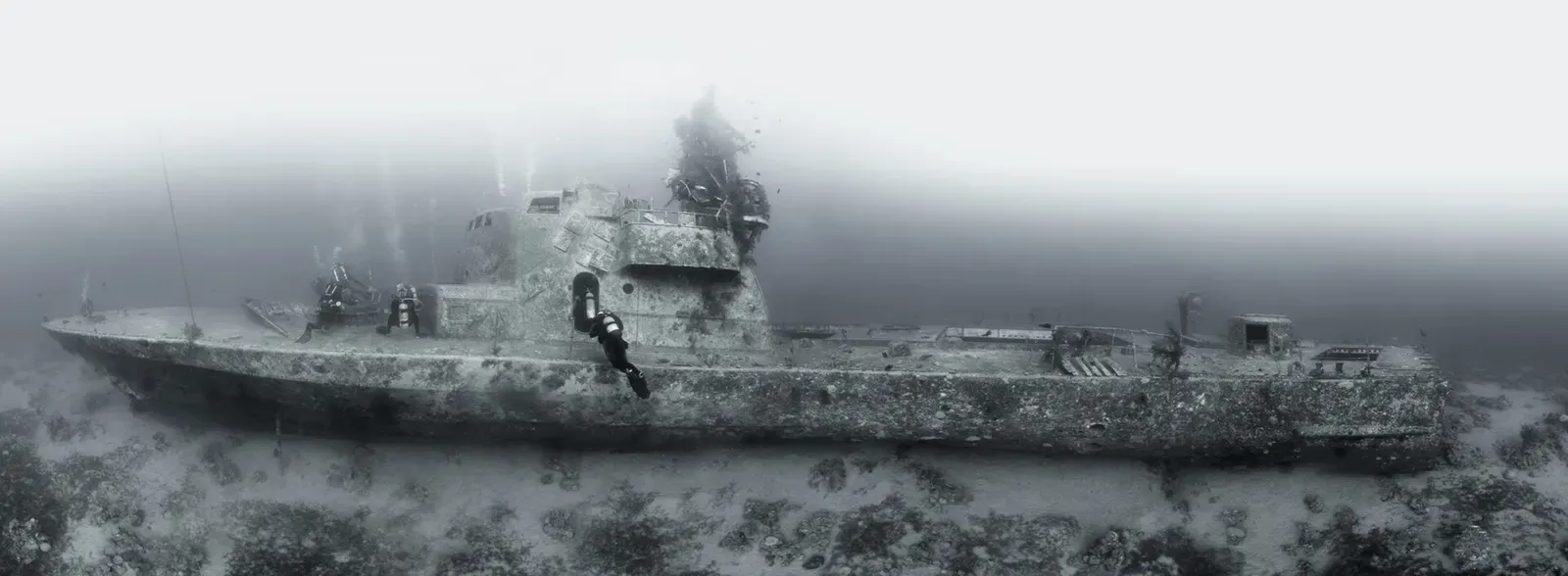
An Israeli missile boat upright at 24 m, reached from the beach
Reef
A coral arch in 6 m of water, entered off the beach
Wreck
A small shore-reachable wreck on coral-grown ground at 30 m
How to get to Eilat
Ramon airport, twenty minutes north of town, is the arrival point, and the drive down from Tel Aviv is about four hours and straightforward. Centres, hotels and the reserve all sit along the southern shore road, so a hire car or taxi covers the logistics. The reserve keeps set opening hours and charges admission, which is the one thing that shapes a shore-diving day.
Photos from Eilat
Yonatan Dodin · CC BY 4.0
Dive videos
Family Scuba Diving in Eilat Israel- The Red Sea · Scuba4Families on YouTube
SATIL Wreck Dive | Exploring Eilat’s Iconic Underwater Warship · Dive N' Above on YouTube
Photo credits
- Aerial view of the fringing coral reef and turquoise shallows at Eilat's Coral Beach Nature Reserve by Yonatan Dodin, CC BY 4.0, via Wikimedia Commons
- A glass-bottom tour boat cruising the calm waters off Eilat's coastal reef by Yonatan Dodin, CC BY 4.0, via Wikimedia Commons
Embed
Run a dive centre, club or blog? Embed this map of 12 dive sites near Eilat on your own page.
In The Logbook
- Ships sunk on purpose, and where to dive themWrecks · 14 min read
- The best shore dives in the worldShore diving · 8 min read
- Your first wreck dive: what to expect and whereFirst dives · 6 min read
Similar destinations

The Cedar Pride wreck and a scuttled tank sit an easy shore swim from Aqaba's beach.
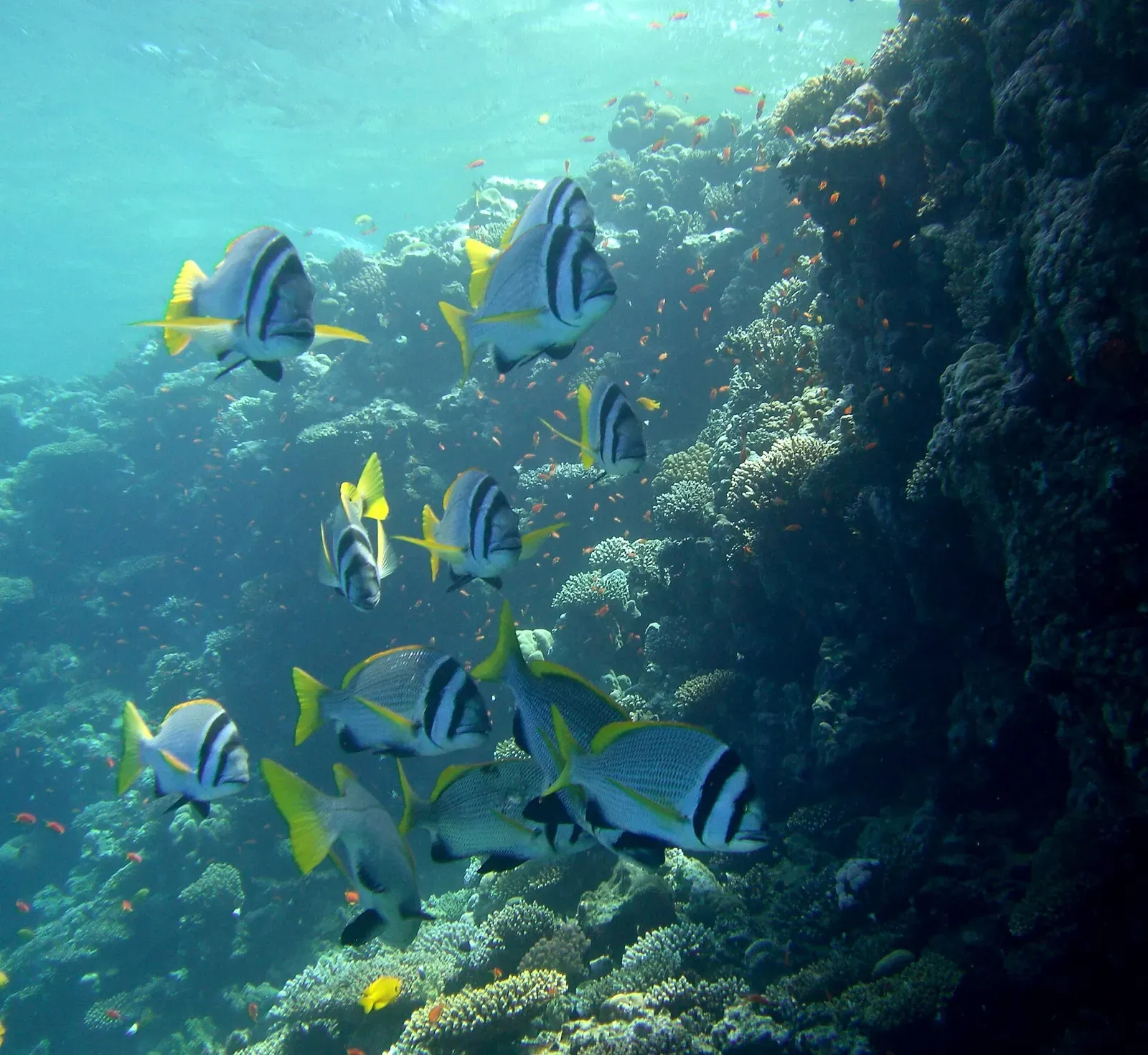
The Blue Hole's infamous Arch passage drops to roughly 55 metres just offshore.

Four ships wrecked on one reef, all between 4 m and 27 m
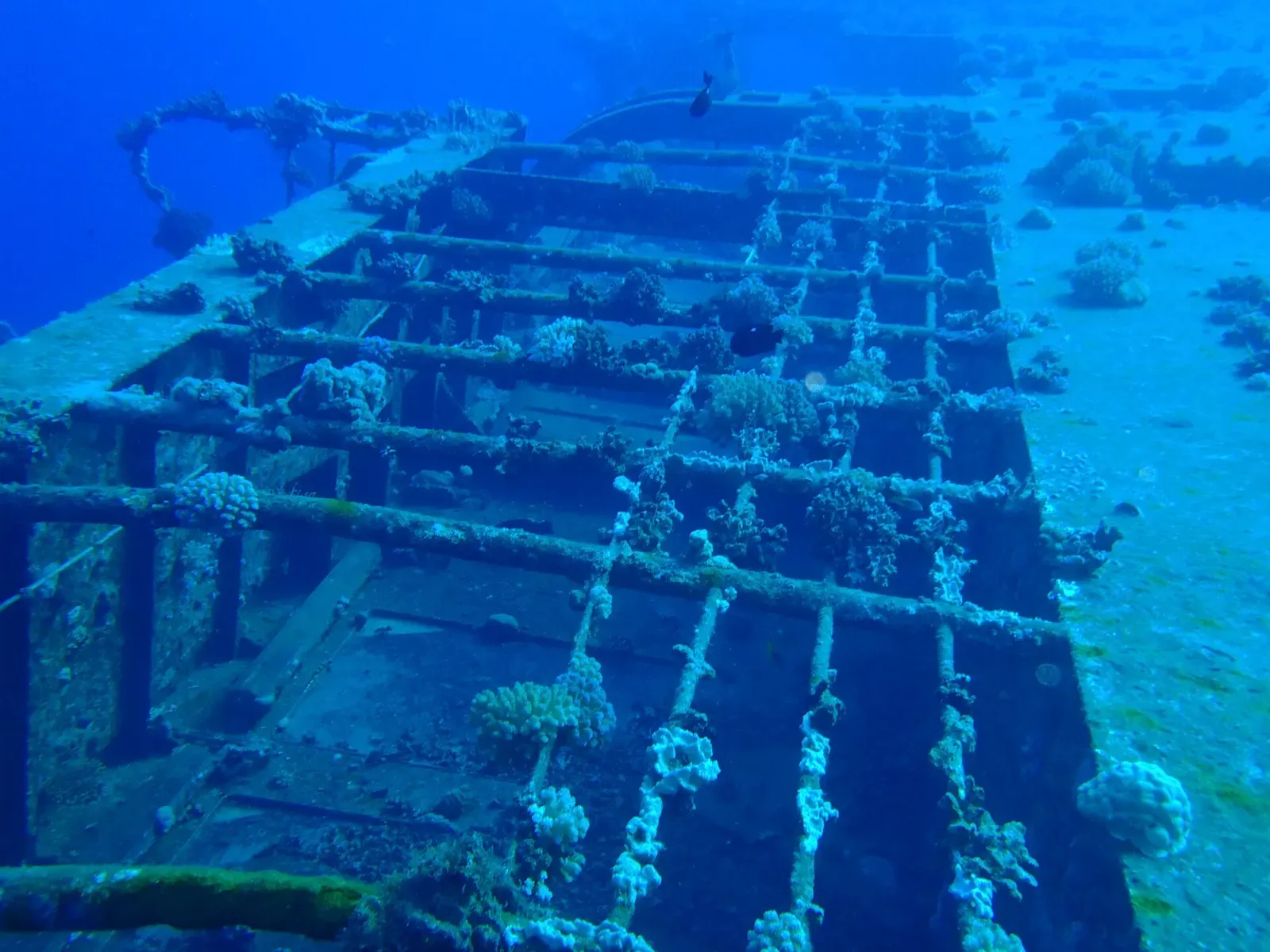

.jpg)
Panorama Reef's plateau drops away on every side into soft coral walls