Mediterranean · Italy
Elba & the Tuscan Archipelago
A 62 m merchant wreck lying in 2–12 m of water off Pomonte beach
Photo: CTHOE · CC BY-SA 3.0
Elba is the main island of the Tuscan Archipelago National Park, a car-ferry ride from Piombino. The signature dive is the Elviscot, a 62 m timber freighter that struck the Scoglio dell'Ògliera off Pomonte on 10 January 1972 and lies on sand in 2–12 m, close enough to swim out to from the beach. Deeper ground rings the island: Formiche della Zanca is a vertical wall from 20 to 40 m thick with red gorgonian, and the Scoglietto di Portoferraio rockfall has had no fishing since 1971. Pianosa is dived only on a quota-limited park programme that runs April to November.
About diving in Elba & the Tuscan Archipelago
The centres are spread around the harbour towns rather than gathered in one base: Portoferraio, Biodola and Procchio, Marciana Marina, Sant'Andrea, Marina di Campo, Capoliveri, Porto Azzurro and Rio, and the national park lists a dozen of them as authorised for Pianosa in recent years. Most diving is by day boat to the walls and secche off the nearest stretch of coast, so the base sets which sites are dived. Shore entries exist where the ground allows: the Elviscot is reached by swimming out from the Spiaggia del Relitto at Pomonte, Morcone Bay near Capoliveri is walked into from the beach for training dives in 2–10 m, and Sant'Andrea has a shallow sandy entry used for the same.
The rock continues underwater as walls, rockfalls and shoals. Formiche della Zanca is a vertical wall from 20 to 40 m thick with red gorgonian; Picchi di Pablo runs from 8 to 33 m with white and yellow gorgonians and shrimp-covered yellow sponges; the Secca di Fetovaia and the Scoglio del Remaiolo rise from about 50 m to around 10 m. Capo Stella carries grouper, moray, red gorgonian and red coral to 41 m, and Le Coralline has red coral at a depth unusual for the island. The Scoglietto di Portoferraio, a rockfall in 20–35 m with no fishing since 1971, is described as the one ground on Elba where fish are truly abundant: barracuda in numbers, bream, dentex, grouper, moray and lobster.
It suits divers who want a shallow, enterable wreck and gorgonian walls within Advanced limits, and the shore bays take beginners. Pianosa is a different proposition: under the park's 2026 rules it is dived only on guided visits booked through an authorised Elba centre, boat-only and moored on six fixed buoys, open from 1 April to late November, with no more than six divers per guide, no first-level certifications and no centre on the island. Divers after big animals or drift diving should look elsewhere; Ripalti's strong current restricts the site rather than making a drift of it. Some centres also run full-day outings to Capraia's deeper pinnacles.
When to dive Elba & the Tuscan Archipelago
| Jan | Feb | Mar | Apr | May | Jun | Jul | Aug | Sep | Oct | Nov | Dec |
|---|---|---|---|---|---|---|---|---|---|---|---|
| Fair | Fair | Fair | Fair | Good | Prime | Prime | Prime | Prime | Good | Fair | Fair |
The season runs May–September with a warm October; the sea bottoms out near 14 °C in February–March, spring and autumn winds push boats to sheltered sites, and Pianosa's buoys open April–November.
Dive types & marine life
The reliable draw is fixed life: red gorgonian on the Formiche della Zanca wall, shrimp-covered sponges at Picchi di Pablo, red coral at Capo Stella and in the shallows at Le Coralline, and yellow cluster anemone in the rock clefts of Pianosa's SP3 wall. Grouper, moray, octopus and lobster hold on the rock, and the Scoglietto no-fishing zone has barracuda in numbers with bream and dentex.
- Wreck
- Wall
- Reef
- Groupers
- Barracuda
- Reef fish swarms
- Octopus & cuttlefish
- Nudibranchs
- Macro critters
Notable dive sites in Elba & the Tuscan Archipelago
Two dives in one: an easier south side to 35 m, a deep north side past 40 m
A red-gorgonian wall from 20 to 40 m off Capo Sant'Andrea
Reef
Walk-in shore bay near Capoliveri in 2–10 m, with turtles since 2021
Wall
A protected carbonate wall from 40 m to 4 m, dived only on guided park visits
Wall
A vertical wall from a 6 m anchorage to a shrimp-filled cave at 30 m
A 62 m freighter on her side in 2–12 m, swum to from Pomonte beach
Pinnacle
Solitary boulders from 12 m to 40 m in strong current, for experienced divers
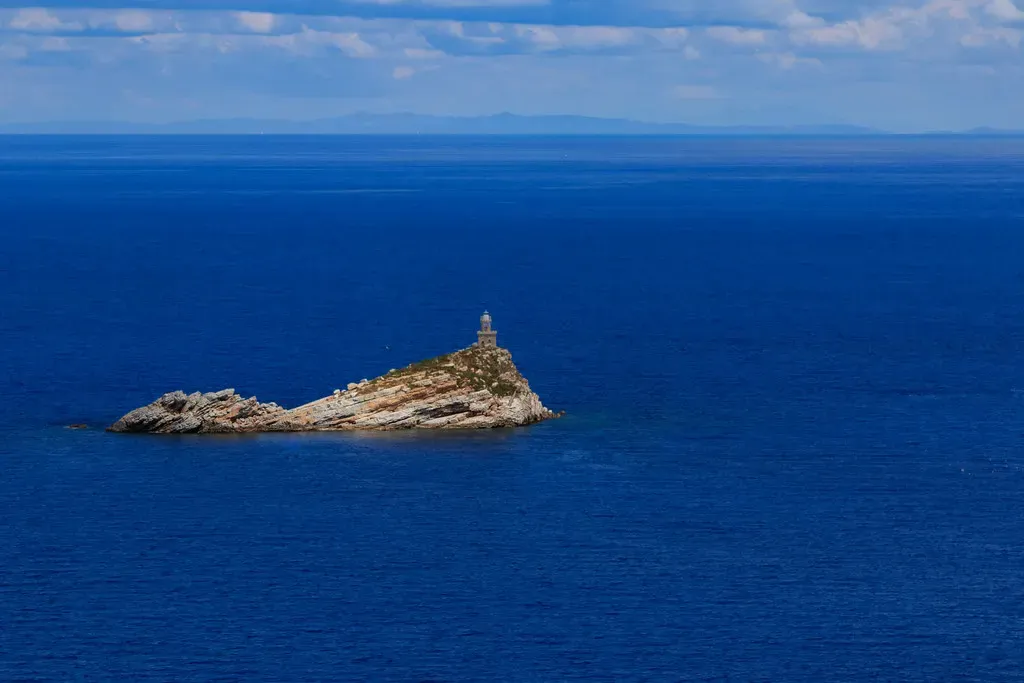
A plaque of Christ at 39 m on a red-gorgonian wall in a 1971 no-fishing zone
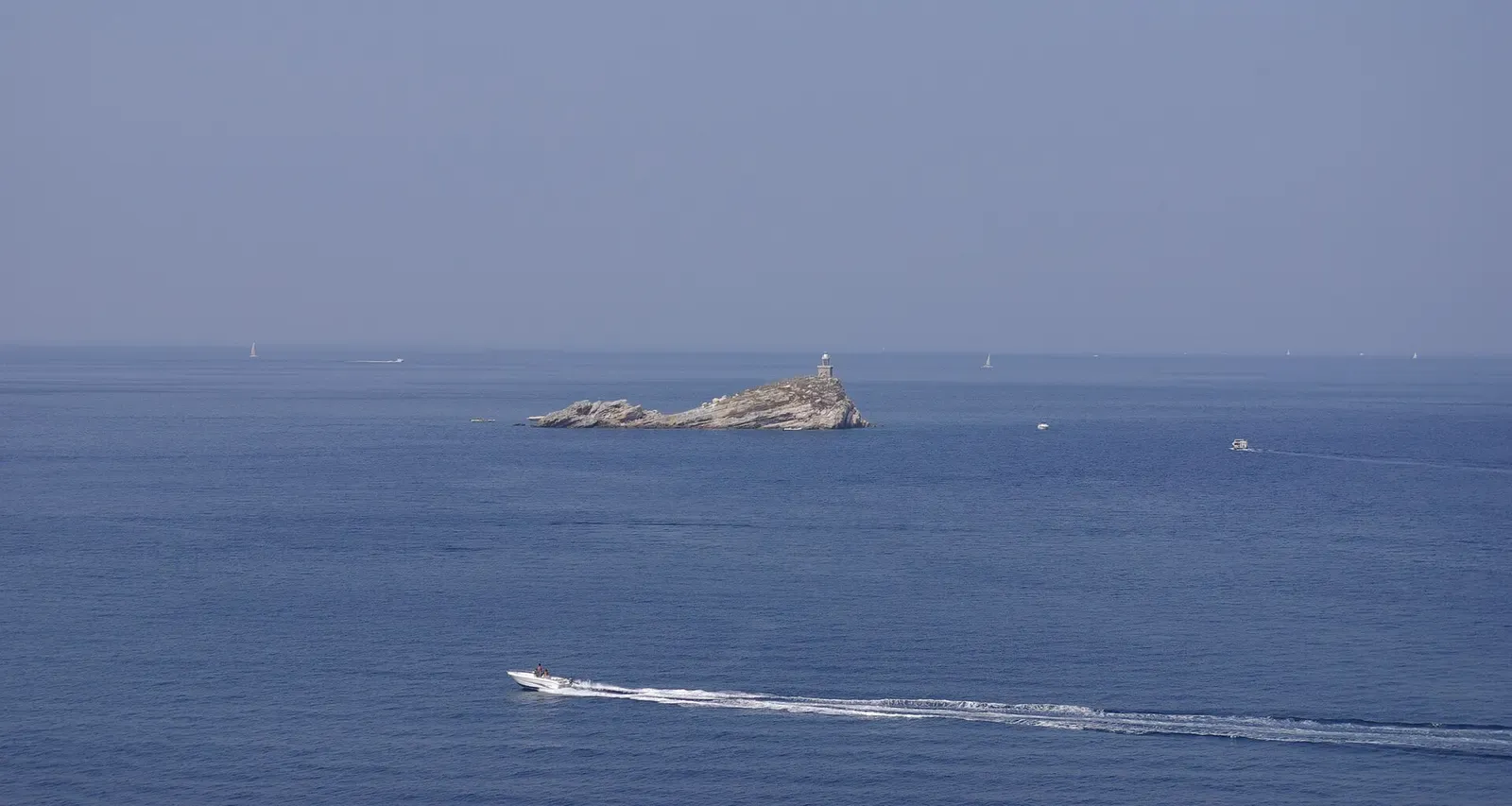
A fish-rich rockfall from the surface to 40 m in a 1971 no-fishing zone
Pinnacle
An outcropping rock with an Open Water north side and a ridge sinking to 50 m
Pinnacle
A shoal off Fetovaia beach rising from 50 m to 10 m with large red gorgonians
Pinnacle
A shoal 100 m off Fonza beach: cap at 4 m, east wall straight to sand at 40 m
Capo Stella
Split dive off Isola Corbella: an easier south side to 35 m, a north side past 40 m with grouper and red coral.
Getting there
Elba is reached by Toremar and Moby car ferries from Piombino, and Marina di Campo airport has scheduled flights from Pisa and Florence with a seasonal Milan Linate link. Dive centres sit in harbour towns all round the island, from Portoferraio to Marina di Campo, Capoliveri and Rio, so the base decides which coast is dived. Pianosa is a boat day out with an authorised centre.
Photo credits
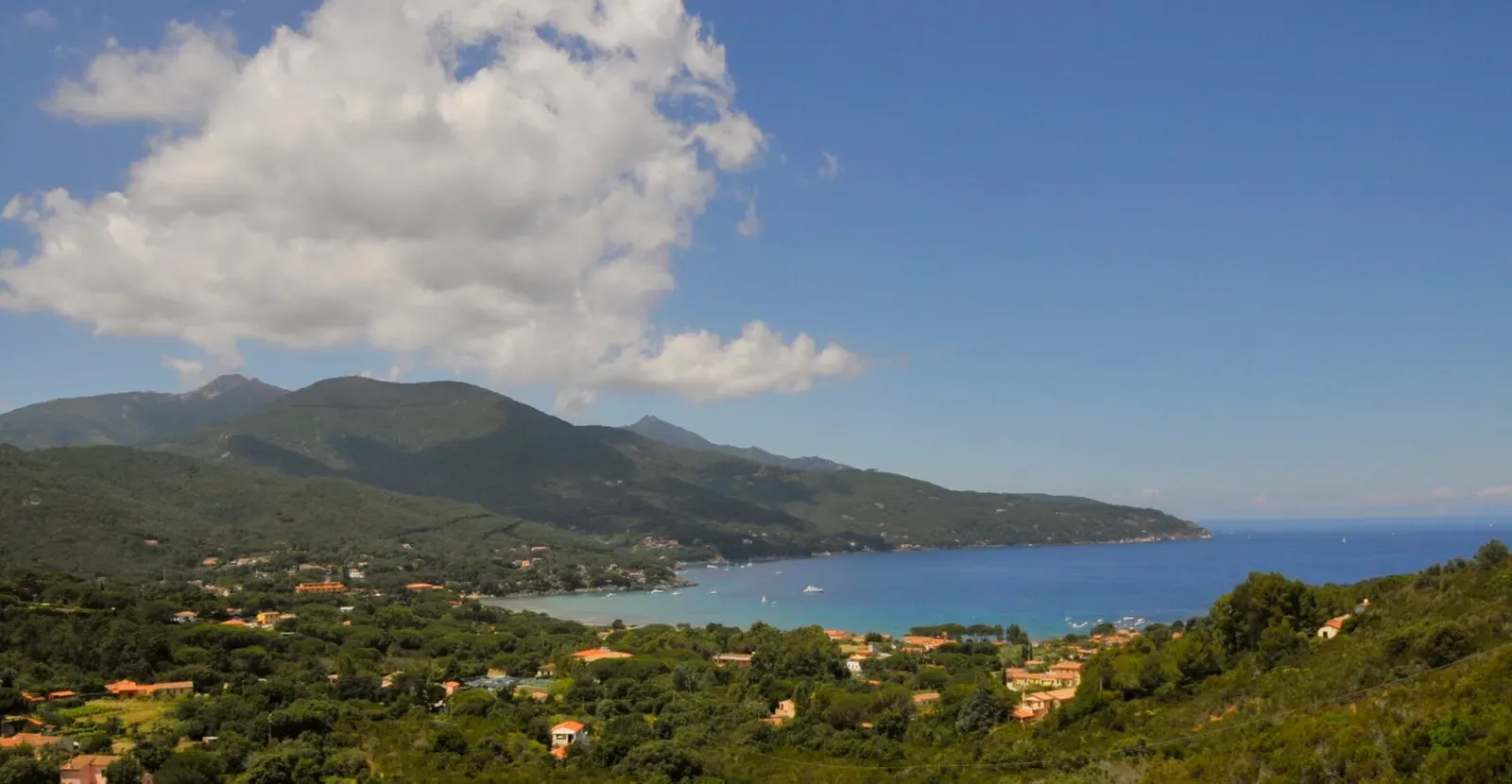
- View over the Gulf of Procchio on Elba, with wooded hills framing a blue bay by CTHOE, CC BY-SA 3.0, via Wikimedia Commons
Similar destinations
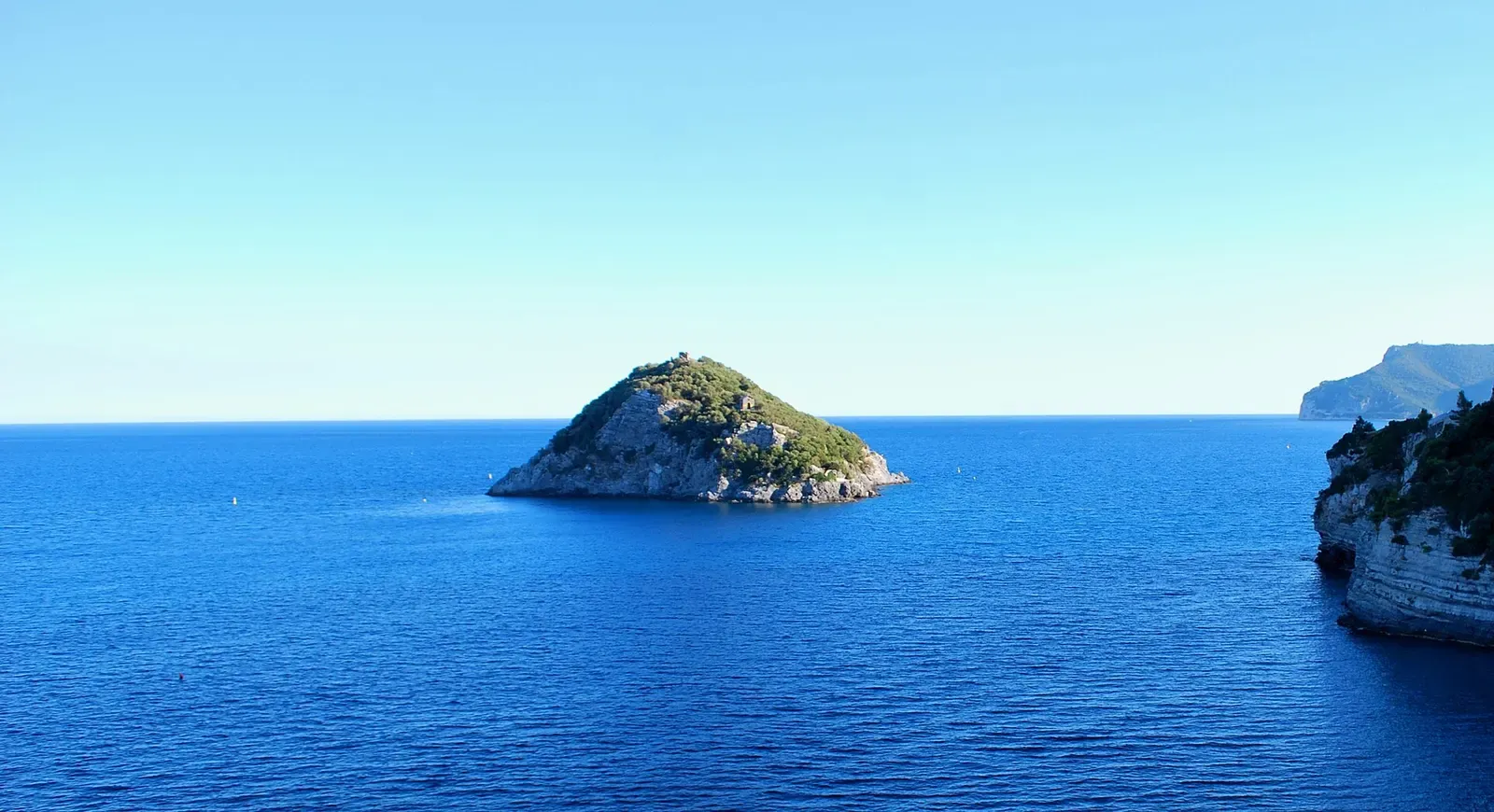
Reserve walls at Bergeggi island and cert-gated gorgonian secche offshore

Granite seamounts rising to the surface off Sardinia's south-east corner
A B-17 bomber upright on the sand at 25 m below the citadel


Fossil elephant tusks inside a cave whose entrance is now at 10 m