
The water off Isla Mujeres hosts two of the Caribbean's great surface spectacles. From June to September several hundred whale sharks gather at a plankton bloom known as the afuera, feeding shoulder to shoulder in open blue water, and from January to March sailfish herd sardine baitballs against the surface off Isla Contoy. Both are snorkel-only by law. Below, scuba runs on Manchones Reef and through MUSA, an underwater museum of more than 500 concrete sculptures colonising into artificial reef.
About diving in Isla Mujeres
Two very different days run out of the same small harbour. Whale shark trips run about an hour north-east of the island and put two swimmers and a guide in the water at a time, in turns of a few minutes each; life jackets are mandatory and swimming beneath the sharks is not allowed. Sailfish days are longer, up to 8 or 10 hours of searching offshore for a baitball. Reef days are the opposite: minutes from the harbour, two tanks, back by early afternoon, usually on small open boats with a ladder over the stern. Most people mix the two rather than choosing.
Underwater this is the northern end of the Mesoamerican reef, and it is flat country. Expect low coral heads and spur-and-groove ridges on white sand in modest depths, not walls, with the sand channels between them acting as the crossing points for rays. A mild current normally runs along the reef line, so dives are worked as gentle drifts with the boat following bubbles. Visibility swings with the weather, glassy after a settled spell and milky green once wind has been stirring the shallows for a day or two.
MUSA and the wrecks split the scuba menu between them. The museum's Salón Manchones gallery holds 477 concrete sculptures in 3 to 6 m beside Manchones Reef, sunk to draw divers off a reef that had taken the most damage from visitors. It is bright, shallow and a photographer's site above all. The wrecks are deeper and ask for an Advanced card: the C-58 minesweeper at 26 m is the most dived, and the Ultrafreeze, the oldest, lies furthest east near the drop-off. Los Cuevones, the cave where sleeping reef sharks made the area famous, is an 18 m Advanced dive, and the sharks are now a rare find.
The mix suits beginners and mixed groups where not everyone dives, since depths are modest, conditions are forgiving and there is enough shallow reef and snorkelling to keep non-divers occupied. More experienced divers tend to use the island as a base and add cenote days on the mainland or a crossing to Cozumel. Timing matters more than usual, because the two headline seasons sit at opposite ends of the calendar: April falls in the gap between them, and the rainy season runs from late August through November.
Best time to dive Isla Mujeres
| Jan | Feb | Mar | Apr | May | Jun | Jul | Aug | Sep | Oct | Nov | Dec | |
|---|---|---|---|---|---|---|---|---|---|---|---|---|
| Season | Good | Prime | Prime | Fair | Good | Prime | Prime | Prime | Good | Fair | Fair | Good |
| Sea surface | 27°C81°F | 26°C79°F | 27°C81°F | 27°C81°F | 28°C82°F | 28°C82°F | 29°C84°F | 29°C84°F | 29°C84°F | 29°C84°F | 28°C82°F | 27°C81°F |
| Daytime high | 28°C82°F | 29°C84°F | 30°C86°F | 31°C88°F | 31°C88°F | 31°C88°F | 31°C88°F | 31°C88°F | 31°C88°F | 30°C86°F | 29°C84°F | 29°C84°F |
| Rain | 86 mm3.4 in | 53 mm2.1 in | 36 mm1.4 in | 42 mm1.7 in | 79 mm3.1 in | 203 mm8.0 in | 79 mm3.1 in | 115 mm4.5 in | 154 mm6.1 in | 195 mm7.7 in | 113 mm4.4 in | 80 mm3.1 in |
| Jan | Feb | Mar | Apr | May | Jun |
|---|---|---|---|---|---|
| Good | Prime | Prime | Fair | Good | Prime |
| Sea surface | |||||
| 27°C81°F | 26°C79°F | 27°C81°F | 27°C81°F | 28°C82°F | 28°C82°F |
| Daytime high | |||||
| 28°C82°F | 29°C84°F | 30°C86°F | 31°C88°F | 31°C88°F | 31°C88°F |
| Rain | |||||
| 86 mm3.4 in | 53 mm2.1 in | 36 mm1.4 in | 42 mm1.7 in | 79 mm3.1 in | 203 mm8.0 in |
| Jul | Aug | Sep | Oct | Nov | Dec |
|---|---|---|---|---|---|
| Prime | Prime | Good | Fair | Fair | Good |
| Sea surface | |||||
| 29°C84°F | 29°C84°F | 29°C84°F | 29°C84°F | 28°C82°F | 27°C81°F |
| Daytime high | |||||
| 31°C88°F | 31°C88°F | 31°C88°F | 30°C86°F | 29°C84°F | 29°C84°F |
| Rain | |||||
| 79 mm3.1 in | 115 mm4.5 in | 154 mm6.1 in | 195 mm7.7 in | 113 mm4.4 in | 80 mm3.1 in |
2011–2025 averages. Sea surface: NOAA Coral Reef Watch, measured at the surface, so deeper water can run colder. Daytime high and rain: NASA POWER.
December to March is sailfish season, from mid-December to mid-March, when Atlantic sailfish work sardine baitballs offshore; the sea is at its coolest, averaging about 26 °C. April falls between the two headline seasons and is a quiet month for reef diving. May to mid-September is whale shark season: the sharks gather off the tip of the Yucatán from May, peak between late July and mid-August and disperse in mid-September, and the offshore group between the latitudes of Isla Contoy and Isla Mujeres has been found feeding on the spawn of little tunny. The water warms to about 29 °C. Late August to November is the rainy season and falls inside the June-to-November hurricane season, so October and November are the weakest months, although the reef and MUSA are dived whenever the weather allows.
Best months: February, March, June, July, August
Isla Mujeres water temperature and weather by month
The sea surface runs from 26 °C (79 °F) in February to 29 °C (84 °F) in August. Most rain falls from June, peaking at about 200 mm (7.9 in) in June; February to April are the driest. Daytime highs sit around 30 °C (86 °F) all year. The coldest water here is about 25 °C (77 °F), so pack a 3 mm full suit.
Dive types & marine life
Whale sharks gather offshore from June into September, thickest in July and August, while sailfish work sardine baitballs in the first quarter of the year, most reliably in February and March. On the reef the cast holds all year: green and hawksbill turtles, eagle rays crossing the sand channels, barracuda on the wrecks and dense schools of small fish drifting over the sculptures.
- Reef
- Pelagic & blue water
- Wreck
- Drift
- Whale sharks
- Marlin & sailfish
- Sea turtles
- Eagle rays
- Barracuda
- Reef fish swarms
- Sardine baitballs
Best dive sites in Isla Mujeres
- 1
MUSA — Salón Manchones
477 concrete sculptures in 3–6 m beside Manchones Reef; the signature shallow dive off the island.
- 2
Manchones Reef
Largest reef off Cancún, starting just off the island; the usual first tank of a morning.
- 3
C-58 Minesweeper
Former US Navy minesweeper at 26 m and the most popular wreck in the area; an Advanced dive.
- 4
La Bandera
Gentle drift over a figure-eight reef to about 12 m, the easy end of the reef diving.
- 5
Los Cuevones — Cave of the Sleeping Sharks
Reef caves at 18 m made famous by sleeping reef sharks, which are now a rare find.
- 6
Ultrafreeze
The oldest wreck off the island, sunk in 1979 and lying furthest east at 26 m near the drop-off.
Site guides
Wreck
A 1944 US Navy minesweeper, split in two at 26 metres
Reef
A light drift over a reef shaped like a figure eight
Cave & cavern
Where the sleeping sharks of Isla Mujeres were found
Reef
The most-visited reef in Cancún, and the reason MUSA exists
The Silent Evolution, more than 400 concrete figures on the seabed
Wreck
The oldest wreck here, split in two beside the drop-off
How to get to Isla Mujeres
Fly into Cancún and take the passenger ferry across from Puerto Juárez or the hotel zone, about twenty minutes. Most divers stay at the island's north end within walking distance of the shops, and all diving is by boat from the harbour. Whale shark trips are separate full-day charters run under national park permits; sailfish trips are full-day offshore runs too, leaving at first light.
Photos from Isla Mujeres
Andy Blackledge from Scottsdale, AZ, USA · CC BY 2.0
Andy Blackledge from Scottsdale, AZ, USA · CC BY 2.0
oscarajo · CC BY 3.0
Kirt Edblom from Albany, Oregon, United States · CC BY-SA 2.0
Dive videos
Scuba Diving The Biggest Museum In The World | MUSA · Adam Radcliffe on YouTube
Questions divers ask
Can divers scuba dive with the whale sharks at Isla Mujeres?+
No. The encounters are snorkel trips: two swimmers and a guide enter the water at a time, life jackets are mandatory and swimming beneath the sharks is not allowed. The sharks gather from May to mid-September, about an hour by boat north-east of the island.
What certification do I need to dive Isla Mujeres?+
Open Water covers MUSA, Manchones Reef and La Bandera, which sit between 3 and 12 m. The C-58 minesweeper and the Ultrafreeze, both at 26 m, and the Los Cuevones cave at 18 m are Advanced dives.
How warm is the water at Isla Mujeres?+
Warm all year: the sea off neighbouring Cancún averages about 26 °C from December to March and 29 °C from June to October. The cooler months are sailfish season and the warmest ones cover the whale shark season.
When is sailfish season at Isla Mujeres?+
From mid-December to mid-March, when Atlantic sailfish hunt sardine baitballs off the island. The trips are long days offshore, often 8 to 10 hours of searching, and the encounter itself happens on snorkel at the surface.
How do divers get to Isla Mujeres?+
Fly into Cancún and take the passenger ferry, a crossing of about 20 minutes from Puerto Juárez, the hotel zone or Gran Puerto. The island lies about 13 km off the mainland, and every dive leaves by boat from its harbour.
Sources
- An Unprecedented Aggregation of Whale Sharks, Rhincodon typus, in Mexican Coastal Waters of the Caribbean Sea — PLOS ONE
- Isla Mujeres — Wikipedia
- Isla Mujeres — Wikivoyage
- Cancún Underwater Museum — Wikipedia
- Cancún: climate — Wikipedia
- Best Scuba Diving in Isla Mujeres — Bluewater Dive Travel
- Wreck Diving in Isla Mujeres — Mexico Divers
- Sleeping Shark Cave Reef — Mexico Divers
- Swim with Whale Sharks Tour Isla Mujeres — Mexico Divers
Photo credits
- Coral-encrusted human statues stand in a row on the seabed at the MUSA sculpture museum by Andy Blackledge from Scottsdale, AZ, USA, CC BY 2.0, via Wikimedia Commons
- A coral-covered Volkswagen Beetle sculpture rests on the seabed at the MUSA underwater museum by Andy Blackledge from Scottsdale, AZ, USA, CC BY 2.0, via Wikimedia Commons
- A concrete house sculpture encrusted with coral sits on the seabed at the MUSA underwater museum by Andy Blackledge from Scottsdale, AZ, USA, CC BY 2.0, via Wikimedia Commons
- Sunlight filters through turquoise water onto a coral reef formation off Isla Mujeres by oscarajo, CC BY 3.0, via Wikimedia Commons
- A turquoise lagoon and shallow reef flat seen from the cliffs of Parque Nacional Garrafon by Kirt Edblom from Albany, Oregon, United States, CC BY-SA 2.0, via Wikimedia Commons
Embed
Run a dive centre, club or blog? Embed this map of 3 dive sites near Isla Mujeres on your own page.
In The Logbook
- Ships sunk on purpose, and where to dive themWrecks · 14 min read
- Wetsuit thickness by water temperatureGear & kit · 11 min read
Similar destinations

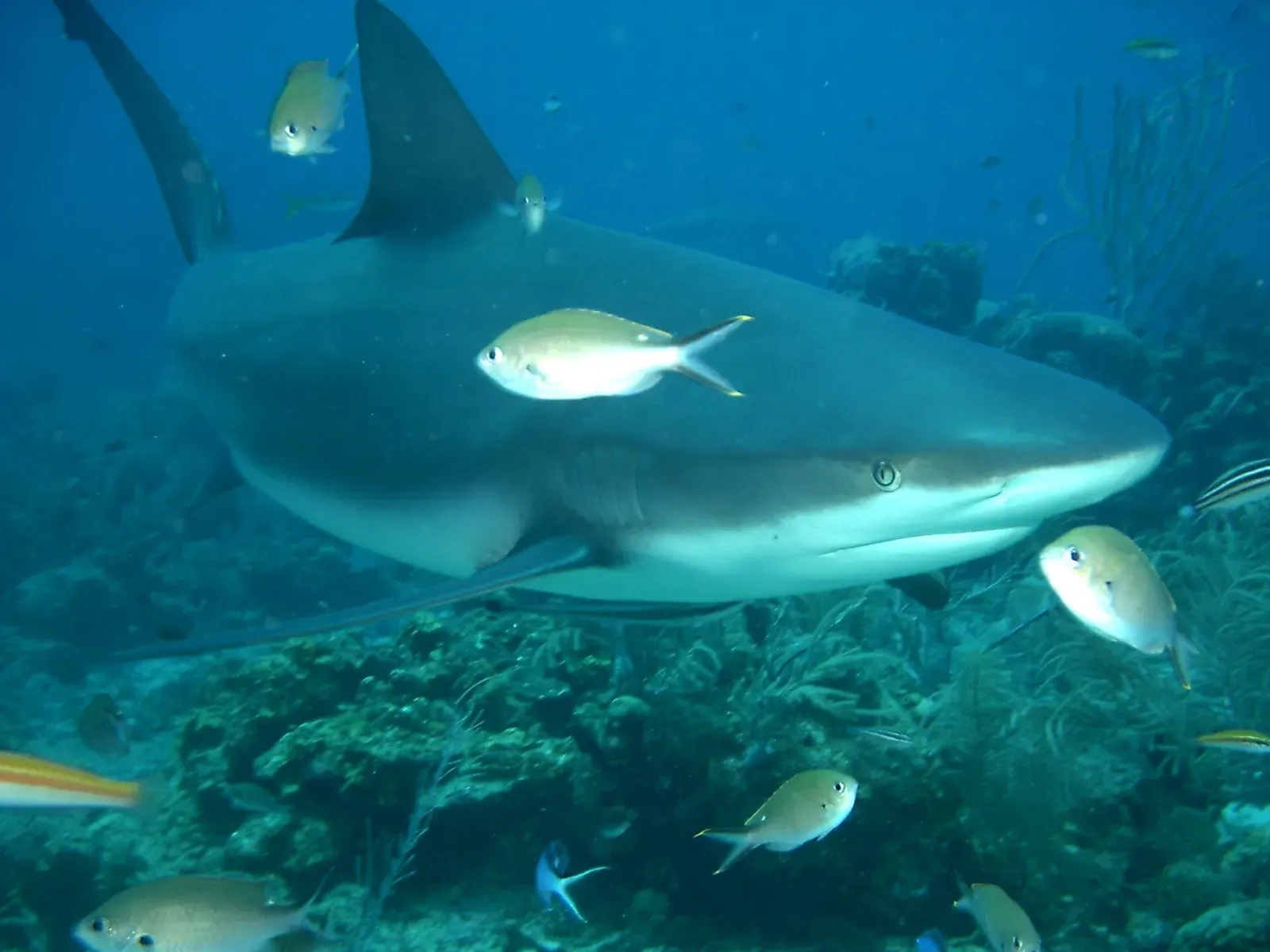
Two dozen reef sharks circle a baited arena in 12 m of water
Walk in from a beach resort and be on a coral wall within a five-minute swim

Lava flows, old wreck sites and night turtles in a marine park
.jpg)
.jpg)
.jpg)

.jpg)
Healthy fringing reef, boulder swim-throughs and a tug wreck minutes from the beach