Caribbean · Honduras
Roatán
Walk in from a beach resort and be on a coral wall within a five-minute swim
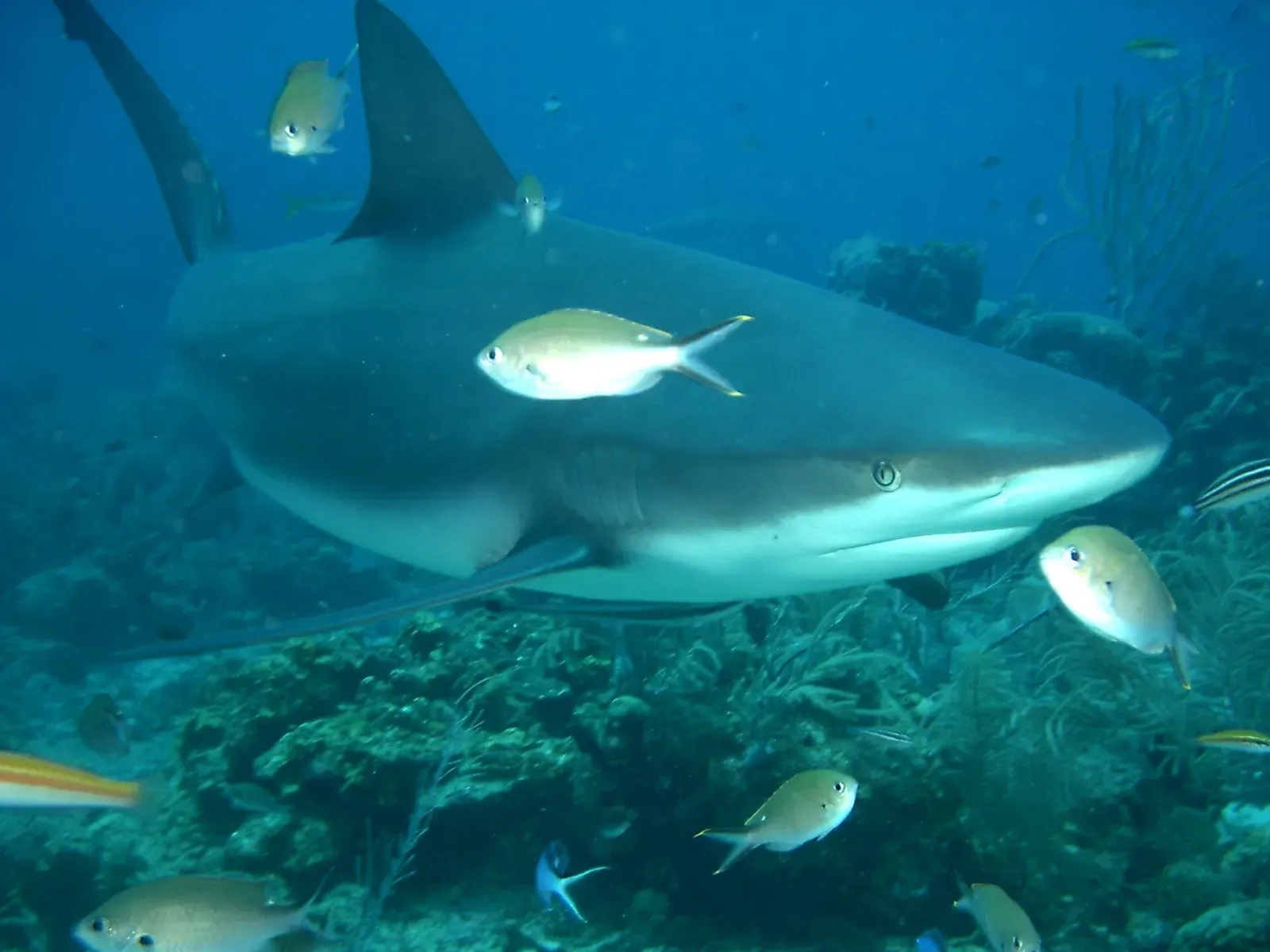
Photo: William Eburn · CC BY 2.5
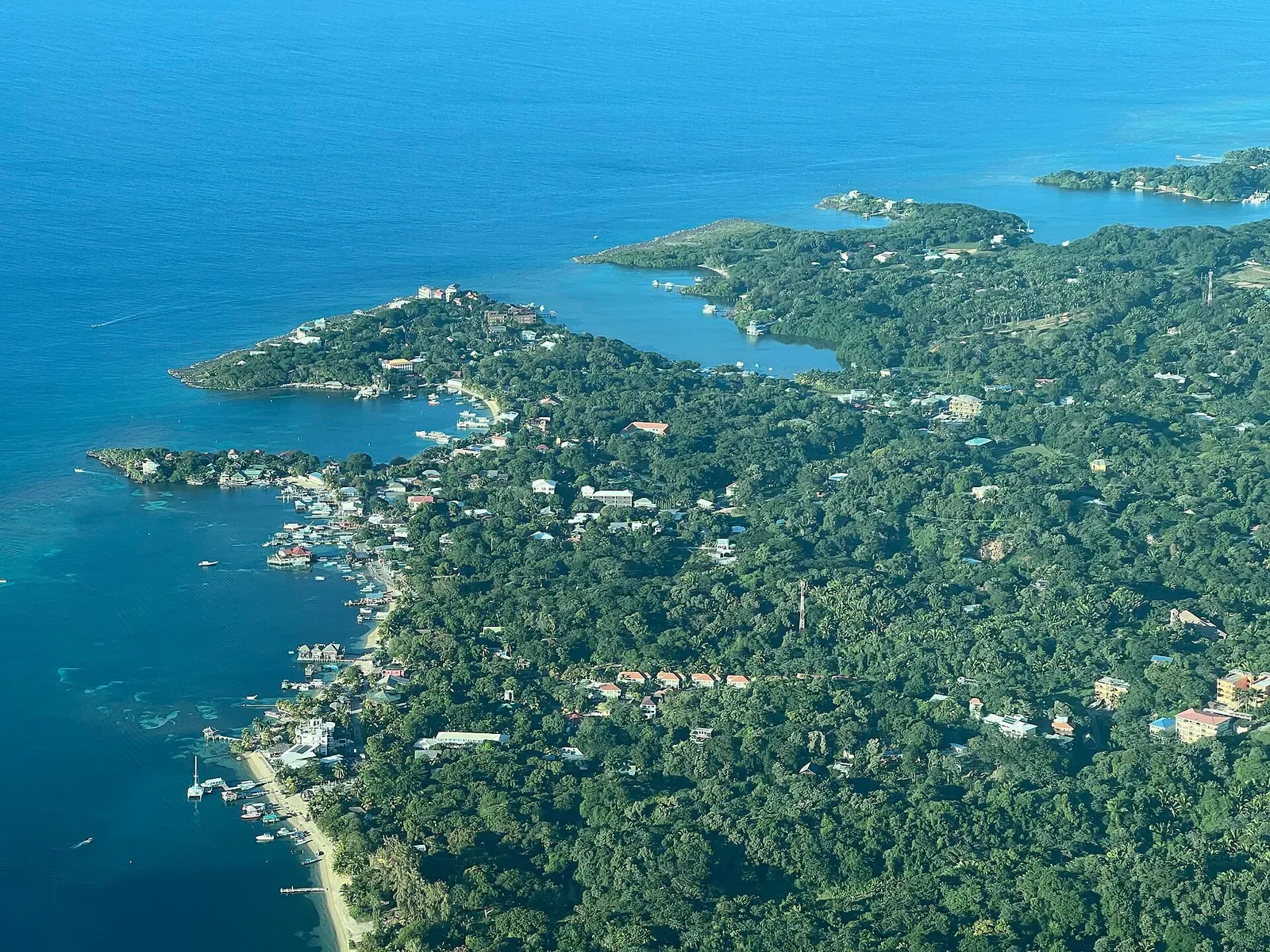
Roatán's fringing reef, part of the Mesoamerican Barrier Reef System, runs close enough to shore that many resorts offer walk-in diving straight onto a wall beginning within a few dozen meters of the beach. West Bay and West End host colorful, current-light reef diving, while wreck dives like the Odyssey add penetration options, and whale sharks pass by less predictably through the surrounding channel.
About diving in Roatán
A typical day is unhurried. Shops run a two-tank morning with a short ride out to a mooring, come back to the dock for the surface interval, then offer an afternoon and often a night dive. Boat rides are measured in minutes rather than half-hours, and crews switch between the north and south sides depending on which way the wind is blowing. Between trips, divers on the west side add entries of their own from the sand, so tank counts climb faster than most people plan for.
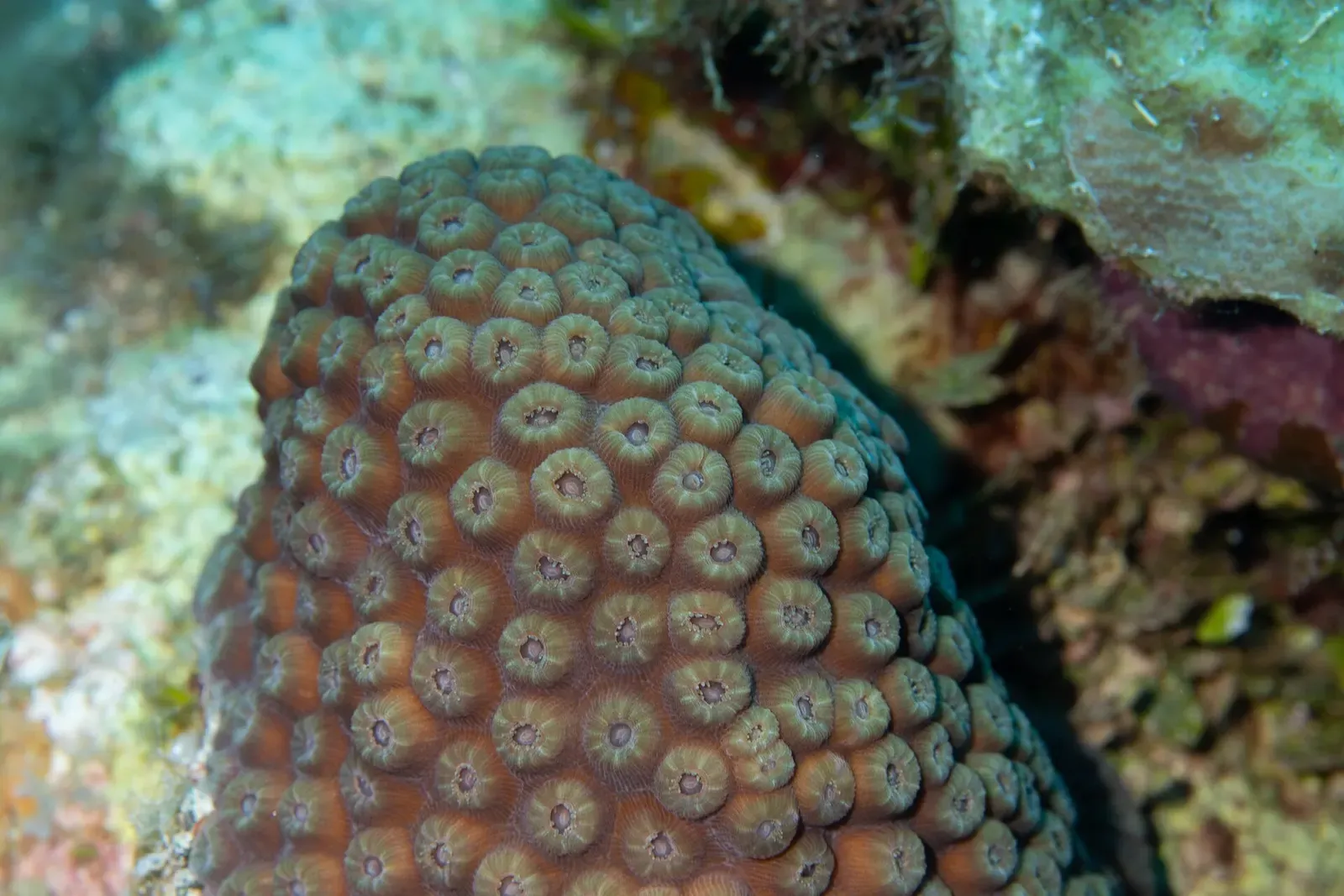
The reef is more varied than the postcard version suggests. Long stretches are wall, starting on a shallow shelf and dropping steeply, cut by sand chutes and swim-throughs that let you thread back up onto the reef top. Elsewhere the old volcanic rock shows through as canyons and fissures narrow enough to swim in single file. Two freighters were sunk deliberately as dive sites, one of them since broken into sections by storm damage, and Cordelia Banks on the south side is protected for stands of staghorn coral that have grown scarce elsewhere in the Caribbean.
Conditions are the reason the island gets recommended for training and for cameras. Water movement is usually gentle, the reef starts shallow enough that a first wall dive is not intimidating, and one site can serve a check-out dive and a macro hunt at once. That also sets the ceiling: everyday diving is reef and wall scenery rather than big-animal encounters, and the exception, a baited reef-shark dive on the south side, is a booked add-on rather than something you stumble into.
It works for families and mixed groups, since non-divers have beaches and a walkable village while divers get wet repeatedly without long travel days. Two very different bases exist: West End and West Bay, dense with shops, bars and dive-in accommodation, and the quieter eastern half, where resorts run their own boats and there is little to do off site. Choosing between them matters more than choosing a dive shop; marine park fees are usually added to the bill either way.
Best time to dive Roatán
| Jan | Feb | Mar | Apr | May | Jun | Jul | Aug | Sep | Oct | Nov | Dec | |
|---|---|---|---|---|---|---|---|---|---|---|---|---|
| Season | Good | Good | Prime | Prime | Prime | Prime | Prime | Prime | Good | Fair | Fair | Fair |
| Sea surface | 27°C81°F | 27°C81°F | 27°C81°F | 28°C82°F | 28°C82°F | 29°C84°F | 29°C84°F | 29°C84°F | 30°C86°F | 30°C86°F | 29°C84°F | 28°C82°F |
| Daytime high | 28°C82°F | 27°C81°F | 28°C82°F | 29°C84°F | 29°C84°F | 30°C86°F | 29°C84°F | 30°C86°F | 30°C86°F | 30°C86°F | 29°C84°F | 28°C82°F |
| Rain | 197 mm7.8 in | 103 mm4.1 in | 85 mm3.3 in | 54 mm2.1 in | 91 mm3.6 in | 198 mm7.8 in | 212 mm8.3 in | 195 mm7.7 in | 192 mm7.6 in | 333 mm13.1 in | 367 mm14.4 in | 228 mm9.0 in |
| Jan | Feb | Mar | Apr | May | Jun |
|---|---|---|---|---|---|
| Good | Good | Prime | Prime | Prime | Prime |
| Sea surface | |||||
| 27°C81°F | 27°C81°F | 27°C81°F | 28°C82°F | 28°C82°F | 29°C84°F |
| Daytime high | |||||
| 28°C82°F | 27°C81°F | 28°C82°F | 29°C84°F | 29°C84°F | 30°C86°F |
| Rain | |||||
| 197 mm7.8 in | 103 mm4.1 in | 85 mm3.3 in | 54 mm2.1 in | 91 mm3.6 in | 198 mm7.8 in |
| Jul | Aug | Sep | Oct | Nov | Dec |
|---|---|---|---|---|---|
| Prime | Prime | Good | Fair | Fair | Fair |
| Sea surface | |||||
| 29°C84°F | 29°C84°F | 30°C86°F | 30°C86°F | 29°C84°F | 28°C82°F |
| Daytime high | |||||
| 29°C84°F | 30°C86°F | 30°C86°F | 30°C86°F | 29°C84°F | 28°C82°F |
| Rain | |||||
| 212 mm8.3 in | 195 mm7.7 in | 192 mm7.6 in | 333 mm13.1 in | 367 mm14.4 in | 228 mm9.0 in |
2011–2025 averages. Sea surface: NOAA Coral Reef Watch, measured at the surface, so deeper water can run colder. Daytime high and rain: NASA POWER.
March to May is the pick: the dry season has set in, the seas are calm and the water is at its clearest. June to August stays dry and settled, and the water warms towards its September peak of about 30 °C. September is still good, although the Atlantic hurricane season is under way; the island lies south of the main storm track and takes a direct hit only about once every 26 years. October to February is the rainy season, wettest in November and December. Showers tend to be short and intense and the boats keep running, but the water is less clear than in spring and summer and cools towards 26 °C. January and February are drier than the months before and still good for diving, with the coolest water of the year.
Best months: March, April, May, June, July, August
Roatán water temperature and weather by month
The sea surface runs from 27 °C (81 °F) in February to 30 °C (86 °F) in September. Most rain falls from June to January, peaking at about 370 mm (15 in) in November; it stays largely dry from February to May. Daytime highs sit around 29 °C (84 °F) all year. The coldest water here is about 25 °C (77 °F), so pack a 3 mm full suit.
Dive types & marine life
Turtles, eagle rays, grouper and barracuda are everyday sightings; reef sharks turn up occasionally, mostly on the baited south-side dive, and night dives bring out octopus and squid. March to August has the calmest seas and clearest water, October to February the rain and lower visibility. Whale sharks are recorded in the channel but far less often than off Utila to the west.
- Wall
- Reef
- Wreck
- Drift
- Whale sharks
- Sea turtles
- Eagle rays
- Groupers
- Reef sharks
- Barracuda
Best dive sites in Roatán
- 1
Mary's Place
Reef split by volcanic crevasses past 30 m, lined with some of the Caribbean's largest black corals.
- 2
Odyssey Wreck
A 90 m freighter sunk upright in 2002, 12 m at the mast to 33 m at the keel; the largest wreck here.
- 3
El Aguila
A 60 m cargo ship on its side at 33 m, broken in three by Hurricane Mitch; groupers shelter inside.
- 4
Hole in the Wall
A sloping tunnel that exits through the wall at 33 m; needs solid buoyancy and cavern experience.
- 5
Cara a Cara
Shark dive on a south-side plateau at 21 m, home to a resident group of Caribbean reef sharks.
- 6
Half Moon Wall
Reef top from 5 m turning to a wall that drops to about 46 m, with a juvenile-fish nursery on top; a favourite at night.
- 7
Texas Point
Fast drift along the exposed western tip from 15 m, for experienced drift divers carrying an SMB.
- 8
Spooky Channel
A narrow cut through the south-side wall to 27 m, dim under overhanging coral, nurse sharks on the sand.
Site guides
Channel & pass
A gentle drift down a sand channel that ends at the drop-off
Wall
Canyons and swim-throughs on a wall bottoming out at 16 m
Reef
A resident group of Caribbean reef sharks on a south-side plateau
Cave & cavern
A network of shallow, easily navigated coral caves
Wreck
Three swim-throughs, and sometimes 15 to 20 groupers inside
Reef
A coral pillar standing in a square cut in the reef wall
Drift
A shallow drift down a sand path scattered with wreck pieces
Wall
Reef top at 5 m, wall dropping to about 46 m off West End
Exit a sand-chute tunnel through an opening in the vertical wall face
Steep cracked wall over sand that starts at 25 m and keeps going
Sand slope
Garden eel colonies on a sand patch near the foot of the wall
Reef
Volcanic fissures lined with some of the Caribbean's largest black corals
Wreck
Stairwells, cabins and an intact mess table at 12 to 33 m
Drift
Schooling horse-eye jacks above a wall where turtles graze
Pinnacle
A coral spire off the wall, topping out at about 27 m
Wreck
A shore-accessible wreck at 20 m, also dived after dark
Channel & pass
Swim-throughs one after another inside a canyon from lagoon to outer reef
Reef
Shallow West Bay reef with 22-24 m of average visibility
Drift
A fast ride along the vertical drop-off at the island's exposed western tip
Reef
Shallow barrier reef where turtles and grouper are common
Coral channels off a shallow plateau, dropping to about 37 m
Southern stingrays and spotted eagle rays hunting along the base of the wall
Sand slope
A sand patch at 11 m between Dragon Maze and the wall
How to get to Roatán
The island has its own international airport, with direct services from several North American hubs and more of them in the winter season, plus a fast ferry from La Ceiba on the mainland. Most divers base in West End or West Bay, where shops, docks and reef are walkable; the eastern half is quieter and resort-based, so plan on transfers for anything off site.
Photos from Roatán
William Eburn · CC BY 2.5
DJ Cane · CC BY-SA 4.0
Roatanavi · CC BY-SA 3.0
Luis Alfredo Romero · CC BY-SA 4.0
JurriaanH · CC BY-SA 3.0
Daniel Gillaspia from Berkeley, CA · CC BY 2.0
Dive videos
DEEP Wreck Dive on Roatan with DiveTalk! · BlueWorldTV on YouTube
Scuba Diving Mary's Place On SOUTH SIDE Roatan - Ep 108 · Blue Horizon Diving on YouTube
Questions divers ask
When is the best time to dive Roatán?+
March to May, when the dry season brings calm seas and the clearest water of the year. Diving runs all year: the rainy season runs from October to February, wettest in November and December, and even then the rain mostly comes as short showers rather than days that stop the boats.
What certification do I need to dive Roatán?+
Open Water is enough for most reef and wall sites, where current is usually mild and the reef starts shallow. The deeper wrecks, the reef-shark dive at Cara a Cara, the Hole in the Wall exit at 33 m and the fast drifts off the western tip call for Advanced training and some experience.
How warm is the water in Roatán?+
Warm all year. Monthly averages run from about 26 °C in February, the coolest month, to about 30 °C in September. A 3 mm full suit covers the whole year, and plenty of divers switch to a shorty through the summer.
How do divers get to Roatán, and where do they stay?+
Juan Manuel Gálvez International Airport takes nonstop flights from several US cities, and ferries run twice daily from La Ceiba on the mainland. Most divers stay in West End or West Bay, where the shops, the docks and the busiest reef are all walkable; the eastern half is quieter and resort-based.
Is there a marine park fee for diving Roatán?+
Yes. The reefs sit inside the Bay Islands National Marine Park, declared in 2010, and dive shops ask every diver to buy a Roatan Marine Park tag. The money funds the park, a non-profit set up by dive operators and local businesses in 2005 to patrol the reef and keep it clean.
Sources
- Roatan Diving Sites — Dive The World
- Diving in Honduras — Wikivoyage
- Roatán — Wikipedia
- Roatan Marine Park — Roatan Marine Park
- About the Roatan Marine Park — Seagrape Plantation Resort
- Roatán water temperature — World Sea Temperatures
Photo credits
- A Caribbean reef shark swims close over the reef with small fish around it off Roatán by William Eburn, CC BY 2.5, via Wikimedia Commons
- Several Caribbean reef sharks circle over a reef off Roatán by William Eburn, CC BY 2.5, via Wikimedia Commons
- A cluster of hard and soft corals on a shallow reef near West Bay, Roatán by DJ Cane, CC BY-SA 4.0, via Wikimedia Commons
- A spotted eagle ray glides over sand in shallow water at West Bay, Roatán by Roatanavi, CC BY-SA 3.0, via Wikimedia Commons
- Clear turquoise water over Roatán's fringing reef with the island's forested hills beyond. by Luis Alfredo Romero, CC BY-SA 4.0, via Openverse
- Small tender boats moored at a wooden dock in clear turquoise bay water off Roatán. by JurriaanH, CC BY-SA 3.0, via Openverse
- Sea fans, sponges and star coral on a reef slope in blue water off Roatán, Honduras by Daniel Gillaspia from Berkeley, CA, CC BY 2.0, via Wikimedia Commons
Embed
Run a dive centre, club or blog? Embed this map of 12 dive sites near Roatán on your own page.
In The Logbook
- Where to dive with sea turtlesBig animals · 15 min read
- The best wall dives in the worldWalls & drop-offs · 11 min read
- Ships sunk on purpose, and where to dive themWrecks · 14 min read
- Cheapest places to scuba dive, and the catchTrip planning · 15 min read
- Liveaboard vs resort diving: which suits you?Trip planning · 6 min read
- Your first wreck dive: what to expect and whereFirst dives · 6 min read
Similar destinations

Whale sharks off the north side and easy macro reefs for new divers

Hand-feed wild stingrays in chest-deep water, then drop over a sheer wall the same day

Two dozen reef sharks circle a baited arena in 12 m of water


.jpg)
Lava flows, old wreck sites and night turtles in a marine park