
Kona · United States · Pelagic & blue water · Night · Drift
Kona Blackwater Dive
Tethered in open ocean at night as deep-water animals rise to the surface
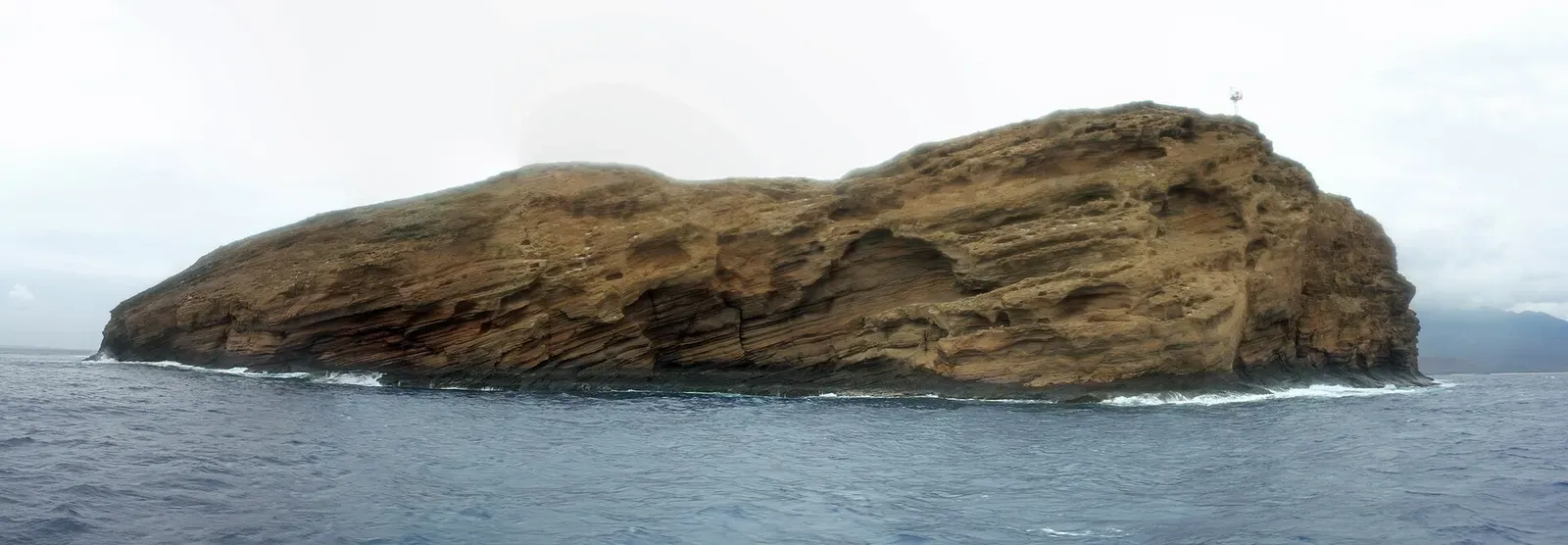
Area photo: Brocken Inaglory · CC BY-SA 4.0
The Kona blackwater dive is an open-ocean night dive a few miles off the Big Island's west coast, over deep water with no reef and no bottom in sight. Divers clip to tethers on a line hung from a drifting boat and hang in the top 13 to 15 metres while animals rising from the deep at night drift through the torch beam: siphonophores, ctenophores, salps, larval fish, squid and octopus. It is a dive for experienced divers who are calm in the dark.
Also known as Pelagic Magic.
Where it is and how deep
No published position for this site — the map shows Kona and its other sites; operators know the mooring.
The dive
The boat leaves after dark and runs a few miles offshore, well beyond the reef and over deep water. The crew sets a parachute sea anchor off the bow so the boat drifts steadily, then hangs a 15-metre line (50 feet) beneath the hull. Each diver clips a tether to that line, takes a dive light and back-rolls in. The tether sets the maximum depth, not the seabed, so the dive happens in the top 13 to 15 metres, and each diver is free to settle wherever feels best within that range for about 45 minutes.
The dive rides on diel vertical migration. Every night animals that spend the day in the deep rise towards the surface to feed and sink back before morning, and measured by biomass it is the largest synchronous migration in the world. What drifts through the torch beam is that traffic: siphonophores, ctenophores, salps, pyrosomes, larval flounder, shrimp, lobster and octopus, squid, and animals even the guides cannot name. The guide stays untethered and swims between divers pointing out finds.
Bigger animals pass now and then. Hunting dolphins are sometimes heard squealing in the dark or seen, and a pelagic shark is a rare event rather than a routine one. Nothing about the dive involves covering ground: it is an exercise in hanging still and noticing, which photographers find absorbing and some divers find unsettling.
Marine life and season
- Squid
- Octopus & cuttlefish
- Dolphins
- Macro critters
| Jan | Feb | Mar | Apr | May | Jun | Jul | Aug | Sep | Oct | Nov | Dec |
|---|---|---|---|---|---|---|---|---|---|---|---|
| Prime | Prime | Prime | Prime | Good | Good | Good | Good | Good | Good | Good | Prime |
Season follows Kona: Manta rays and reef diving are consistent year-round; Dec-Apr adds migrating humpback whales, while winter swell can occasionally limit access to exposed sites.
Know before you go
- Divers are tethered for the whole dive with no bottom and no visual reference, so buoyancy control has to be automatic rather than considered.
- Surge near the surface and a boat drifting on the swell leave some divers seasick; settling a little deeper on the tether steadies things, and heavy camera task loading makes it worse.
- Getting back aboard means climbing a floating vertical ladder unassisted in full scuba gear, which the operator treats as a hard requirement.
Dive videos
Blackwater Diving Kona, Hawaii | Kona Honu Divers | In the Night Time Pelagic Magic Happens · Kona Honu Divers on YouTube
Pelagic Magic Black Water Night Dive - Kona, Hawaii · Jack's Diving Locker on YouTube
Questions divers ask
How deep does the Kona blackwater dive go?+
Not deep. Divers hang from tethers on a 15-metre line (50 feet) under a drifting boat, so the dive stays in roughly the top 13 to 15 metres over open ocean a few miles offshore. The length of the line sets the limit, not the seabed.
What experience do I need for a blackwater dive?+
Open Water certification plus at least 25 logged dives, and a night dive with the operator's own crew within the past twelve months. Divers under 15 are not taken, and everyone must be able to climb a floating ladder in full gear.
What do you see on a Kona blackwater dive?+
Mostly small, translucent animals rising from the deep at night: siphonophores, ctenophores, salps and pyrosomes, larval fish, shrimp and octopus, and squid. Hunting dolphins pass through, and a pelagic shark is rare.
How does a blackwater dive work?+
The boat drifts over deep water after dark on a sea anchor, with a line hung beneath it. Each diver clips a tether to the line and hangs in the water column for about 45 minutes, lit only by a dive light, while an untethered guide points out animals.
Sources
- Kona Blackwater Night Scuba Dive — Big Island Divers
- Battle of the Blackwater Guides — Scuba Diving
- Diel vertical migration — Wikipedia
- 7 Top Dive Sites Around Hawaii's Big Island — PADI
In The Logbook
- Hearing underwater: why sound has no directionOcean science · 14 min read
- Blackwater diving: what it is and where to goNight diving · 13 min read
- Bioluminescence: why the sea glows at nightNight diving · 7 min read
- Why is some sea green instead of blue?Ocean science · 8 min read
- Night diving: the best night dives in the worldNight diving · 12 min read
More dive sites in Kona
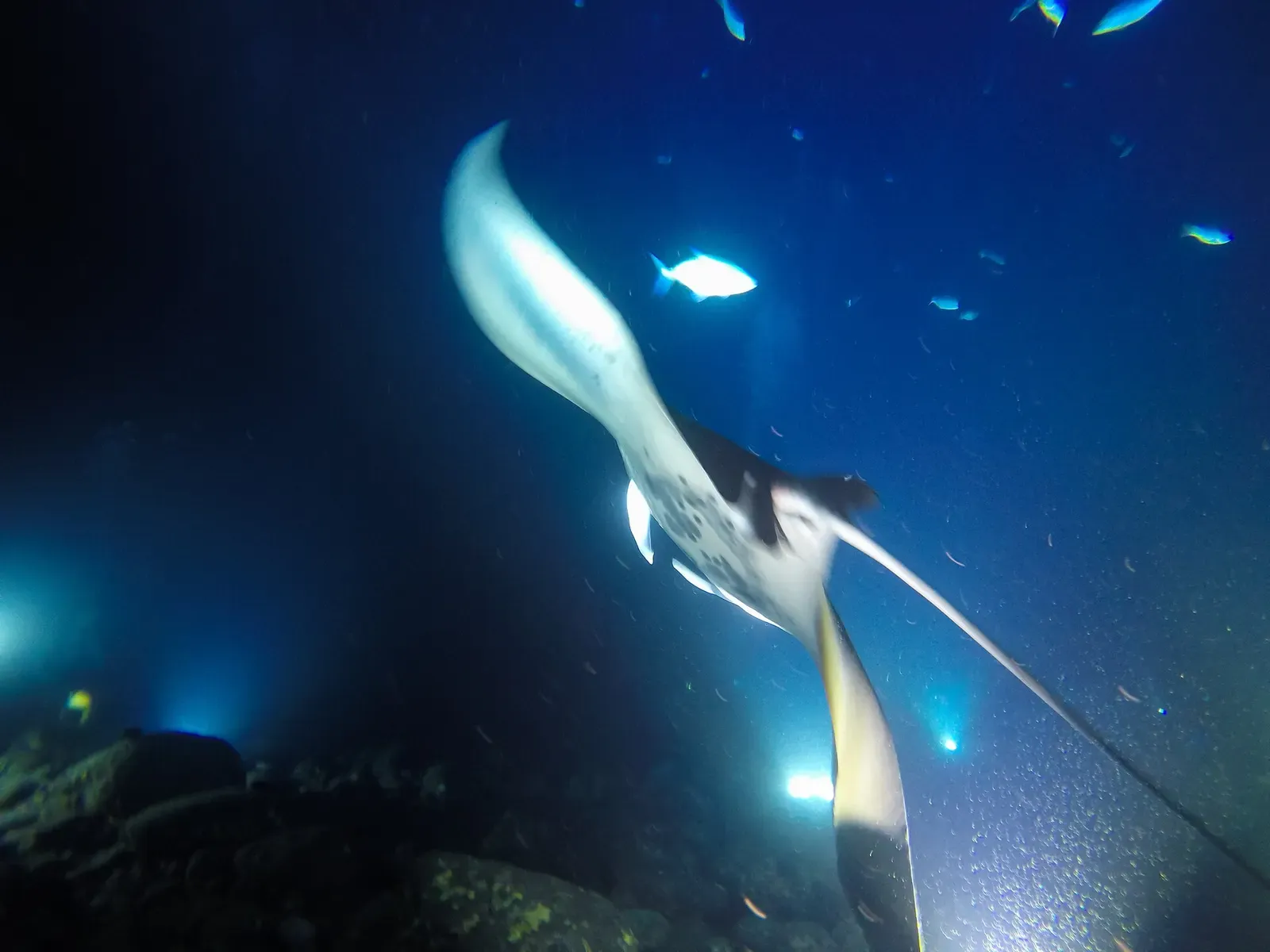
Hundreds of garden eels by day, feeding mantas after dark
Cave & cavern
Two lava-tube arches, neither deeper than 9 metres
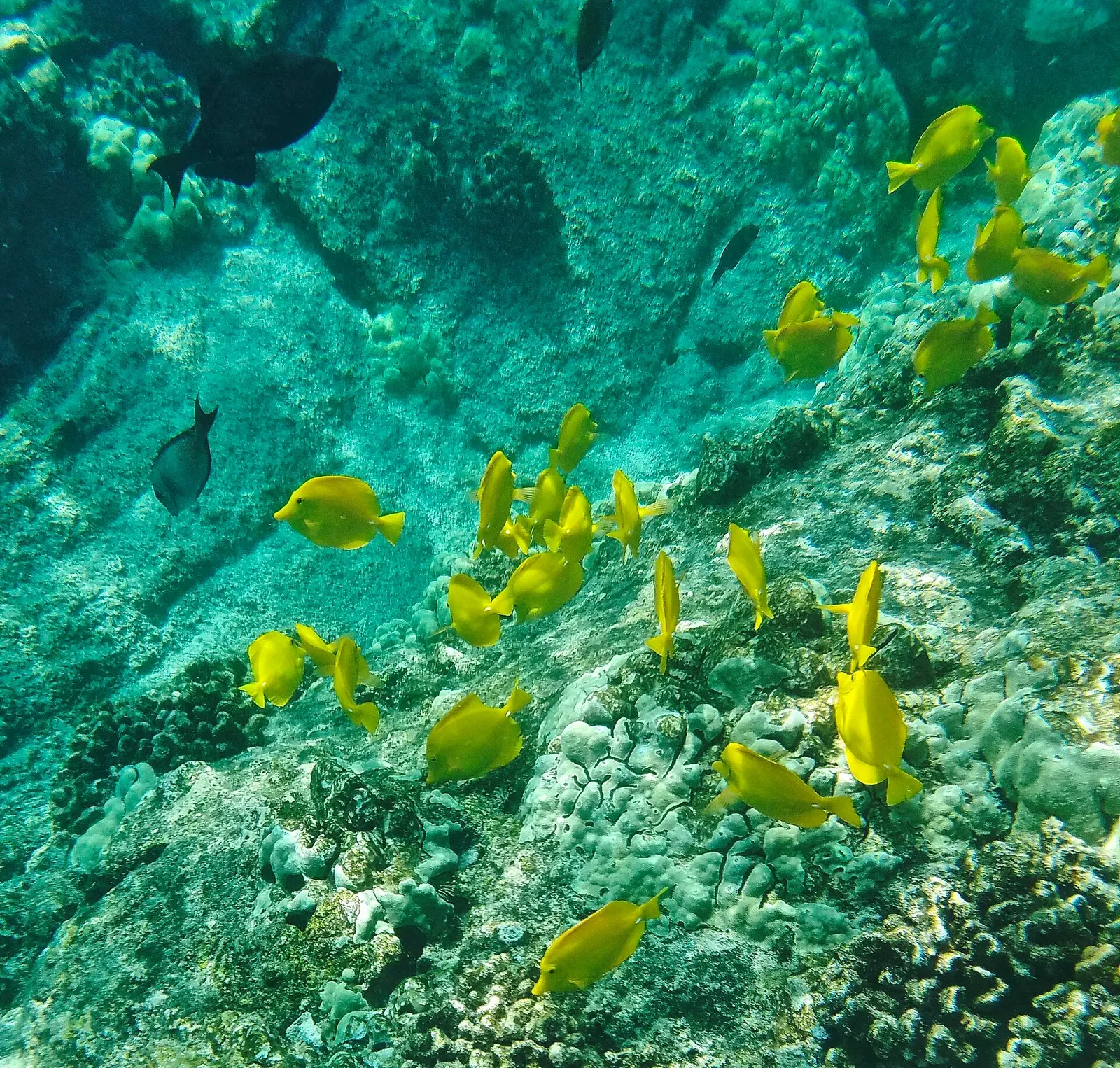
Sanctuary reef under the cliff where Cook was killed
Night
Divers kneel on the sand at 10 m with lights aimed straight up
Pinnacle
Green turtles rest at the base while kole surgeonfish clean them
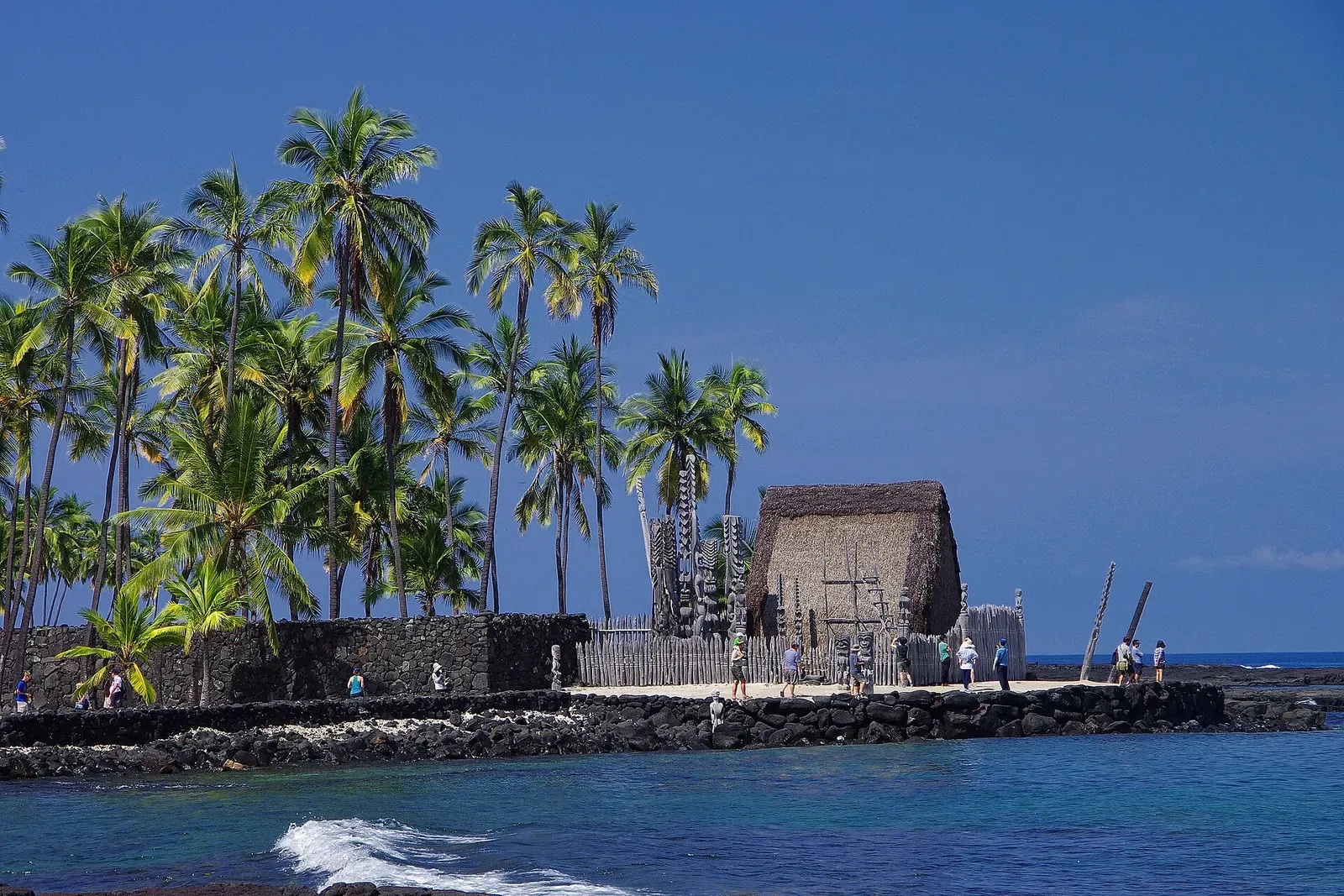
Two lava steps into turtle canyons at the Place of Refuge
Similar dives elsewhere

A lit hang-bar at 16 m, GPS-marked over a trench more than 7,000 metres deep
Oceanic whitetips in open water, no reef and no cage

Schooling scalloped hammerheads in the Kuroshio

The outer rim's face drops 91 m into open ocean