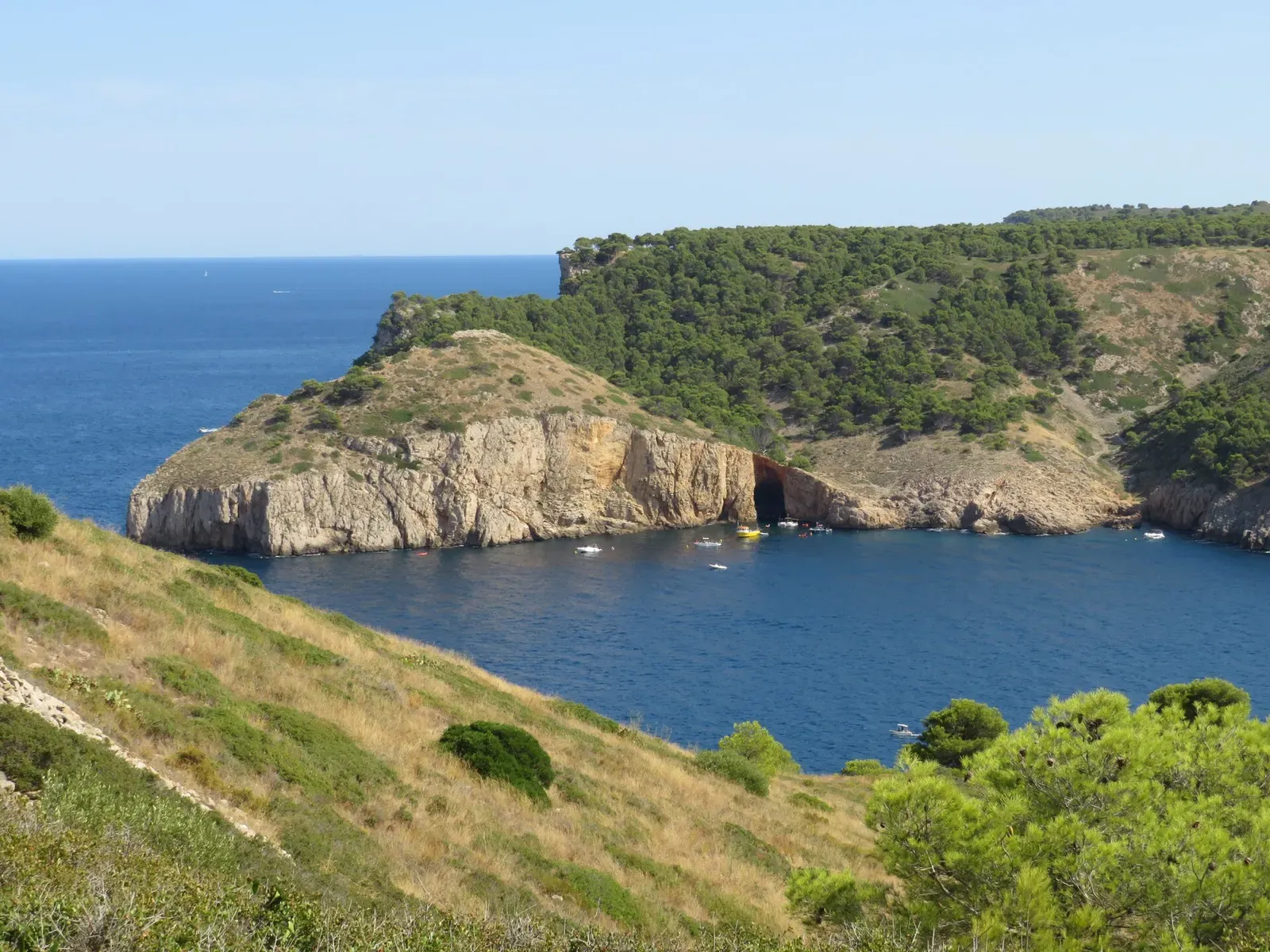
Costa Brava · Spain · Wreck
Cotentin Wreck
A dynamited navy tug in 5–10 m off Illa Mateua
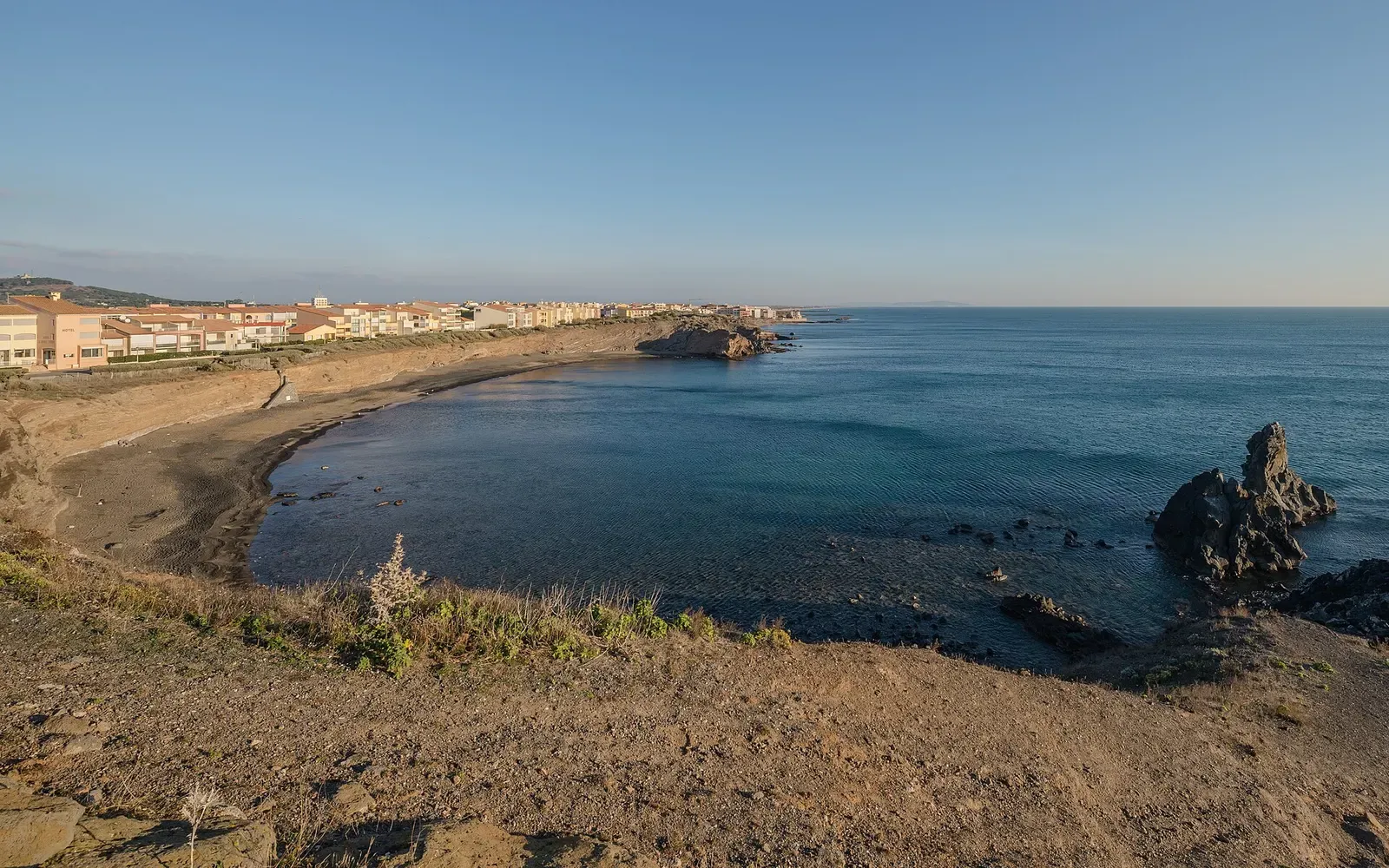
Area photo: Enric · CC BY-SA 4.0
A French Navy tug that ran aground off Illa Mateua on 8 September 1963 while under tow, was dynamited afterwards, and now lies in 5 to 10 m in the northern part of the cove. Catalan sources name the vessel Cotentin; the dive centres and the catalogue list the site as El Constantine or Constantin.
Also known as El Constantine, Constantin.
Where it is and how deep
42.1149° N, 3.1638° EApproximate position — the dashed circle shows where the site lies; your operator's briefing has the mooring.
The dive
The remains lie in the northern part of Cala Illa Mateua, in 5 to 10 m of water; the catalogue frames it as an easy dive with an average around 12 m. That depth is the whole character of the site — nothing about it asks for a long descent or a tight gas plan, and it leaves time to work over the wreck slowly and still finish on the shallow rock around it.
What is down there is what the dynamite left. The tug was broken up where it grounded, so the dive is a search over structure rather than a tour of a hull, and the operator describes the result as an easy and attractive itinerary. It is the shallow wreck of this coast, and the one an entry-level certification covers without any special arrangement.
The wreck
- Vessel
- Cotentin
- Type
- French Navy tug
- Sunk
- 1963
- Cause
- Ran aground after the tow line parted in a north wind; dynamited afterwards
- Lies
- Broken remains in 5–10 m in the northern part of Cala Illa Mateua
The tug was being towed to a port in France to be broken up when the force of the north wind parted the line to the ship towing it. It drifted until it found the coast of L'Escala, where it ran aground on 8 September 1963. It was dynamited later, and its remains are what divers see today. The Catalan record names the vessel Cotentin, while Orca Diving and the catalogue list the site under the local name El Constantine.
Marine life and season
The sources we used don't single out particular species here.
| Jan | Feb | Mar | Apr | May | Jun | Jul | Aug | Sep | Oct | Nov | Dec |
|---|---|---|---|---|---|---|---|---|---|---|---|
| Fair | Fair | Fair | Fair | Good | Prime | Prime | Prime | Prime | Good | Fair | Fair |
Season follows Costa Brava: Water runs from about 13 °C in February to 25 °C in July and August; no L'Escala centre publishes closing months, and the tramuntana can keep boats in port in any month.
Questions divers ask
What ship is the Constantine wreck at L'Escala?+
The Catalan record for Cala Illa Mateua names it as the French Navy tug Cotentin, wrecked there on 8 September 1963 and known locally as Constantin. Orca Diving lists the site as El Constantine and the catalogue as Constantin (Wreck).
Sources
- Costa de L'Escala Diving Sites — Orca Diving Center
- Cala Illa Mateua — Viquipèdia
- Constantin (Wreck) — Scubago
More dive sites in Costa Brava
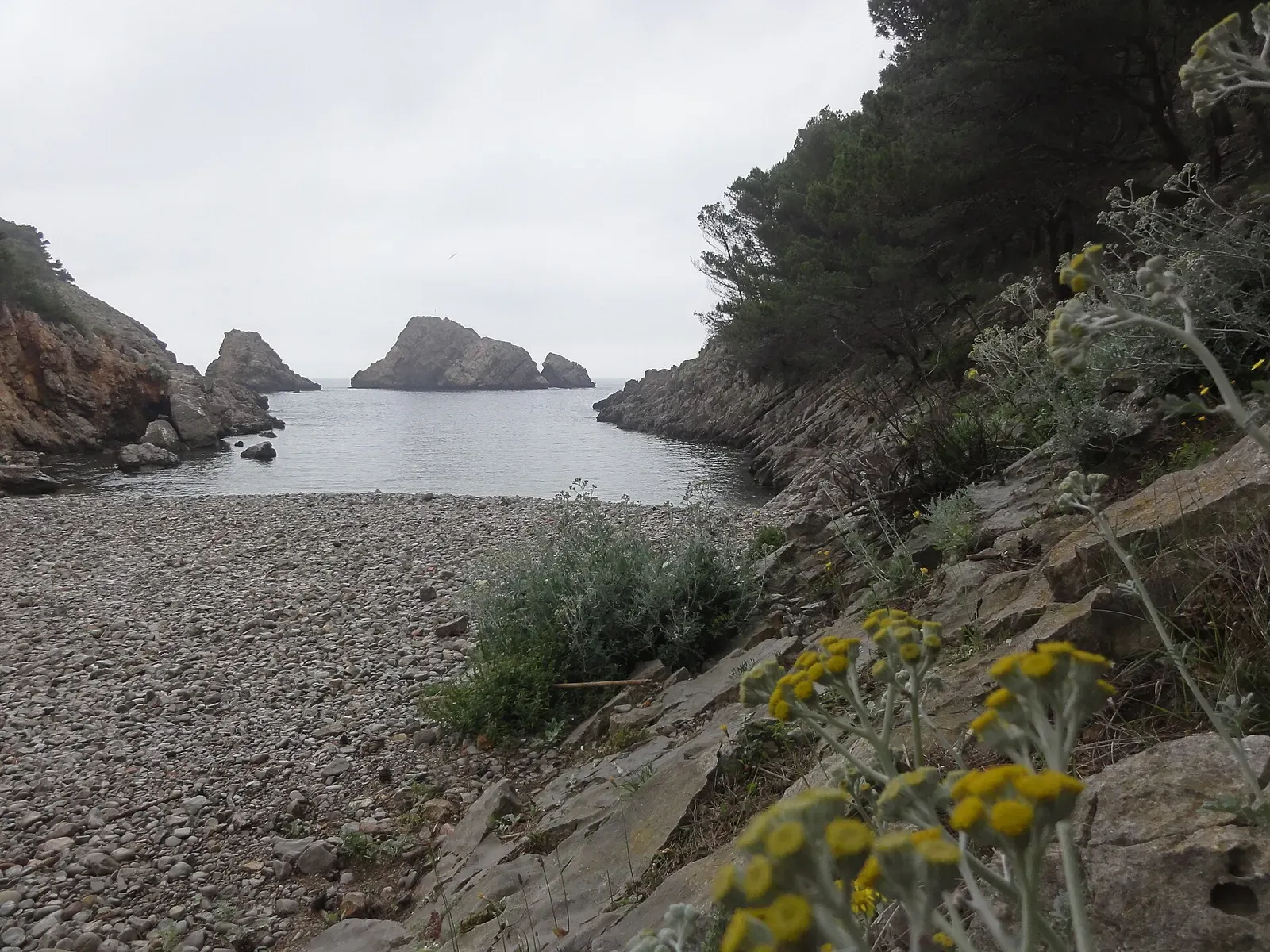
A wide tunnel entered at 16 m, out to a 30 m bottom
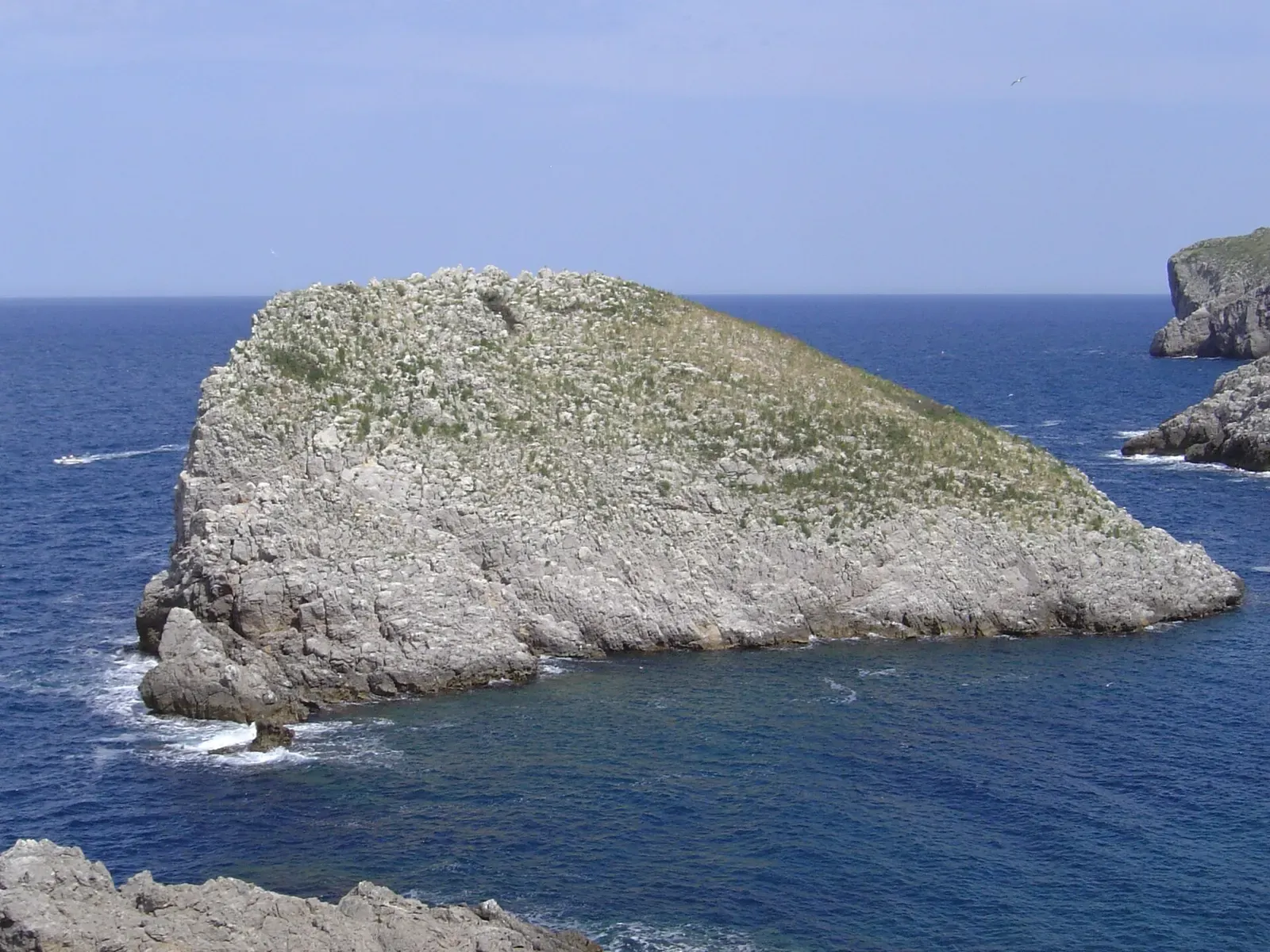
A 70 m tunnel straight through the islet, lit at both ends
Cave & cavern
An air dome at the end of the first cave
Wall
A protected wall shallow enough for a first dive
Wreck
Carrara marble still lying in the holds at 42 m
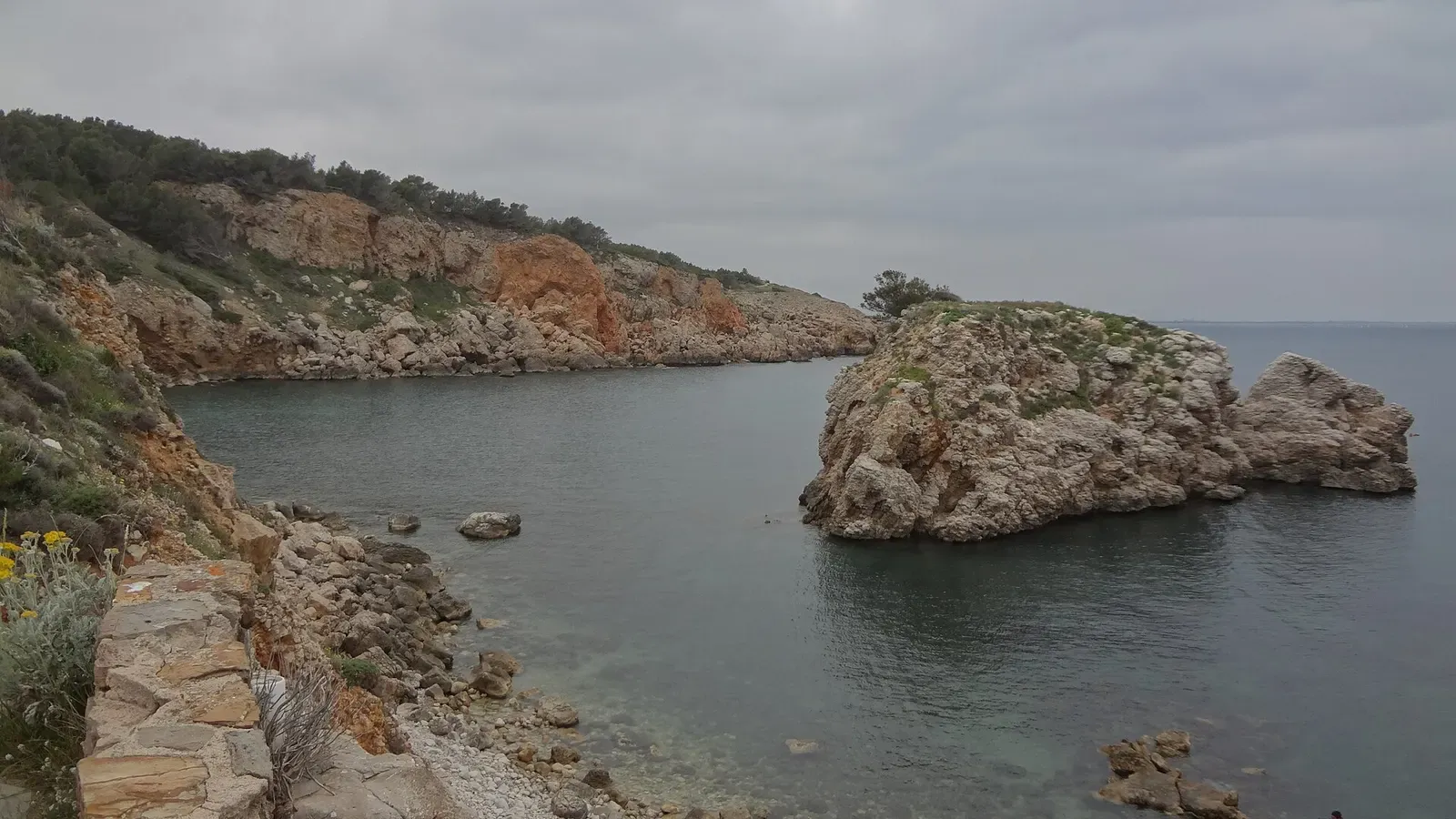
Shore-entry islet at 0–16 m with a short, easy tunnel
Wall
A walk-in wall at 3–22 m used for courses and night dives
Reef
A small tunnel lined with coral and sponges
Similar dives elsewhere
A 25 m cod boat lost in a storm in 1913, on 12 m of sand
A 1915 British submarine in 8 m off Kepez Point
Four Yarrow boilers standing in 13 m of Suvla Bay sand
,_vista_des_de_dalt_del_Montg%C3%B3_(l%27Escala).jpg)
A hollow 12 m cistern alone on the sand at 11 m