
Mediterranean · Spain
Medes Islands
Dusky grouper by the dozen inside a Costa Brava marine reserve
Photo: Alexandre Albore · CC BY-SA 4.0
This tiny archipelago off L'Estartit on the Costa Brava, protected since 1983, is one of Europe's benchmark grouper dives: divers routinely encounter dusky grouper by the dozen, along with moray eels, barracuda, and shoals of fish over gorgonian-covered rock. La Vaca is a bright tunnel running clean through the main island, Pota del Llop drops past a gorgonian wall to 50 meters, and Carall Bernat at the southern tip, the busiest dive here, runs from 4 metres at the top of the rock to 45 at the bottom. A strict buoy and permit system limits diver numbers to protect the reserve.
About diving in Medes Islands
Diving here is entirely boat-based and short-range. The islands sit just off the beach at L'Estartit, so a boat leaves the harbour, ties to a mooring within minutes and can be back in port between dives rather than waiting out the surface interval at sea. Centres typically run two-dive mornings through the season, and because the buoy and permit system caps diver numbers, places are booked ahead — in August that can mean days in advance rather than hours.
The islands are the seaward end of the Montgrí limestone massif, and it shows underwater. The rock is drilled through with tunnels, chimneys and blind caves, and the shaded walls carry red gorgonian fans over coralligenous crust. The sheltered inner sides shelve gently across seagrass and boulders, while the outer faces drop away properly; that is where the depth sits, and where what little current there is tends to be felt.
What makes the reserve unusual is how unbothered the fish are. Decades of protection — the reserve dates to 1983 — have left large fish holding station while divers pass, close enough to photograph without stalking, and the shallow tunnels are often thick with them. Visibility is the trade-off: this stretch of coast takes river run-off, and after heavy rain or a hard tramuntana blow the water can drop well below its summer best for several days.
It suits divers who come to watch animals rather than terrain, and photographers above all: tame fish, tunnels lit at both ends and forgiving depths make an unusual combination. Open Water divers are well served on the sheltered sides and the shallower tunnels. The walls, the deeper gorgonian slopes and the darker cave sections want Advanced-level comfort with depth and buoyancy.
Best time to dive Medes Islands
| Jan | Feb | Mar | Apr | May | Jun | Jul | Aug | Sep | Oct | Nov | Dec | |
|---|---|---|---|---|---|---|---|---|---|---|---|---|
| Season | Off-season | Off-season | Fair | Fair | Good | Prime | Prime | Prime | Prime | Good | Fair | Off-season |
| Sea surface | 14°C57°F | 13°C55°F | 13°C55°F | 14°C57°F | 17°C63°F | 20°C68°F | 23°C73°F | 24°C75°F | 22°C72°F | 20°C68°F | 17°C63°F | 15°C59°F |
| Daytime high | 18°C64°F | 19°C66°F | 20°C68°F | 22°C72°F | 26°C79°F | 30°C86°F | 32°C90°F | 33°C91°F | 29°C84°F | 26°C79°F | 22°C72°F | 18°C64°F |
| Rain | 37 mm1.5 in | 29 mm1.1 in | 77 mm3.0 in | 65 mm2.6 in | 56 mm2.2 in | 40 mm1.6 in | 42 mm1.7 in | 35 mm1.4 in | 63 mm2.5 in | 77 mm3.0 in | 75 mm3.0 in | 35 mm1.4 in |
| Jan | Feb | Mar | Apr | May | Jun |
|---|---|---|---|---|---|
| Off-season | Off-season | Fair | Fair | Good | Prime |
| Sea surface | |||||
| 14°C57°F | 13°C55°F | 13°C55°F | 14°C57°F | 17°C63°F | 20°C68°F |
| Daytime high | |||||
| 18°C64°F | 19°C66°F | 20°C68°F | 22°C72°F | 26°C79°F | 30°C86°F |
| Rain | |||||
| 37 mm1.5 in | 29 mm1.1 in | 77 mm3.0 in | 65 mm2.6 in | 56 mm2.2 in | 40 mm1.6 in |
| Jul | Aug | Sep | Oct | Nov | Dec |
|---|---|---|---|---|---|
| Prime | Prime | Prime | Good | Fair | Off-season |
| Sea surface | |||||
| 23°C73°F | 24°C75°F | 22°C72°F | 20°C68°F | 17°C63°F | 15°C59°F |
| Daytime high | |||||
| 32°C90°F | 33°C91°F | 29°C84°F | 26°C79°F | 22°C72°F | 18°C64°F |
| Rain | |||||
| 42 mm1.7 in | 35 mm1.4 in | 63 mm2.5 in | 77 mm3.0 in | 75 mm3.0 in | 35 mm1.4 in |
2011–2025 averages. Sea surface: NOAA Coral Reef Watch, measured at the surface, so deeper water can run colder. Daytime high and rain: NASA POWER.
Jun–Sep brings the warmest water, calmest seas, and peak grouper and fish activity; most dive centers scale back Dec–Feb.
Best months: June, July, August, September
Medes Islands water temperature and weather by month
The sea surface runs from 13 °C (55 °F) in February to 24 °C (75 °F) in August. It is 24 °C (75 °F) or warmer from August. Most rain falls from March to May, peaking at about 80 mm (3.1 in) in March; February is the driest. Daytime highs reach 33 °C (91 °F) in August and drop to 18 °C (64 °F) in January. The coldest water here is about 13 °C (55 °F), so pack a 7 mm suit with a hood, or a semi-dry.
Dive types & marine life
Dusky grouper are resident and approachable right through the diving season, with octopus and cuttlefish on the rock and in the shallows. Barracuda and the big shoals of smaller fish build through the prime June-to-September stretch; eagle rays over sand and dolphins offshore are occasional rather than dependable.
- Wall
- Cave & cavern
- Wreck
- Reef
- Groupers
- Barracuda
- Octopus & cuttlefish
- Reef fish swarms
- Macro critters
Best dive sites in Medes Islands
Pinnacle
The archipelago's busiest dive: a rock from 4 m to 45 m
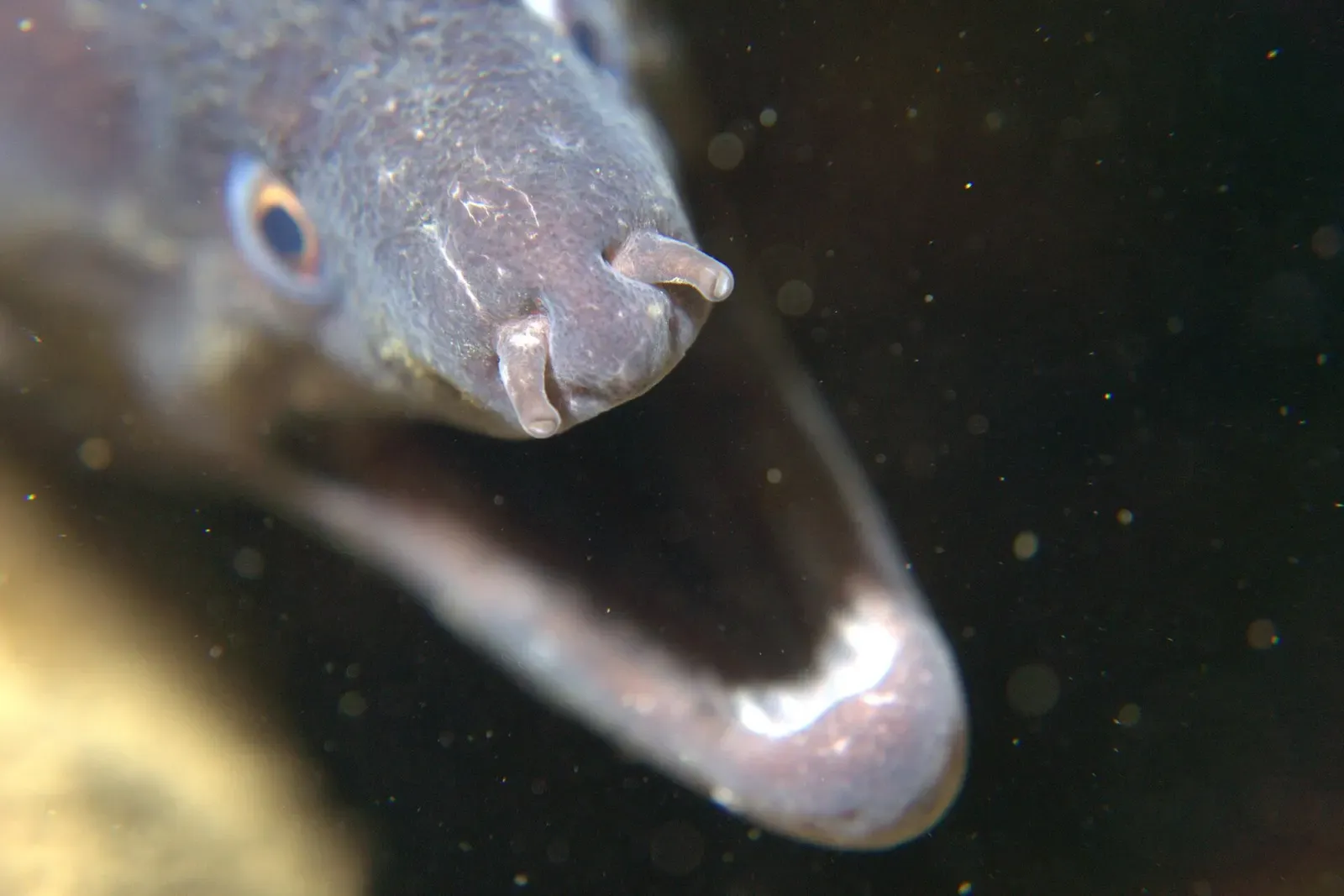
A 5 m cave passage that comes out at Dofí Sud
Cave & cavern
Backlit galleries under Meda Petita, red coral on the wall
Cave & cavern
Limestone platform rising almost to the surface off Meda Gran
Cave & cavern
A daylit tunnel system inside Meda Gran
Cave & cavern
Tunnels cutting clean through the island at 14–24 m
Reef
Coral beds, posidonia meadow and sand in a single dive
Wall
Vertical gorgonian walls dropping to 42 m off Meda Gran
Wall
A gorgonian wall above drop-offs past 40 m
Reef
Coralligenous boulders and red gorgonians from 15 to 40 m
Reef
The southernmost Medes islet, open to current from any side
How to get to Medes Islands
Fly into Girona or Barcelona and drive to L'Estartit, which is the base — centres, harbour and boats all sit on the seafront. Everything is day-boat; there is no shore access to the islands, and the reserve's capped permits mean booking dives ahead in July and August.
Photos from Medes Islands
Jouni Kuisma, DiveCodex · CC BY-SA 4.0
Jouni Kuisma, DiveCodex · CC BY-SA 4.0
Jouni Kuisma, DiveCodex · CC BY-SA 4.0
Jouni Kuisma, DiveCodex · CC BY-SA 4.0
Dive videos
Diving Estartit: Medes Islands 2022 · Jamie Turner on YouTube
Scuba Diving in Spain (Medes Islands) - L'Estartit · Vasileios Ritsos on YouTube
Photo credits
- Two yellowmouth barracuda cruising through open blue water at the Medes Islands by Alexandre Albore, CC BY-SA 4.0, via Wikimedia Commons
- Dusky grouper swimming over gorgonian-dotted rock at Tascó Petit, Medes Islands by Jouni Kuisma, DiveCodex, CC BY-SA 4.0, via Wikimedia Commons
- Red and yellow violescent sea-whip gorgonians growing on a rock wall at Les Ferranelles, Medes Islands by Jouni Kuisma, DiveCodex, CC BY-SA 4.0, via Wikimedia Commons
- Close-up of a common octopus showing its horizontal-slit eye at Pedra de Déu, Medes Islands by Jouni Kuisma, DiveCodex, CC BY-SA 4.0, via Wikimedia Commons
- Mediterranean moray eel emerging from a crevice at Tascó Petit, Medes Islands by Jouni Kuisma, DiveCodex, CC BY-SA 4.0, via Wikimedia Commons
Embed
Run a dive centre, club or blog? Embed this map of 12 dive sites near Medes Islands on your own page.
In The Logbook
- Where to dive in every month of the yearTrip planning · 14 min read
- Cavern and cenote diving without cave trainingCaves & caverns · 8 min read
Similar destinations
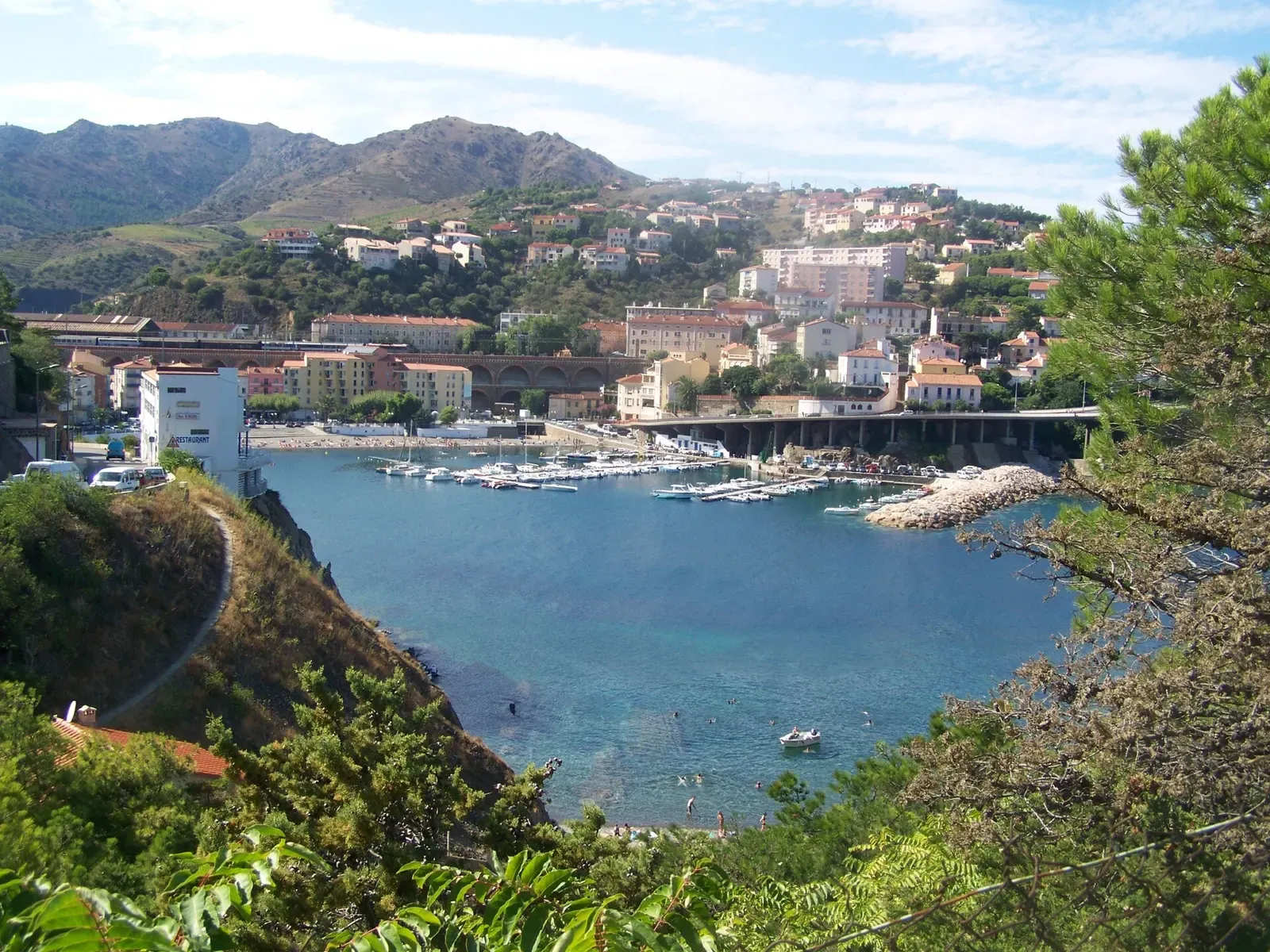
Reserve reef diving at Cerbère-Banyuls, France's first marine reserve
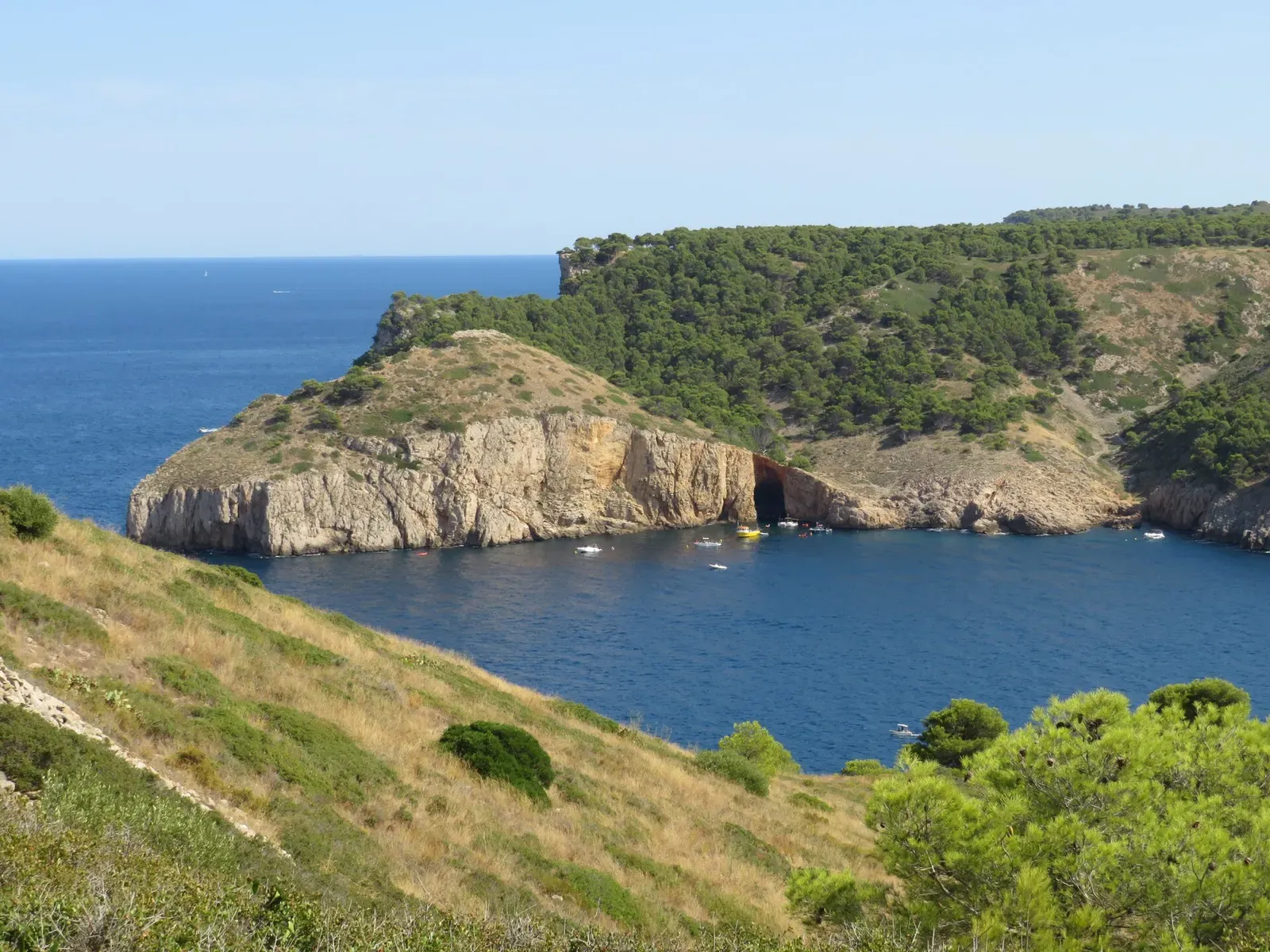
Tunnels, walls and a shallow wreck under the Montgrí cliffs, dived from L'Escala

Schist walls, tunnels and red gorgonian fans at the Pyrenees' end

,_Tasco_Petit,_Medes_Islands,_Spain.jpg)
,_Ferranelles,_Medes_Islands,_Spain.jpg)
,_Pedra_de_Deu,_Medes_Islands,_Spain.jpg)
,_Tasco_Petit,_Medes_Islands,_Spain.jpg)
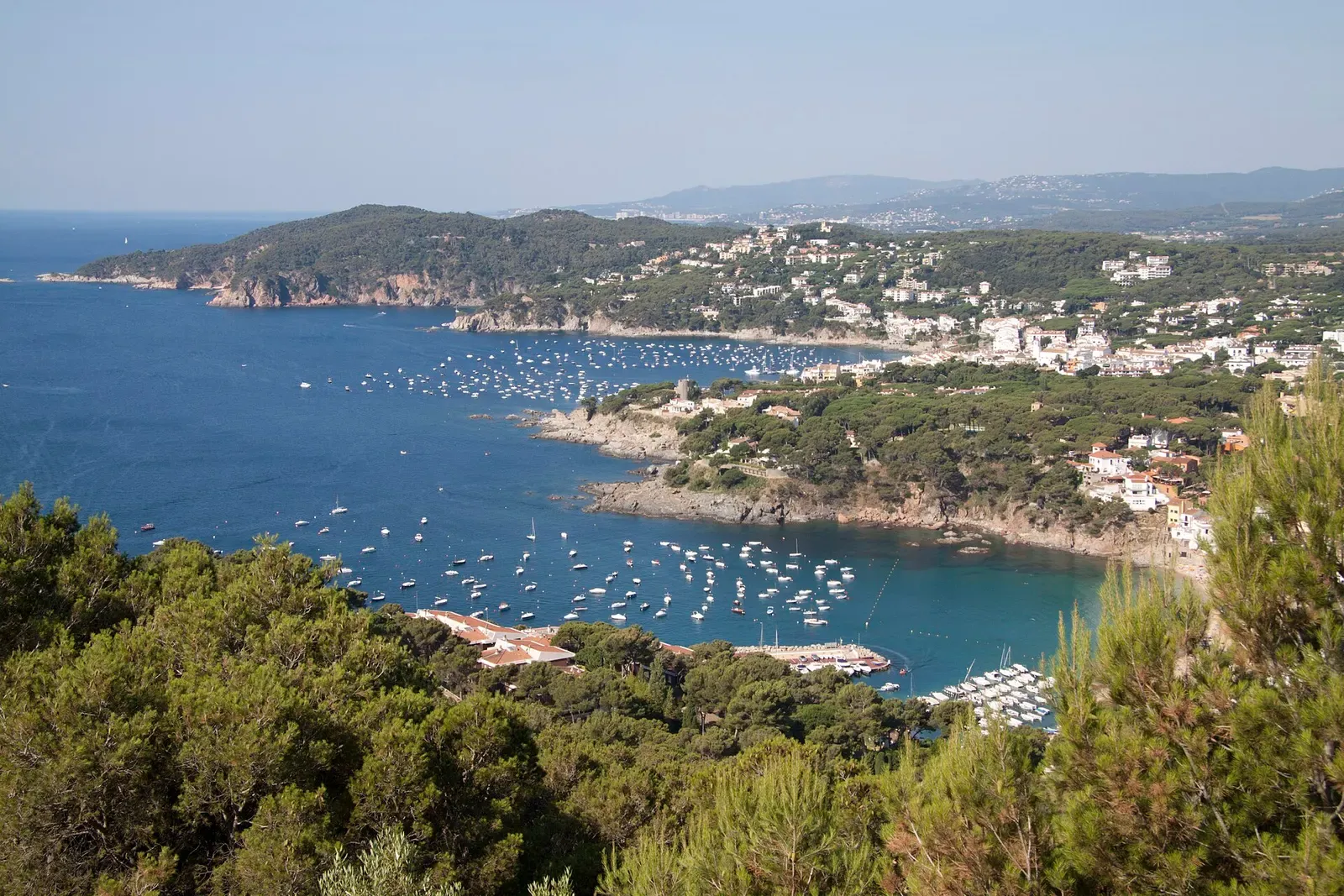
Three seamounts, a navy-tug wreck and gorgonian walls between Palamós and Cap de Begur