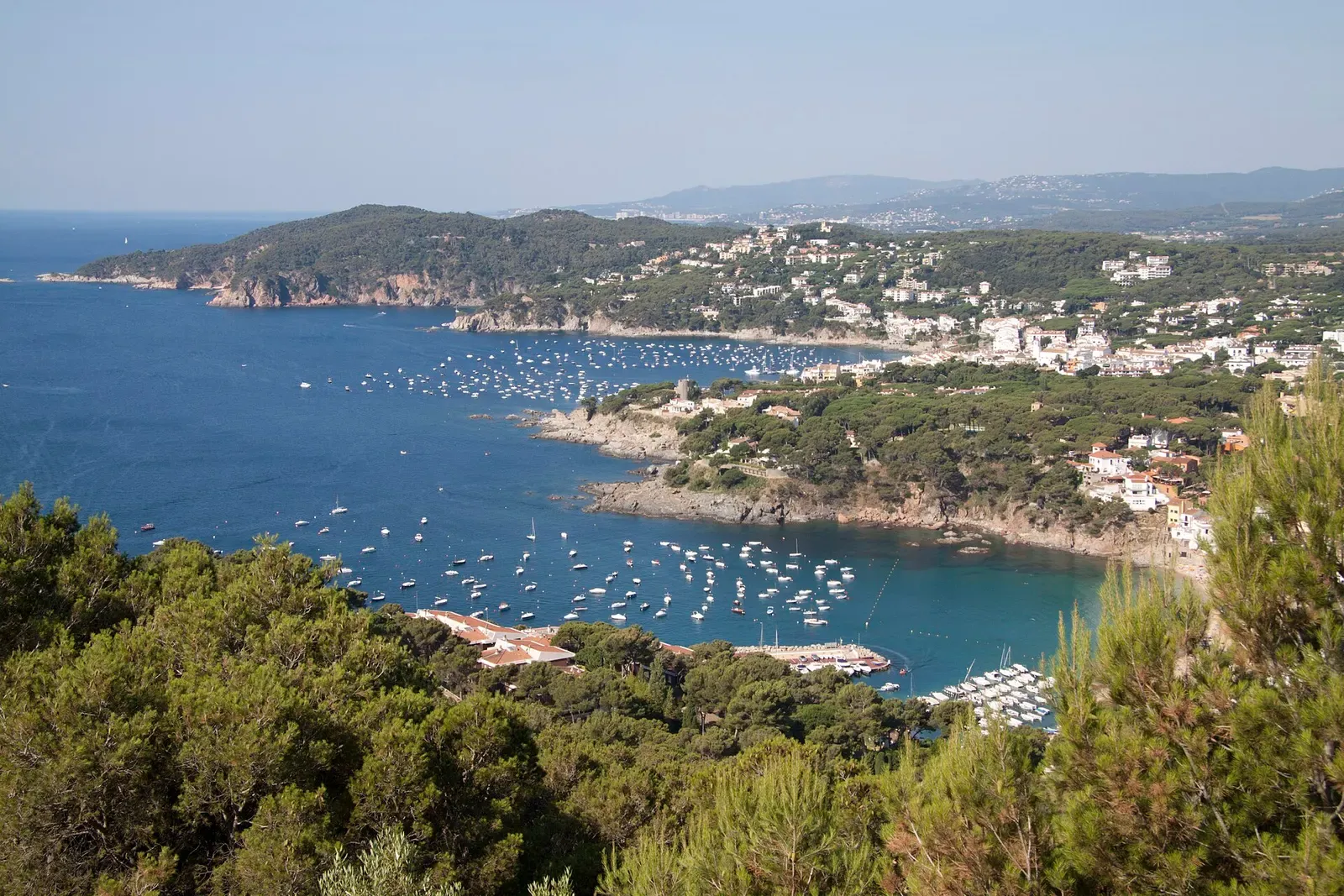
Mediterranean · Spain
Costa Brava — Palamós, Llafranc & Begur
Three seamounts, a navy-tug wreck and gorgonian walls between Palamós and Cap de Begur
Photo: Mikipons · CC BY-SA 3.0
The middle Costa Brava from Palamós harbour north to Cap de Begur is dived by six centres in four towns on one shared pool of sites. Els Ullastres, three seamounts off Cap de Sant Sebastià, are the centrepiece: the first bottoms out at 30 m, the second and third fall to 53–54 m. The Boreas, a former German navy tug off Palamós, lies from 18 to 32 m, the Illes Formigues carry caves and gorgonians, and the Canons de Tamariu drop to 42 m. Ordinary dives sit between 5 and 30 m, with shore entries at the Tamariu house reef and Cala Margarida.
About diving in Costa Brava — Palamós, Llafranc & Begur
Six centres share this coast: Dive Center Palamós, Gidive and H2O Diving in Palamós, Triton Diving on Plaça dels Pins in Llafranc, Stollis Divebase on the Tamariu seafront and Begur Dive on Aiguablava beach. Almost everything is a day-boat run from the town harbours, mostly under ten minutes and under thirty for the rest; Begur Dive counts more than ten sites within ten minutes of Aiguablava, and one operator quotes a 25-minute run to the Ullastres off Calella. Shore entries exist too: the Tamariu house reef is walked in from the beach, and Cala Margarida at Palamós has a pool ladder at the end of the cove. H2O keeps beginners to sites with a 20 m maximum.
Most of the catalogue is wall diving. Els Ullastres are three separate seamounts about 500 m south of Cap de Sant Sebastià, the top of the third at 8 m, and the catalogue lists them, El Cau, the Canons de Tamariu and the Formigues as wall dives. Triton says walls of gorgonians predominate from Cap de Begur to Palamós; Stollis calls Cala Nova densely populated with sea fans and Furió d'Aigua Xelida notable for morays and lobsters. At El Montiell large congers are abundant. Ullastre I is listed with octopus, nudibranchs and slipper lobsters, Cala Margarida with numerous nudibranchs. Grouper and red coral were once common on the Ullastres but have become rare through indiscriminate fishing.
The deep sites are the exception, not the norm. Ullastre II and III fall to 53–54 m, the Boreas lies at 18–32 m and Furió Fitó runs from 16 m to 54 m with current at times; all four are rated CMAS two-star or Advanced Open Water. El Tabal, the lighthouse reef, is met at 22 m on a plateau that slopes south and ends in a steep wall to the north, and the catalogue calls it advanced-only on its depth profile. Cap de Begur is dived as a drift over three rocky bars, the outer one about 37 m and the second around 30 m. Boat traffic is a listed hazard at the Pinell, Ullastre I, the Boreas and Furió d'Aigua Xelida, and depth and current at Ullastre III, Furió Fitó and the Canons.
It suits divers who want shallow bays, reef dives and a few serious profiles from the same boat. All-diver sites include the Pinell bays, Cala Margarida, the Formigues and El Montiell; Ullastre I, El Cau, Cap Roig and Furió d'Aigua Xelida are rated CMAS one-star or Open Water, so a new diver has a week here without touching the deep list. No permit or diving fee is recorded for any site named here. Divers who want reserve-grade grouper should carry on north to the Medes Islands, where the reserve rules apply.
When to dive Costa Brava — Palamós, Llafranc & Begur
| Jan | Feb | Mar | Apr | May | Jun | Jul | Aug | Sep | Oct | Nov | Dec |
|---|---|---|---|---|---|---|---|---|---|---|---|
| Fair | Fair | Fair | Fair | Good | Good | Prime | Prime | Good | Good | Fair | Fair |
Surface water sits near 13 °C from January to March and peaks around 25 °C in August; local guidance is 5 mm in July and August, 7 mm April to June and September to October, drysuit the rest.
Dive types & marine life
Octopus, nudibranchs, slipper lobsters and damselfish are listed at Ullastre I, with scorpionfish, sea bream and salema on the Ullastres and numerous nudibranchs at Cala Margarida. Large congers, morays and small lobsters are reliable at El Montiell; sunfish there take luck. Grouper and red coral have become rare on the Ullastres. The Palamós association lists barracuda, and monkfish in winter.
- Seamount
- Wall
- Wreck
- Cave & cavern
- Reef
- Night
- Octopus & cuttlefish
- Nudibranchs
- Reef fish swarms
- Macro critters
Notable dive sites in Costa Brava — Palamós, Llafranc & Begur
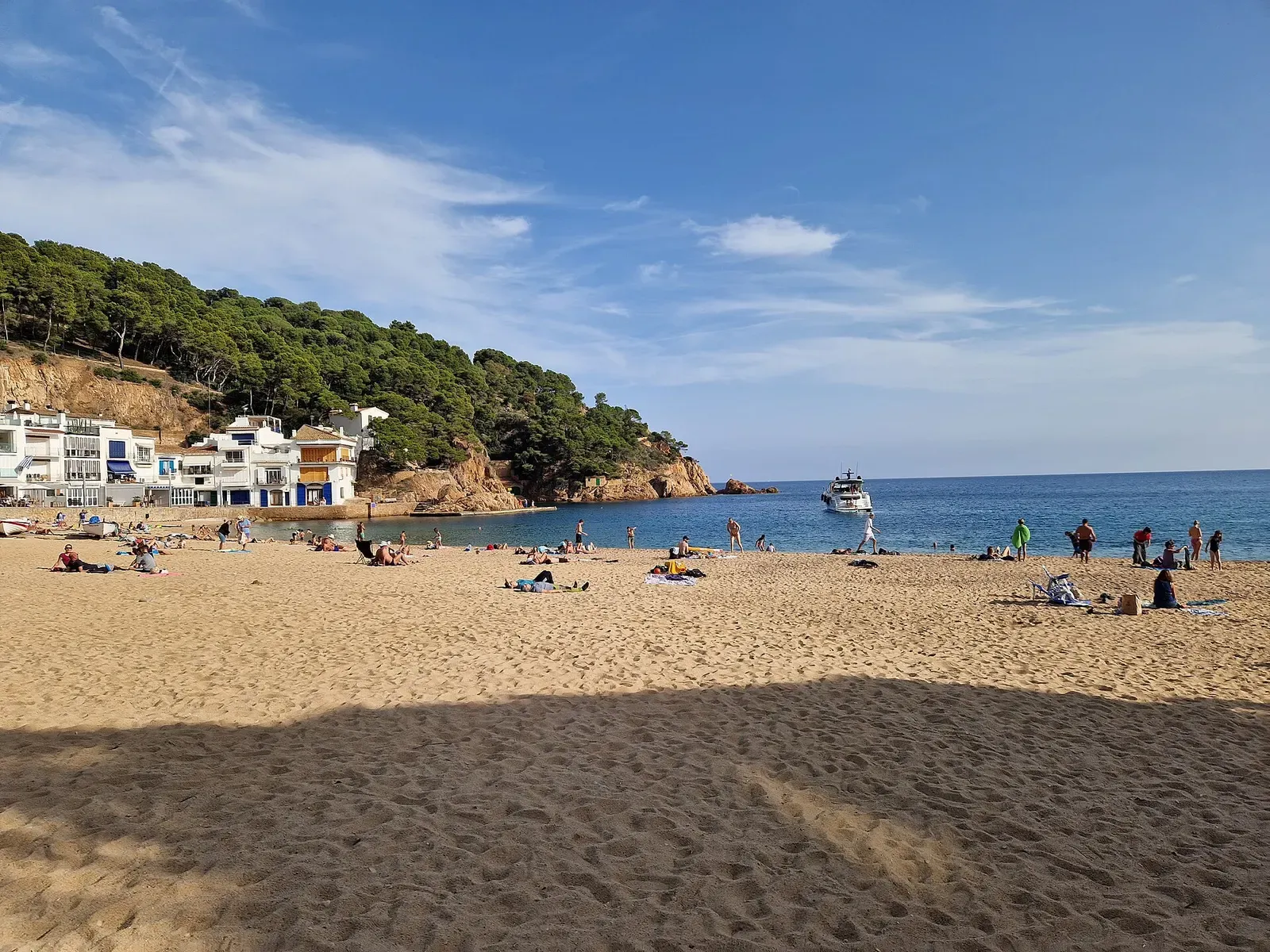
A shore dive 30 m from the base, inside a buoy line
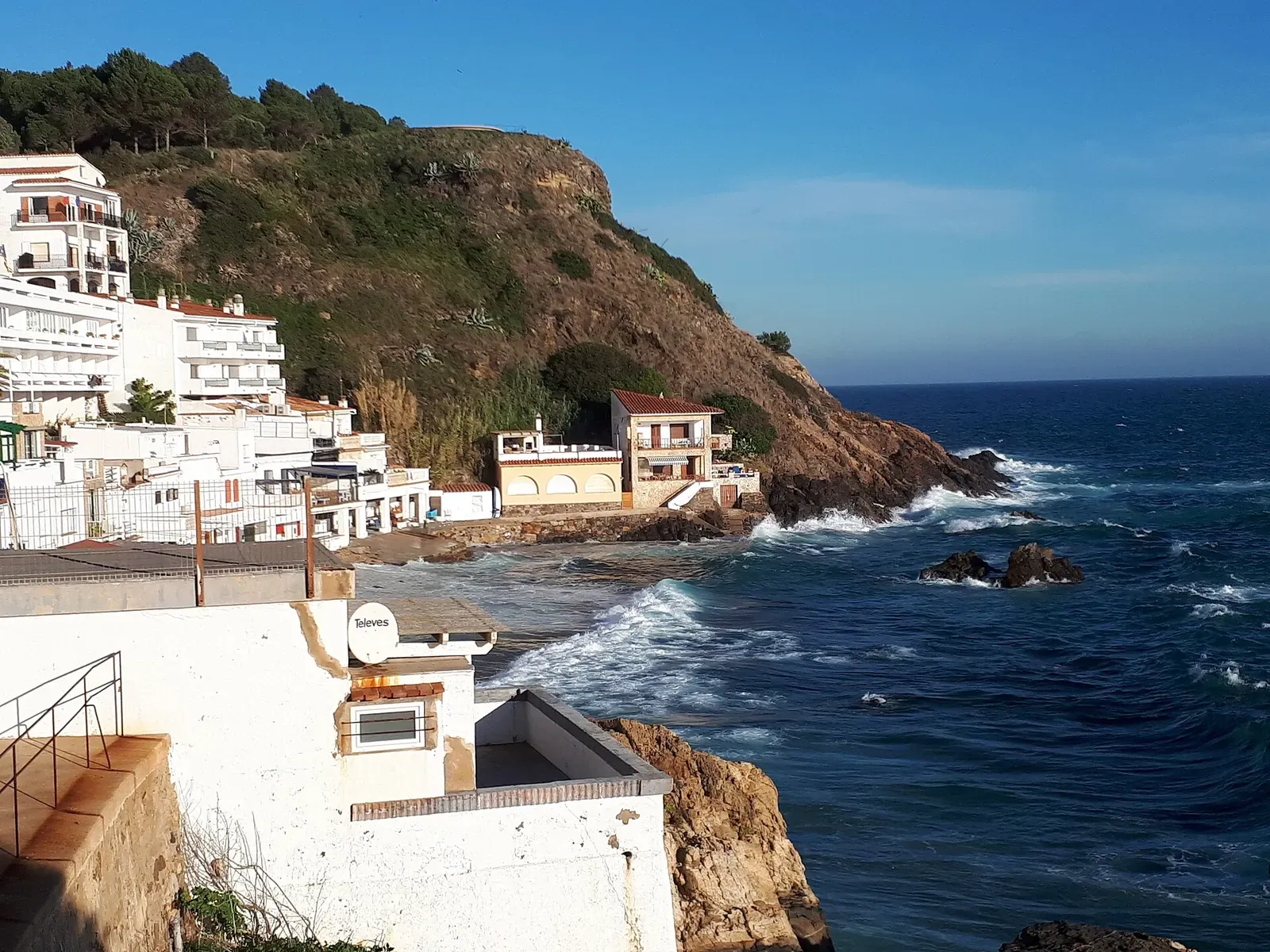
A pool ladder into a cove of nudibranchs and shrimp
Twin gorges between three walls, 10 m down to 40 m
Drift
Three rocky bars round the cape, dived as a drift
Cave & cavern
A 120 m grotto from a 12 m entrance to bats at the far end
Wreck
A confiscated navy tug from 18 m to a 32 m seabed
Reef
Large congers on a rock seven minutes from Tamariu
Sand slope
A pool-like training bay from 1 to 8 m
A swim-through cave at 12 m beside the mooring
Pinnacle
A pinnacle from 16 m to a 54 m bottom, with a rock needle east of it
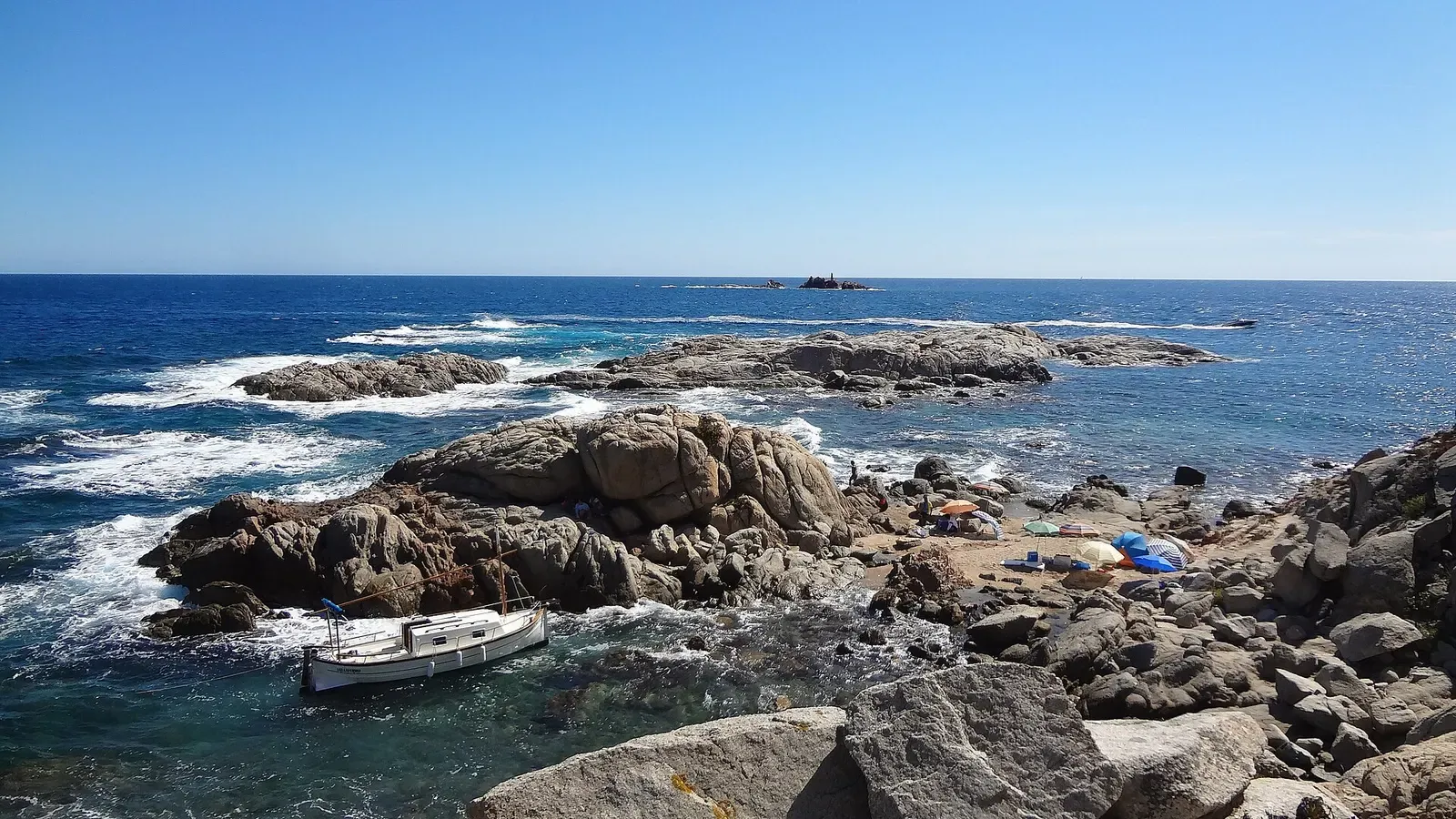
Gullies and caves under the islets, gorgonians on the rock
Seamount
The one Ullastre rated Open Water, 15 m over a 30 m bottom
Seamount
Gorgonian walls from 25 m down to a 53 m bottom
Seamount
A summit at 8 m over a wall that bottoms out at 54 m
Els Ullastres
Three seamounts off Cap de Sant Sebastià; Ullastre I bottoms out at 30 m, II and III run down to 53–54 m for AOW divers.
Getting there
Girona-Costa Brava airport is the gateway, 43 km from Palamós and about 50 km from Palafrugell; SARFA buses reach Palamós from Girona in 1 h 15 to 1 h 30 and from Barcelona in 2 h. Centres sit on Port Marina in Palamós, Plaça dels Pins in Llafranc, Passeig de Mar in Tamariu and Aiguablava beach at Begur.
Photos from Costa Brava — Palamós, Llafranc & Begur
Alberto-g-rovi · CC BY 3.0
Isidro Jabato · CC BY-SA 4.0
andre oortgijs · CC BY-SA 3.0
Juli Vintró i Casallachs · Public domain
Photo credits
- Aerial view over Llafranc's harbour and bay, boats at anchor below wooded headlands by Mikipons, CC BY-SA 3.0, via Wikimedia Commons
- Lighthouse on the rocky Illes Formigues islets with a boat moored alongside by Alberto-g-rovi, CC BY 3.0, via Wikimedia Commons
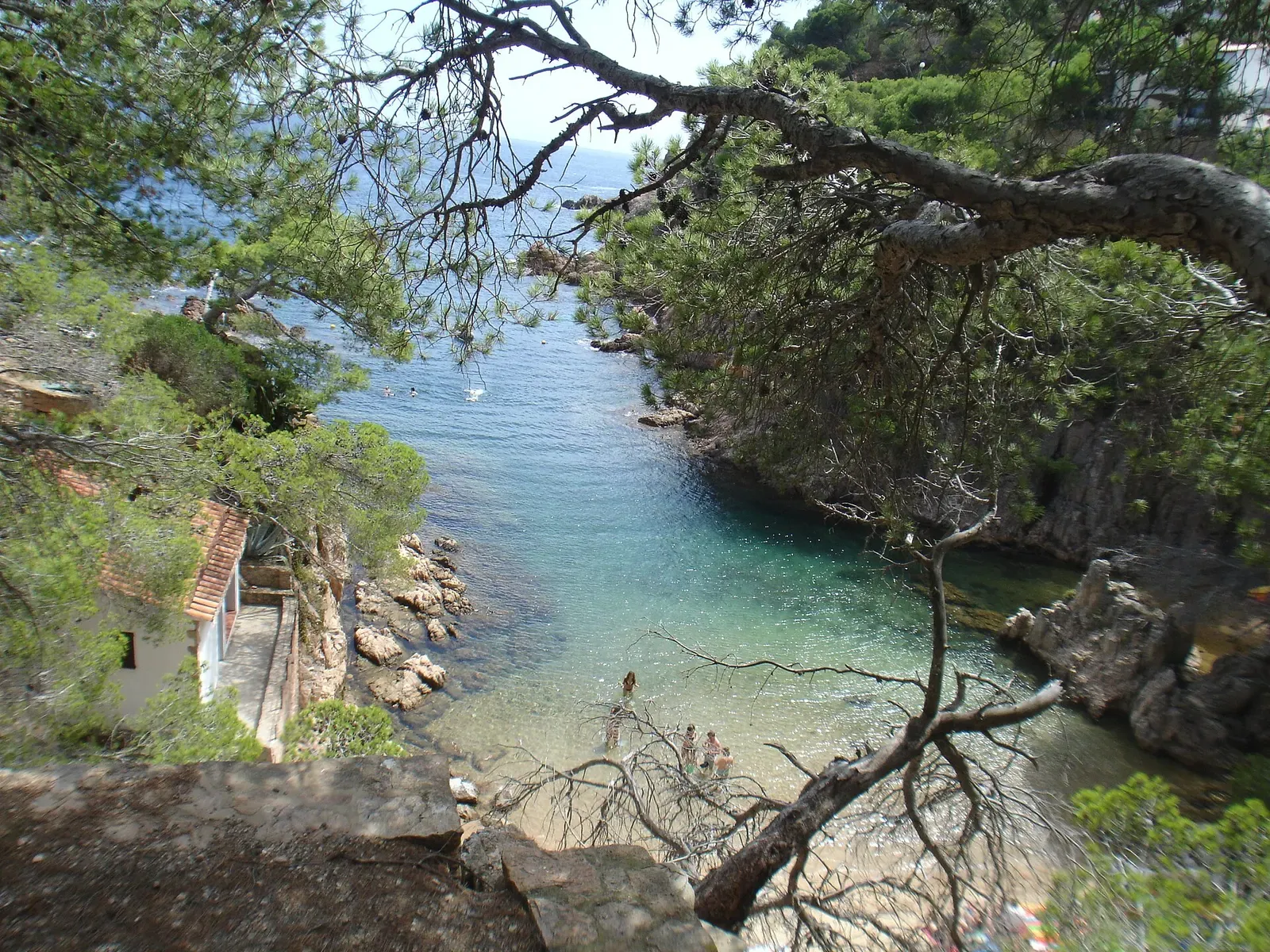
- Rocky, pine-topped headland dropping to clear turquoise coves near the Formigues islets by Isidro Jabato, CC BY-SA 4.0, via Wikimedia Commons
- Sea bream over an algae-covered rocky reef at Sa Tuna, near Begur by andre oortgijs, CC BY-SA 3.0, via Wikimedia Commons
- Historic photograph of Cap de Sant Sebastià seen from the sea by Juli Vintró i Casallachs, Public domain, via Wikimedia Commons
Similar destinations
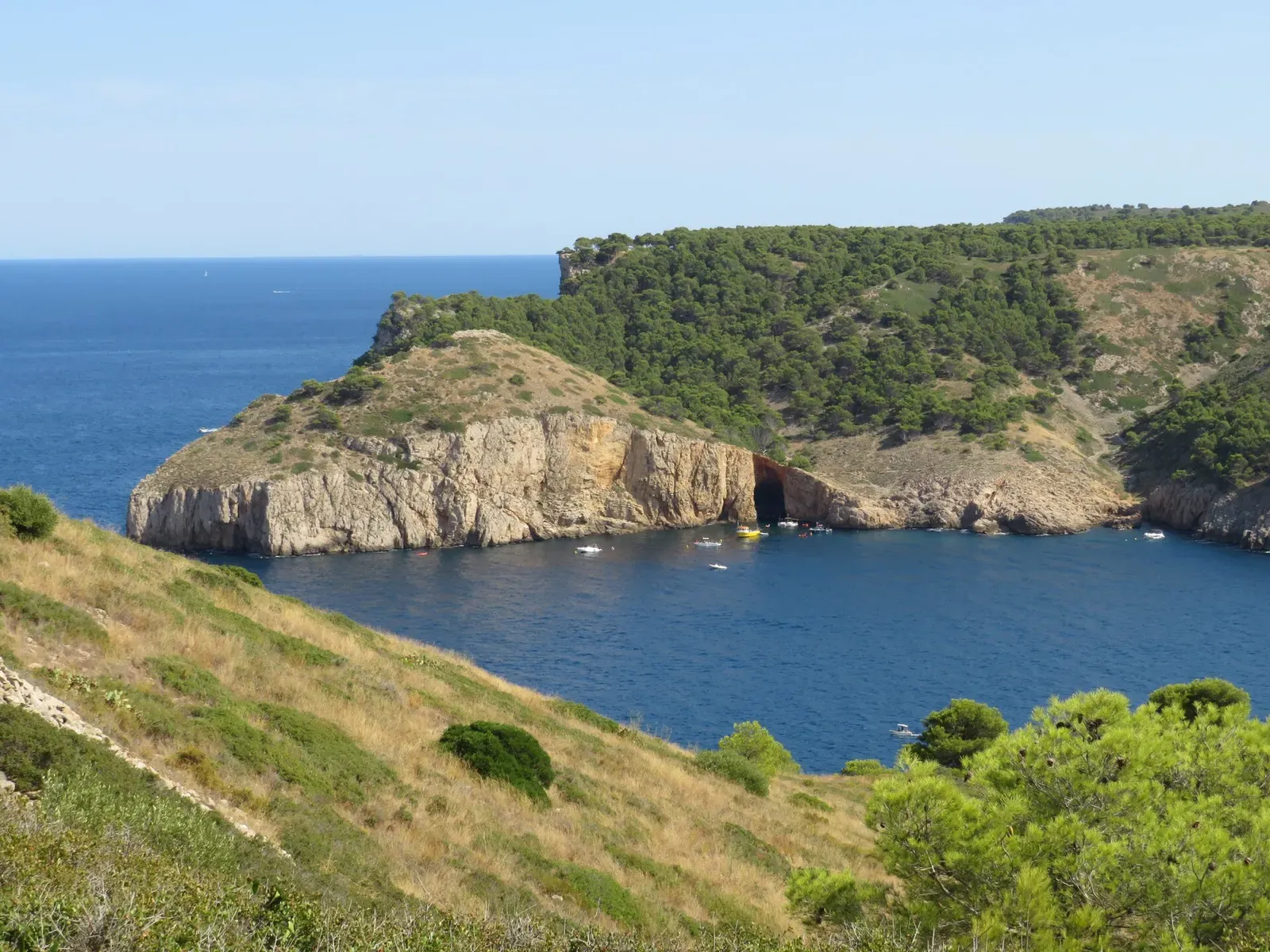
Tunnels, walls and a shallow wreck under the Montgrí cliffs, dived from L'Escala
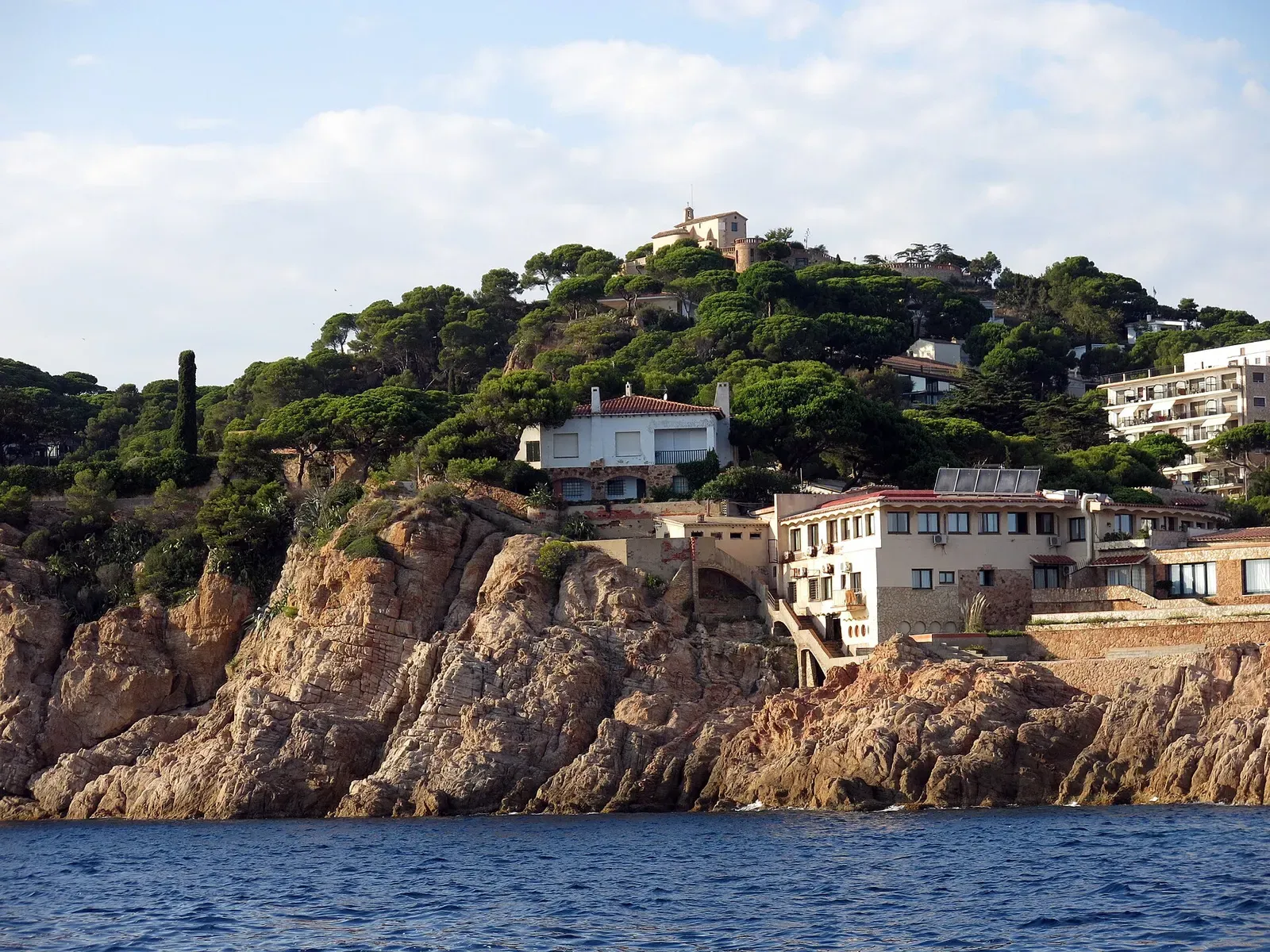
A cave system below the Eden Roc hotel, entered at 25 m from the beach or by boat

Dusky grouper by the dozen inside a Costa Brava marine reserve


.jpeg)
Schist walls, tunnels and red gorgonian fans at the Pyrenees' end