
Mediterranean · Spain
Cap de Creus
Schist walls, tunnels and red gorgonian fans at the Pyrenees' end
Photo: Alan Mattingly · CC0
Where the Pyrenees run into the sea at the northern end of the Costa Brava, the coast breaks into schist headlands, islets and coves that continue underwater as walls and boulder fields. The Tramuntana wind that shapes the landscape also stirs the water, keeping it cold and productive: red gorgonian fans grow from 20 m down, groupers have recovered inside the natural park, and caves and tunnels cut through almost every point. It is the most dramatic topography on mainland Spain's Mediterranean coast.
About diving in Cap de Creus
The wind runs the diving. The Tramuntana decides which side of the cape is workable each morning, so boat plans are made late and changed often, and a week here usually means a mix of north-side and south-side sites rather than a fixed itinerary. When the boats stay in port, sheltered coves such as Cala Jugadora keep the day going as shore dives, and those walk-in entries are part of the normal routine rather than a consolation.
Underwater the schist keeps the shape it has on land: angular ribs and slabs, boulder fields piled at the foot of the headlands, and tunnels and caverns cut through nearly every point, with Punta Falconera near Roses riddled with them between about 10 and 25 m. Walls are the other register, dropping off the offshore stacks at Els Farallons and along Cap de Norfeu, where red gorgonian fans take over below 20 m and grow densest deeper still.
The water is colder than most of the Spanish coast and stays that way, with thermoclines that catch out divers in thin suits even in high summer. The cold is part of why the life is dense, since the same wind-driven mixing that ruins the boat schedule feeds the gorgonians and the fish. Visibility swings hard with conditions, so days here are judged individually rather than by season, and locals plan around the forecast.
It suits divers who like structure and cold-water texture more than warm, empty blue: swim-throughs, macro life on the walls, and a natural park where groupers have visibly recovered. A certified Open Water diver handles it comfortably in a settled summer, but surge on the exposed points, the depth of the better gorgonian walls and the occasional current make Advanced the sensible level for the best of the coast.
Best time to dive Cap de Creus
| Jan | Feb | Mar | Apr | May | Jun | Jul | Aug | Sep | Oct | Nov | Dec | |
|---|---|---|---|---|---|---|---|---|---|---|---|---|
| Season | Fair | Fair | Fair | Good | Good | Prime | Prime | Prime | Prime | Good | Fair | Fair |
| Sea surface | 14°C57°F | 13°C55°F | 13°C55°F | 14°C57°F | 16°C61°F | 20°C68°F | 23°C73°F | 23°C73°F | 22°C72°F | 19°C66°F | 17°C63°F | 15°C59°F |
| Daytime high | 18°C64°F | 18°C64°F | 20°C68°F | 22°C72°F | 26°C79°F | 31°C88°F | 32°C90°F | 33°C91°F | 29°C84°F | 26°C79°F | 22°C72°F | 18°C64°F |
| Rain | 38 mm1.5 in | 28 mm1.1 in | 68 mm2.7 in | 59 mm2.3 in | 45 mm1.8 in | 34 mm1.3 in | 34 mm1.3 in | 28 mm1.1 in | 52 mm2.0 in | 67 mm2.6 in | 67 mm2.6 in | 34 mm1.3 in |
| Jan | Feb | Mar | Apr | May | Jun |
|---|---|---|---|---|---|
| Fair | Fair | Fair | Good | Good | Prime |
| Sea surface | |||||
| 14°C57°F | 13°C55°F | 13°C55°F | 14°C57°F | 16°C61°F | 20°C68°F |
| Daytime high | |||||
| 18°C64°F | 18°C64°F | 20°C68°F | 22°C72°F | 26°C79°F | 31°C88°F |
| Rain | |||||
| 38 mm1.5 in | 28 mm1.1 in | 68 mm2.7 in | 59 mm2.3 in | 45 mm1.8 in | 34 mm1.3 in |
| Jul | Aug | Sep | Oct | Nov | Dec |
|---|---|---|---|---|---|
| Prime | Prime | Prime | Good | Fair | Fair |
| Sea surface | |||||
| 23°C73°F | 23°C73°F | 22°C72°F | 19°C66°F | 17°C63°F | 15°C59°F |
| Daytime high | |||||
| 32°C90°F | 33°C91°F | 29°C84°F | 26°C79°F | 22°C72°F | 18°C64°F |
| Rain | |||||
| 34 mm1.3 in | 28 mm1.1 in | 52 mm2.0 in | 67 mm2.6 in | 67 mm2.6 in | 34 mm1.3 in |
2011–2025 averages. Sea surface: NOAA Coral Reef Watch, measured at the surface, so deeper water can run colder. Daytime high and rain: NASA POWER.
Jun–Sep is warmest and calmest; the Tramuntana blows hardest in winter and spring and regularly cancels boats for days at a time.
Best months: June, July, August, September
Cap de Creus water temperature and weather by month
The sea surface runs from 13 °C (55 °F) in February to 23 °C (73 °F) in August. Rain falls through the year, about 50 mm (2 in) a month on average, with March the wettest. Daytime highs reach 33 °C (91 °F) in August and drop to 18 °C (64 °F) in January. The coldest water here is about 12 °C (54 °F), so pack a 7 mm suit with a hood, or a semi-dry.
Dive types & marine life
Red gorgonian fans start around 20 m and thicken with depth, and groupers have recovered inside the park well enough to be seen regularly. Octopus, cuttlefish and nudibranchs make the shallows worth diving slowly, while reef-fish shoals and passing barracuda are heaviest in the settled June to September stretch.
- Wall
- Reef
- Cave & cavern
- Drift
- Groupers
- Barracuda
- Octopus & cuttlefish
- Nudibranchs
- Reef fish swarms
- Macro critters
Best dive sites in Cap de Creus
Reef
A giant anchor and its chain links lying at 21 m
Sand, coralligenous and rock between 12 and 30 m
Seamount
The park's only offshore seamount, 8 m to 60 m
Circle the reef from 18 to 32 m, with the Phedon's remains on it
Seamount
Seamount rock from 5 m to past 40 m, gorgonians throughout
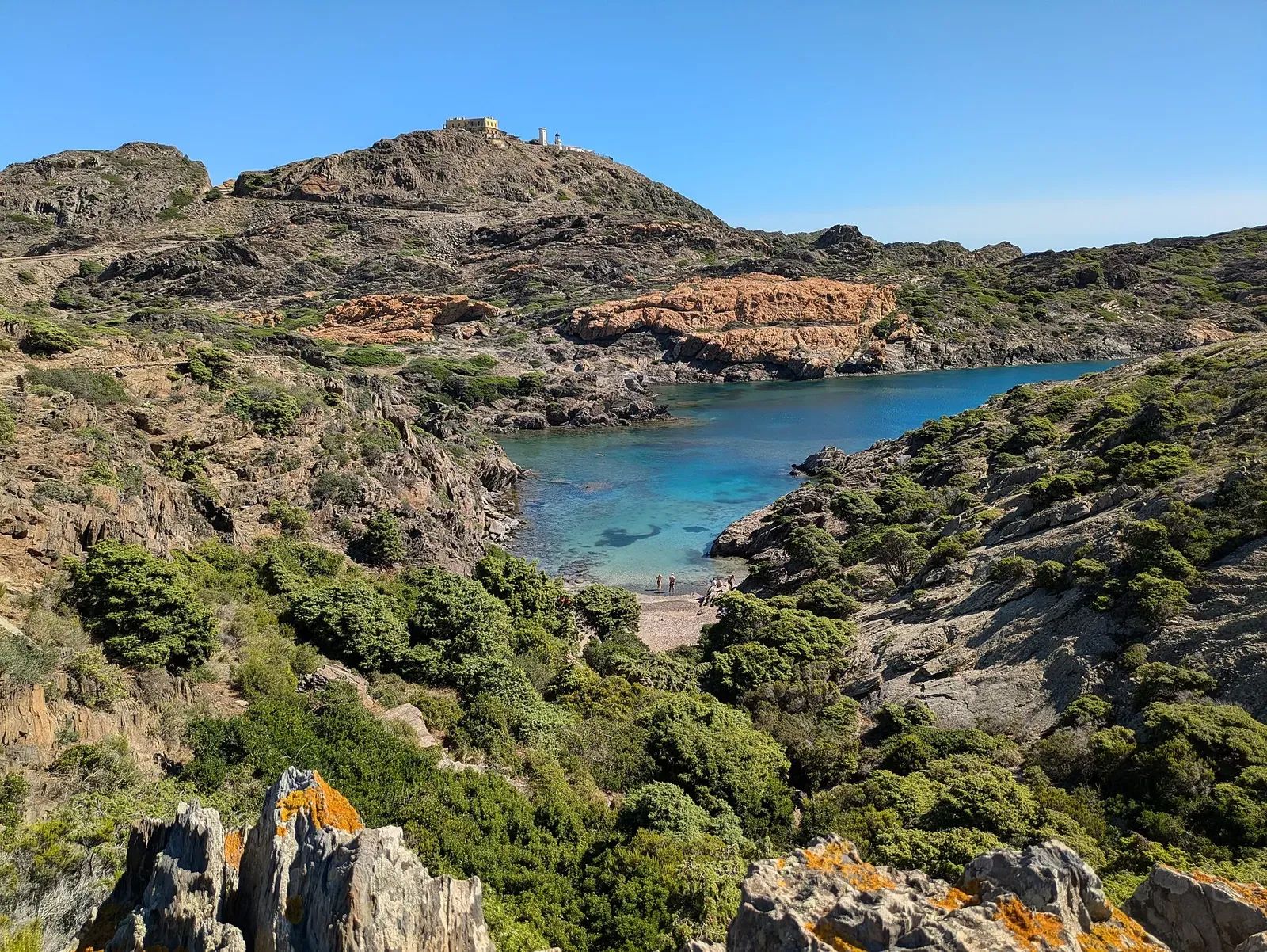
A marine-reserve cove under the Cap de Creus lighthouse
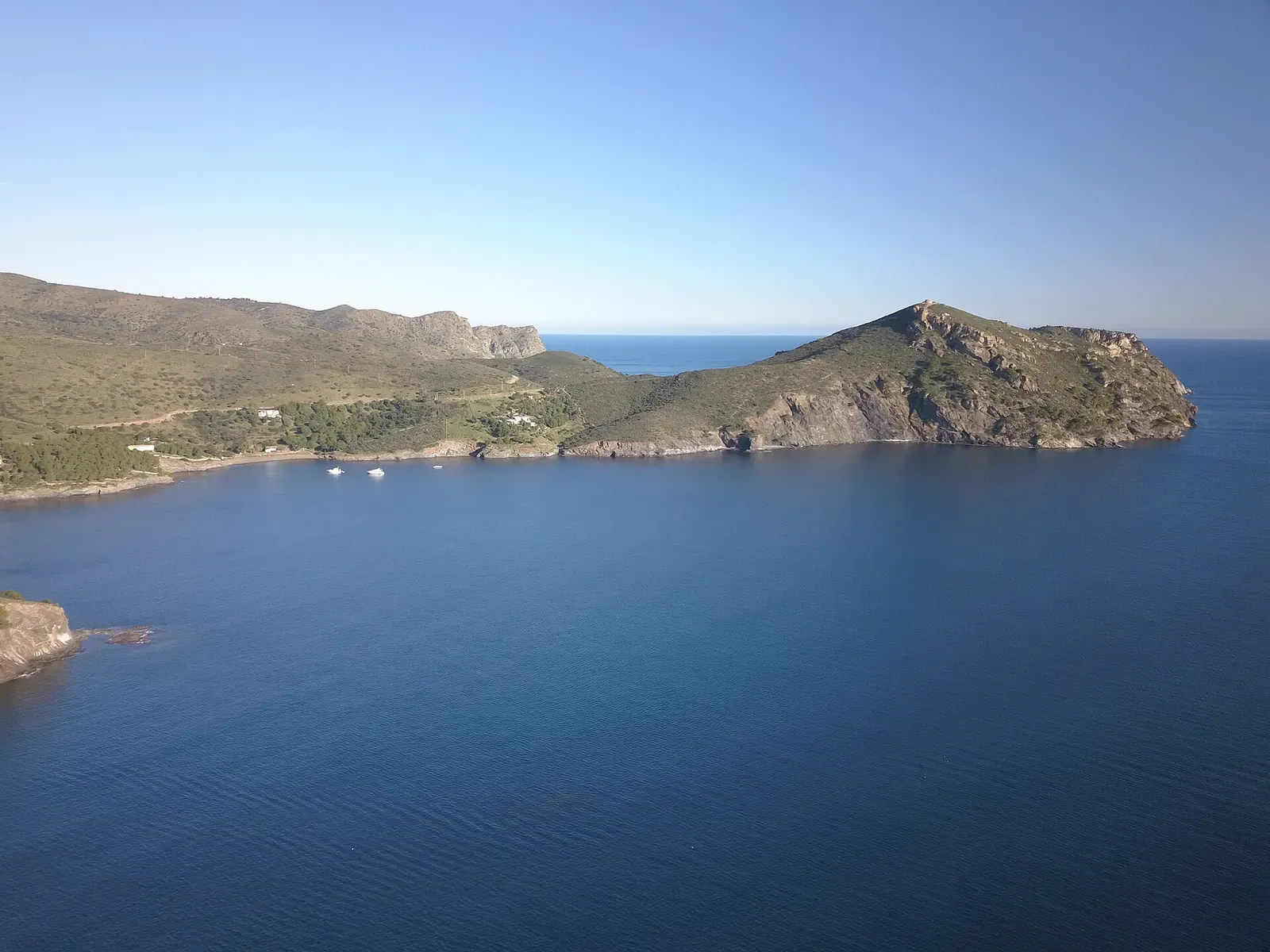
The park's best-known walls, and a cave with an air pocket
Reef
A 40 m canyon at the end of a 5 to 20 m drop-off
Pinnacle
Maze-like rock stacks full of red sea fans to 40 m
Canyons, rifts and drop-offs between 10 and 30 m
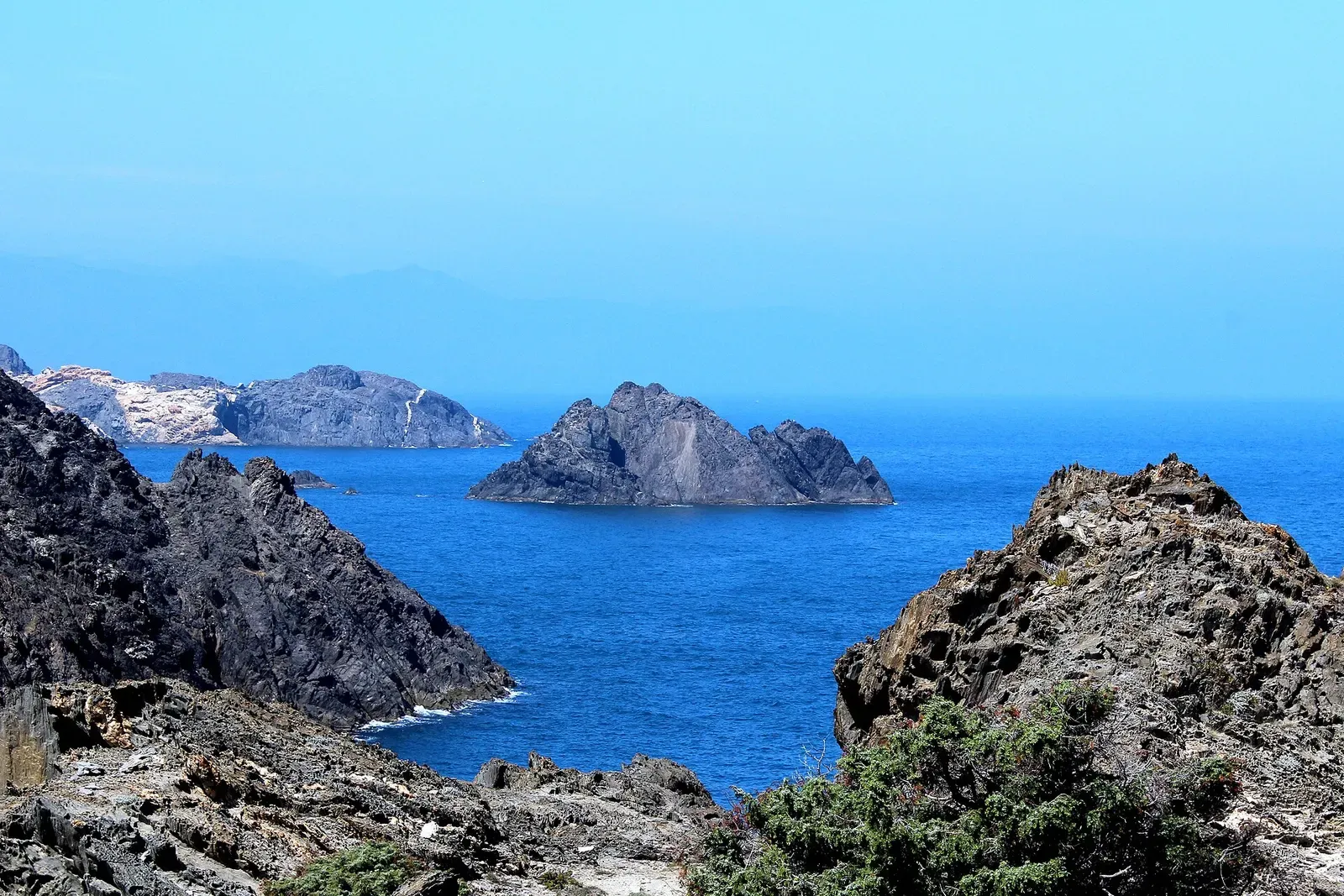
Gorgonian walls in the lee of the tramuntana
Cave & cavern
A drop-off to 45 m and an air pocket from 14 m to 3 m
Wall
Drop-off from 27 to 40 m, then scree at 20 m
Wall
Fast drop-off onto a gorgonian platform at 30 m
Pinnacle
Up to 25 large dusky groupers on one offshore pinnacle
Pinnacle
A 40 m rocky canyon through a submerged mountain
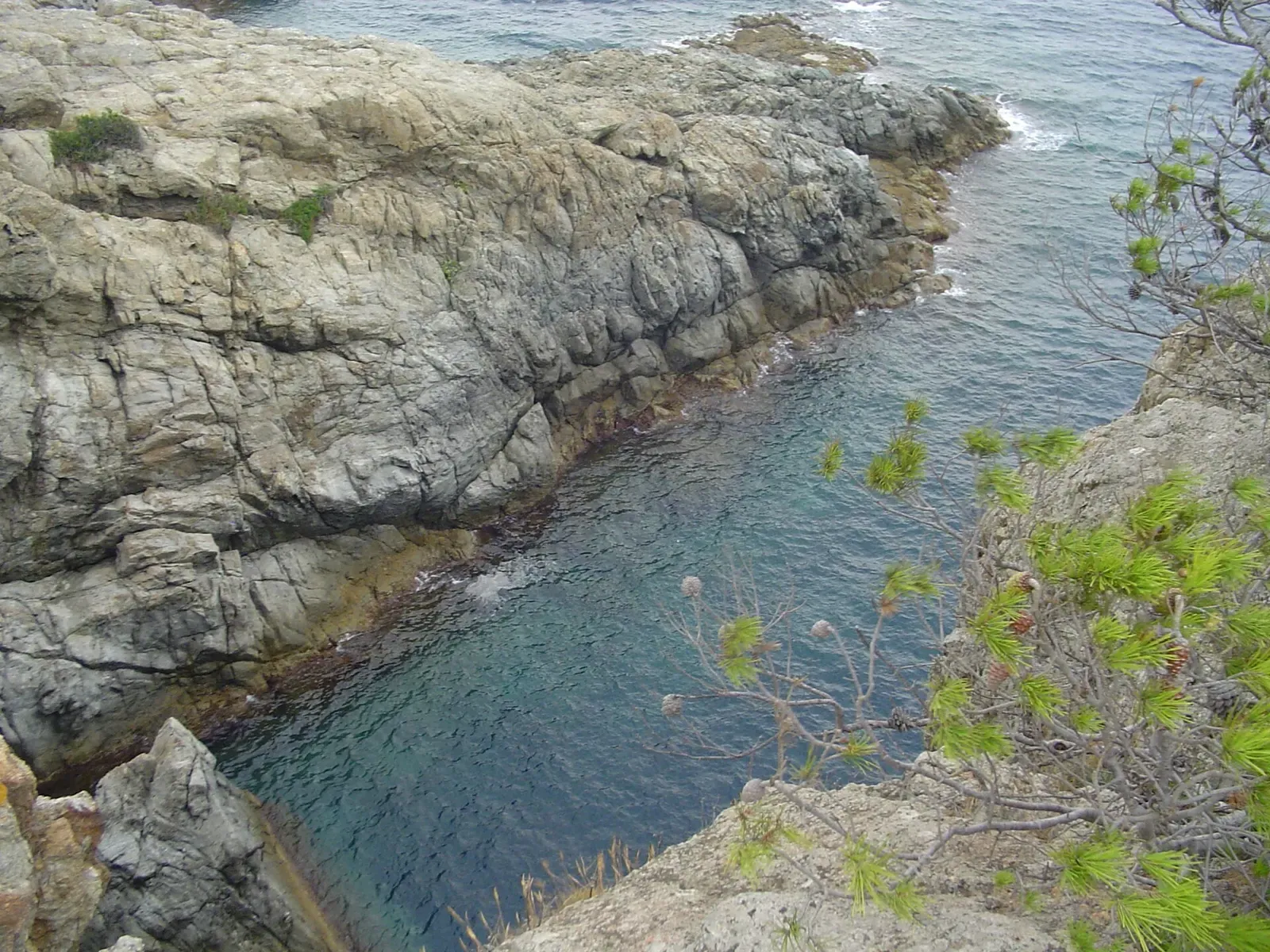
Stepped platforms, a chimney-tunnel and gorgonian walls
Reef
Protected island rock from 12 m to past 40 m
How to get to Cap de Creus
Girona is the nearest airport and Barcelona the better connected, both a road transfer away. Roses and Cadaqués are the usual bases, with short boat runs around the cape and reliable shore entries from coves like Cala Jugadora when the Tramuntana rules boats out.
Photos from Cap de Creus
WINDENRIC · CC BY 2.0
Dive videos
Buceo en Cap de Creus y Massa d'Or - Cadaqués Diving · Angel Sanchez on YouTube
Photo credits
- Pre-Cambrian schist islets of Illa Encalladora in bright blue sea off Cap de Creus by Alan Mattingly, CC0, via Wikimedia Commons
- Folded schist headlands of Cap de Creus enclosing a deep blue inlet by WINDENRIC, CC BY 2.0, via Openverse
Embed
Run a dive centre, club or blog? Embed this map of 12 dive sites near Cap de Creus on your own page.
In The Logbook
- Wetsuit thickness by water temperatureGear & kit · 11 min read
- Sunfish diving: where and when to see a molaBig animals · 11 min read
Similar destinations
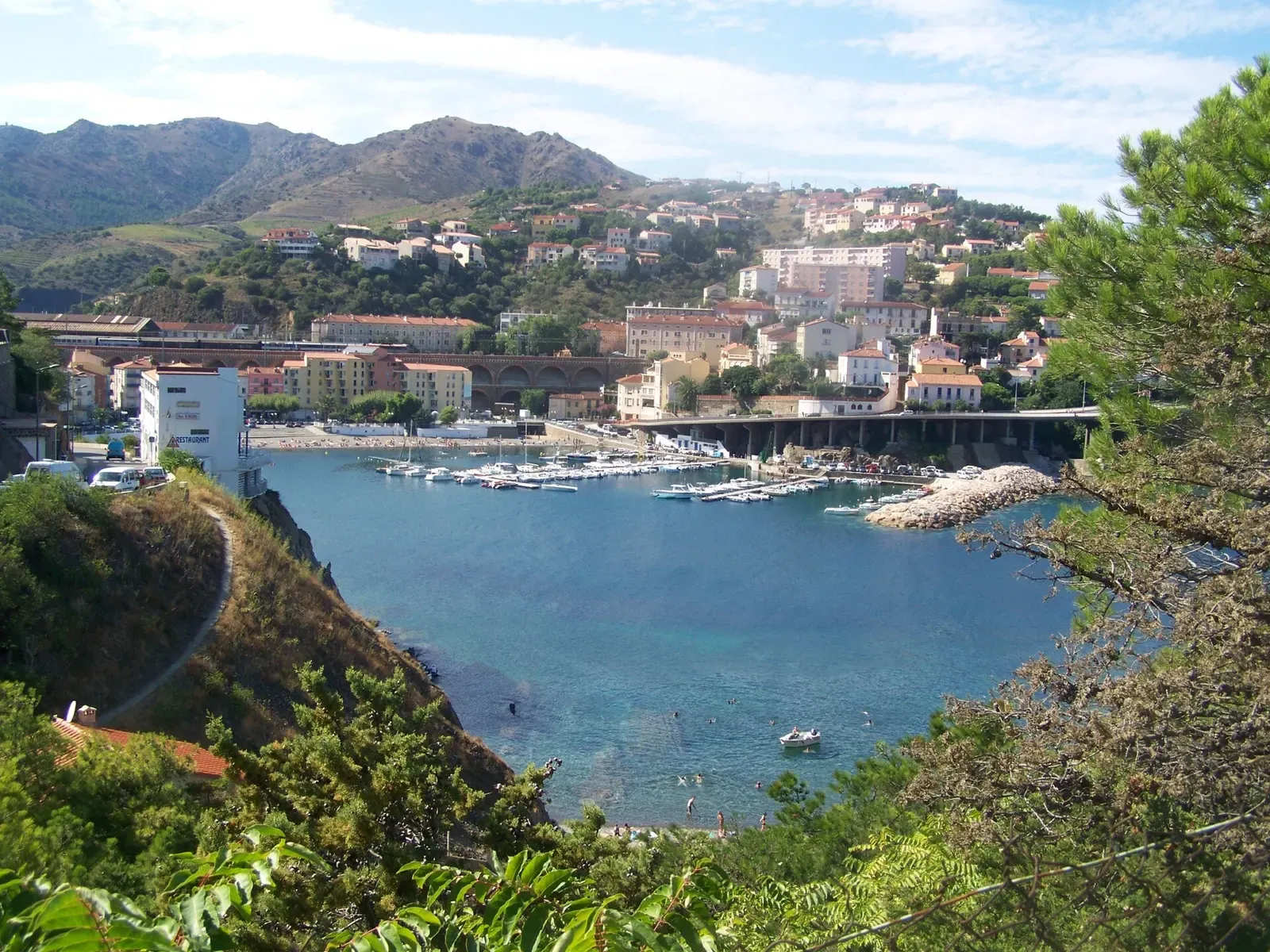
Reserve reef diving at Cerbère-Banyuls, France's first marine reserve
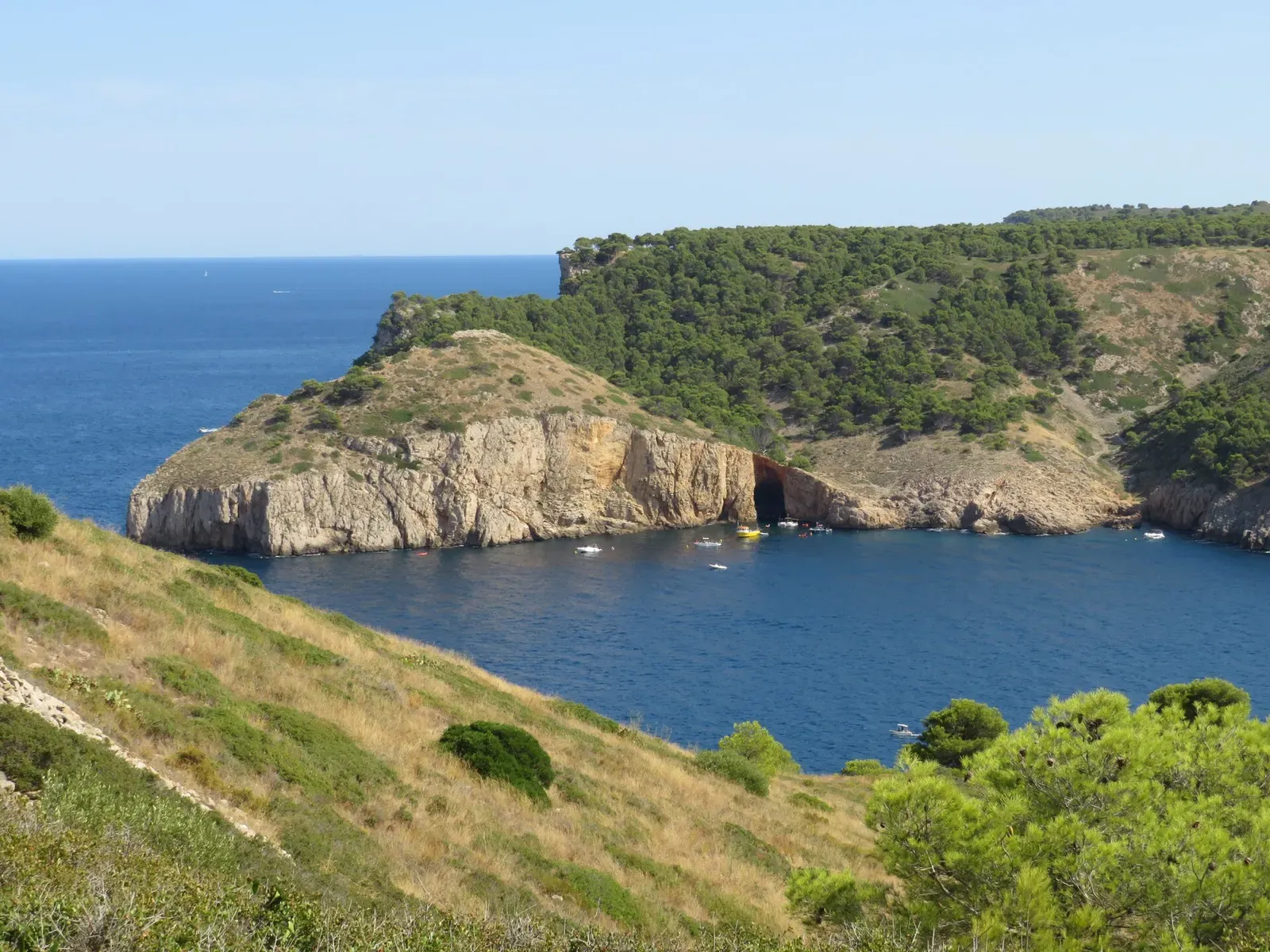
Tunnels, walls and a shallow wreck under the Montgrí cliffs, dived from L'Escala

Dusky grouper by the dozen inside a Costa Brava marine reserve
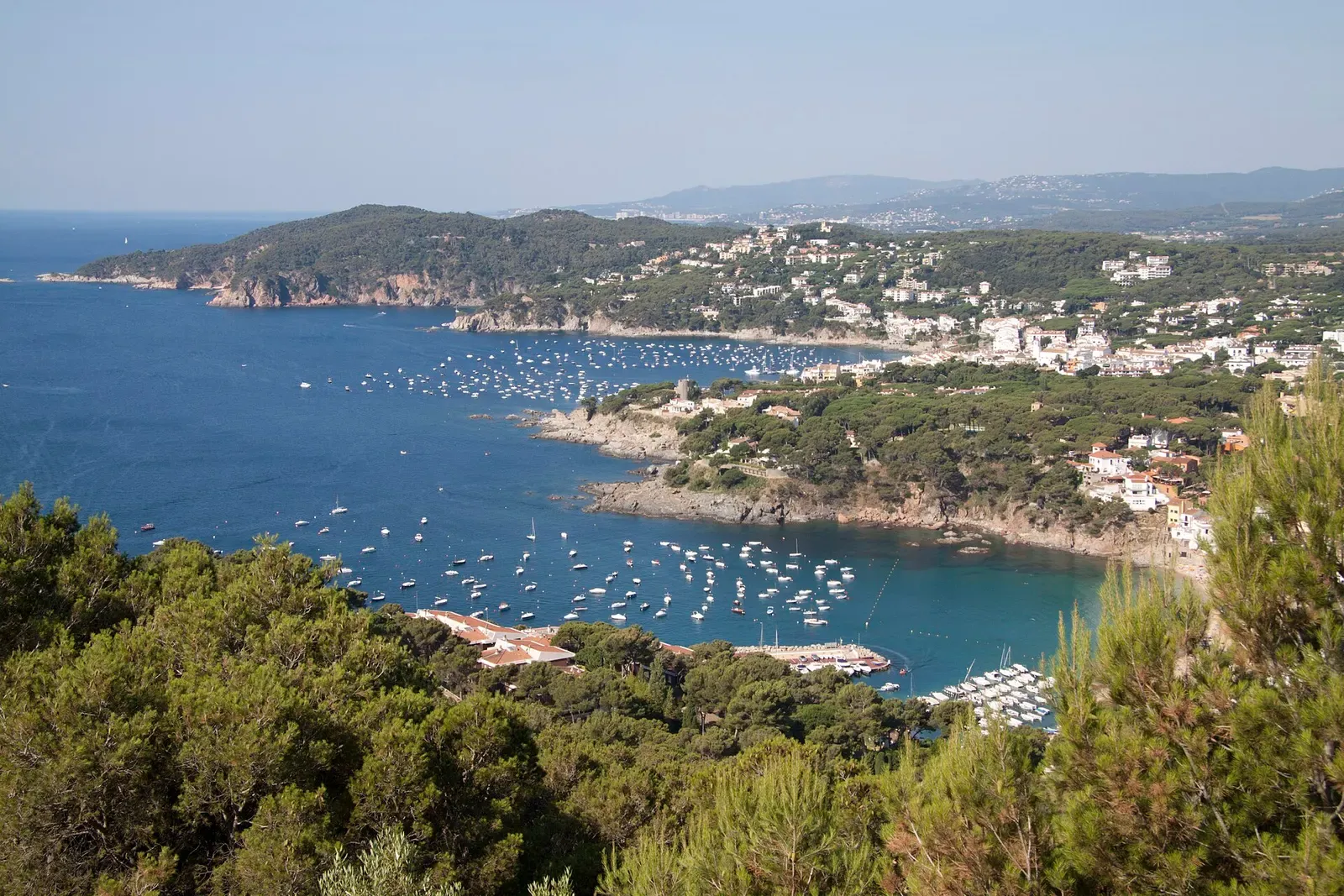

Three seamounts, a navy-tug wreck and gorgonian walls between Palamós and Cap de Begur