Monterey Bay · United States · Kelp forest · Wall · Reef
Point Lobos — Whalers Cove
A 77-metre wall at 18-20 m, off the cove boat ramp
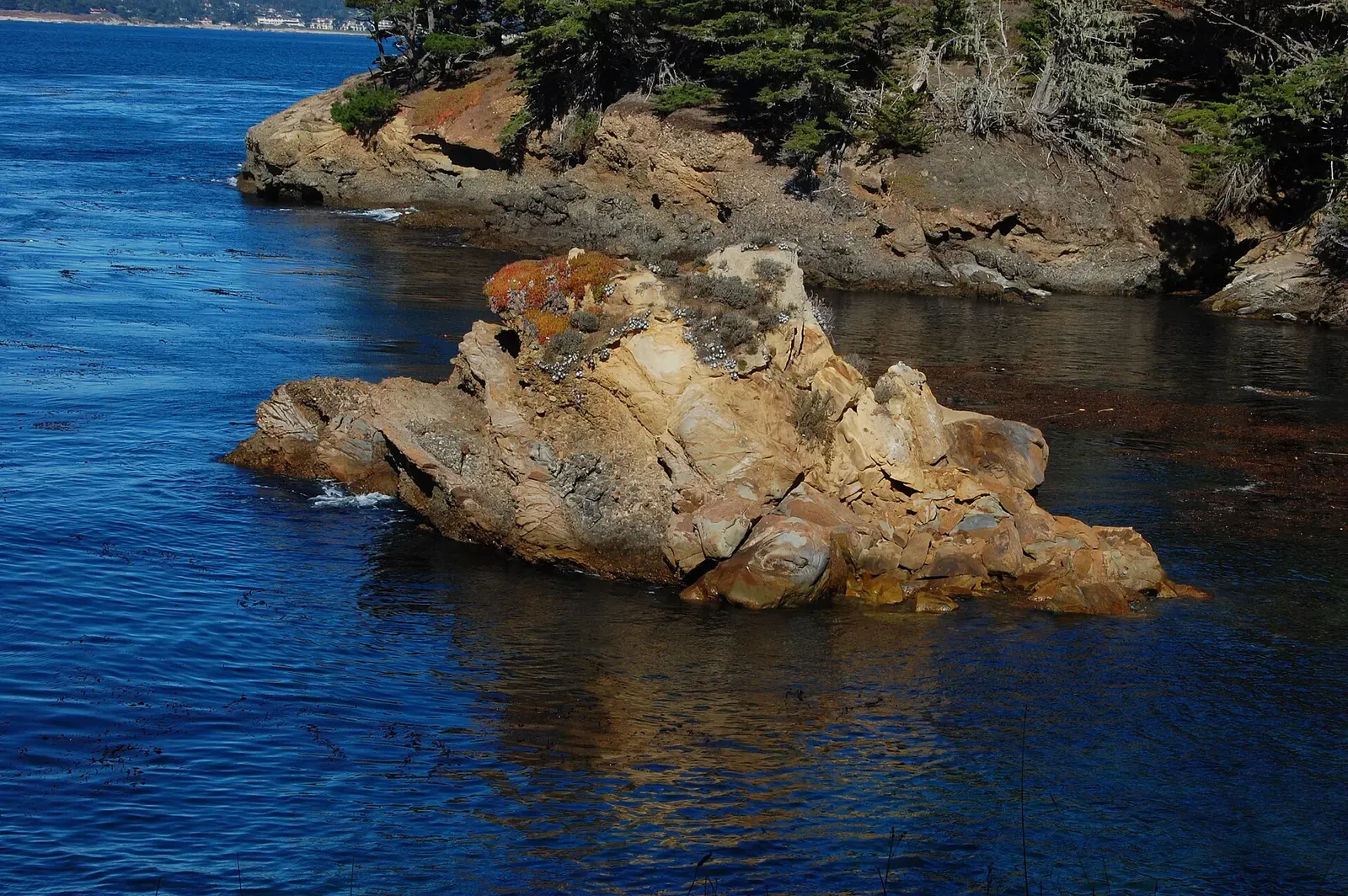
Photo: Eugene Zelenko · CC BY-SA 4.0
Whalers Cove is the boat-ramp entry inside Point Lobos State Natural Reserve, and one of only two coves in the reserve where diving is permitted at all. Dives are booked in advance and certification is checked, and what the paperwork buys is kelp standing 21 m off the reef, with lingcod, rockfish, harbour seals, sea otters and sea stars in it.
Also known as Whaler's Cove, Point Lobos.
Where it is and how deep
36.5200° N, 121.9390° WPublished position for this site.
Site maps published elsewhere
The dive
You kit up at the car park and walk in at the boat ramp, the entry point that makes this cove the reserve's primary diving access and the start of almost every dive here. Reservations and certification cards are checked before you get that far. Beyond the cove the ground is rock and sand under kelp that stands as much as 21 m off the bottom, and the marks divers navigate between sit in the sand channels that run between the reefs.
The first landmark on the standard route is the Worm Patch, a brown dome-shaped worm mound sitting in a sand channel roughly 30 m north of Dog Rock, in 8 to 9 m of water depending on the tide. Its texture, tunnelled by the worms that build it, is what tells it apart from the sand around it. From there the route runs out along the reef, and how much of that swim is under canopy depends on the season: kelp cover here is highly variable.
Further out, Granite Point Wall runs about 77 m long at 18 to 20 m, its face covered in sponges, nudibranchs and soft corals, and it lies some 90 m north-east of the end of Middle Reef. Two more features sit at the edge of recreational range: the Lone Metridium, a freestanding anemone-covered mark at about 21 m, and the Sea Mount, a boxcar-shaped rock with vertical sides that starts near 18 m and drops to about 27 m.
The Lone Metridium is not a target for anyone new to the cove, and less so on a low-visibility day, because finding it depends on running a heading rather than on seeing it. The way back is a return along the reef towards the ramp, finishing shallow in the kelp inside the cove. Submerged car tyres, left on the bottom as habitat, turn up along the way.
Marine life and season
- Seals & sea lions
- Nudibranchs
| Jan | Feb | Mar | Apr | May | Jun | Jul | Aug | Sep | Oct | Nov | Dec |
|---|---|---|---|---|---|---|---|---|---|---|---|
| Fair | Fair | Good | Good | Good | Fair | Fair | Fair | Prime | Prime | Prime | Fair |
Season follows Monterey Bay: September to November is the calm, clearer stretch; summer plankton blooms cut visibility and winter brings the biggest swells.
Know before you go
- Kelp cover is seasonal and highly variable, changing both visibility and navigation from one month to the next; run a compass route rather than relying on landmarks you used last trip.
- The Lone Metridium at about 21 m is not recommended for divers new to the site, especially in low visibility, since reaching it depends on navigating from known marks.
Photos from Point Lobos — Whalers Cove
Eugene Zelenko · CC BY-SA 4.0
Kevin.Daniels · CC BY 3.0
Eugene Zelenko · CC BY-SA 4.0
Dive videos
Point Lobos Whaler's Cove Dive · d5kenn on YouTube
Questions divers ask
How deep is the diving at Whalers Cove?+
Standard routes run from about 8 to 9 m at the Worm Patch out to 18-21 m along Granite Point Wall and the Lone Metridium. The deepest documented feature is the Sea Mount, which starts near 18 m and drops to about 27 m.
Do you need a reservation to dive Point Lobos?+
Yes. Diving is permitted only in Whalers and Bluefish Coves, and both proof of certification and an advance reservation are required (831-624-8413). The fee is $20 on weekdays and $30 at weekends and holidays plus processing, with $10 per car for parking.
What will you see diving Whalers Cove?+
Kelp forest standing up to 21 m off the reef, with lingcod, rockfish, harbour seals, sea otters and sea stars. Granite Point Wall, at 18 to 20 m, is covered in sponges, nudibranchs and soft corals.
Sources
- SCUBA Diving at Point Lobos State Natural Reserve — California State Parks
- Point Lobos Trail Map — Bay Area Underwater Explorers
- Point Lobos Dive Site — PADI
- Point Lobos — Wikipedia
Photo credits
- Sunlit granite outcrop rising from the blue water of Whalers Cove, framed by cypress-covered shoreline by Eugene Zelenko, CC BY-SA 4.0, via Wikimedia Commons
- Waves breaking over granite rocks off Whalers Cove with the Carmel coastline visible beyond by Eugene Zelenko, CC BY-SA 4.0, via Wikimedia Commons
- Wind-bent cypress trees frame the calm turquoise water of Whalers Cove seen from the bluff above by Kevin.Daniels, CC BY 3.0, via Wikimedia Commons
- Lichen-covered granite in the foreground with an offshore rock breaking the swell at Whalers Cove by Eugene Zelenko, CC BY-SA 4.0, via Wikimedia Commons
In The Logbook
- Kelp forest diving, and where it still growsCold water · 13 min read
- The best wall dives in the worldWalls & drop-offs · 11 min read
- How far you can see underwaterOcean science · 12 min read
- Why is some sea green instead of blue?Ocean science · 8 min read
- Cold-water diving: is it worth the drysuit?Cold water · 8 min read
- The best shore dives in the worldShore diving · 8 min read
More dive sites in Monterey Bay
Pinnacle
Granite pinnacle at 12 m (40 ft) with a vertical wall on its offshore face
Sand slope
Kelp and rock reef at 30-40 feet (12 m), with the trench a short swim out
Similar dives elsewhere
Point-to-cove kelp swim from Long Point to Cobble Beach

Concrete steps into the first underwater park in the US


Shore dive on a 9 m cove inside a no-take marine reserve
Kelp forest
Malaga Cove
Redondo, Palos Verdes & San Pedro · United States
Thick, shallow kelp forest over rock, full of fish