North America · United States
Monterey Bay
Beach-entry kelp forests inside a national marine sanctuary
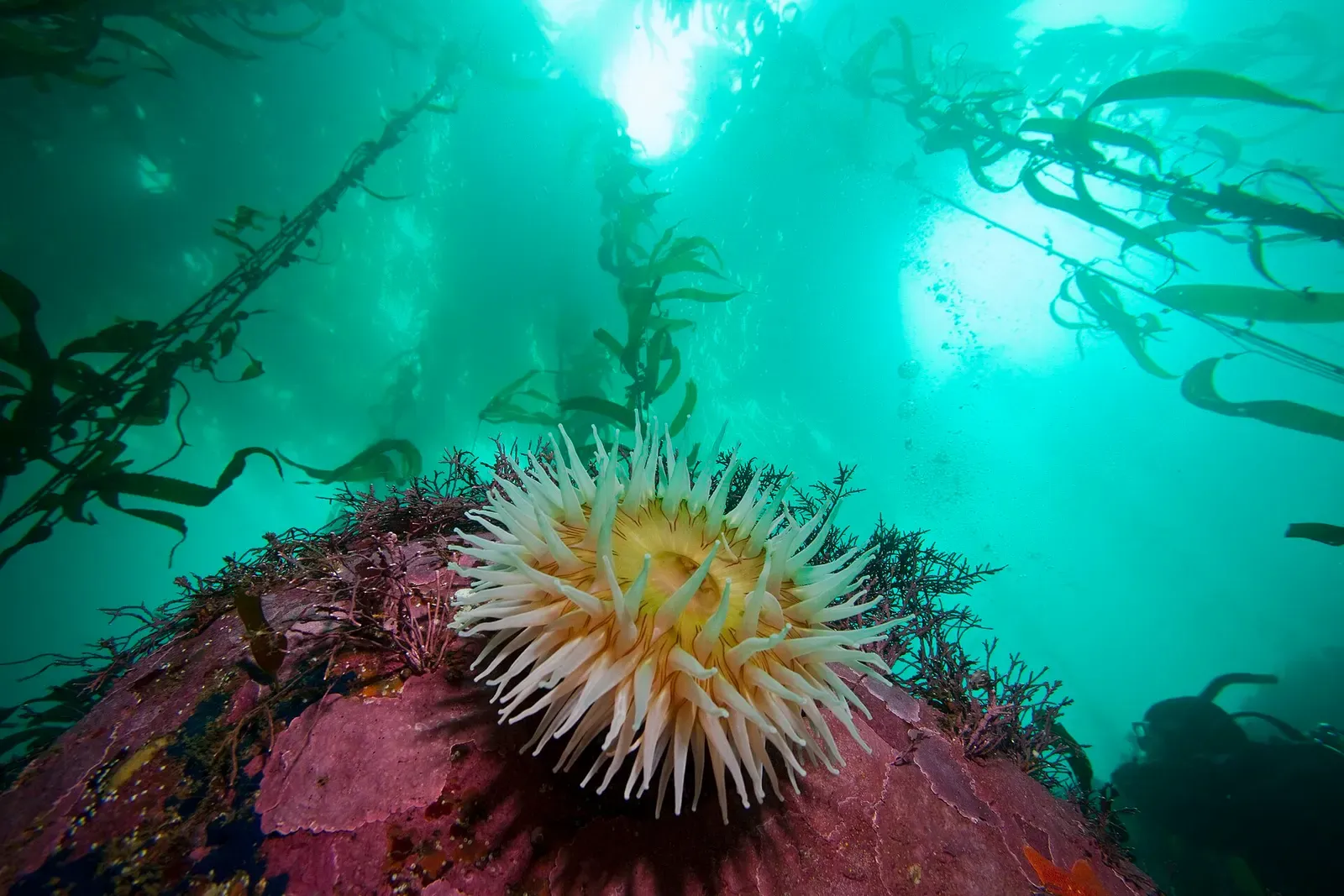
Photo: Chad King / NOAA · Public domain
Monterey Bay offers cold-water diving inside a national marine sanctuary in California, with kelp forests and rocky reefs reached mostly from the beach. The Breakwater is often used for training and night dives, Whalers Cove at Point Lobos has walls, pinnacles and kelp forest, and boats run to the pinnacles in Carmel Bay. Harbor seals and sea lions share the water, and gray whale sightings increase in winter and spring.
About diving in Monterey Bay
Most of the diving here is from shore. Bluefish and Whalers Coves at Point Lobos, Lovers Point in Pacific Grove, and Monterey State Beach, San Carlos Beach and McAbee Beach are dived by every level, and the Breakwater, with calm water and a concrete stair entry, is often used for training and night dives. Boats serve the less accessible sites and are the only way to the offshore pinnacles. Sites inside Monterey Bay are normally protected from the prevailing northwest swells, and winter brings the largest swells of the year.
Underwater the coast is rocky reef and kelp forest, with rockfish and lingcod around the rocks, seastars carpeting the floor, and nudibranchs and abalone among them. Octopus, monkeyface eels and wolf eels can be seen among the rocks, and sea lions and tube anemones are found on the sandy floor. Point Lobos adds walls: the wall at Granite Point runs at 18–20 m (60–65 ft), covered with sponges, nudibranchs and soft corals, with kelp growing along its top. At the Breakwater, small shrimp, juvenile abalone, flatworms and small crabs suit macro photographers.
The bay suits divers who want cold-water kelp forest and invertebrate life reached from the beach. Beginners train at the Breakwater and at McAbee Beach, where a thick kelp forest and rocky reef hold sea hares, rockfish, crabs and anemones. Monastery Beach and Carmel River State Beach are popular with advanced divers, and Monastery calls for experience with surf entries and exits. Carmel Bay sites are more exposed to weather and a few degrees colder than those inside Monterey Bay, but their visibility can be better.
Best time to dive Monterey Bay
| Jan | Feb | Mar | Apr | May | Jun | Jul | Aug | Sep | Oct | Nov | Dec | |
|---|---|---|---|---|---|---|---|---|---|---|---|---|
| Season | Fair | Fair | Good | Good | Good | Fair | Fair | Fair | Prime | Prime | Prime | Fair |
| Sea surface | 13°C55°F | 13°C55°F | 12°C54°F | 12°C54°F | 12°C54°F | 13°C55°F | 14°C57°F | 15°C59°F | 15°C59°F | 15°C59°F | 14°C57°F | 13°C55°F |
| Daytime high | 19°C66°F | 20°C68°F | 21°C70°F | 22°C72°F | 22°C72°F | 24°C75°F | 22°C72°F | 25°C77°F | 28°C82°F | 29°C84°F | 23°C73°F | 20°C68°F |
| Rain | 80 mm3.1 in | 66 mm2.6 in | 76 mm3.0 in | 24 mm0.9 in | 12 mm0.5 in | 5 mm0.2 in | 1 mm0.0 in | 1 mm0.0 in | 6 mm0.2 in | 19 mm0.7 in | 49 mm1.9 in | 88 mm3.5 in |
| Jan | Feb | Mar | Apr | May | Jun |
|---|---|---|---|---|---|
| Fair | Fair | Good | Good | Good | Fair |
| Sea surface | |||||
| 13°C55°F | 13°C55°F | 12°C54°F | 12°C54°F | 12°C54°F | 13°C55°F |
| Daytime high | |||||
| 19°C66°F | 20°C68°F | 21°C70°F | 22°C72°F | 22°C72°F | 24°C75°F |
| Rain | |||||
| 80 mm3.1 in | 66 mm2.6 in | 76 mm3.0 in | 24 mm0.9 in | 12 mm0.5 in | 5 mm0.2 in |
| Jul | Aug | Sep | Oct | Nov | Dec |
|---|---|---|---|---|---|
| Fair | Fair | Prime | Prime | Prime | Fair |
| Sea surface | |||||
| 14°C57°F | 15°C59°F | 15°C59°F | 15°C59°F | 14°C57°F | 13°C55°F |
| Daytime high | |||||
| 22°C72°F | 25°C77°F | 28°C82°F | 29°C84°F | 23°C73°F | 20°C68°F |
| Rain | |||||
| 1 mm0.0 in | 1 mm0.0 in | 6 mm0.2 in | 19 mm0.7 in | 49 mm1.9 in | 88 mm3.5 in |
2011–2025 averages. Sea surface: NOAA Coral Reef Watch, measured at the surface, so deeper water can run colder. Daytime high and rain: NASA POWER.
Autumn is the best stretch: from September to November conditions are calmer, visibility improves and marine life is abundant. Winter brings the largest waves and swells of the year, which stir up the coastal water. Winter and spring, from December to May, bring cooler temperatures, but the kelp forests thrive and sightings of harbor seals, sea lions and migrating gray whales increase. Summer, from June to August, has warmer air but plankton blooms can reduce visibility.
Best months: September, October, November
Monterey Bay water temperature and weather by month
The sea surface runs from 12 °C (54 °F) in April to 15 °C (59 °F) in September. Most rain falls from November to March, peaking at about 90 mm (3.5 in) in December; it stays largely dry from May to October. Daytime highs reach 29 °C (84 °F) in October and drop to 19 °C (66 °F) in January. Below the surface the water can drop to about 9 °C (48 °F), so pack a drysuit.
Dive types & marine life
Seals, otters and sea lions play in the shallows, and sightings of harbor seals and sea lions rise from December to May, when migrating gray whales also pass. Sea lions make good photo subjects at the Breakwater in fall and winter.
- Kelp forest
- Reef
- Wall
- Night
- Seals & sea lions
- Octopus & cuttlefish
- Nudibranchs
- Whales
- Reef fish swarms
- Macro critters
Best dive sites in Monterey Bay
- 1
Breakwater
Calm, protected beach dive of 3–18 m (10–60 ft) used for Open Water classes and night dives.
- 2
Point Lobos — Whalers Cove
The most popular dive in Point Lobos, with walls, pinnacles and kelp forest.
- 3
Monastery Beach
Loose-gravel beach with pounding surf; the dive follows the kelp line in 9–12 m (30–40 ft), for advanced divers.
- 4
Carmel Bay Pinnacles
Two submerged peaks off the northwest tip of Carmel Bay, reached only by boat, with fish schools under the kelp canopy.
- 5
Lovers Point
Sand entry to rock ridges with plenty of fish life, and pinnacles to the north.
- 6
Metridium Fields
Rocky outcroppings covered in Metridium anemones.
Site guides
Pinnacle
Granite pinnacle at 12 m (40 ft) with a vertical wall on its offshore face
Sand slope
Kelp and rock reef at 30-40 feet (12 m), with the trench a short swim out
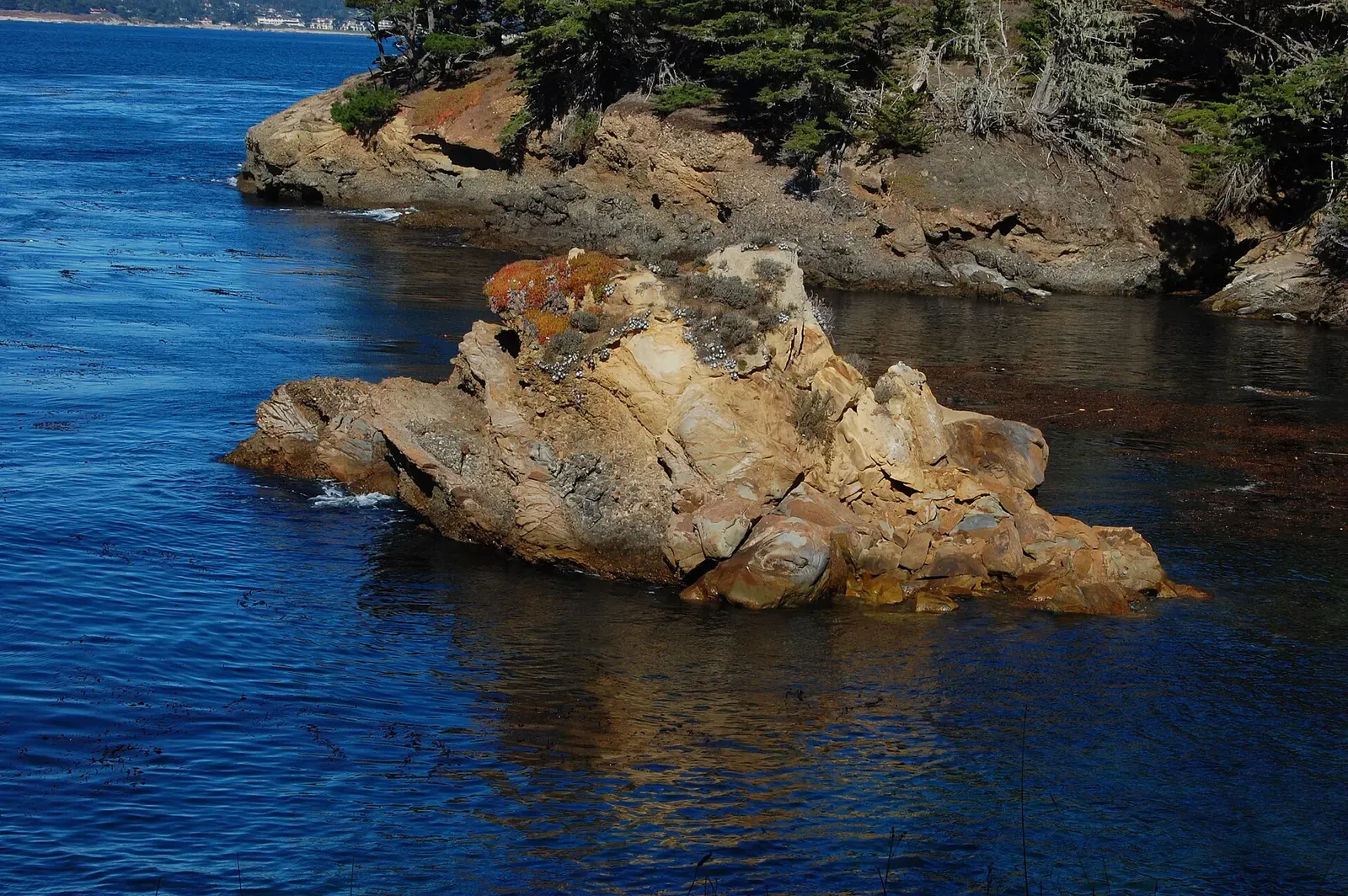
A 77-metre wall at 18-20 m, off the cove boat ramp
How to get to Monterey Bay
San Jose International Airport is about 1.5 hours away and San Francisco International about two hours' drive. A rental car is the easiest way to reach the beach dives, marine reserves and kelp forests.
Photos from Monterey Bay
Tony Hisgett · CC BY 2.0
Rhododendrites · CC BY-SA 4.0
Dive videos
Diving with the HARBOR SEALS of Monterey Bay! · BlueWorldTV on YouTube
Kelp Forest Scuba Diving at McAbee Beach & McAbee Pinnacle, Monterey, California, 09/17/22 · Calvin Wen on YouTube
Questions divers ask
Do I need advanced certification to dive Monterey?+
No. Point Lobos, Lovers Point and the Monterey beaches are dived by all levels, and the Breakwater is rated beginner or better. Monastery Beach and Carmel River State Beach are the ones that favour advanced divers.
Can I dive Monterey without a boat?+
Yes, most of the diving is from shore. A boat is needed for the offshore pinnacles, such as the pair at the northwest tip of Carmel Bay.
What exposure suit should I bring?+
At least a wetsuit: the water is usually closer to 10 °C (50 °F) and only sometimes reaches 16 °C (60 °F). Wetsuits and drysuits can both be rented in Monterey.
Can I collect anything at Lovers Point?+
No. The Lovers Point-Julia Platt marine reserve makes it unlawful to injure, damage, take or possess any living, geological or cultural marine resource.
Sources
- Monterey Scuba Diving — See Monterey
- Monterey Average Sea Temperatures — SeaTemperature.org
- Local Diving — Aquarius Dive Shop
- Monterey Bay Scuba — Monterey Bay Scuba
- Diving in Monterey — PADI
- Monastery Beach — Scubago (SSI MyDiveGuide)
- Point Lobos Trail Map — Bay Area Underwater Explorers
- Lovers Point-Julia Platt State Marine Reserve — California Department of Fish and Wildlife
- Monterey’s Iconic Dive Site: The Breakwater — California Diving News
- Monterey Bay Scuba Diving — DEKT
- Weather and Ocean Conditions — Monterey Bay National Marine Sanctuary / NOAA
Photo credits
- A pale anemone on a rock inside a sunlit kelp forest in Monterey Bay National Marine Sanctuary by Chad King / NOAA, Public domain, via Wikimedia Commons
- Harbor seal resting on a surf-washed rock in Monterey Bay by Tony Hisgett, CC BY 2.0, via Wikimedia Commons
- Rocky shoreline near Cannery Row overlooking Monterey Bay's waters by Rhododendrites, CC BY-SA 4.0, via Wikimedia Commons
Embed
Run a dive centre, club or blog? Embed this map of 4 dive sites near Monterey Bay on your own page.
In The Logbook
- Kelp forest diving, and where it still growsCold water · 13 min read
- The best wall dives in the worldWalls & drop-offs · 11 min read
- How far you can see underwaterOcean science · 12 min read
- Where to dive in every month of the yearTrip planning · 14 min read
- Why is some sea green instead of blue?Ocean science · 8 min read
- Cold-water diving: is it worth the drysuit?Cold water · 8 min read
- The best shore dives in the worldShore diving · 8 min read
Similar destinations

Permit-limited giant kelp forest with sea otters working the shallows

Walk down the stairs at Casino Point straight into a giant kelp forest

Market squid spawn in their millions over the sand on winter nights
.jpg)
.jpg)
.jpg)
Playful sea lions and towering kelp forests around rocky island pinnacles.