North America · United States
Morro Bay & Port San Luis
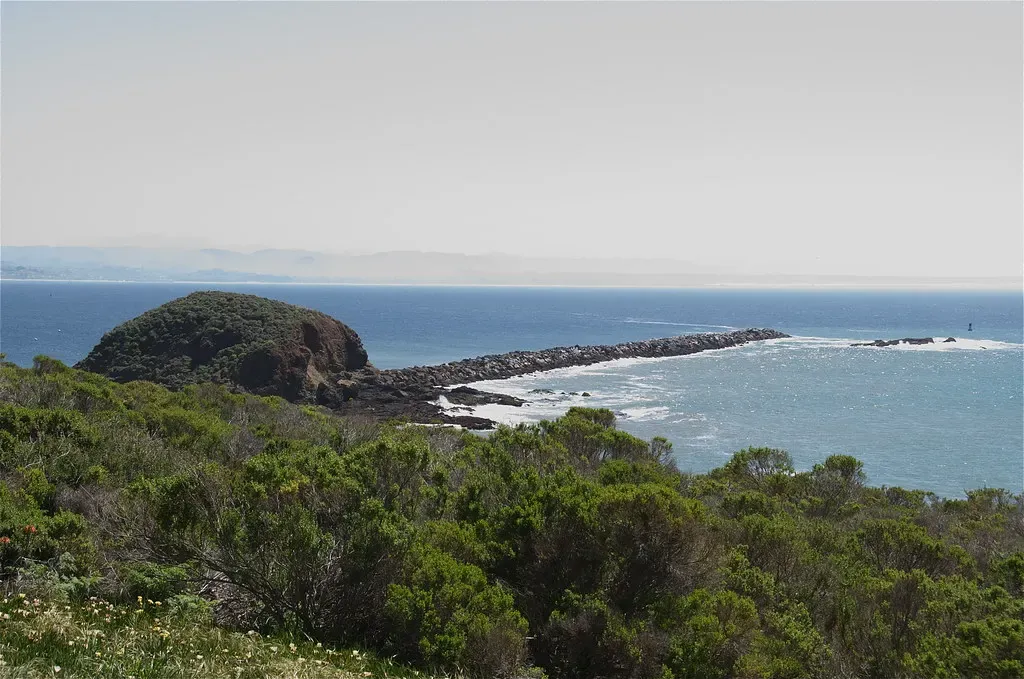
Little-dived kelp pinnacles between Port San Luis and Morro Bay
Photo: jkirkhart35 · CC BY 2.0
A stretch of California's Central Coast between Port San Luis at Avila and Morro Bay, dived mostly from small boats launched at the two harbours. Offshore pinnacles such as Souza Rock rise to about 6 m and fall to 37 m, Santa Rosa Reef is a kelp-ringed tabletop with a sheer wall, and the Point Buchon Pinnacles sit off Point Buchon, where two marine protected areas lie offshore. Target Rock in Morro Bay gives an easy 3–8 m dive. The water runs 7–13 °C and the weather turns quickly.
About diving in Morro Bay & Port San Luis
Most of the diving here is done from small boats. Divers trailer them to the Port San Luis Harbor at Avila, where a sling lifts each boat off its trailer, or to the launch ramp in Morro Bay Harbor, then run out to the pinnacles and reefs along the coast between the two. A few sites are within reach on foot, around Morro Bay and at Spooner's Cove on a calm day. Two dive shops are based in San Luis Obispo: Depth Perceptions Diving Services on Los Osos Valley Road, on the Central Coast since 1987, and SLO Ocean Currents.
Underwater the coast is rock and kelp. Offshore pinnacles rise to within about 5 to 8 m (15 to 25 ft) of the surface: Souza Rock falls to around 37 m (120 ft), and Westdhal Rock spreads as a field of jagged tops. Santa Rosa Reef is a tabletop at 6–9 m with a sheer wall on one side. Lingcod, cabezon and kelp bass hold on the rock at White Rock. Inside Morro Bay, Target Rock is a shallow dive at 3–8 m, and timed with the tide it becomes a long drift from the harbour entrance.
It suits cold-water divers with their own boat or kayak who are happy to plan around the weather, which changes quickly along this coast, and to keep clear of the security zone around the Diablo nuclear plant. The water sits at 7–13 °C depending on the time of year, so extra thermal protection may be needed. Most divers in the San Luis Obispo and Morro Bay area know very little about these sites, and the difficult access keeps diving pressure low.
Best time to dive Morro Bay & Port San Luis
| Jan | Feb | Mar | Apr | May | Jun | Jul | Aug | Sep | Oct | Nov | Dec |
|---|---|---|---|---|---|---|---|---|---|---|---|
| Fair | Fair | Fair | Fair | Fair | Fair | Fair | Fair | Fair | Fair | Fair | Fair |
No month stands out; the water ranges 7–13 °C with the time of year, and fast-changing weather decides which days the boat sites can be dived.
Best months:
Dive types & marine life
Lingcod, cabezon and kelp bass live on the rock around White Rock. Point Buchon is a protected area where diving is allowed unless otherwise restricted. No season for any animal is documented here.
- Kelp forest
- Reef
- Wall
- Drift
Best dive sites in Morro Bay & Port San Luis
- 1
Souza Rock
Pinnacle with its top at about 6 m (20 ft) and its base near 37 m (120 ft).
- 2
Santa Rosa Reef
Tabletop reef at 6–9 m with a sheer wall on one side that drops about 12–18 m.
- 3
Point Buchon Pinnacles
A series of large pinnacles, from about 8 m (25 ft) to past 30 m (100 ft).
- 4
Target Rock
Easy shallow Morro Bay dive at 3–8 m over rock and kelp; watch for fishing line.
- 5
Spooner's Cove
Cove dived from the beach when conditions allow.
Site guides
Kelp forest
Thick kelp beds along Highway 1 just past Cayucos
Reef
A large rock topping out about 5 m under the surface
Reef
Surface-breaking rock in kelp with lingcod and rockfish at 6–15 m
Pinnacle
Large pinnacles off Point Buchon, from 8 m to past 30 m
Pinnacle
Pinnacle rising from about 37 m to within 6 m of the surface
Pinnacle
A large field of jagged pinnacle tops at around 6 m
Reef
Rocky ground to 15 m with lingcod, cabezon and kelp bass
How to get to Morro Bay & Port San Luis
San Luis Obispo has the nearest airport, with departures to western hubs. Morro Bay is a 15-minute drive from San Luis Obispo, 2½ hours from Fresno or Bakersfield and 4 hours from Los Angeles or San Francisco. Two dive shops are based in San Luis Obispo, and the boat launches are at Port San Luis Harbor and Morro Bay Harbor.
Photos from Morro Bay & Port San Luis
Thomson M · CC BY 3.0
Questions divers ask
Are the Morro Bay dives from boats or shore?+
Most diving is from small boats launched at Port San Luis Harbor, where a sling lifts each boat off its trailer, or at the Morro Bay Harbor ramp. A few sites are within reach on foot, such as Spooner's Cove on a calm day.
What exposure protection do Morro Bay dives need?+
The water sits at 7–13 °C depending on the time of year, so extra thermal protection may be needed. Weather changes quickly and decides which days the boat sites can be dived.
Are any Morro Bay dive areas restricted?+
Divers keep clear of the security zone around the Diablo nuclear plant. Point Buchon, with two marine protected areas offshore, allows diving unless otherwise restricted.
How do divers get to Morro Bay?+
San Luis Obispo has the nearest airport, with departures to western hubs. Morro Bay is a 15-minute drive from San Luis Obispo, 2½ hours from Fresno or Bakersfield and 4 hours from Los Angeles or San Francisco.
Sources
- Welcome to Depth Perceptions Diving Services — Depth Perceptions Diving Services
- SLO Ocean Currents — SLO Ocean Currents
- Coastal Dive Sites-Avila (Port San Luis) to Big Sur — Channel Islands Dive Adventures
- Morro Bay — Wikivoyage
- Point Buchon State Marine Reserve and Marine Conservation Area — Wikipedia
Photo credits
- Rocky headland and a long stone breakwater reaching into blue sea, seen over coastal scrub by jkirkhart35, CC BY 2.0, via Openverse
- A seal lifting its head out of green harbour water beside a drifting frond of kelp by Thomson M, CC BY 3.0, via Wikimedia Commons
Embed
Run a dive centre, club or blog? Embed this map of 6 dive sites near Morro Bay & Port San Luis on your own page.
Similar destinations

Walk down the stairs at Casino Point straight into a giant kelp forest
Playful sea lions and towering kelp forests around rocky island pinnacles.

Healthy coral reef caps 161 km offshore (100 miles), famous for August coral spawning.


Market squid spawn in their millions over the sand on winter nights