
North America · United States
La Jolla Cove & Canyon
Market squid spawn in their millions over the sand on winter nights
Photo: Jarek Tuszyński · CC BY-SA 4.0
A submarine canyon runs to within a few hundred metres of the beach at La Jolla Shores, so divers can walk into the surf and be over 100 m of water in ten minutes. The whole area is a marine reserve, which shows: sea lions crowd the Cove, leopard sharks blanket the shallows through summer and autumn, and from late autumn market squid spawn on the sand in their millions, drawing a night-diving crowd. Visibility is rarely great, but the animal density is.
About diving in La Jolla Cove & Canyon
This is a shore-diving town, and the day runs on the surf forecast rather than a charter schedule. Divers park early before the beach lot fills, kit up on the sand, walk out through the small breaking waves and surface-swim past the marker buoys before dropping. Shops a few streets back handle fills and rentals, and nothing needs booking. Organised night dives are the exception, run in groups with torches, and day boats reach the outer kelp beds when the wind allows.
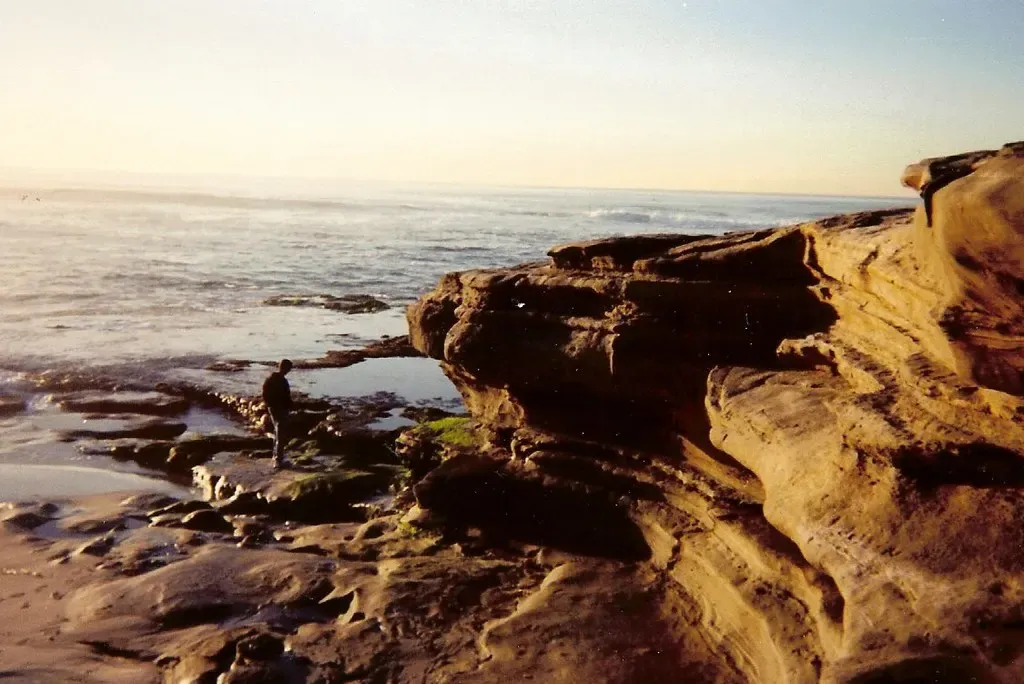
Three different bottoms sit within a couple of kilometres of each other. At the rocky point under the cliffs, reef and kelp break into ledges and surge channels that work best on a calm morning. North-east of there the shoreline flattens into a wide beach fronting a plain of open sand that looks empty until you learn to read it: halibut buried flat in it, guitarfish and rays cruising over it. Cutting through that plain is the canyon head, found by watching your depth rather than by any landmark on the bottom.
Visibility is the constraint and it shapes technique. The surf zone keeps sand in suspension, so the first minutes are usually the murkiest, and photographers work close with macro rather than wide. Navigation is done on compass headings out and back, which makes this a genuinely useful place to build that skill instead of following a guide's fins. The animals, for their part, are habituated to divers and rarely bolt, so an encounter tends to last as long as your patience does.
It suits new divers, night divers and macro photographers, and anyone who wants to dive often without paying for boats; training agencies use the sand flats for the same reason. The trade-off cuts both ways. Divers after long sightlines, hard coral or dependable blue water will find the place underwhelming, and the surf entry, modest as it usually is, remains the one thing that catches people out on a first visit.
Best time to dive La Jolla Cove & Canyon
| Jan | Feb | Mar | Apr | May | Jun | Jul | Aug | Sep | Oct | Nov | Dec | |
|---|---|---|---|---|---|---|---|---|---|---|---|---|
| Season | Good | Good | Fair | Fair | Good | Good | Prime | Prime | Prime | Prime | Good | Good |
| Sea surface | 15°C59°F | 15°C59°F | 15°C59°F | 16°C61°F | 18°C64°F | 19°C66°F | 21°C70°F | 22°C72°F | 22°C72°F | 20°C68°F | 18°C64°F | 16°C61°F |
| Daytime high | 22°C72°F | 23°C73°F | 23°C73°F | 25°C77°F | 24°C75°F | 26°C79°F | 28°C82°F | 30°C86°F | 31°C88°F | 30°C86°F | 26°C79°F | 22°C72°F |
| Rain | 58 mm2.3 in | 57 mm2.2 in | 53 mm2.1 in | 16 mm0.6 in | 10 mm0.4 in | 6 mm0.2 in | 4 mm0.2 in | 7 mm0.3 in | 8 mm0.3 in | 9 mm0.4 in | 33 mm1.3 in | 59 mm2.3 in |
| Jan | Feb | Mar | Apr | May | Jun |
|---|---|---|---|---|---|
| Good | Good | Fair | Fair | Good | Good |
| Sea surface | |||||
| 15°C59°F | 15°C59°F | 15°C59°F | 16°C61°F | 18°C64°F | 19°C66°F |
| Daytime high | |||||
| 22°C72°F | 23°C73°F | 23°C73°F | 25°C77°F | 24°C75°F | 26°C79°F |
| Rain | |||||
| 58 mm2.3 in | 57 mm2.2 in | 53 mm2.1 in | 16 mm0.6 in | 10 mm0.4 in | 6 mm0.2 in |
| Jul | Aug | Sep | Oct | Nov | Dec |
|---|---|---|---|---|---|
| Prime | Prime | Prime | Prime | Good | Good |
| Sea surface | |||||
| 21°C70°F | 22°C72°F | 22°C72°F | 20°C68°F | 18°C64°F | 16°C61°F |
| Daytime high | |||||
| 28°C82°F | 30°C86°F | 31°C88°F | 30°C86°F | 26°C79°F | 22°C72°F |
| Rain | |||||
| 4 mm0.2 in | 7 mm0.3 in | 8 mm0.3 in | 9 mm0.4 in | 33 mm1.3 in | 59 mm2.3 in |
2011–2025 averages. Sea surface: NOAA Coral Reef Watch, measured at the surface, so deeper water can run colder. Daytime high and rain: NASA POWER.
Leopard sharks mass in the shallows Jul–Oct when visibility is also best; the market squid run peaks Nov–Mar on night dives.
Best months: July, August, September, October
La Jolla water temperature and weather by month
The sea surface runs from 15 °C (59 °F) in February to 22 °C (72 °F) in August. Most rain falls from November to March, peaking at about 60 mm (2.4 in) in December; it stays largely dry from April to October. Daytime highs reach 31 °C (88 °F) in September and drop to 22 °C (72 °F) in January. The coldest water here is about 13 °C (55 °F), so pack a 7 mm suit with a hood, or a semi-dry.
Dive types & marine life
Sea lions haul out on the rocks around the Cove all year, with harbour seals on a beach just along the coast. Leopard sharks, mostly females, gather in the warm shallows off the Shores from roughly July to October, and the market squid run draws sea lions in to feed over the sand at night from late autumn onward. Rays, octopus and nudibranchs are the year-round constant.
- Kelp forest
- Muck & macro
- Night
- Wall
- Reef
- Seals & sea lions
- Squid
- Stingrays
- Octopus & cuttlefish
- Nudibranchs
- Macro critters
- Reef fish swarms
Best dive sites in La Jolla Cove & Canyon
Wall
The seabed drops 150 metres at the edge of the slope
Sea lions in the kelp, and sevengill sharks in April
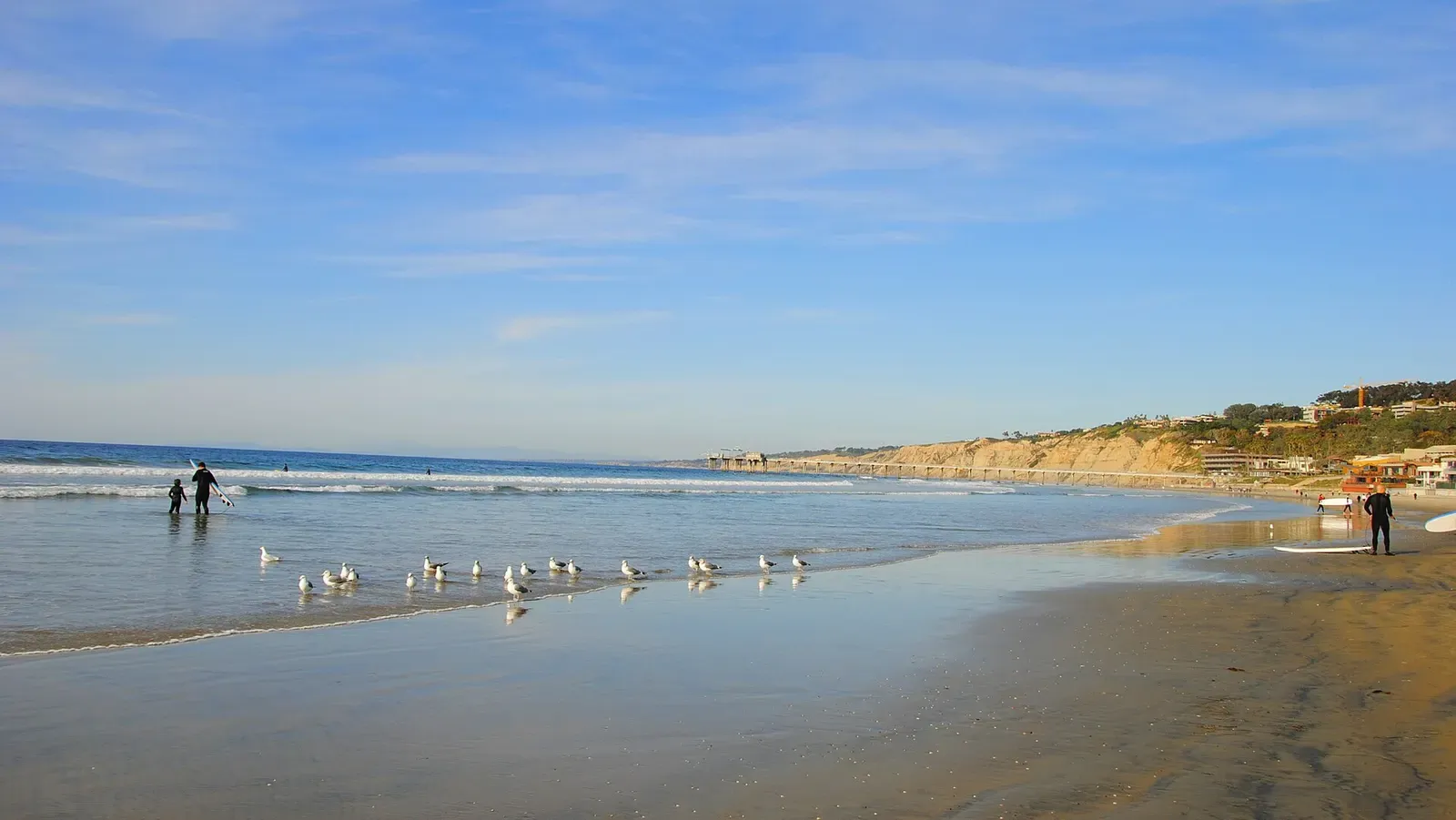
Leopard sharks and rays over open sand, straight off the beach
Sand slope
A sand flat that holds 3 to 5 metres for 100 metres out
How to get to La Jolla Cove & Canyon
San Diego International is the gateway and the area is small enough to drive end to end, with most divers basing in La Jolla itself or a nearby San Diego neighbourhood. The Cove and the Shores are separate shore entries, a few minutes apart by car, and the beach lot at the Shores fills early on summer weekends. Day boats for the outer kelp run from Mission Bay.
Photos from La Jolla Cove & Canyon
Rhododendrites · CC BY-SA 4.0
Rhododendrites · CC BY-SA 4.0
Jarek Tuszyński · CC BY 4.0
Dive videos
Diving La Jolla Cove (Sea Lions, Tope Sharks, Guitarfish & More) · Jack Ruhland on YouTube
SCUBA How To DPV Dive La Jolla South Rim - San Diego, CA 2025 - 4k · Soup Cat JJ on YouTube
Photo credits
- Natural stone sea arch at La Jolla Cove with kayakers paddling through the opening by Jarek Tuszyński, CC BY-SA 4.0, via Wikimedia Commons
- Sandstone cliff arch and sea caves at La Jolla Cove with visitors walking along the rim by Rhododendrites, CC BY-SA 4.0, via Wikimedia Commons
- La Jolla Cove shoreline with sea kayakers and swimmers near the sandstone cliffs and arch by Rhododendrites, CC BY-SA 4.0, via Wikimedia Commons
- Steep sandstone sea cliffs plunging into the water along the La Jolla coastline by Jarek Tuszyński, CC BY 4.0, via Wikimedia Commons
Embed
Run a dive centre, club or blog? Embed this map of 10 dive sites near La Jolla on your own page.
In The Logbook
- Kelp forest diving, and where it still growsCold water · 13 min read
- Where to dive with seals and sea lionsBig animals · 17 min read
- Why is some sea green instead of blue?Ocean science · 8 min read
- The best shore dives in the worldShore diving · 8 min read
Similar destinations
North America
A sunken Canadian destroyer and giant kelp a short boat ride from Mission Bay

Permit-limited giant kelp forest with sea otters working the shallows

Walk down the stairs at Casino Point straight into a giant kelp forest

.jpg)
.jpg)

Beach-entry kelp forests inside a national marine sanctuary