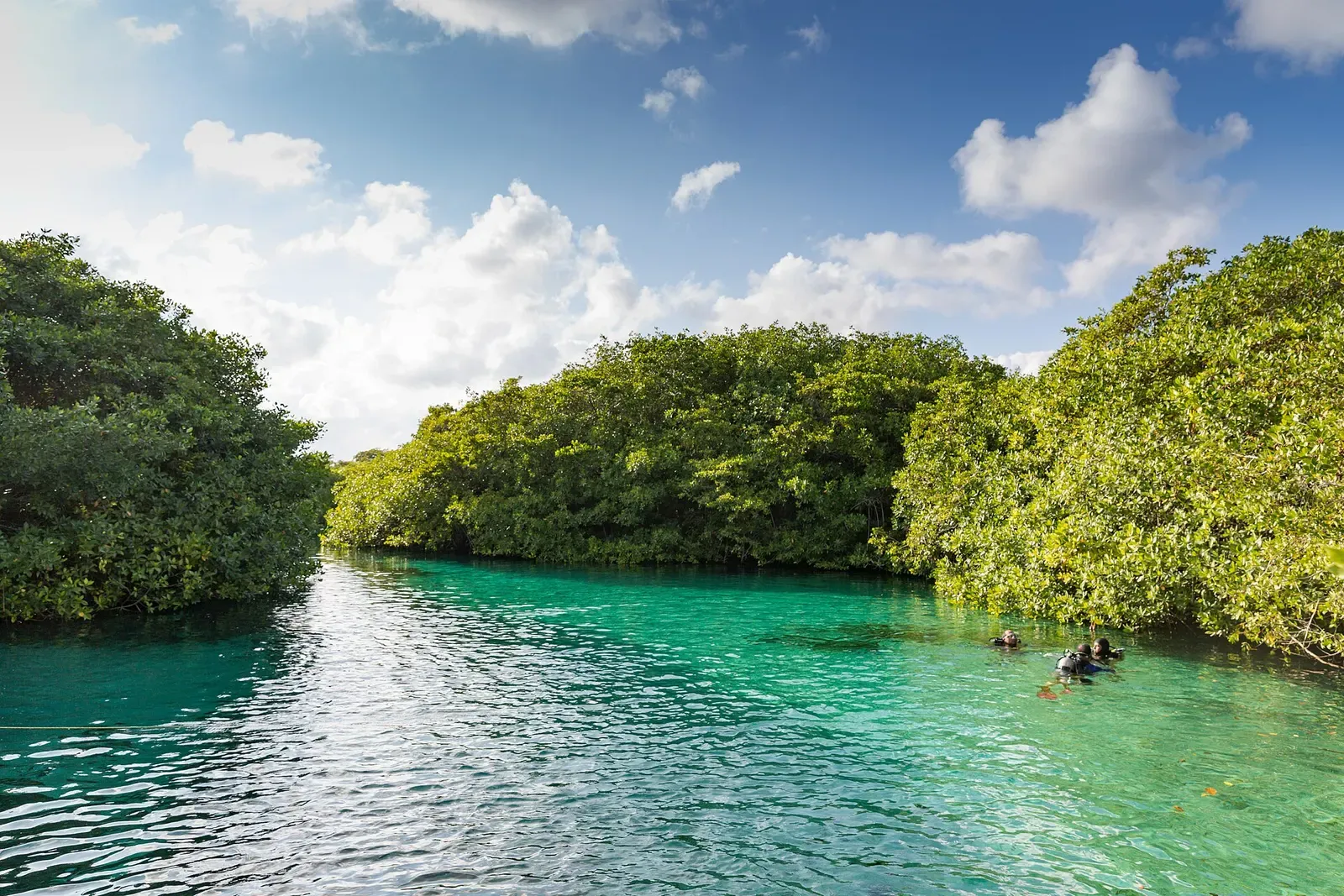
The open-air exception on a coast where every other cenote dive happens under rock. Casa Cenote is a mangrove channel behind the beach at Tankah, north of Tulum, running 2 to 7 m deep with daylight the whole way and no overhead at any point. The underground river that feeds it carries on beneath the sand and surfaces again offshore.
Also known as Cenote Manatí.
Where it is and how deep
20.2665° N, 87.3913° WPublished position for this site.
The dive
You step off a wooden dock into a channel rather than a shaft, and the dive is a slow drift up and back along it in 2 to 7 m of water. Mangrove roots hang into the water along the banks, the bottom is pale sediment, and daylight reaches every part of the route, so lights are for looking into the roots rather than for finding the way out.
The interest here is life rather than rock. Small crocodiles rest in the shallows and are uninterested in divers, turtles are regular visitors, and juvenile barracuda and shoals of small fish hold in the channel where fresh water meets salt. Because the maximum is 7 m the gas lasts, and most people spend the time working the roots and the surface reflections instead of covering ground.
The channel runs underground about 90 m before the beach and resurfaces as a spring roughly 18 m offshore, which is why the water tastes brackish and why the fish list mixes fresh and salt water species. Divers who want to see the other end of that plumbing snorkel the nearshore reef off the beach on the same visit.
Marine life and season
- Crocodiles
- Sea turtles
- Barracuda
- Freshwater fish
| Jan | Feb | Mar | Apr | May | Jun | Jul | Aug | Sep | Oct | Nov | Dec |
|---|---|---|---|---|---|---|---|---|---|---|---|
| Prime | Prime | Prime | Prime | Good | Good | Good | Good | Good | Good | Prime | Prime |
Season follows Riviera Maya Cenotes: Divable year-round at a constant 25°C; the Nov–Apr dry season is clearest, while summer downpours can cloud shallow cenotes for a day or two.
Know before you go
- Crocodiles live in the channel. They ignore divers, but guides keep groups off the banks and out of the mangrove roots where the animals rest.
Photos from Casa Cenote
mergulhotripcaribe · Public domain
Bernard DUPONT · CC BY-SA 2.0
dronepicr · CC BY 2.0
Questions divers ask
Do you need cavern training for Casa Cenote?+
No. Casa Cenote is an open-air channel with no overhead, so an Open Water certification is enough and it is the usual first cenote dive for people who have never been under rock.
How deep is Casa Cenote?+
Shallow throughout: the channel varies from about 2 to 7 m, which makes for long, slow dives and leaves plenty of gas for photography.
Sources
- Casa Cenote — Cenote Diving in Tulum — Seth Dive Mexico
- Casa Cenote — Scubago
- Tulum — Wikivoyage
Photo credits
- Turquoise mangrove channel with snorkellers, jungle closing in on both banks by dronepicr, CC BY 2.0, via Wikimedia Commons
- Diver in green water beneath a curtain of mangrove roots by mergulhotripcaribe, Public domain, via Openverse
- Small Yucatán gambusia fish over bright green algae in shallow water by Bernard DUPONT, CC BY-SA 2.0, via Wikimedia Commons
- Swimmers in the clear channel between mangrove banks under a blue sky by dronepicr, CC BY 2.0, via Wikimedia Commons
More dive sites in Riviera Maya Cenotes
A sulphide cloud you can put a hand through, at 27 m
Lily pads on the surface, decorated cavern underneath
Jump through the roof or take the ladder beside it
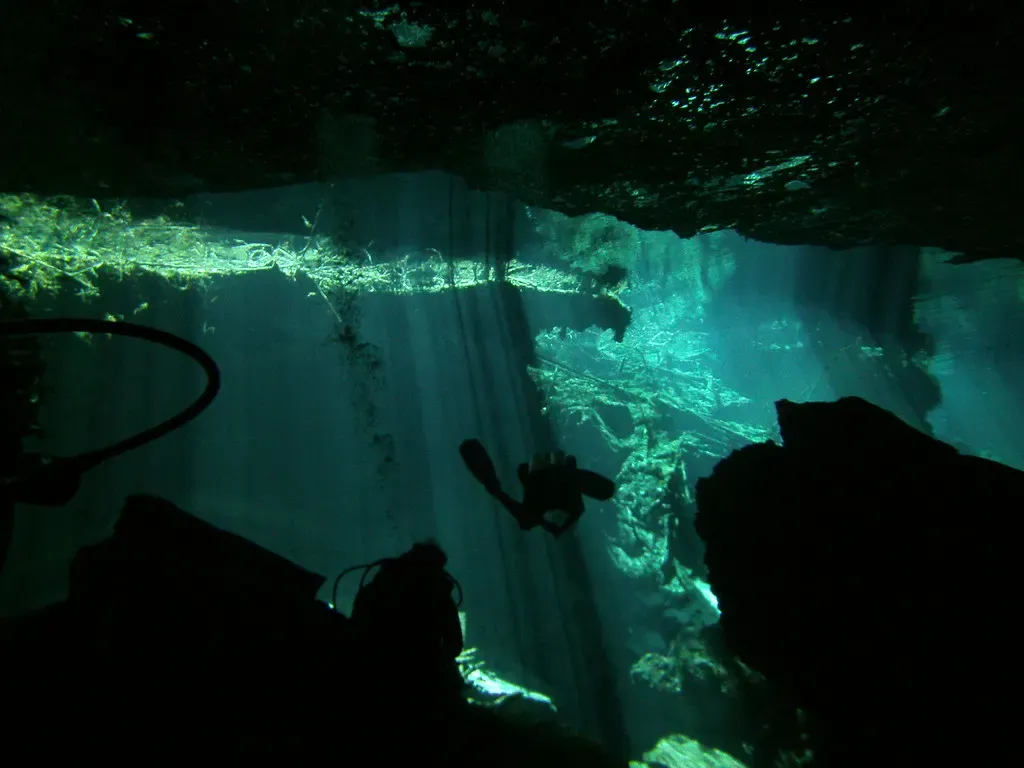
An air dome you can surface in, under two levels of stalactites
Cenote
Where cave divers found three prehistoric skeletons
Cenote
A crossing to the neighbouring Rainbow Cenote
Cenote
Nine metres of clear water used for course skills
Cenote
Two 40-minute circuits through wall-to-wall formations
Similar dives elsewhere
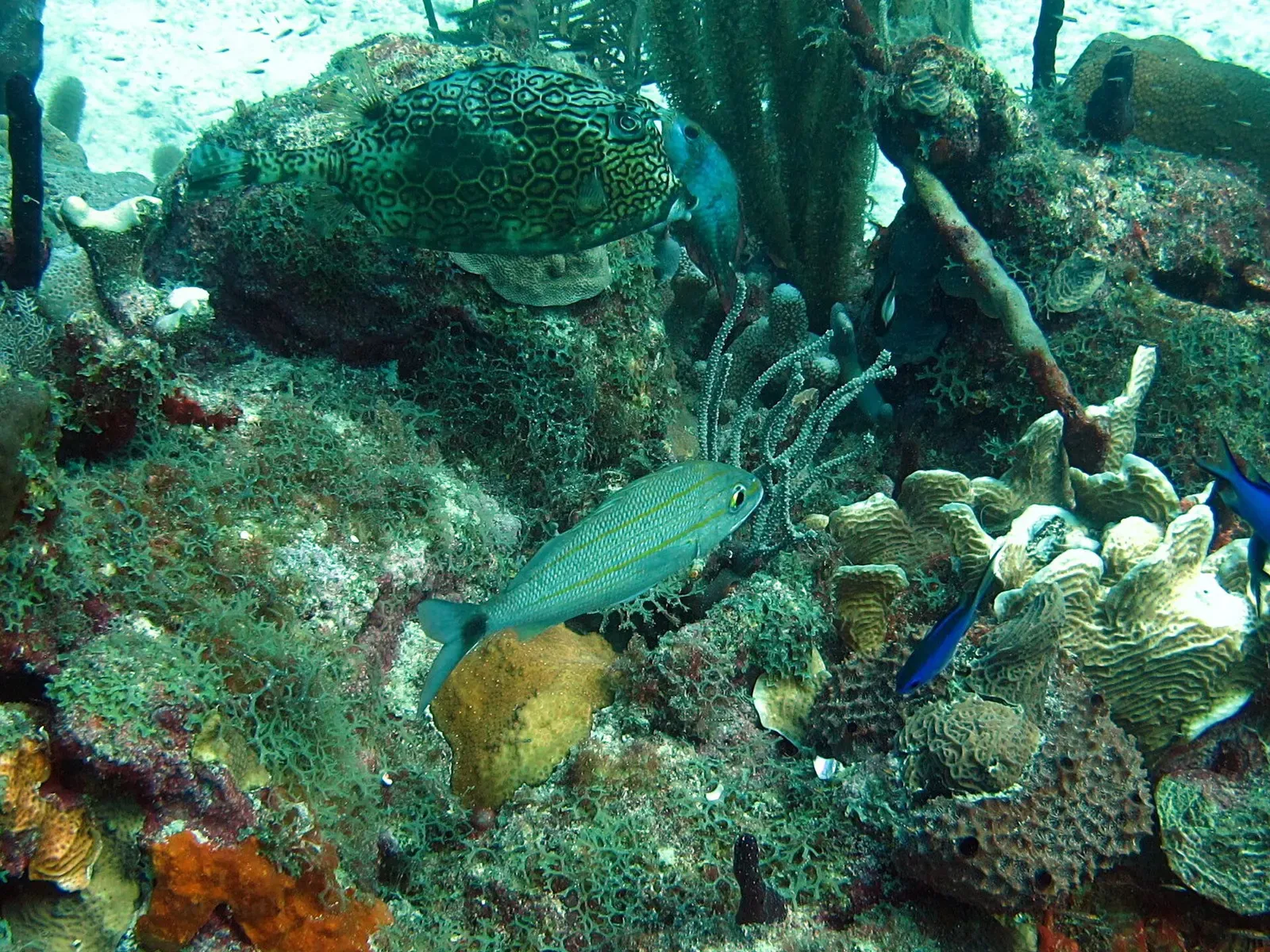
Taíno artefacts in place in a 9 m freshwater cave

Nineteenth-century anchors lie along a wall that drops past 975 m
Cave & cavern
Dan's Cave
South Abaco Blue Holes · Bahamas
Cascade Room entrance leads to crystal rooms with names like Fangorn Forest
.jpg)
_-_Tulum_QR.jpg)
.jpg)
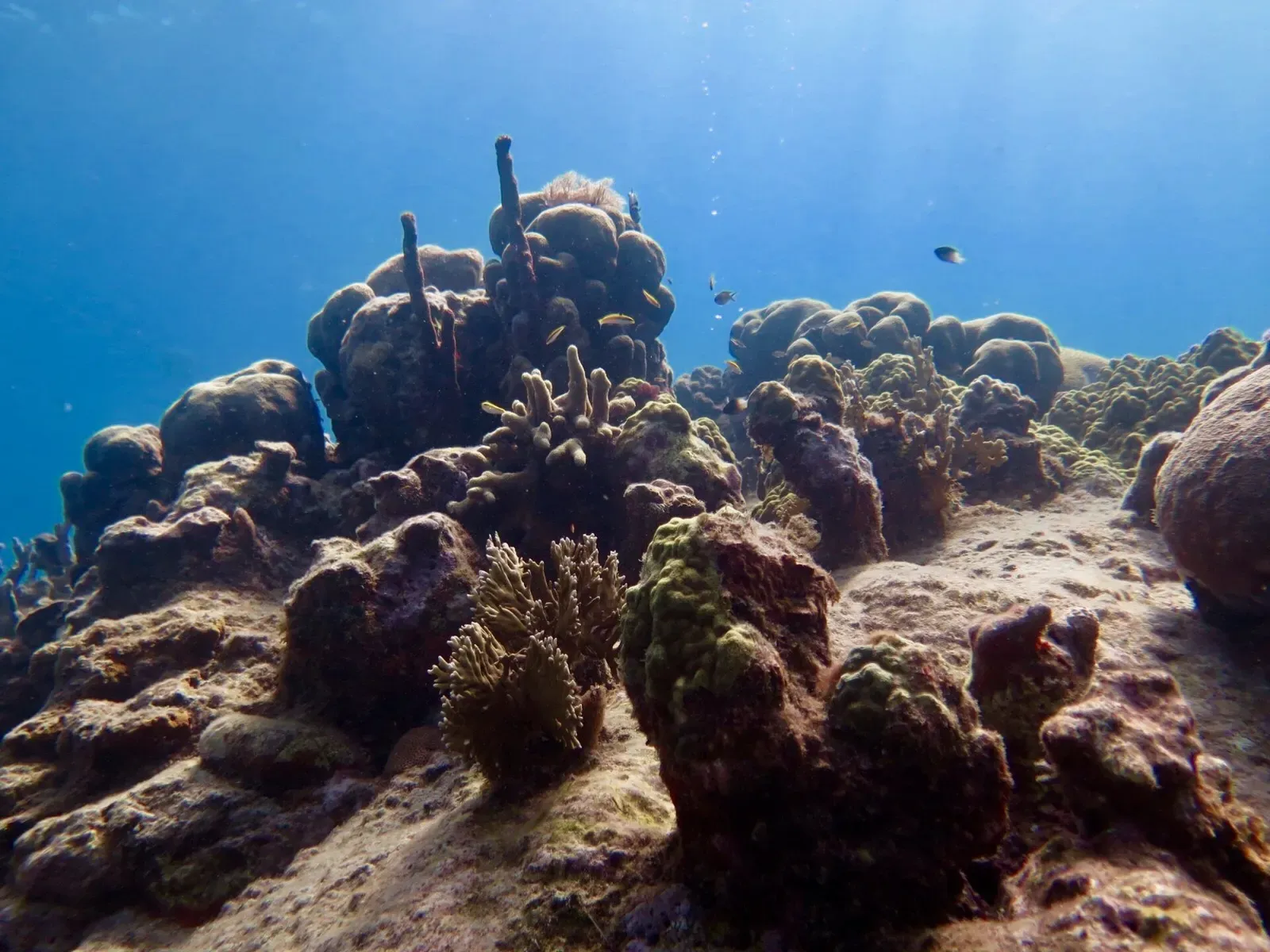
Hawksbill turtles and jack schools over protected coral