
Pacific Islands · Northern Mariana Islands
Saipan & Tinian
Swim out of a collapsed limestone cavern into the open Pacific
Photo: Gage Skidmore · CC BY-SA 4.0
The Grotto on Saipan's north-east coast is a collapsed limestone cavern reached down 100-odd concrete steps, connected to the open Pacific by three underwater openings. Divers giant-stride into a blue-lit pool, swim out through a tunnel as surge pushes and pulls, and surface in open ocean. The Marianas have some of the clearest water in the Pacific — 50 m is routine — and the islands are ringed with wartime wreckage from the 1944 invasion.
About diving in Saipan & Tinian
Most days start in a van rather than on a boat. Saipan's headline sites are shore entries reached down tracks and staircases, and the real work is topside: carrying tanks down to the water and, harder, carrying them back up again. Centres check the swell first thing and make the call at the top of the steps, shifting to the sheltered lagoon side when the exposed coast is working. Boat days run across to Tinian and out to the lagoon wrecks, and December through May is the stretch when those crossings are dependable.
These are uplifted limestone islands, and the diving follows the rock. Rainwater has cut fissures, tunnels and blue-lit chambers along the coast, and the porous limestone swallows what falls rather than carrying silt out to sea, which is a large part of why the water is what it is. The ocean-facing sides drop away as walls and current-swept points into deep water, while the western side shelters a shallow lagoon of sand, coral heads and wartime metal. Coral cover is patchy next to Palau or Chuuk; the appeal here is clarity, structure and relics.
That wartime layer runs through nearly every kind of site. The 1944 invasions left the lagoon and the shallows scattered with vehicles, landing craft, aircraft parts, small freighters and at least one Japanese flying boat — most of it shallow, much of it broken up, and a fair amount identified more by local habit than by hard evidence. Access arrangements at the Grotto have changed more than once after storms and accidents, so take the current position from a centre rather than an old trip report. Conditions taper from June into the July-to-November typhoon season.
It suits divers who like the water to have a history and who accept that the logistics are part of the day: staircases, van rides, a tide of your own gear, and a fair chance the plan changes at the top of the steps. Newer divers get plenty out of the lagoon and the easier shore entries, and there is enough shallow wreckage to fill days when the coast is shut. Anyone after dense fish life, effortless entries or a liveaboard week has better options elsewhere in Micronesia.
Best time to dive Saipan & Tinian
| Jan | Feb | Mar | Apr | May | Jun | Jul | Aug | Sep | Oct | Nov | Dec | |
|---|---|---|---|---|---|---|---|---|---|---|---|---|
| Season | Prime | Prime | Prime | Prime | Prime | Good | Fair | Fair | Fair | Fair | Good | Prime |
| Sea surface | 28°C82°F | 28°C82°F | 28°C82°F | 28°C82°F | 29°C84°F | 29°C84°F | 30°C86°F | 30°C86°F | 30°C86°F | 29°C84°F | 29°C84°F | 29°C84°F |
| Daytime high | 29°C84°F | 28°C82°F | 28°C82°F | 29°C84°F | 30°C86°F | 30°C86°F | 30°C86°F | 30°C86°F | 30°C86°F | 30°C86°F | 30°C86°F | 29°C84°F |
| Rain | 72 mm2.8 in | 40 mm1.6 in | 38 mm1.5 in | 53 mm2.1 in | 42 mm1.7 in | 61 mm2.4 in | 166 mm6.5 in | 274 mm10.8 in | 265 mm10.4 in | 253 mm10.0 in | 77 mm3.0 in | 46 mm1.8 in |
| Jan | Feb | Mar | Apr | May | Jun |
|---|---|---|---|---|---|
| Prime | Prime | Prime | Prime | Prime | Good |
| Sea surface | |||||
| 28°C82°F | 28°C82°F | 28°C82°F | 28°C82°F | 29°C84°F | 29°C84°F |
| Daytime high | |||||
| 29°C84°F | 28°C82°F | 28°C82°F | 29°C84°F | 30°C86°F | 30°C86°F |
| Rain | |||||
| 72 mm2.8 in | 40 mm1.6 in | 38 mm1.5 in | 53 mm2.1 in | 42 mm1.7 in | 61 mm2.4 in |
| Jul | Aug | Sep | Oct | Nov | Dec |
|---|---|---|---|---|---|
| Fair | Fair | Fair | Fair | Good | Prime |
| Sea surface | |||||
| 30°C86°F | 30°C86°F | 30°C86°F | 29°C84°F | 29°C84°F | 29°C84°F |
| Daytime high | |||||
| 30°C86°F | 30°C86°F | 30°C86°F | 30°C86°F | 30°C86°F | 29°C84°F |
| Rain | |||||
| 166 mm6.5 in | 274 mm10.8 in | 265 mm10.4 in | 253 mm10.0 in | 77 mm3.0 in | 46 mm1.8 in |
2011–2025 averages. Sea surface: NOAA Coral Reef Watch, measured at the surface, so deeper water can run colder. Daytime high and rain: NASA POWER.
Dec–Jun is calmest and clearest; Jul–Nov is typhoon season, when swell regularly closes the Grotto entirely.
Best months: January, February, March, April, May, December
Saipan & Tinian water temperature and weather by month
The sea surface stays between 28 and 30 °C (82–86 °F) all year. Most rain falls from July to October, peaking at about 270 mm (11 in) in August; it stays largely dry from February to June. Daytime highs sit around 29 °C (84 °F) all year. The coldest water here is about 27 °C (81 °F), so pack a 3 mm, or even a 2 mm, suit.
Dive types & marine life
Eagle rays are the dependable draw, working the shallow sand and most easily reached in the calm December-to-May window when the exposed sites are open anyway. Reef sharks, napoleon wrasse, barracuda and jack schools hold on the current-swept points, turtles are constant, and the lagoon wrecks make decent nudibranch ground when swell shuts the outer coast.
- Cave & cavern
- Wall
- Reef
- Wreck
- Drift
- Eagle rays
- Reef sharks
- Sea turtles
- Reef fish swarms
- Napoleon wrasse
- Barracuda
- Nudibranchs
- Trevally & jacks
Best dive sites in Saipan & Tinian
Reef
Up to 40 eagle rays over one rock in 9 m
Wall
Coral rim at 14 m, then a wall past 40 m
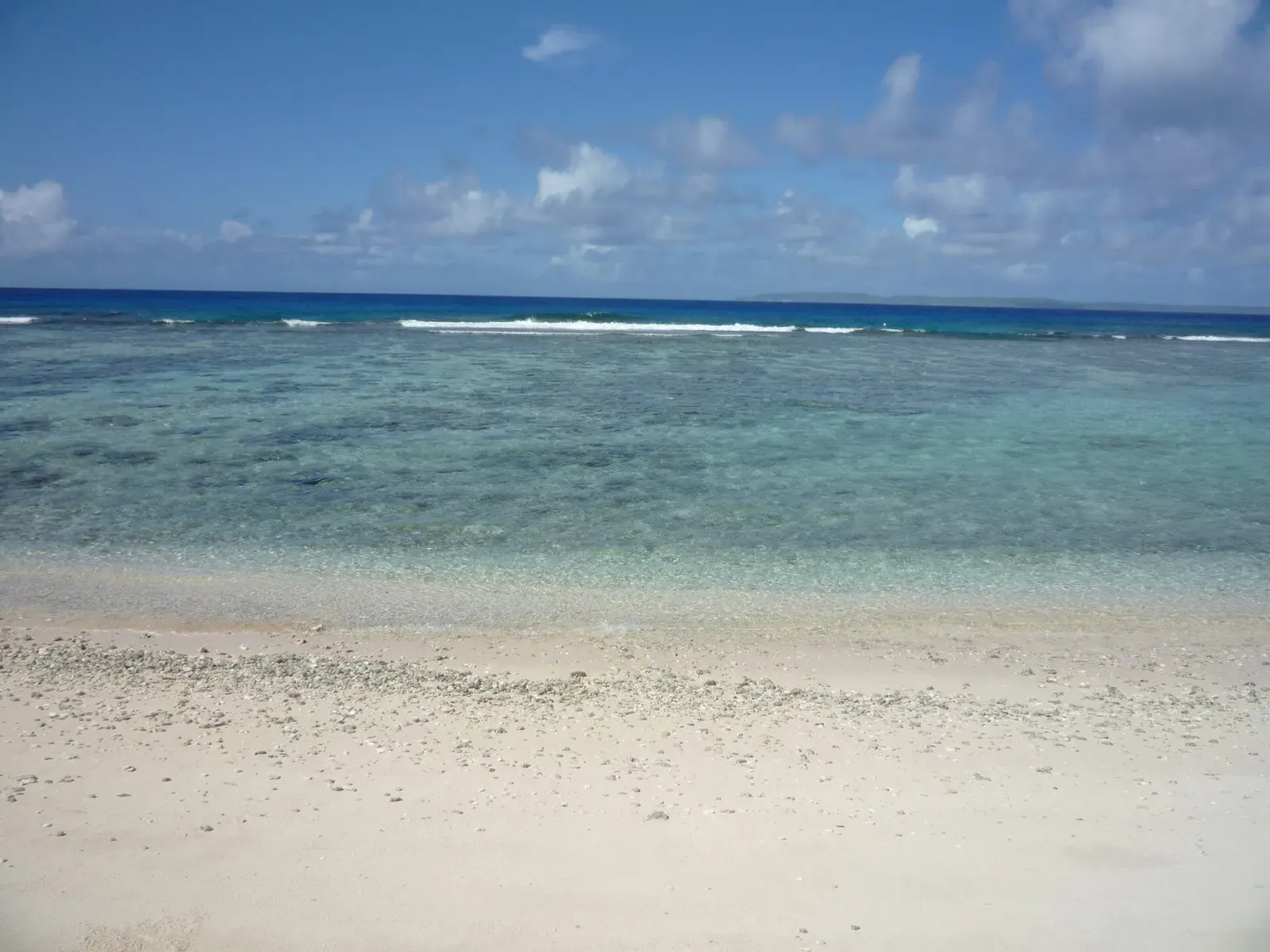
Two-step reef from 5 m, with wartime ordnance in the sand
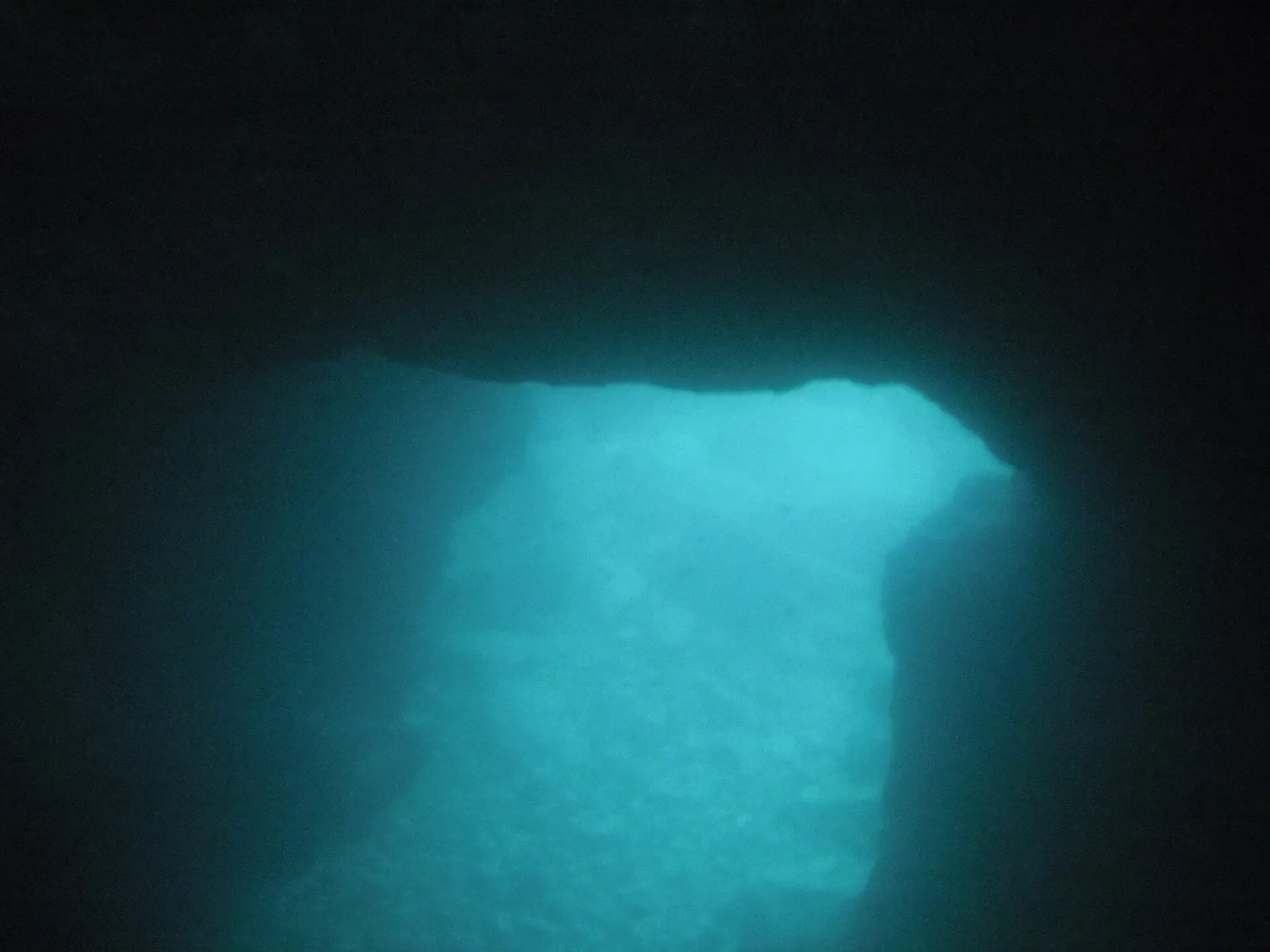
Three underwater holes lead out of the cavern into open ocean
Dump Coke
Tinian site where wartime vehicles were bulldozed into 12 m of water.
Shoan Maru
Japanese freighter sunk in 1944, lying in Saipan's lagoon at 18 m.
How to get to Saipan & Tinian
Saipan's airport takes flights from Asia plus connections through Guam, a short hop south. Garapan is the usual base, with the hotels and dive centres, and the shore sites are a short drive out. Tinian is normally dived as a boat day from Saipan. A car or a centre's van is essential; there are no liveaboards.
Photos from Saipan & Tinian
Gage Skidmore · CC BY-SA 4.0
Peter Rood · CC BY-SA 2.0
Dive videos
Saipan. The Grotto and Lau Lau Beach. Diving! · Think Ocean on YouTube
サイパン Eagle Ray City SAIPAN HD · AQUA Geo Graphic on YouTube
Photo credits
- Rocky headland of Forbidden Island with surf crashing against the cliffs on Saipan's coast by Gage Skidmore, CC BY-SA 4.0, via Wikimedia Commons
- Dark blue Pacific swells breaking against jagged sea stacks off Saipan's rugged coastline by Gage Skidmore, CC BY-SA 4.0, via Wikimedia Commons
- Rusted WWII-era tank overgrown with vegetation on the coast of Saipan by Peter Rood, CC BY-SA 2.0, via Wikimedia Commons
Embed
Run a dive centre, club or blog? Embed this map of 3 dive sites near Saipan & Tinian on your own page.
In The Logbook
- How far you can see underwaterOcean science · 12 min read
- How much weight do you need to dive?Gear & kit · 8 min read
- Cavern and cenote diving without cave trainingCaves & caverns · 8 min read
Similar destinations
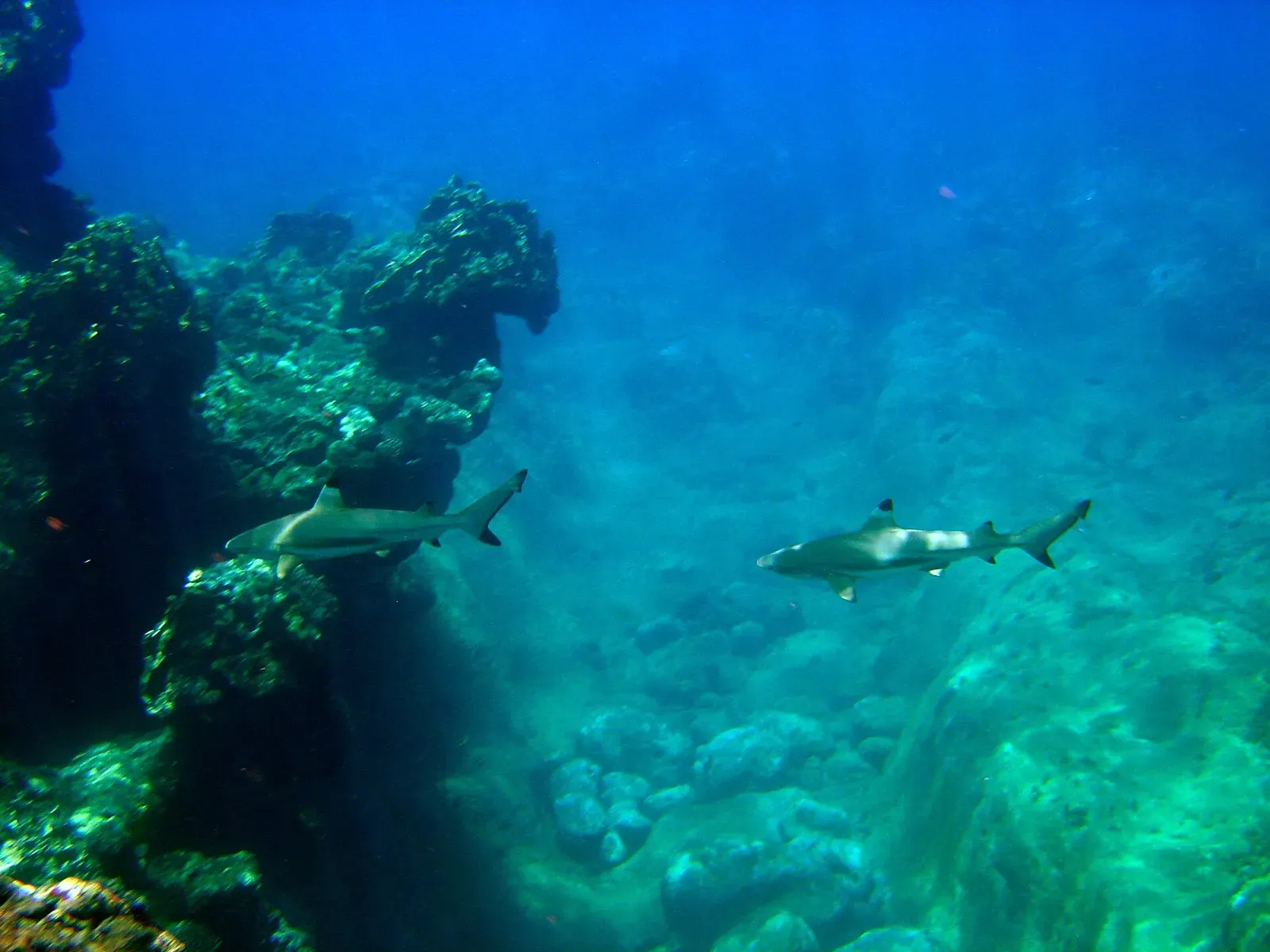
Wrecks from two wars touching in Apra Harbor, plus the Blue Hole sinkhole

A 38 m chimney built by freshwater springs venting inside the lagoon

Hooked onto the reef at Blue Corner as schools and grey reef sharks pour past


Forty-metre visibility over lava caves and canyons, straight off the reef