Coral Triangle · Indonesia
Sangeang & Bima Bay
Black volcanic sand that bubbles from vents, full of macro critters
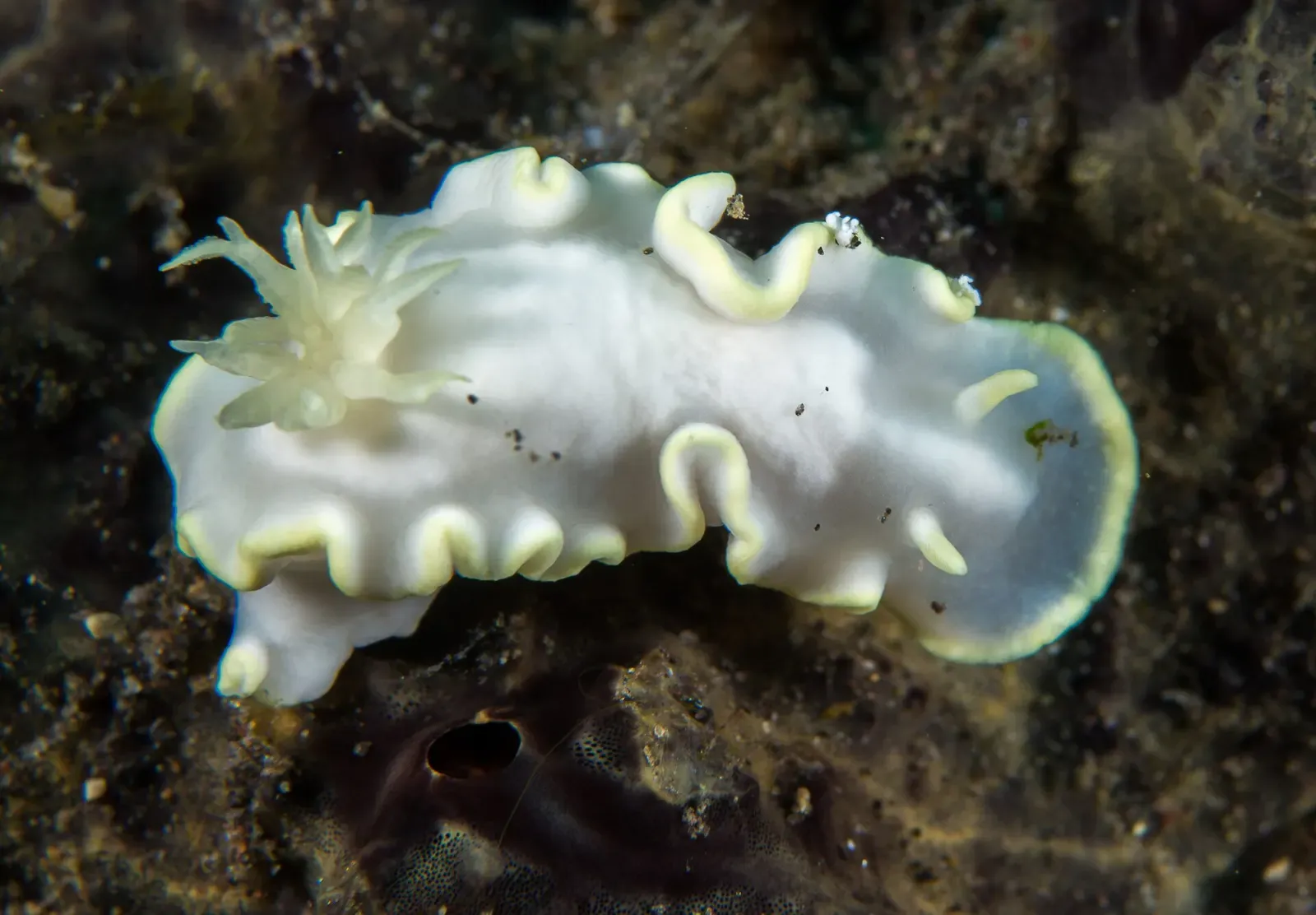
Photo: Bernard Picton · CC BY-SA 4.0
Sangeang, an active volcano island off east Sumbawa, and the waters around Bima are the macro-and-muck side of Sumbawa. The volcano's black sand bubbles constantly from vents in the seabed, and dives at Hot Rocks, Bontoh Reef and Techno Reef run between about 8 and 25 m, hunting pygmy seahorses, frogfish and nudibranchs. Near Bima, a muck site in the bay and a reef wall east of the port add a second stop. Divers come for diving a live volcano's bubbling sand with a guide who knows where the critters sit.
About diving in Sangeang & Bima Bay
There are no dive resorts on Sangeang itself. A land-based resort near the port town of Sape, on the east coast of Sumbawa, runs day boats out to the island, a ride of about 45 minutes to the sites. The other way in is by liveaboard, on routes from Bali, Lombok, Bima or Labuan Bajo that stop at Sangeang on the way to or from Komodo, some with a day of critter hunting in Bima Bay. A Sangeang regional dive permit is paid per person per trip.
The volcano sets the terrain. Its slopes run down into black sand, and in places the seabed bubbles constantly as gas escapes through vents, most visibly in the fumaroles at Hot Rocks. Reefs of soft, hard and black corals sit among the sand, and the dark backdrop shows off the colour of the animals. Pipefish, ornate ghost pipefish, pygmy seahorses, sea moths and nudibranchs of every colour are resident and are usually found by sharp-eyed guides.
The muck sites suit newly certified divers as much as macro photographers: they are shallow, sandy and without significant current. Divers who skip the night dives miss much of the cluster's species action, since the mandarin fish dusk gathering at Bontoh and the resident mimic octopus at Hot Rocks appear mainly after dark. Sometimes the visibility washes out when the escaping gas disturbs the sediment on the sea floor.
Best time to dive Sangeang & Bima Bay
| Jan | Feb | Mar | Apr | May | Jun | Jul | Aug | Sep | Oct | Nov | Dec |
|---|---|---|---|---|---|---|---|---|---|---|---|
| Fair | Fair | Fair | Good | Good | Prime | Prime | Prime | Prime | Prime | Good | Fair |
January and February bring the northwest monsoon, with rain and intermittently rough seas, and most operators do not run scheduled Sumbawa trips. March is a transition month, when some routes skip the exposed eastern waters around Sangeang. April opens the strong window, the dry season with typically calm crossings, which runs through November. June to October is the peak. December is the other transition month, with the same route adjustments as March.
Dive types & marine life
Pygmy seahorses, frogfish and nudibranchs are often seen on the Sangeang sand, and much of the critter life shows mainly on night dives. On the Tanjung Batuputih drop-off there is a good chance of 2 m eagle rays or whitetip sharks.
- Muck & macro
- Wall
- Pygmy seahorses
- Frogfish
- Nudibranchs
- Macro critters
- Eagle rays
- Reef sharks
Best dive sites in Sangeang & Bima Bay
- 1
Hot Rocks
Black-sand slope on Sangeang's south face, with fumaroles venting gas bubbles at 8 to 15 m.
- 2
Bontoh Reef
Black-sand bay on the west face of Sangeang, sloping gently from the shoreline to 25 m.
- 3
Techno Reef
Small coral bommie sitting at 12 m in a sand flat on Sangeang's east side.
- 4
Bubble Reef
Typical Sangeang reef of soft, hard and black corals, with good visibility.
- 5
Tanjung Batuputih
Fringing reef to 20 m, then a wall to 40 m, 5 km east of the port entrance to Bima.
- 6
Unusual Suspect
Sandy muck dive in Bima Bay, with several kinds of squid and octopus.
Site guides
Sunset and night muck dive on the volcano's western black sand
Muck & macro
Fumaroles stream volcanic gas bubbles straight up out of the black sand
Eagle rays and whitetip sharks cruising the edge of the drop-off
Reef
A lone coral bommie on the sand flat east of the volcano, ringed by bigeye trevally
How to get to Sangeang & Bima Bay
Fly to Sultan Muhammad Salahudin Airport outside Bima, served by NAM Air and Wings Air from Denpasar, Lombok and Makassar. The trans-Sumbawa road runs east from Bima to Sape harbour, near the land-based resort, and ferries cross to Sape from Labuan Bajo on Flores. Liveaboards depart from Bima, Lombok and Labuan Bajo.
Photos from Sangeang & Bima Bay
Bernard Picton · CC BY-SA 4.0
Adi Mario · CC BY-SA 4.0
Questions divers ask
What certification is needed to dive Sangeang?+
Open Water is enough. The volcano's muck sites are shallow black-sand slopes without significant current. The Tanjung Batuputih wall near Bima goes much deeper, to 40 m.
Is there a fee to dive Sangeang?+
Yes. A Sangeang regional dive permit of 50,000 Indonesian rupiah is charged per person per trip and covers the volcano cluster.
How do divers get to Sangeang?+
There is no resort on the island. Divers either fly to Bima and take the road east to Sape for a land-based resort with day boats, or join a liveaboard from Bima, Lombok or Labuan Bajo that stops at the volcano.
When is the best time to dive Sangeang and Bima Bay?+
June to October, the peak of the April to November strong window, when crossings are typically calm. In January and February most operators do not run scheduled trips, and in December and March some routes leave out Sangeang.
Sources
- Kalimaya Dive Resort | Volcano Diving | Sangean Volcano — Kalimaya Dive Resort
- Kalimaya Dive Resort | Diving The Sumbawa Coast — Kalimaya Dive Resort
- Labuanbajo-Bima 7 night — MV Samambaia
- Lombok, Sumbawa & Komodo liveaboard itinerary — Emperor Divers
- Best dive sites in Sumbawa — Neptune Liveaboards
- Sumbawa Diving - Indonesia — Dive The World
- Bima, Indonesia — Wikipedia
- Sumbawa — Wikivoyage
Photo credits
- A white nudibranch with ruffled, pale-yellow-edged mantle resting on dark, silty volcanic seabed by Bernard Picton, CC BY-SA 4.0, via Wikimedia Commons
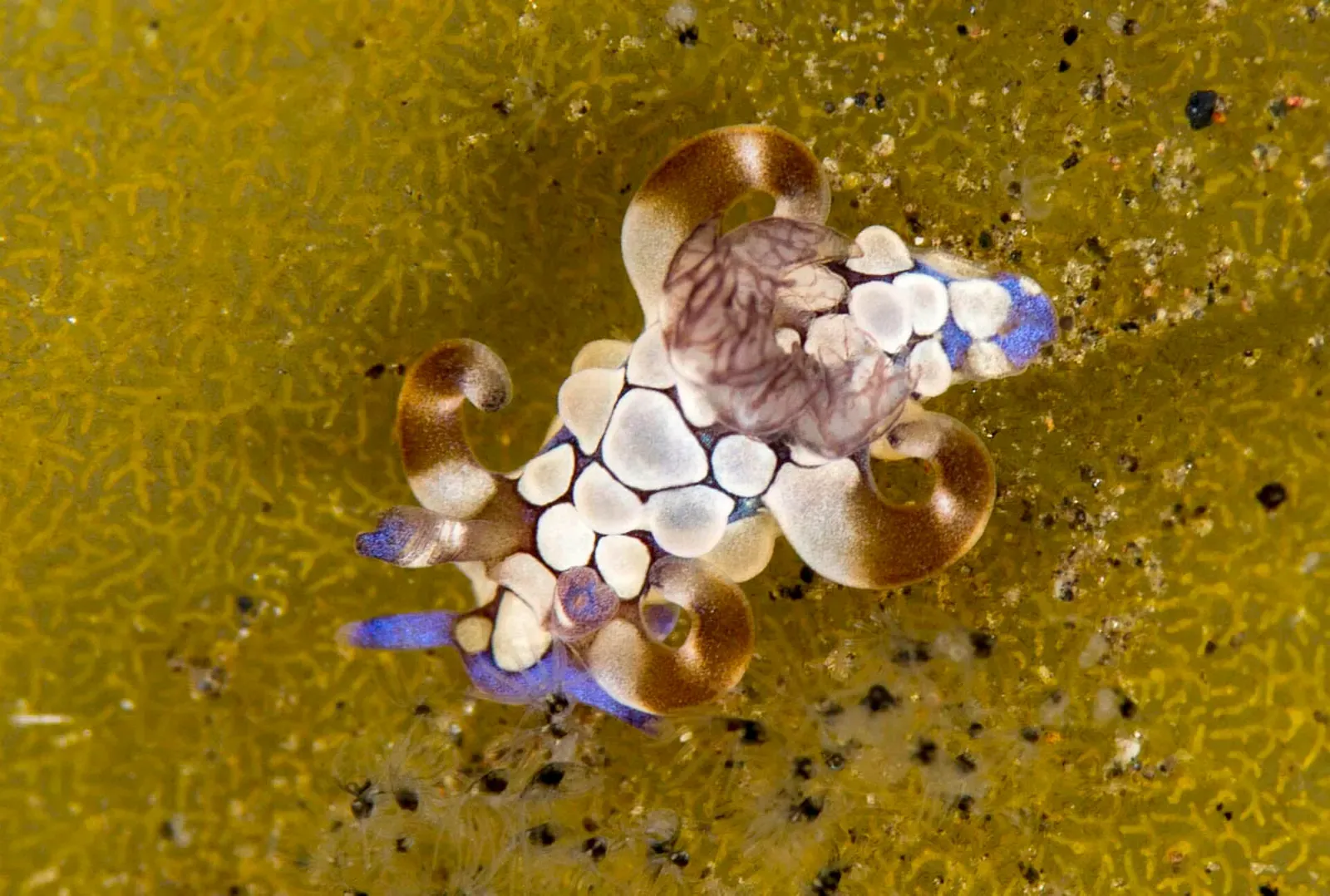
- A slender pink nudibranch with purple spots and orange gills and horns crawling across an orange sponge by Bernard Picton, CC BY-SA 4.0, via Wikimedia Commons
- A twin-peaked volcano rising across calm, clear shallow water over a rocky shore under a blue sky by Adi Mario, CC BY-SA 4.0, via Wikimedia Commons
Embed
Run a dive centre, club or blog? Embed this map of 4 dive sites near Sangeang & Bima Bay on your own page.
Similar destinations

A community-protected house reef drops straight off the jetty into dense coral.
Walls from 5 m past 60, and a dive base of its own
Drift dives past sharks and tuna on current-swept seamounts


A flashlightfish cave and Olango's 73 m wall, minutes from the airport