Coral Triangle · Philippines
Cabilao
Walls from 5 m past 60, and a dive base of its own
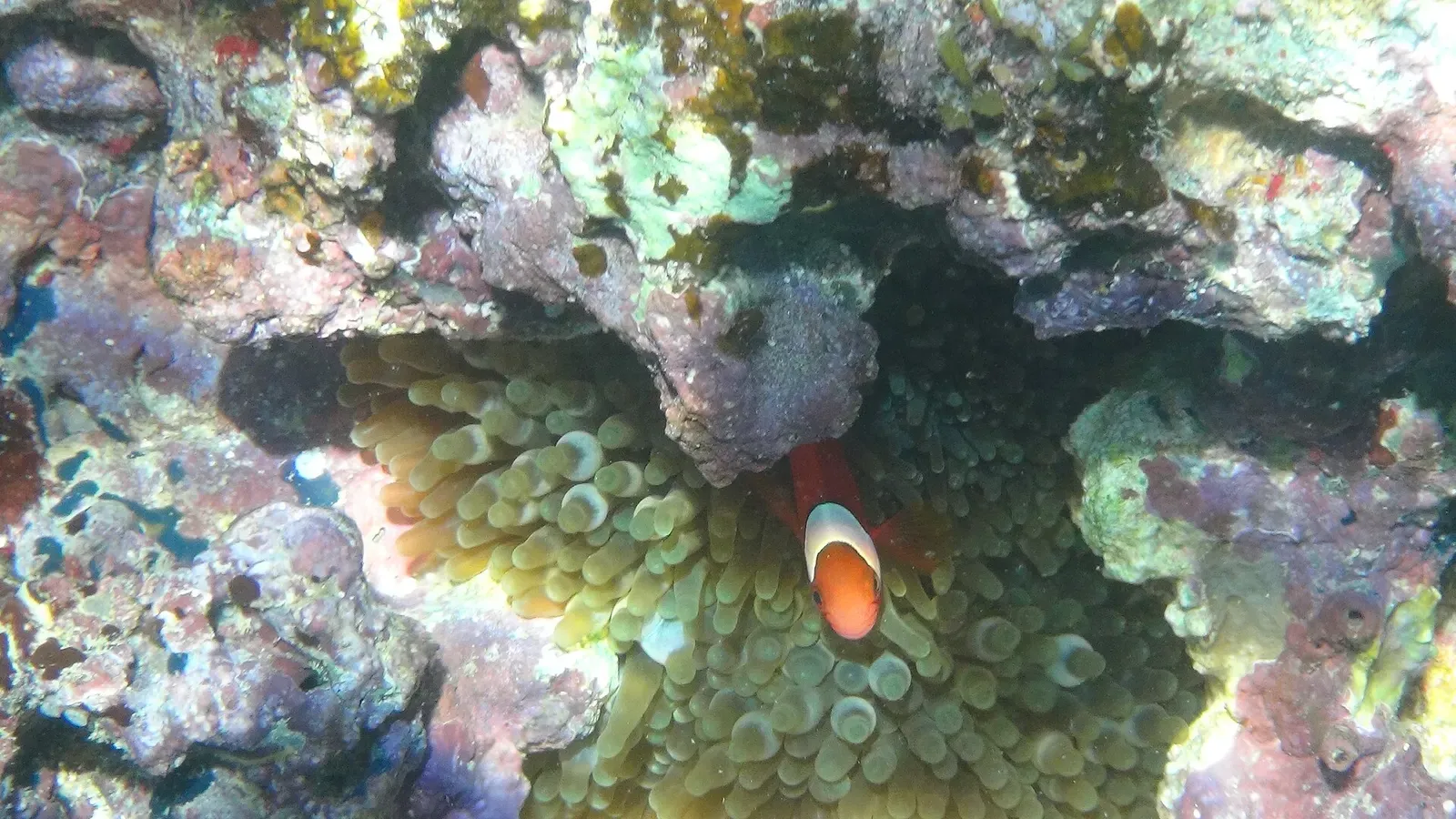
Photo: yuichiro anazawa · CC BY 3.0
Cabilao is a small island in the Cebu Strait off the north-west coast of Bohol, declared a tourist zone and marine reserve in 1978, with a handful of dive resorts on its west coast and a reputation built on walls. Drop-offs ring the island from about 5 m down past 60, hung with giant gorgonians and cut by caves and overhangs, and the shallow seagrass and sand between them carry the macro. Whitetip reef sharks are regular; hammerheads are the winter legend.
About diving in Cabilao
Cabilao is one of the few places in Bohol you can dive without staying on Panglao. Three or four small dive resorts sit on the island's west coast, house reefs start at the beach, and the boats are short hops around a shore you can see the whole of. Day trips do come across from Panglao — it is a long run, most of the morning — but the island rewards staying: sites ring it, so the guide picks by the current rather than by how far the boat can go, and night dives are simply the last dive of the day.
The diving is wall diving. Drop-offs run around most of the island, topping out at about 5 m and falling well past recreational depth, festooned with giant gorgonian fans, barrel sponges and soft coral, and cut with caves and overhangs to work along. Between the walls the ground is shallow seagrass, sand and scattered coral blocks, which is where the other half of Cabilao lives: ghost pipefish, sea moths, stargazers, frogfish, mantis shrimp and a long list of nudibranchs, mostly found on the slow dives and at night.
The island's reputation was built on hammerheads schooling off the north-west corner in the winter months, and that is still what most divers have heard about it. Sightings became far rarer after the 1990s, so treat them as luck rather than a plan; whitetip reef sharks resting in the caves, barracuda, jacks and dogtooth tuna on the current-washed points are the everyday version. The whole island has been a declared marine reserve since 1978, and the reef on the walls is in noticeably better condition than Panglao's.
Best time to dive Cabilao
| Jan | Feb | Mar | Apr | May | Jun | Jul | Aug | Sep | Oct | Nov | Dec | |
|---|---|---|---|---|---|---|---|---|---|---|---|---|
| Season | Prime | Prime | Prime | Prime | Prime | Good | Fair | Fair | Fair | Good | Prime | Prime |
| Sea surface | 28°C82°F | 28°C82°F | 28°C82°F | 29°C84°F | 30°C86°F | 30°C86°F | 30°C86°F | 29°C84°F | 30°C86°F | 30°C86°F | 29°C84°F | 29°C84°F |
| Daytime high | 29°C84°F | 30°C86°F | 31°C88°F | 33°C91°F | 33°C91°F | 32°C90°F | 31°C88°F | 31°C88°F | 31°C88°F | 30°C86°F | 30°C86°F | 30°C86°F |
| Rain | 186 mm7.3 in | 122 mm4.8 in | 100 mm3.9 in | 76 mm3.0 in | 118 mm4.6 in | 211 mm8.3 in | 232 mm9.1 in | 211 mm8.3 in | 216 mm8.5 in | 255 mm10.0 in | 174 mm6.9 in | 210 mm8.3 in |
| Jan | Feb | Mar | Apr | May | Jun |
|---|---|---|---|---|---|
| Prime | Prime | Prime | Prime | Prime | Good |
| Sea surface | |||||
| 28°C82°F | 28°C82°F | 28°C82°F | 29°C84°F | 30°C86°F | 30°C86°F |
| Daytime high | |||||
| 29°C84°F | 30°C86°F | 31°C88°F | 33°C91°F | 33°C91°F | 32°C90°F |
| Rain | |||||
| 186 mm7.3 in | 122 mm4.8 in | 100 mm3.9 in | 76 mm3.0 in | 118 mm4.6 in | 211 mm8.3 in |
| Jul | Aug | Sep | Oct | Nov | Dec |
|---|---|---|---|---|---|
| Fair | Fair | Fair | Good | Prime | Prime |
| Sea surface | |||||
| 30°C86°F | 29°C84°F | 30°C86°F | 30°C86°F | 29°C84°F | 29°C84°F |
| Daytime high | |||||
| 31°C88°F | 31°C88°F | 31°C88°F | 30°C86°F | 30°C86°F | 30°C86°F |
| Rain | |||||
| 232 mm9.1 in | 211 mm8.3 in | 216 mm8.5 in | 255 mm10.0 in | 174 mm6.9 in | 210 mm8.3 in |
2011–2025 averages. Sea surface: NOAA Coral Reef Watch, measured at the surface, so deeper water can run colder. Daytime high and rain: NASA POWER.
Dived year-round; Nov–Jun is the main season and the low season runs roughly May–Oct, when the south-west monsoon works the exposed sides.
Best months: January, February, March, April, May, November, December
Cabilao water temperature and weather by month
The sea surface stays between 28 and 30 °C (82–86 °F) all year. Most rain falls from June to October, peaking at about 260 mm (10 in) in October; March and April are the driest. Daytime highs reach 33 °C (91 °F) in May and drop to 29 °C (84 °F) in January. The coldest water here is about 27 °C (81 °F), so pack a 3 mm, or even a 2 mm, suit.
Dive types & marine life
Whitetip reef sharks are seen through the year, often resting under the overhangs, with barracuda, jacks, mackerel and dogtooth tuna on the current-washed corners. Hammerheads have a winter reputation here but are now rare. The macro is the reliable part: pygmy seahorses on the fans, ghost pipefish, sea moths, stargazers, frogfish and nudibranchs on the shallow seagrass and sand.
- Wall
- Muck & macro
- Reef
- Night
- Drift
- Coral garden
- Reef sharks
- Hammerheads
- Barracuda
- Trevally & jacks
- Pygmy seahorses
- Frogfish
- Nudibranchs
- Sea turtles
- Macro critters
- Pristine corals
Best dive sites in Cabilao
Wall
A hundred metres of coral wall from 5 m to 60
Wall
An east-coast wall with a cave, and Cabilao's best night dive
Wall
Stacked table corals over a wall dropping to 50 m
Drift
A current-washed plateau at 25–30 m, pelagics one day, pygmies the next
Reef
A gentle drift over coral and sand to 18 m
Wall
Giant gorgonian fans on a wall from 5 m to 60
Wall
The corner where Cabilao's sharks are seen, wall to plateau to wall
Wall
Shallow muck over a coral wall that falls to 60 m
Frogfish, ghost pipefish and turtles on a 5-30 m coral wall
Sand slope
Coral blocks and open sand to 30 m, worked slowly
Wall
Caves in a coral wall where whitetips rest up
Sand slope
Cabilao's mandarinfish dive, over rubble at dusk
How to get to Cabilao
Most divers fly into Bohol–Panglao International and travel overland to Loon, then cross by bangka — Mocpoc Pier on Sandingan is the usual jumping-off point. Panglao operators also run Cabilao as a long day trip of about two hours each way. The dive resorts sit on the west coast and dive their own house reefs from the beach.
Photos from Cabilao
P199 · CC BY-SA 4.0
P199 · CC BY-SA 4.0
Kai Squires · CC BY 4.0
Kai Squires · CC BY 4.0
yuichiro anazawa · CC BY 3.0
Dive videos
DIVING CABILAO ISLAND - Part 1 (09/2015) · MASSIMO PAGANI on YouTube
Diving Philippines Polaris Beach and Dive Resort Cabilao 2019 Video · Rene Klünder on YouTube
Photo credits
- Cabilao Island's wooded shore and village seen across deep blue water by P199, CC BY-SA 4.0, via Wikimedia Commons
- The white lighthouse tower standing above buildings on Cabilao Island by P199, CC BY-SA 4.0, via Wikimedia Commons
- A black nudibranch with blue-white tubercles crossing coral rubble at Cabilao by Kai Squires, CC BY 4.0, via Wikimedia Commons
- A small bobtail squid half-buried in white sand at Cabilao by Kai Squires, CC BY 4.0, via Wikimedia Commons
- An anemonefish sheltering among the tentacles of its host anemone by yuichiro anazawa, CC BY 3.0, via Wikimedia Commons
- Outrigger boats floating over pale shallows off the Loon coast by yuichiro anazawa, CC BY 3.0, via Wikimedia Commons
Embed
Run a dive centre, club or blog? Embed this map of 12 dive sites near Cabilao on your own page.
In The Logbook
- Where to see reef sharks on your first divesBig animals · 14 min read
- When does coral spawn? The moon's calendarBig animals · 10 min read
- Night diving: the best night dives in the worldNight diving · 12 min read
Similar destinations

A permanent tornado of jacks and barracuda on a wall from 6 m
A flashlightfish cave and Olango's 73 m wall, minutes from the airport

Banded sea kraits on Cervera Shoal, an hour out of Alona

.jpg)


Napaling's resident sardine shoal, and the base for all of Bohol