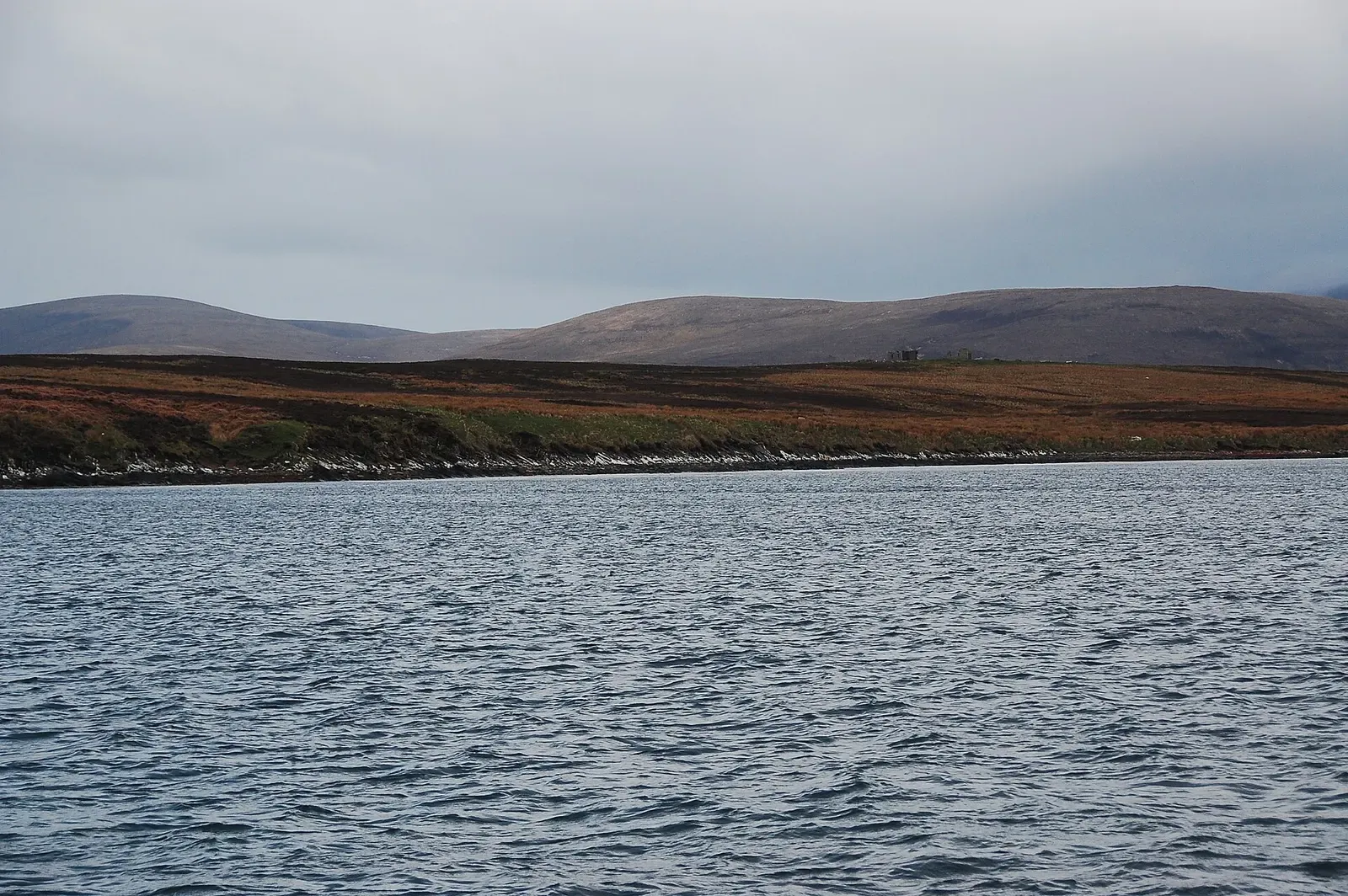
Scapa Flow · United Kingdom · Wreck
SMS Dresden
Bow at 25 m, stern at 38 m, lying on an incline
Photo: Ian Balcombe · CC BY-SA 2.0
Dresden lies south-east of Cava on her port side and on an incline, with the bow at 25 m and the stern at 38 m. The shallow bow makes her a common first dive of a Scapa week, though the upper decks have been badly damaged and the weather deck has separated from the hull.
Where it is and how deep
58.8811° N, 3.1429° WPublished position for this site.
Site maps published elsewhere
The dive
The wreck sits on her port side on an incline, which sets the profile for you: the bow is at 25 m and the stern at 38 m, so groups drop on the shallow end and work down the length rather than the other way round. That shallow bow is why Dresden is often the first dive of a Scapa week, while a group is still settling into cold water.
Along the hull the upper decks have been badly damaged and the weather deck has separated, so in places you are looking into the internal structure rather than swimming over closed plating. The main guns are buried in mud and are not the draw here; the shape of a 155 m Cöln-class cruiser lying on its side is. Depth builds steadily towards the stern, so the incline sets the profile if you dive her bow first.
The wreck
- Vessel
- SMS Dresden
- Type
- Cöln-class light cruiser
- Length
- 155.5 m (510 ft)
- Built
- 1917
- Sunk
- 1919
- Cause
- Scuttled on Rear Admiral Ludwig von Reuter's order during the seizure of the fleet
- Lies
- On her port side on an incline south-east of Cava, bow 25 m, stern 38 m
Dresden was launched on 25 April 1917 and interned at Scapa Flow with the rest of the High Seas Fleet at the end of the war. She was scuttled on 21 June 1919 following Rear Admiral Ludwig von Reuter's order during the planned seizure of the German ships, sinking before British sailors could board her or tow her to shallow water. The wreck was declared a scheduled monument on 23 May 2001.
Marine life and season
The sources we used don't single out particular species here.
| Jan | Feb | Mar | Apr | May | Jun | Jul | Aug | Sep | Oct | Nov | Dec |
|---|---|---|---|---|---|---|---|---|---|---|---|
| Off-season | Off-season | Fair | Good | Good | Good | Good | Good | Prime | Prime | Fair | Off-season |
Season follows Scapa Flow: Boats run from Easter to early November, and visibility improves in autumn once the plankton dies back.
Photos from SMS Dresden
SMS Dresden (Light Cruiser) scuttled 17 June 1919 · Public domain
Dive videos
Diving SMS Dresden - Scapa Flow · 01selkie on YouTube
SMS Dresden inside the stern · Jacob Mackenzie Diving Channel on YouTube
Questions divers ask
Is the Dresden a good first dive in Scapa Flow?+
It is often the first dive of a Scapa week because the bow sits at 25 m, shallower than the battleships. It is still a deep, cold wreck dive, and the stern end runs to 38 m.
Sources
- SMS Dresden (1917) — Wikipedia
- Diving in the United Kingdom — Wikivoyage
- SMS Dresden — Scapa Flow Wrecks
Photo credits
- Overcast view across the water to Cava's rocky, heather-covered coastline in Scapa Flow. by Ian Balcombe, CC BY-SA 2.0, via Wikimedia Commons
- Black-and-white photo of the three-funnelled light cruiser SMS Dresden underway at sea. by SMS Dresden (Light Cruiser) scuttled 17 June 1919, Public domain, via Wikimedia Commons
In The Logbook
- Cold-water diving: is it worth the drysuit?Cold water · 8 min read
- Deep wreck diving: where recreational stopsWrecks · 8 min read
More dive sites in Scapa Flow
Wreck
Armoured control tower and stem both still standing
Salvage-opened battleship with an engine room worth the dive
Bow, stern and rudders of an upturned 1913 dreadnought
Similar dives elsewhere
Five wrecks and a scatter of dinghies on one dive
Wreck
Birkenfels
Belgian North Sea · Belgium
A virtually intact ore carrier lying flat on the bottom far off the Belgian coast
A 1918 torpedo loss at 36 to 38 m on clean sand

_scuttled_17_June_1919.jpg)
A wartime wreck at 40 m with boxes of anti-aircraft heads at the bows