Scapa Flow · United Kingdom · Wreck
SMS Markgraf
Bow, stern and rudders of an upturned 1913 dreadnought
Photo: Ian Balcombe · CC BY-SA 2.0
One of the three König-class battleships scuttled with the interned German High Seas Fleet in June 1919, Markgraf lies almost completely upturned on a sandy floor east of Cava. There is around 25 m of water over the hull and 45 m under it, and Scapa Flow Wrecks rates her the most involved dive of the fleet.
Where it is and how deep
58.8912° N, 3.1667° WPublished position for this site.
Site maps published elsewhere
The dive
Shots go into the upturned hull, which carries around 25 m of water over it, and the dive is a descent down the flank of a ship that turned over as she sank. There is no deck to swim and no superstructure standing clear: what you follow is the curve of steel, with the sandy seabed east of Cava at 45 m under the flanks.
The prominent features are at the ends. The bow and the stern with its rudders remain largely intact and are what most divers come for, and on a hull this long you pick one and work back rather than trying to cover both. Scapa Flow Wrecks rates Markgraf the most involved dive of the fleet, needing a level of technicality the other wrecks do not, so the gas and the ascent are planned before you leave the boat.
The wreck
- Vessel
- SMS Markgraf
- Type
- König-class battleship
- Length
- 175.4 m (575 ft)
- Built
- 1913
- Sunk
- 1919
- Cause
- Scuttled on Rear Admiral Ludwig von Reuter's order to prevent British seizure
- Lies
- Almost completely upturned on a sandy floor east of Cava, in 45 m
Markgraf was the third of the four König-class dreadnoughts built for the Imperial German Navy, launched on 4 June 1913 and interned at Scapa Flow after the First World War. On 21 June 1919 Rear Admiral Ludwig von Reuter ordered the fleet scuttled to prevent British seizure of the interned ships, and Markgraf sank at 16:45. On 23 May 2001 she was designated a maritime scheduled ancient monument along with König and Kronprinz Wilhelm.
Marine life and season
The sources we used don't single out particular species here.
| Jan | Feb | Mar | Apr | May | Jun | Jul | Aug | Sep | Oct | Nov | Dec |
|---|---|---|---|---|---|---|---|---|---|---|---|
| Off-season | Off-season | Fair | Good | Good | Good | Good | Good | Prime | Prime | Fair | Off-season |
Season follows Scapa Flow: Boats run from Easter to early November, and visibility improves in autumn once the plankton dies back.
Know before you go
- Depth is the main hazard: the flanks bottom out at 45 m on a wreck that needs a level of technicality the others do not, so gas planning and decompression discipline matter.
Photos from SMS Markgraf
Ian Balcombe · CC BY-SA 2.0
Dive videos
Diving the wreck of SMS Markgraf - battleship, Scapa Flow · Rod Macdonald on YouTube
The battleship SMS Markgraf at Scapa Flow · Andrew Leng on YouTube
Questions divers ask
How deep is the SMS Markgraf?+
There is around 25 m of water over the upturned hull and the sandy seabed alongside is at 45 m, so the detail on the flanks is the deep part of the dive. Published figures for the wreck vary between 40 and 45 m.
What certification do I need for the Markgraf?+
This is the most involved of the Scapa battleships, described as requiring a level of technicality the other wrecks do not. Deep and cold-water wreck experience, and gas planning for a 45 m dive, are the practical minimum.
Sources
- SMS Markgraf — Wikipedia
- SMS König — Wikipedia
- Diving in the United Kingdom — Wikivoyage
- SMS Markgraf — Scapa Flow Wrecks
- Wrecks and Obstructions within UK EEZ — UK Hydrographic Office, ADMIRALTY Marine Data Portal
Photo credits
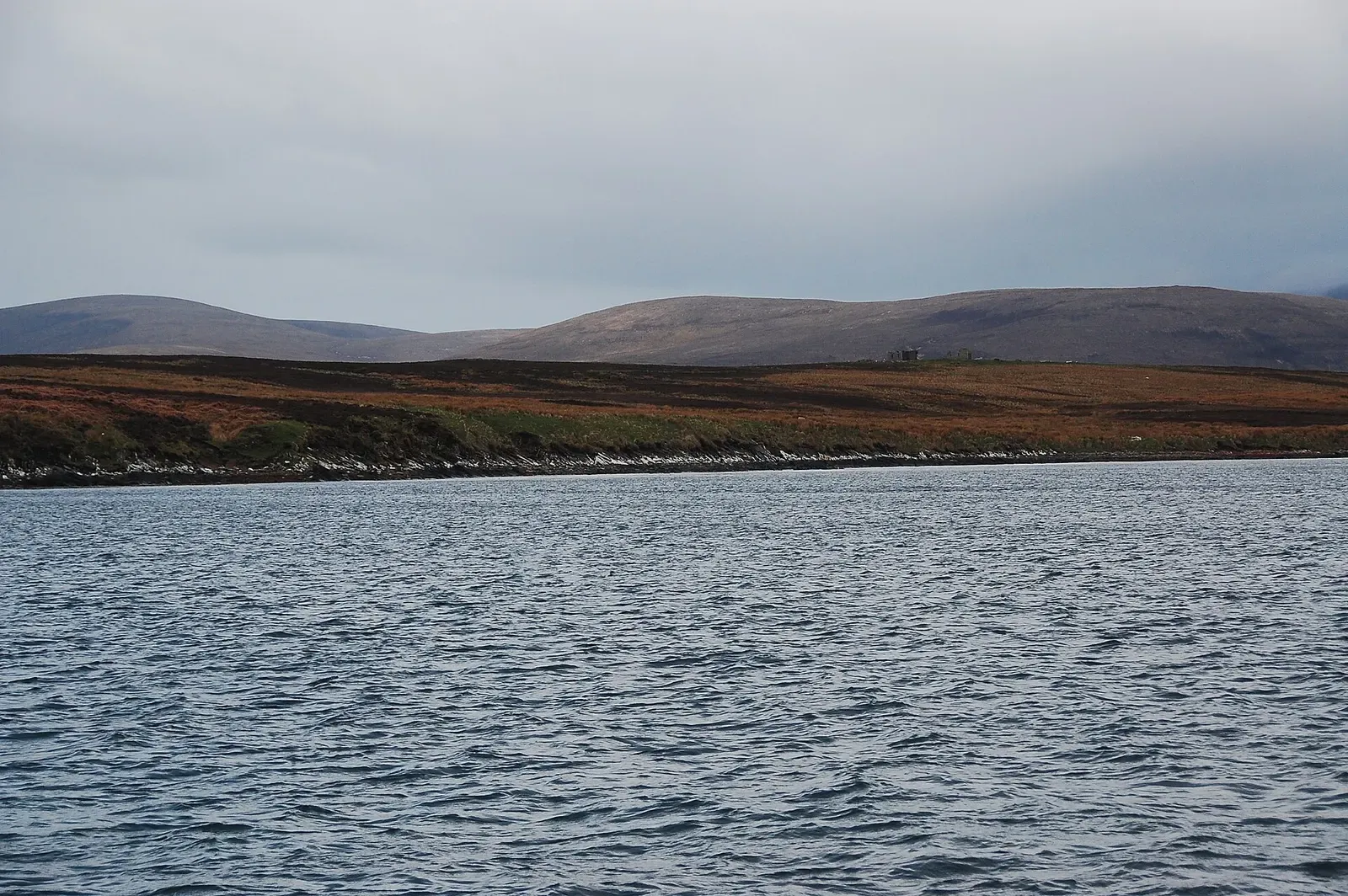
- Overcast view across water toward the rocky, heather-covered coastline of Cava island. by Ian Balcombe, CC BY-SA 2.0, via Wikimedia Commons
- Small sea cave and layered rock ledges along Cava's shoreline at the waterline. by Ian Balcombe, CC BY-SA 2.0, via Wikimedia Commons
In The Logbook
- Ships sunk on purpose, and where to dive themWrecks · 14 min read
- Why you get cold diving, even in a wetsuitBody & health · 8 min read
- Gas density: why deep air gets hard to breatheBody & health · 8 min read
- How long does a tank of air last?Gear & kit · 9 min read
- Cold-water diving: is it worth the drysuit?Cold water · 8 min read
- Deep wreck diving: where recreational stopsWrecks · 8 min read
- How a dive computer calculates no-stop timeBody & health · 10 min read
- Air, nitrox or trimix: which gas, and when?Gear & kit · 15 min read
- DPV diving: what an underwater scooter changesGear & kit · 10 min read
More dive sites in Scapa Flow
Bow at 25 m, stern at 38 m, lying on an incline
Wreck
Armoured control tower and stem both still standing


Salvage-opened battleship with an engine room worth the dive
Similar dives elsewhere
Wreck
Abille
Hel Peninsula · Poland
An intact tug with a windlass and a skylight that looks into the hull
Wreck
Casper
Gotland & Fårö · Sweden
A wooden wreck with its mast, deep below the Digerhuvud drop-off
Wreck
Consul Carl Fisser
Skarnsundet & the Trondheim Fjord · Norway
An upright 5,900-ton wartime freighter sloping from stern to bow
Wreck
Desantowiec
Hel Peninsula · Poland
A small vessel off Hel's port, with an opening bow and a small stern superstructure