Caribbean · Saint Vincent and the Grenadines
St. Vincent — Young Island & Anchor Reef
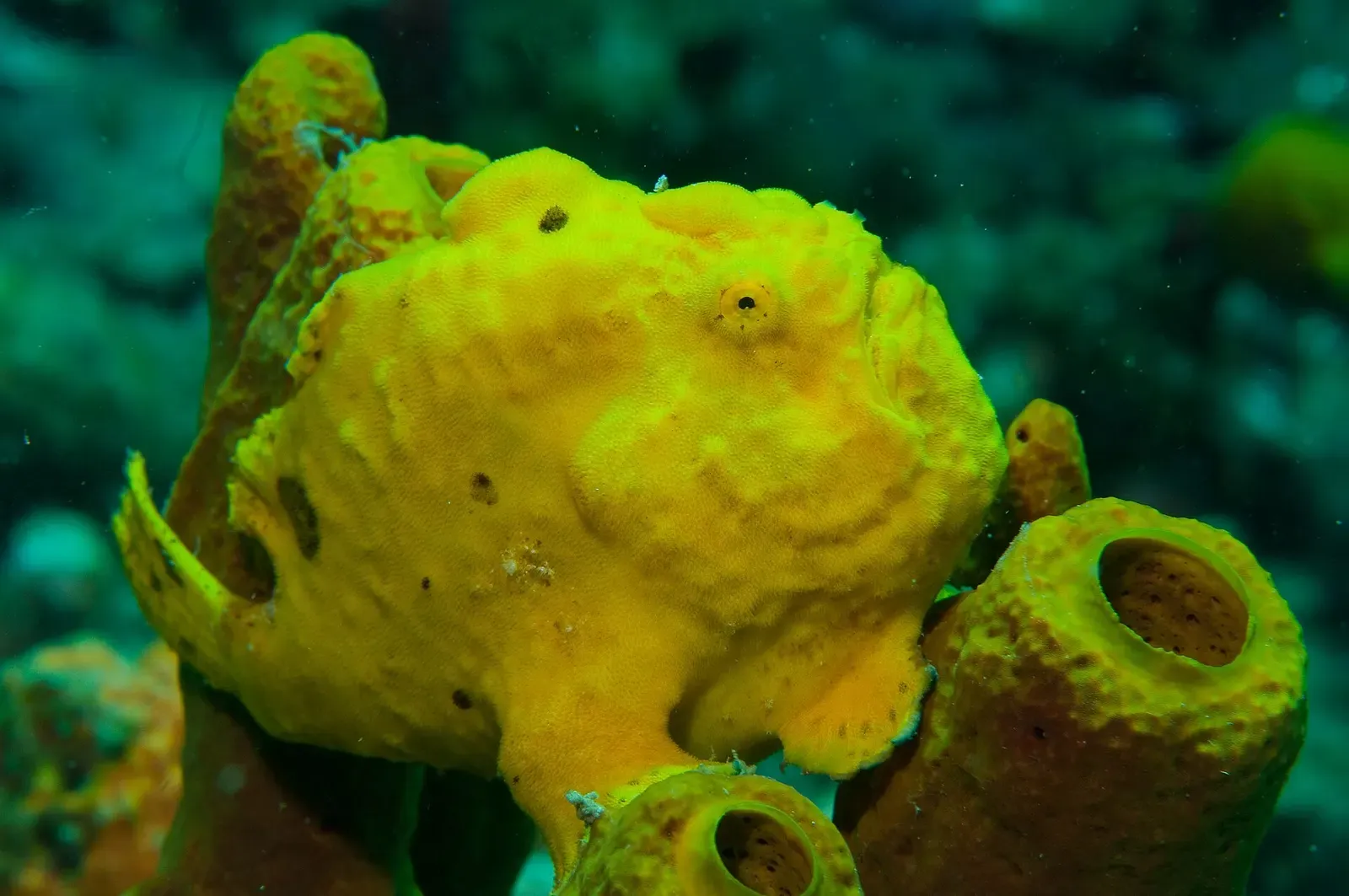
Seahorses and frogfish on shallow sand beside leeward walls and a cave
Photo: Barry Peters from Greer, SC · CC BY 2.0
St. Vincent's leeward coast holds walls, an underwater fissure, a cluster of wrecks and sandy slopes thick with small animals, all a short speedboat ride from the island's dive centres. Dives run from 6 m to 30 m, and the sites range from the wall and swim-throughs of Anchor Reef to the Bat Cave and Layou Wall. Its speciality is critter diving: seahorses, frogfish, torpedo rays and gurnards on shallow sand.
About diving in St. Vincent — Young Island & Anchor Reef
Dives run by speedboat. Most sites lie along the leeward, western side of the island, and the run out takes 10 to 15 minutes on average, while the sand off Young Island is two minutes from the dive centre jetty. The morning boat leaves at 9 am daily and returns around 1 pm after two dives, and a single-tank dive goes out at 2 pm. The most popular sites have moorings to protect the reef, and an average dive depth of 10 m makes a tank last an hour or more.
The coast mixes vertical terrain with open sand. Beneath the sea cliffs, the site called The Wall is full of black corals, gorgonians and barrel and vase sponges, with chromis and creole wrasse over it. Off Young Island the seabed lies at 8 m, and its flat, featureless-looking sand holds burrowing starfish, decorator crabs, jawfish and golden coral shrimp. Orca Point is best worked from its deep side up to shallow boulders with swarming fish, and Orca II pairs a coral-rich reef with a muck slope of flying gurnards, seahorses, pike blennies and crustaceans.
The island suits macro photographers and critter hunters. Dives are slow and relaxed, and the aim is not to cover ground but to find the unusual; at Critter Corner, film or card space runs out before bottom time does. Good buoyancy control is a must, since the sediment stirs up easily and ruins visibility. Divers who want to cover distance along a reef will find the pace slow, though the walls and the Bat Cave make a change from the sand.
Best time to dive St. Vincent — Young Island & Anchor Reef
| Jan | Feb | Mar | Apr | May | Jun | Jul | Aug | Sep | Oct | Nov | Dec |
|---|---|---|---|---|---|---|---|---|---|---|---|
| Good | Good | Good | Good | Fair | Fair | Fair | Fair | Fair | Fair | Fair | Good |
No month stands out for the diving; the rainy season runs May to November, and hurricanes are a risk from July to October.
Dive types & marine life
Frogfish, seahorses, nudibranchs and sea slugs are common on the muck dives, and several types of seahorse, flamingo tongue snails and frogfish turn up on a typical dive at Orca Point. Critter Corner adds pistol shrimp, cardinalfish, torpedo rays and gurnards.
- Reef
- Wall
- Wreck
- Muck & macro
- Night
- Frogfish
- Nudibranchs
- Macro critters
Best dive sites in St. Vincent — Young Island & Anchor Reef
- 1
Anchor Reef
Wall dive with swim-throughs and a coral reef formation
- 2
Orca Point
Critter site from 6 to 30 m with several types of seahorse, also dived at night
- 3
Critter Corner
Critter site in 8 m with pistol shrimp, cardinalfish, torpedo rays and gurnards
- 4
Bat Cave
Dive into an underwater fissure, high on most visiting divers' lists
- 5
Layou Wall
Wall dive and drift over the formations of Rock Fort
- 6
Capital Wrecks
Three shipwrecks in recreational depths, best for experienced divers
Site guides
Wall
An 18th-century anchor buried in the reef that gives the site its name
Cave & cavern
An underwater fissure into a coastal cave on the leeward shore
Wreck
Three shipwrecks on one dive, the oldest an 18th-century French frigate
Muck & macro
Torpedo rays and seahorses under Fort Duvernette
Wall
A drift along a leeward wall over the formations of Rock Fort
Muck & macro
Several types of seahorse and frogfish on a single dive
How to get to St. Vincent — Young Island & Anchor Reef
Argyle International Airport (SVD) is the main airport. Vans and taxis run from Argyle to Kingstown. One dive centre is on Villa Beach and another has its jetty on the small stretch of water between the mainland and Young Island.
Photos from St. Vincent — Young Island & Anchor Reef
Barry Peters · CC BY 2.0
Barry Peters from Greer, SC · CC BY 2.0
Barry Peters from Greer, SC · CC BY 2.0
Dive videos
Scuba Diving in St. Vincent & the Grenadines · Scubaverse on YouTube
Scuba Diving with Dive St. Vincent 2015. Caribbean · Rick Cavanaugh on YouTube
Questions divers ask
Where are the seahorses and frogfish on St. Vincent?+
On the muck and sand sites. Orca Point turns up several types of seahorse and frogfish on a typical dive and is also dived at night, and Orca II has seahorses on its muck side.
What skills does St. Vincent's critter diving need?+
Good buoyancy control above all, since the sediment stirs up easily and ruins visibility. Critter Corner lies in 8 m, Orca Point reaches 30 m, and Capital Wrecks is best suited to experienced divers.
How is St. Vincent reached for diving?+
Fly into Argyle International Airport (SVD), then take a van or taxi towards Kingstown. The dive centres sit on Villa Beach and on the channel facing Young Island, and their speedboats reach the leeward sites in 10 to 15 minutes.
When is the best time to dive St. Vincent?+
No month stands out, and the boat runs daily. December to April falls outside the May to November rainy season, and hurricanes are a risk from July to October.
Sources
- Dive Sites — Ministry of Tourism, Sports and Culture — Government of Saint Vincent and the Grenadines
- St Vincent — SSI — SSI
- Dive Antilles — Dive Antilles
- Fun dives & Snorkeling | Dive Antilles — Dive Antilles
- Saint Vincent and the Grenadines — Wikivoyage — Wikivoyage
- Kingstown Average Sea Temperatures — seatemperature.org
Photo credits
- A bright yellow frogfish perched among yellow-brown tube sponges, its small eye ringed in orange by Barry Peters from Greer, SC, CC BY 2.0, via Wikimedia Commons
- A rough, sand-dusted red-brown batfish propped on its fins on grey sand by Barry Peters, CC BY 2.0, via Wikimedia Commons
- A lizardfish with its jaws wide open while a small cleaner shrimp works inside its mouth by Barry Peters from Greer, SC, CC BY 2.0, via Wikimedia Commons
- A translucent shrimp with white spots and blue-and-white banded legs on red and orange reef by Barry Peters from Greer, SC, CC BY 2.0, via Wikimedia Commons
Embed
Run a dive centre, club or blog? Embed this map of 4 dive sites near St. Vincent on your own page.
Similar destinations
Healthy fringing reef, boulder swim-throughs and a tug wreck minutes from the beach

Swim off a beach onto a wall that drops past 900 metres
Cold upwelling makes Colombia's Caribbean coast unexpectedly productive

.jpg)
.jpg)
.jpg)
.jpg)
Whale sharks off the north side and easy macro reefs for new divers