
Jessie Beazley is the park's third and smallest reef, an emergent coral cay about 20 kilometres north of the two atolls and more or less on the route back to Puerto Princesa. The mushroom-shaped reef starts as shallow as 7 m and drops past 50 m, with barracuda, Spanish mackerel, Napoleon wrasse and numbers of grey reef sharks along the edge.
Where it is and how deep
9.0466° N, 119.8143° EApproximate position — the dashed circle shows where the site lies; your operator's briefing has the mooring.
The dive
The reef is mushroom-shaped and steep-sided: it comes up as shallow as 7 m and drops away past 50 m, so the dive is largely a matter of picking a depth on the drop-off and letting the wall run past. When conditions are calm the boat works one of a few sub-sites around the cay, most commonly the North End and the South End.
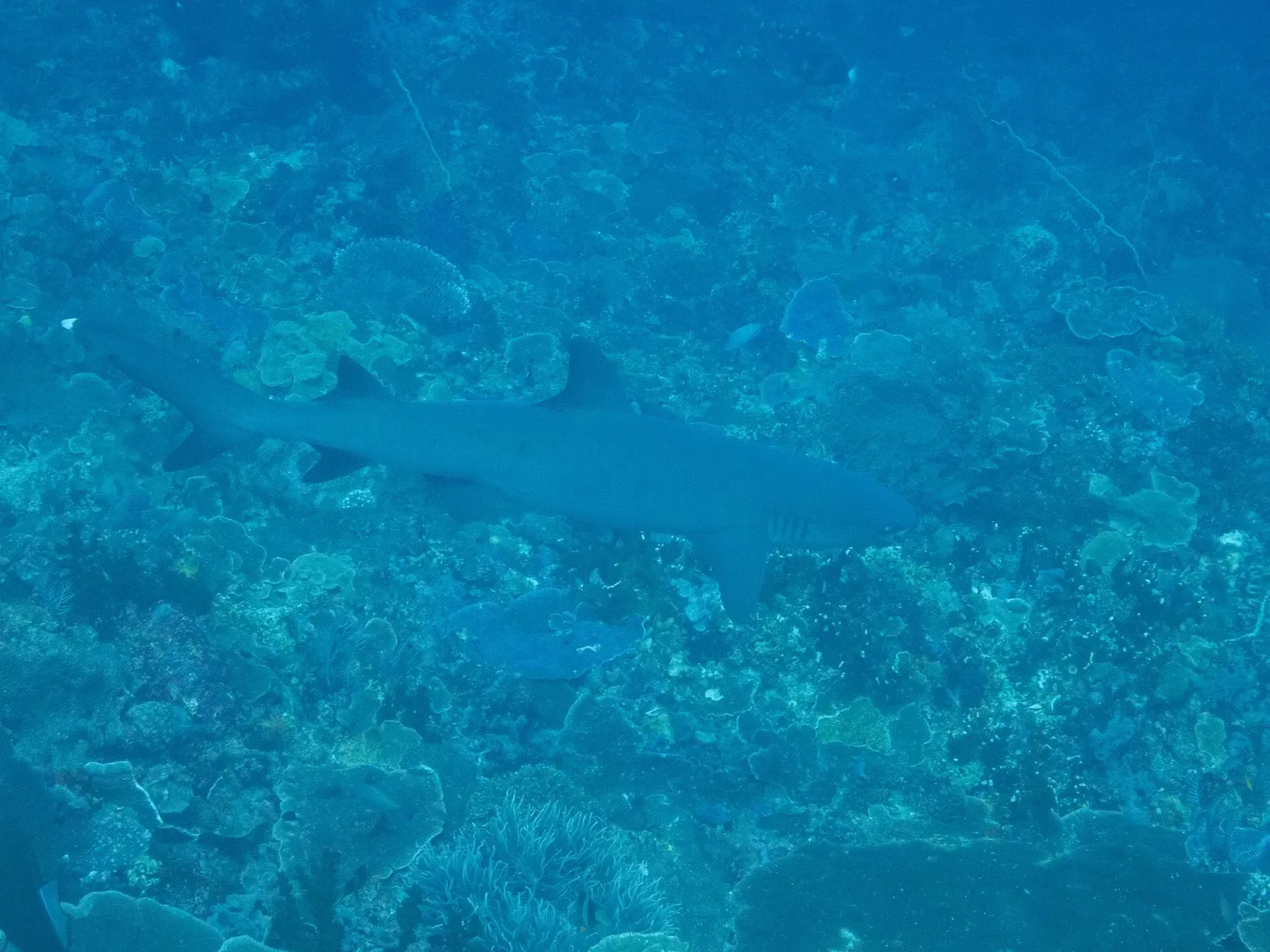
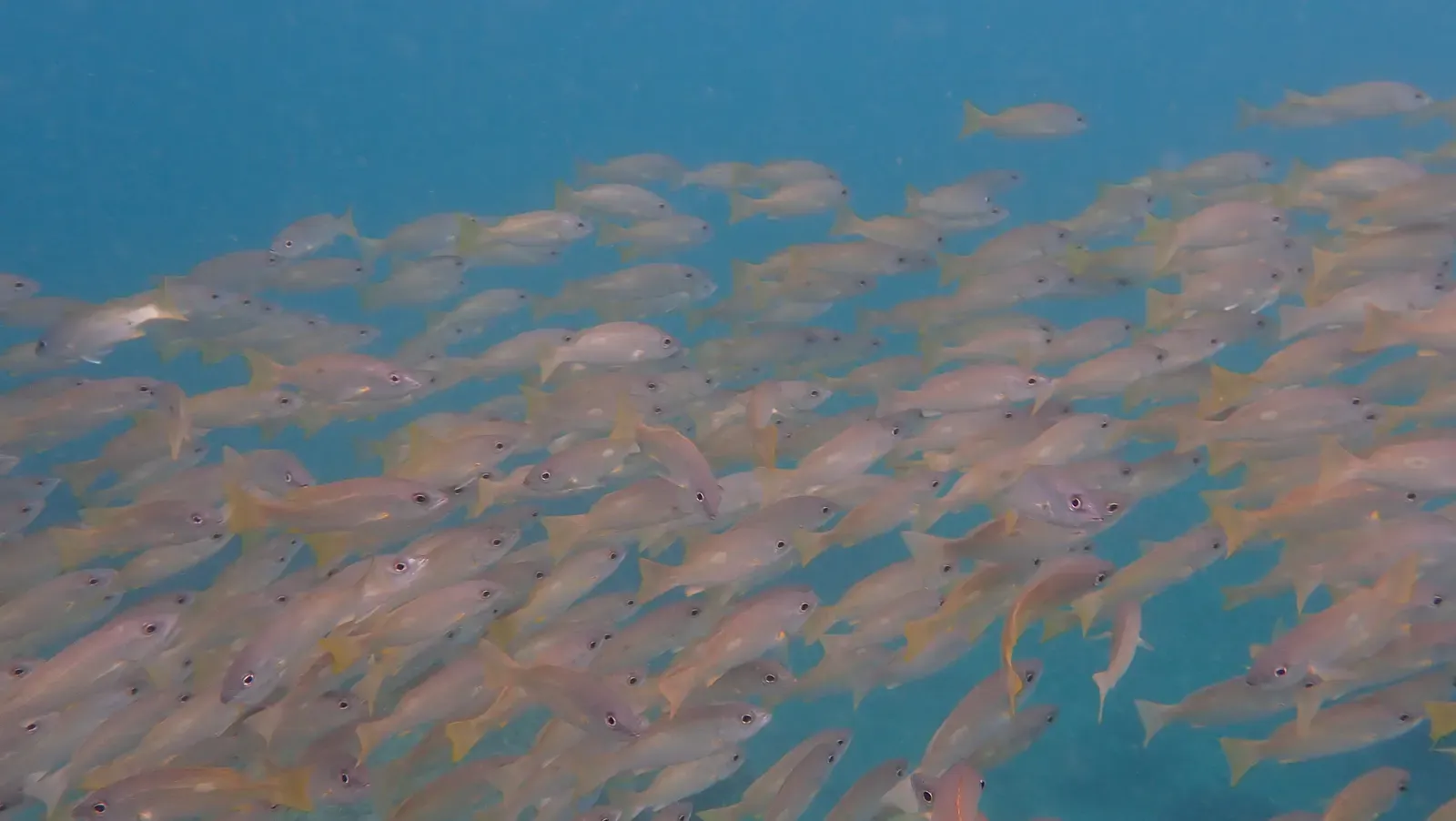
The fish list is the open-ocean version of the park's. Barracuda and Spanish mackerel patrol the edge, Napoleon wrasse work the reef itself, and schools of unicornfish and surgeonfish move across the top in numbers. Sharks can be numerous here too, grey reef sharks in particular, which is what most divers come away talking about.
Because it is only reached when the crossing allows, a dive at Jessie Beazley usually lands at the end of a liveaboard trip rather than the start of one. Plan gas around that: the shallow top of the cay is the part worth time, and with the drop-off falling past 50 m it is easy to spend the whole dive deep and surface having seen the least interesting half of the reef.
Background
The reef appears to be named after the Jessie Beazley, a Liverpool-built ship that sank at Tubbataha in 1872. It is the smallest of the park's three reefs and sits about 20 kilometres north of the two atolls, far enough out that boats treat it as a detour rather than a fixture on the itinerary, and usually take it on the run back toward Puerto Princesa.
Marine life and season
- Reef sharks
- Barracuda
- Napoleon wrasse
- Reef fish swarms
| Jan | Feb | Mar | Apr | May | Jun | Jul | Aug | Sep | Oct | Nov | Dec |
|---|---|---|---|---|---|---|---|---|---|---|---|
| Off-season | Off-season | Fair | Prime | Prime | Good | Off-season | Off-season | Off-season | Off-season | Off-season | Off-season |
Season follows Tubbataha Reefs: Park diving is permitted only mid-March through mid-June; closed the rest of the year for monsoon safety and reef recovery.
Know before you go
- The reef drops past 50 m, so it is easy to follow sharks below plan on the outer slope — agree a depth ceiling in the briefing and hold it.
Dive videos
Wall dive at Tubbataha Jessie Beazley Reef · TaileMac on YouTube
Whaleshark playing with divers at Tubbataha, Jessie Beazley Reef (2) · Benny Meyer on YouTube
Questions divers ask
How deep is Jessie Beazley Reef?+
The reef top comes up as shallow as 7 m and the drop-off continues past 50 m, so the site covers the whole recreational range and then some. Agree a depth ceiling in the briefing rather than following sharks down the outer slope.
How do you dive Jessie Beazley Reef?+
By liveaboard only. It lies about 20 kilometres north of Tubbataha's two main atolls and is dived when conditions are calm, often as the last dive of a trip on the way back to Puerto Princesa.
Why is it called Jessie Beazley Reef?+
The reef appears to be named after the Jessie Beazley, a Liverpool-built ship that sank at Tubbataha in 1872.
Sources
- Tubbataha Dive Sites — Dive The World
- Tubbataha Reef — Wikipedia
- Jesse Beazley Reef (mapped reef outline) — OpenStreetMap
In The Logbook
- The best wall dives in the worldWalls & drop-offs · 11 min read
- What is decompression sickness (the bends)?Body & health · 18 min read
- Why do you pee when diving, and tire after?Body & health · 12 min read
- How long to wait before flying after divingBody & health · 8 min read
More dive sites in Tubbataha Reefs
Wall
Predators along the wall, and a crevasse to 40 m as current shelter
Reef
Several whitetip reef sharks on one terrace at 20 m
Wall
A steep face to 60 m over a 3-5 m coral garden
Similar dives elsewhere
Thousands of blacktail barracuda over the Apollo slope

Two pinnacles on a 16-metre plateau, with a wall dropping to 60 metres
A holed rock at the surface, a coral-covered pinnacle below
Caves and overhangs north, a wall past 60 m east