
Black Hills is a submerged seamount that rises from deep water to within 10 metres of the surface, with the seabed dropping past 40 metres at its base. It is Utila's big-animal dive: schooling fish stack up around the peak whenever the current runs, and whale sharks pass over and around the site during the spring and autumn aggregation seasons.
Where it is and how deep
16.0910° N, 86.8468° WApproximate position — the dashed circle shows where the site lies; your operator's briefing has the mooring.
The dive
The seamount tops out at about 10 metres and falls away past 40 metres at its base, so the dive is built around the peak rather than the bottom. Currents can be strong, especially on the surface and on the down-current side of the seamount, and that is exactly when the site performs: when the flow runs, and it often does here, the seamount becomes a riot of activity with the schools stacked around the summit.
Schools of barracuda, jacks, Atlantic spadefish and creole wrasse circle the peak, and whale sharks pass over and around Black Hills, particularly during the spring and autumn aggregations. Turtles work the structure too, hawksbills among them. Keep an eye on the blue as well as on the rock, since the whale sharks pass over and around the seamount rather than settling on it.
Closer in, the cracks hold free-swimming moray eels, scorpionfish and frogfish, which makes a slow pass over the top worth the time before you start up. Check your air often: the depth and the activity here make it easy to lose track of time, and a strong flow turns the swim back into work you need gas in hand for.
Marine life and season
- Whale sharks
- Barracuda
- Trevally & jacks
- Sea turtles
- Frogfish
- Reef fish swarms
| Jan | Feb | Mar | Apr | May | Jun | Jul | Aug | Sep | Oct | Nov | Dec |
|---|---|---|---|---|---|---|---|---|---|---|---|
| Fair | Good | Prime | Prime | Prime | Good | Good | Good | Good | Fair | Fair | Good |
Season follows Utila: March to May is dry, clearest and best for whale sharks; October and November bring the heaviest rain and some runoff.
Know before you go
- Currents can be strong, especially at the surface and on the down-current side of the seamount - stay on the up-current face rather than fighting your way back around it.
- The depth and the activity make it easy to lose track of time here; check your air often and agree a turn pressure before the boat drops you in.
Dive videos
Black Hills Dive, Utila Honduras · GoBall on YouTube
Questions divers ask
Can you see whale sharks at Black Hills?+
Whale sharks pass over and around the seamount, particularly during the spring and autumn aggregation seasons. They are never guaranteed on a given dive, but the schools of barracuda, jacks and Atlantic spadefish circle the peak whether or not the sharks show.
How deep is Black Hills?+
The seamount rises to within 10 metres of the surface and the seabed at its base drops past 40 metres, so dives are planned around the peak rather than the bottom.
Sources
- Utila Dive Sites, Bay Islands, Honduras — Dive The World
- Útila — Wikivoyage
- Black Hills - ScubaGo — ScubaGo
In The Logbook
- Oxygen partial pressure limit: why 1.4 bar?Body & health · 13 min read
- Gas density limit in diving: why 33 m mattersBody & health · 8 min read
- Cheapest places to scuba dive, and the catchTrip planning · 15 min read
- Where to dive with whale sharks, month by monthBig animals · 15 min read
More dive sites in Utila
Wall
Iron Bound
Swim-throughs and overhangs on a wall to 21 metres
Wall
Raggedy Cay
Turtles and nurse sharks resting on sand at the wall's base
Coral garden
Duppy Waters
Bioluminescent glow after dark gave this reef its ghost name
Wreck
Airplane Wreck
A 2021 light-plane wreck flat on the sand at 24 m
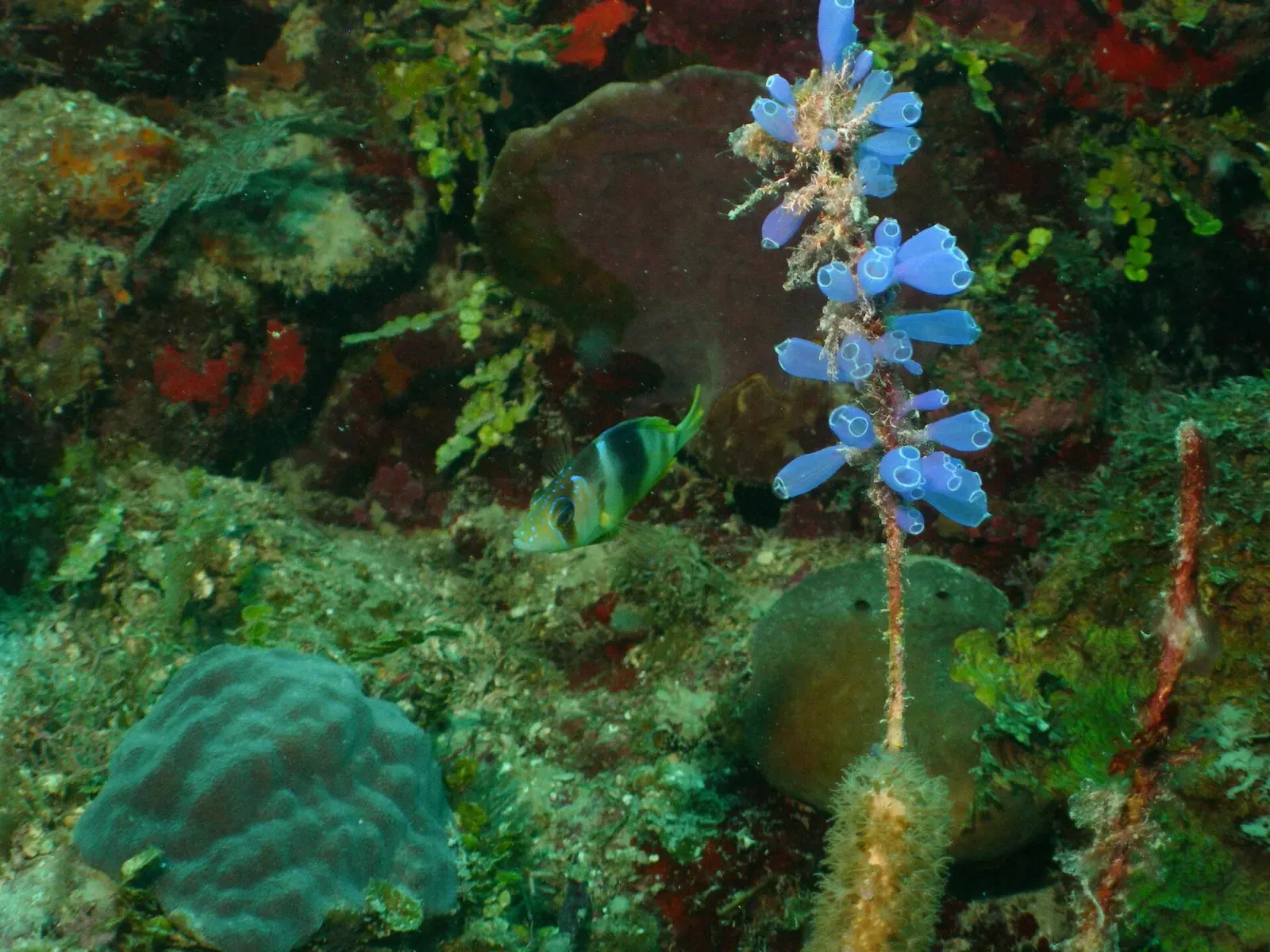
A small sailboat wreck that shelters green morays and nurse sharks
Wreck
Ron's Wreck
An old shrimp boat at 18 metres, full of small life
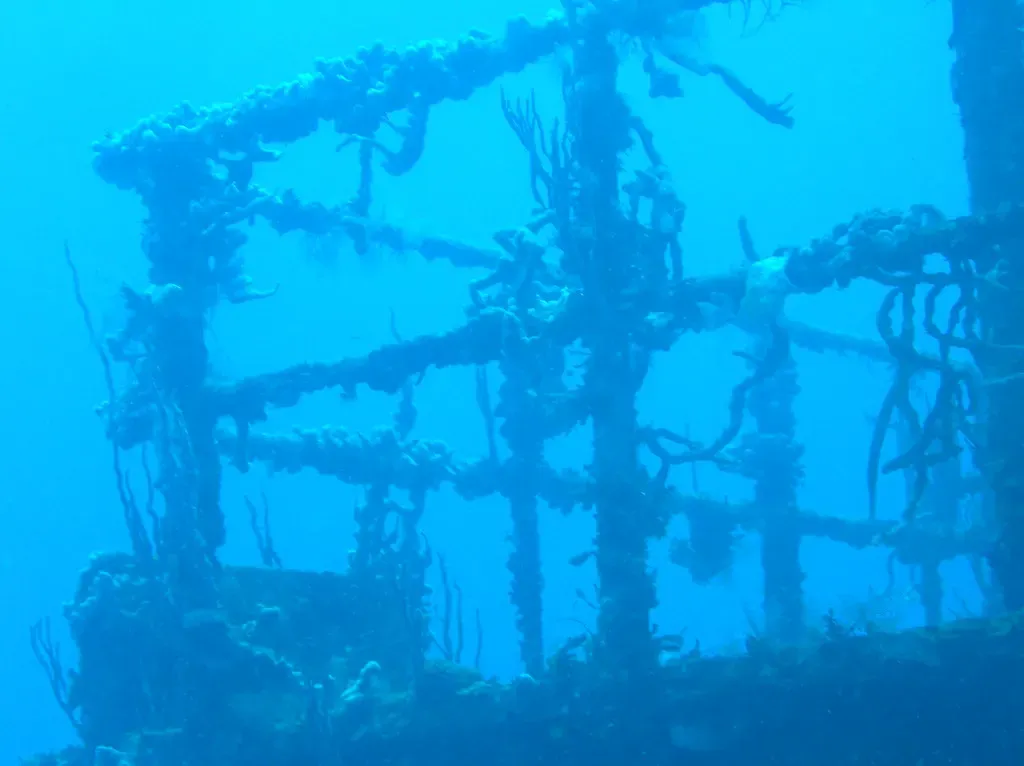
A 1998 artificial-reef wreck dived for its critters
Reef
Pretty Bush
Broken walls and sand channels, 4.6 to 30 metres
Similar dives elsewhere

Three pinnacles at 17 m over a mountain falling past 300 m

A submerged island from 12 m to 40, with current and big fish

Twin peaks at 8 m over walls falling 80 m, in current that feeds the fish
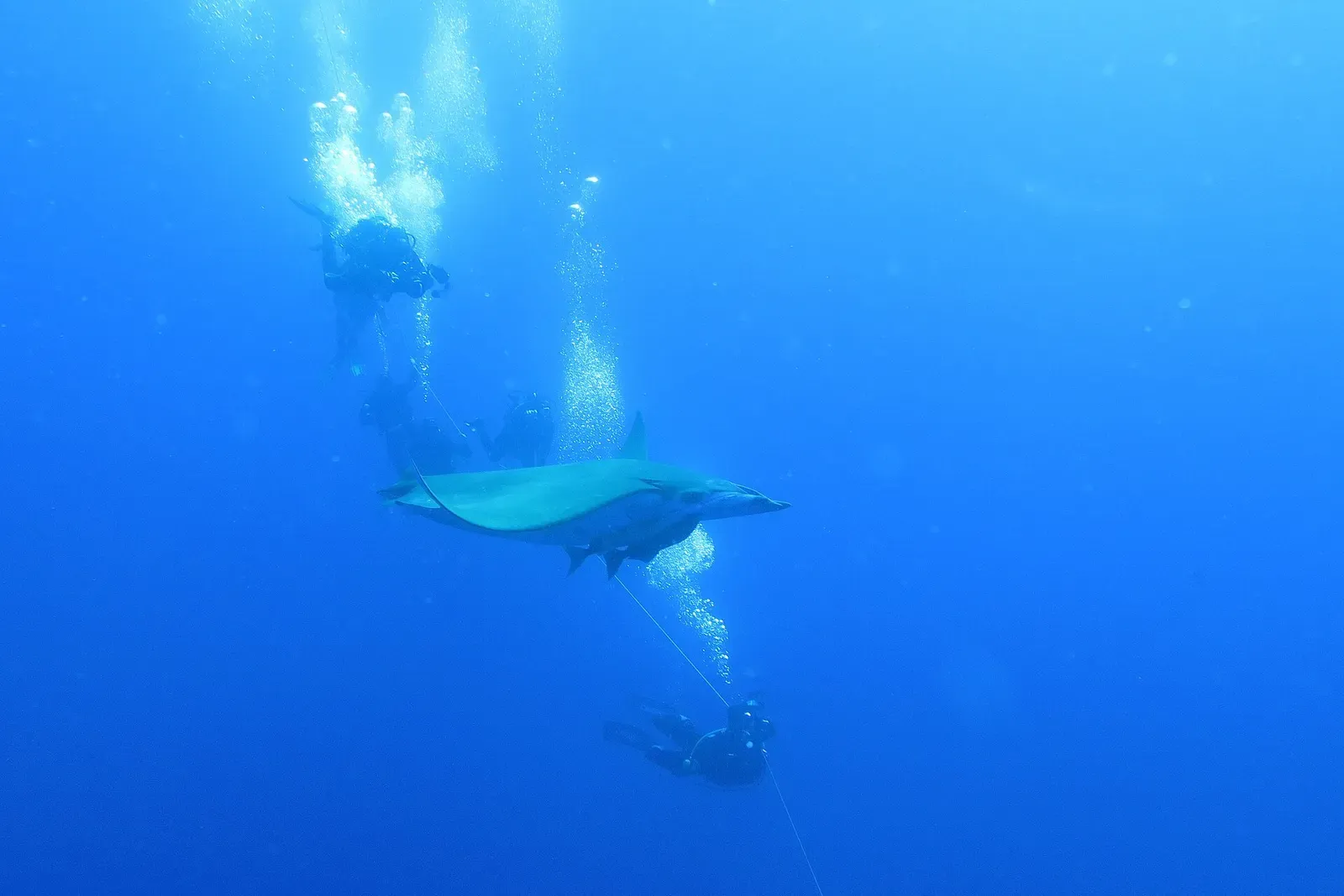

A seamount summit 45 nautical miles out, dived on a descent line