
Panglao is the base for all of Bohol's diving: a small island bridged to Tagbilaran with its own international airport, where the dive shops sit shoulder to shoulder behind Alona Beach. Its own coast is a string of shallow walls, sandy slopes and swim-throughs reached in minutes by boat, plus a dive boat sunk on the sand at 37 m. The north side holds Napaling's resident sardine shoal and Doljo's gorgonian walls, and Balicasag, Pamilacan and Cabilao all run as day trips from the same beach.
About diving in Panglao
Almost everything on Panglao happens within a few minutes of Alona Beach. The shops sit in a row behind the sand, the boats are outrigger bangkas pulled up in front of them, and the south-coast sites are close enough that a two-tank morning barely counts as a boat trip: Kalipayan is five minutes out, Alona's own reef two, and the Habagat wreck sits on the sand about a kilometre offshore. Afternoons and dusk go to the same coast, and night diving is an ordinary part of the schedule rather than an expedition.
The south coast is a low reef edge that breaks into short walls and sand between them, cut in places by chimneys and swim-throughs in the limestone — Arco Point is the one everyone dives, a hole through the wall entered at 18 m and exited at 8 m. Sunken vehicles and a sunken dive boat give the sandy stretches something to grow on. The north coast is a different dive: Napaling's drop-off carries a resident sardine shoal in the top few metres, and Doljo's wall is hung with big gorgonians and elephant-ear sponges.
It suits divers who want variety without moving base. From this one beach you can be on Balicasag's wall in half an hour, at Pamilacan in an hour, or on Cabilao's drop-offs for a full day, and still be back for dinner in the same place. Mixed groups do well here for the same reason: one boat can go to the sardines while another crosses to the sanctuary. Anyone after remoteness or empty sites should look at Anda or Cabilao instead — this is the developed corner of Bohol and it dives like it.
Best time to dive Panglao
| Jan | Feb | Mar | Apr | May | Jun | Jul | Aug | Sep | Oct | Nov | Dec | |
|---|---|---|---|---|---|---|---|---|---|---|---|---|
| Season | Prime | Prime | Prime | Prime | Prime | Good | Fair | Fair | Fair | Good | Prime | Prime |
| Sea surface | 28°C82°F | 27°C81°F | 28°C82°F | 28°C82°F | 29°C84°F | 30°C86°F | 29°C84°F | 29°C84°F | 29°C84°F | 29°C84°F | 29°C84°F | 29°C84°F |
| Daytime high | 29°C84°F | 29°C84°F | 30°C86°F | 31°C88°F | 31°C88°F | 31°C88°F | 30°C86°F | 30°C86°F | 30°C86°F | 30°C86°F | 30°C86°F | 29°C84°F |
| Rain | 177 mm7.0 in | 108 mm4.3 in | 91 mm3.6 in | 62 mm2.4 in | 117 mm4.6 in | 192 mm7.6 in | 217 mm8.5 in | 190 mm7.5 in | 182 mm7.2 in | 223 mm8.8 in | 191 mm7.5 in | 204 mm8.0 in |
| Jan | Feb | Mar | Apr | May | Jun |
|---|---|---|---|---|---|
| Prime | Prime | Prime | Prime | Prime | Good |
| Sea surface | |||||
| 28°C82°F | 27°C81°F | 28°C82°F | 28°C82°F | 29°C84°F | 30°C86°F |
| Daytime high | |||||
| 29°C84°F | 29°C84°F | 30°C86°F | 31°C88°F | 31°C88°F | 31°C88°F |
| Rain | |||||
| 177 mm7.0 in | 108 mm4.3 in | 91 mm3.6 in | 62 mm2.4 in | 117 mm4.6 in | 192 mm7.6 in |
| Jul | Aug | Sep | Oct | Nov | Dec |
|---|---|---|---|---|---|
| Fair | Fair | Fair | Good | Prime | Prime |
| Sea surface | |||||
| 29°C84°F | 29°C84°F | 29°C84°F | 29°C84°F | 29°C84°F | 29°C84°F |
| Daytime high | |||||
| 30°C86°F | 30°C86°F | 30°C86°F | 30°C86°F | 30°C86°F | 29°C84°F |
| Rain | |||||
| 217 mm8.5 in | 190 mm7.5 in | 182 mm7.2 in | 223 mm8.8 in | 191 mm7.5 in | 204 mm8.0 in |
2011–2025 averages. Sea surface: NOAA Coral Reef Watch, measured at the surface, so deeper water can run colder. Daytime high and rain: NASA POWER.
Nov–Jun is the main season; the south-west monsoon and typhoons disrupt Jul–Oct, though the sheltered south coast keeps working through much of it.
Best months: January, February, March, April, May, November, December
Panglao water temperature and weather by month
The sea surface runs from 27 °C (81 °F) in February to 30 °C (86 °F) in June. Most rain falls from June to January, peaking at about 220 mm (8.7 in) in October; March and April are the driest. Daytime highs sit around 30 °C (86 °F) all year. The coldest water here is about 27 °C (81 °F), so pack a 3 mm, or even a 2 mm, suit.
Dive types & marine life
Napaling's sardines are resident rather than seasonal, so what changes through the year is access rather than what is there. Frogfish, nudibranchs, ghost pipefish and the smaller sand life show best at dusk and after dark on the south coast, while the north-coast walls carry gorgonians, elephant-ear sponges and the pygmy seahorses that sit on them.
- Reef
- Wall
- Muck & macro
- Night
- Wreck
- Coral garden
- Sardine baitballs
- Frogfish
- Nudibranchs
- Macro critters
- Octopus & cuttlefish
- Sea turtles
- Pygmy seahorses
- Reef fish swarms
Best dive sites in Panglao
Wall
A chimney through the wall, 18 m in and 8 m out
Reef
Ghost pipefish and pygmy seahorses on a calm coral slope
A turtle point about 10 m under a shallow reef cliff
Wall
A drifted wall from 5 m to 25 m, minutes from Alona
Wall
A vertical wall of huge gorgonians on Panglao's quietest corner
Wall
Table corals over a wall running 25 to 40 metres
Wreck
A dive boat on the sand at 37 m, a kilometre off Alona Beach
Reef
Panglao's critter slope, five minutes off Alona Beach
Reef
An easy north-coast reef on the Napaling and Doljo road trip
Wall
A massive sardine ball on a coral drop-off to 30 m
How to get to Panglao
Bohol–Panglao International is on the island itself, or a fast ferry from Cebu City to Tagbilaran and the bridge across. Alona Beach is the standard base and the departure point for Balicasag, Pamilacan and Cabilao. Napaling, Doljo and Momo are reached by road, so a scooter or a van widens the day considerably.
Photos from Panglao
No machine-readable author provided. Magalhães assumed (based on copyright claims). · Public domain
prilfish · CC BY 2.0
prilfish · CC BY 2.0
prilfish · CC BY 2.0
Patrickroque01 · CC BY-SA 4.0
Reefwander · All rights reserved
Dive videos
WEIGHTLESS | Scuba Diving in Panglao, Philippines – 4K Underwater Calm · Engberts Adventures on YouTube
Diving in the Philippines, Panglao, Doljo · Dariusz Osiak on YouTube
Photo credits
- Palms lean over the white sand of Alona Beach with outrigger boats offshore by Jeroen36, CC BY 3.0, via Wikimedia Commons
- A traditional outrigger bangka anchored over clear water off Panglao by No machine-readable author provided. Magalhães assumed (based on copyright claims)., Public domain, via Wikimedia Commons
- A pale frogfish sits motionless against sponge-covered reef off Panglao by prilfish, CC BY 2.0, via Openverse
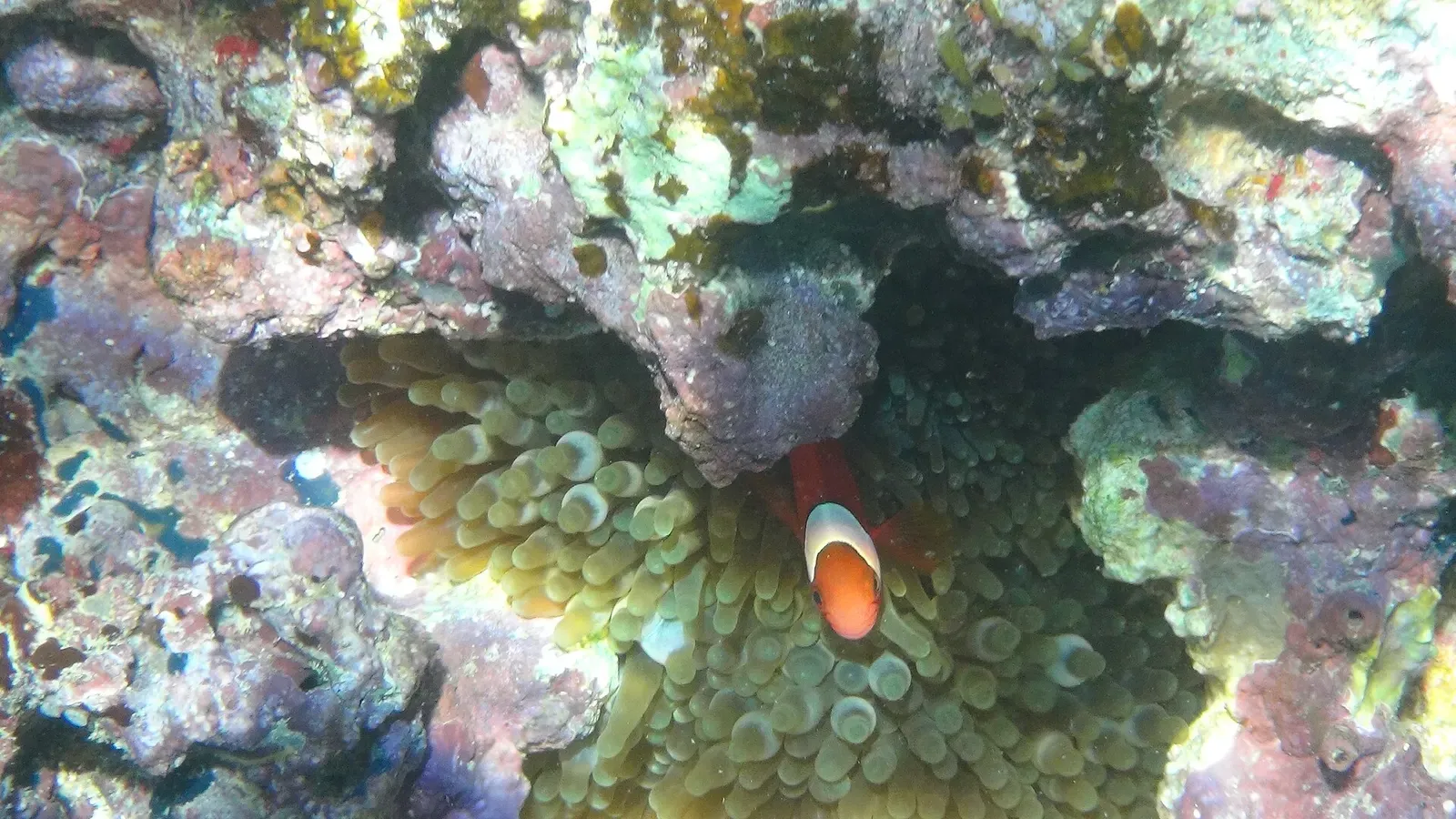
- Bubble-tipped anemone tentacles crowd around a green sea squirt on the reef by prilfish, CC BY 2.0, via Openverse
- A snake eel's head protrudes from the sand on a Panglao slope by prilfish, CC BY 2.0, via Openverse
- Outrigger boats drawn up along the shallow coast at Panglao Poblacion by Patrickroque01, CC BY-SA 4.0, via Wikimedia Commons
- A pale giant frogfish rests on red sponge-covered reef with open blue water and sunlight behind it. by Reefwander, All rights reserved
Embed
Run a dive centre, club or blog? Embed this map of 12 dive sites near Panglao on your own page.
In The Logbook
- Where to dive with sea turtlesBig animals · 15 min read
- Frogfish: species, behaviour and where to diveMacro & muck · 12 min read
- Cheapest places to scuba dive, and the catchTrip planning · 15 min read
- How a dive computer calculates no-stop timeBody & health · 10 min read
- Air, nitrox or trimix: which gas, and when?Gear & kit · 15 min read
Similar destinations
Walls from 5 m past 60, and a dive base of its own

Shore-accessible walls from 5 m into blue, dived one boat at a time

A permanent tornado of jacks and barracuda on a wall from 6 m


.jpg)
Banded sea kraits on Cervera Shoal, an hour out of Alona