Coral Triangle · Indonesia
Bunaken
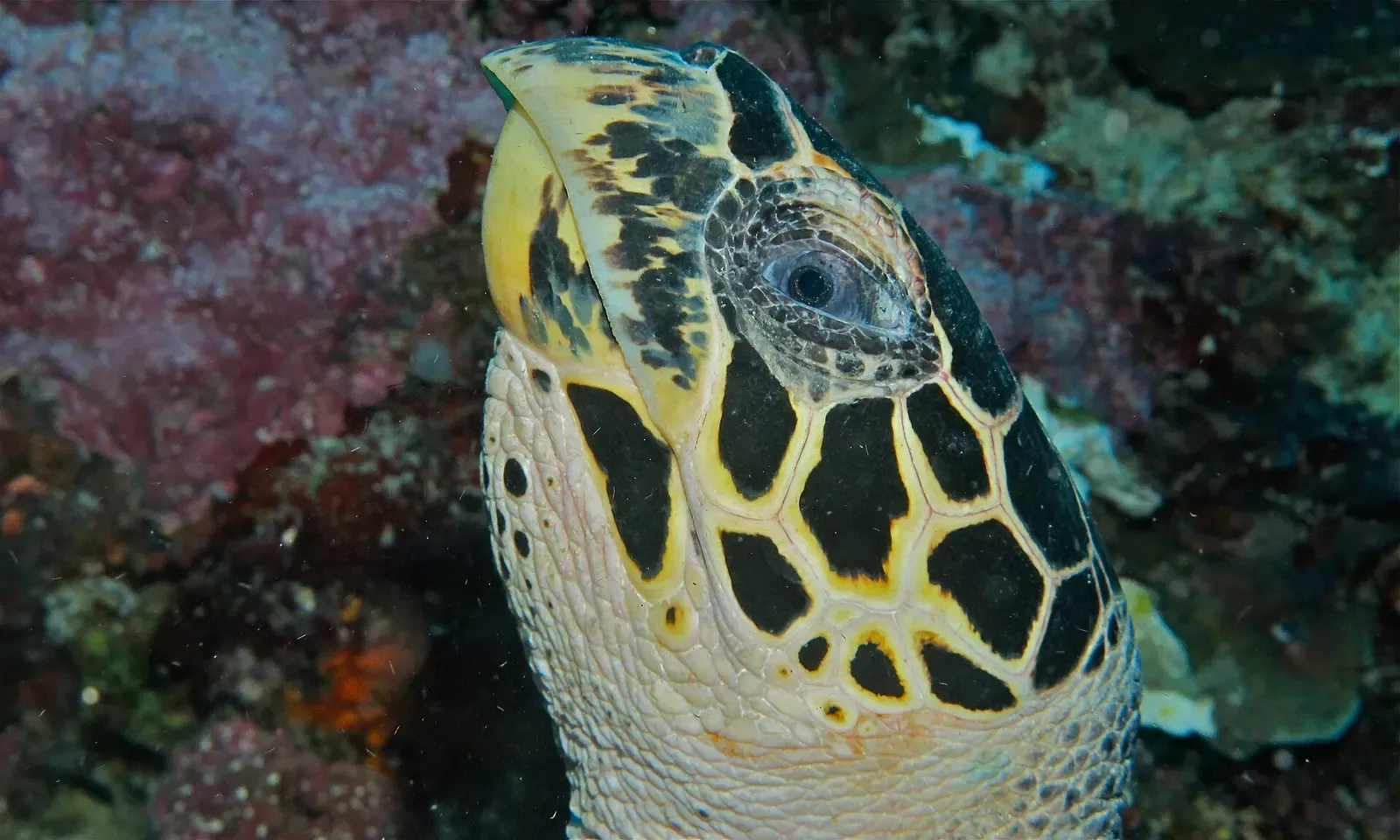
Sheer walls drop from the surface, patrolled by turtles and napoleon wrasse.
Photo: Bernard DUPONT · CC BY-SA 2.0
Bunaken National Marine Park off Manado in North Sulawesi is known for near-vertical walls that drop from the surface well past recreational depth, carpeted in soft coral, sponges, and sea fans. Sites like Lekuan and Fukui combine wall diving with sightings of napoleon wrasse, green and hawksbill turtles, and schooling jacks holding in the current along the drop-off. Water is clear year-round, and dives are typically drift dives along the wall with a boat pickup downcurrent.
About diving in Bunaken
Diving in the park follows a settled daily rhythm: two dives through the morning with the interval spent on the boat or on a beach, a third in the afternoon for those sleeping on the islands, and a return before the sea gets up. Boats run out from the Manado waterfront and from small resorts on Bunaken and Siladen, so the crossing is anything from most of an hour to a few minutes depending on where you stay. The cone of Manado Tua stands over the park and does most of the work of orientation from the surface.
The park is built to one template and the interest lies in how each site varies it. A shallow reef flat runs out from the island, ends at a lip, and drops away vertically; you kick across the flat, cross the edge, and the bottom simply stops being there. The face is cut with cracks, overhangs and small caves, and the fans on it stand out into the passing water rather than lying back against the rock. Corners and channels take the most flow and hold fish out in the blue, while the sheltered stretches run slower and reward working the ledges.
The characteristic dive is a long, slow drift with the wall on one shoulder and open water on the other, ascending through the profile so the last third passes over the sunlit reef flat where the safety stop happens. That shallow top is the most productive part of many dives and the reason snorkellers get a real day out of the same sites. With no bottom in sight to judge depth against, gauge discipline sits entirely with the diver, and guides tend to brief that point before anything else.
It suits divers who want straightforward navigation and dependable fish life without technical demands, and it is a reasonable place to build confidence in moving water, since the flow usually tracks along the wall rather than down it. Down-currents do occur at the exposed corners, which is why the ascent plan and markers get briefed rather than assumed. Divers who want macro subjects and long bottom times over sand find the format repetitive after a few days, which is why the usual North Sulawesi week splits between here and Lembeh Strait.
Best time to dive Bunaken
| Jan | Feb | Mar | Apr | May | Jun | Jul | Aug | Sep | Oct | Nov | Dec | |
|---|---|---|---|---|---|---|---|---|---|---|---|---|
| Season | Good | Good | Good | Good | Prime | Prime | Prime | Prime | Prime | Prime | Good | Good |
| Sea surface | 29°C84°F | 29°C84°F | 29°C84°F | 29°C84°F | 30°C86°F | 30°C86°F | 29°C84°F | 29°C84°F | 29°C84°F | 30°C86°F | 30°C86°F | 29°C84°F |
| Daytime high | 29°C84°F | 29°C84°F | 29°C84°F | 30°C86°F | 30°C86°F | 29°C84°F | 29°C84°F | 29°C84°F | 30°C86°F | 30°C86°F | 30°C86°F | 29°C84°F |
| Rain | 259 mm10.2 in | 200 mm7.9 in | 198 mm7.8 in | 195 mm7.7 in | 191 mm7.5 in | 191 mm7.5 in | 158 mm6.2 in | 105 mm4.1 in | 110 mm4.3 in | 144 mm5.7 in | 184 mm7.2 in | 215 mm8.5 in |
| Jan | Feb | Mar | Apr | May | Jun |
|---|---|---|---|---|---|
| Good | Good | Good | Good | Prime | Prime |
| Sea surface | |||||
| 29°C84°F | 29°C84°F | 29°C84°F | 29°C84°F | 30°C86°F | 30°C86°F |
| Daytime high | |||||
| 29°C84°F | 29°C84°F | 29°C84°F | 30°C86°F | 30°C86°F | 29°C84°F |
| Rain | |||||
| 259 mm10.2 in | 200 mm7.9 in | 198 mm7.8 in | 195 mm7.7 in | 191 mm7.5 in | 191 mm7.5 in |
| Jul | Aug | Sep | Oct | Nov | Dec |
|---|---|---|---|---|---|
| Prime | Prime | Prime | Prime | Good | Good |
| Sea surface | |||||
| 29°C84°F | 29°C84°F | 29°C84°F | 30°C86°F | 30°C86°F | 29°C84°F |
| Daytime high | |||||
| 29°C84°F | 29°C84°F | 30°C86°F | 30°C86°F | 30°C86°F | 29°C84°F |
| Rain | |||||
| 158 mm6.2 in | 105 mm4.1 in | 110 mm4.3 in | 144 mm5.7 in | 184 mm7.2 in | 215 mm8.5 in |
2011–2025 averages. Sea surface: NOAA Coral Reef Watch, measured at the surface, so deeper water can run colder. Daytime high and rain: NASA POWER.
May–October dry season gives the clearest water; some rain and runoff November–April.
Best months: May, June, July, August, September, October
Bunaken water temperature and weather by month
The sea surface stays between 29 and 30 °C (84–86 °F) all year. Rain falls through the year, about 180 mm (7.1 in) a month on average, with January the wettest. Daytime highs sit around 29 °C (84 °F) all year. The coldest water here is about 27 °C (81 °F), so pack a 3 mm, or even a 2 mm, suit.
Dive types & marine life
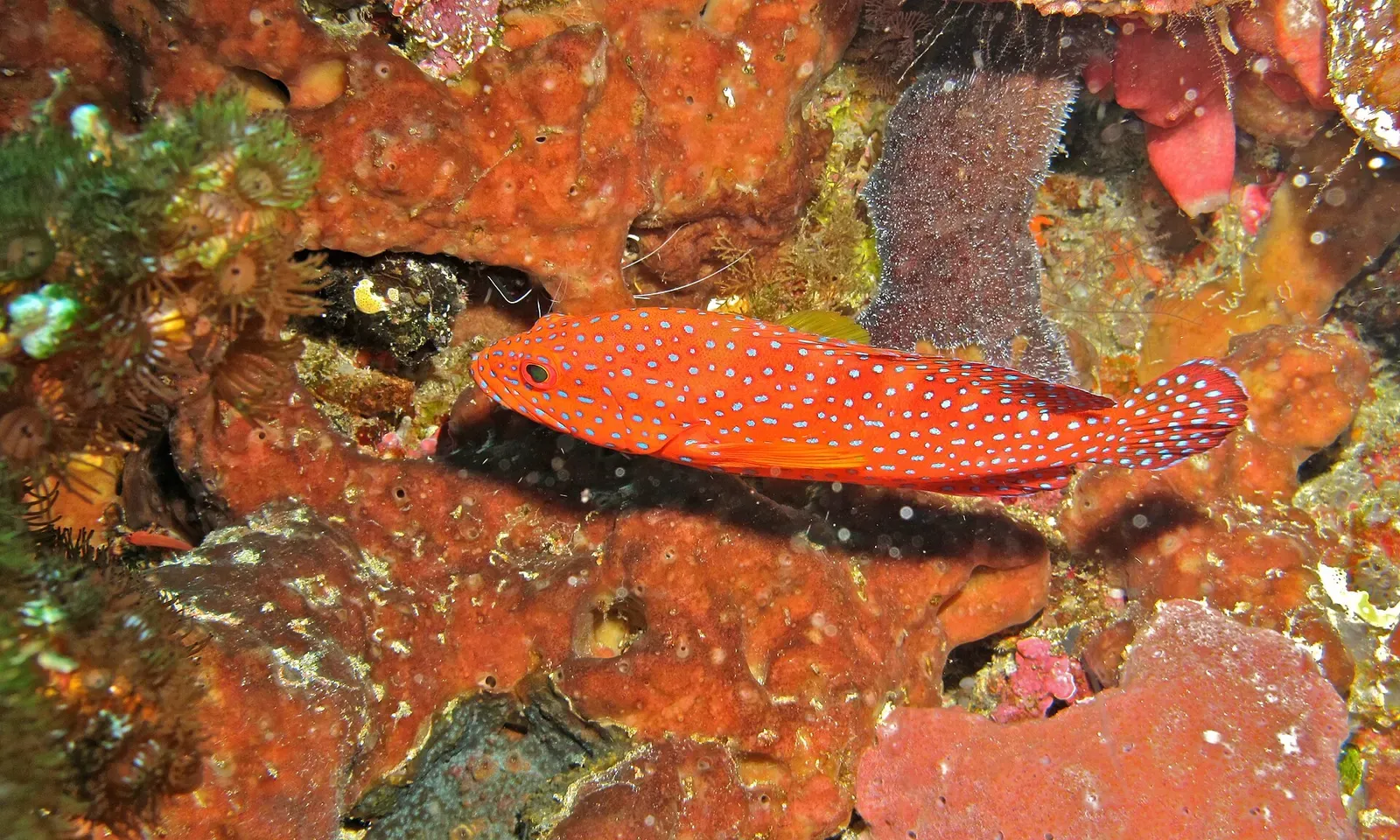
Turtles are the constant, resting on ledges and grazing the reef top on most dives. Napoleon wrasse, groupers and jacks hold where current hits the corners, and nudibranchs are the reef-flat consolation when the blue stays empty. Reef sharks and eagle rays are luck rather than plan. Presence barely shifts across the year; May to October rates highest for clarity.
- Wall
- Reef
- Drift
- Reef sharks
- Sea turtles
- Napoleon wrasse
- Eagle rays
- Trevally & jacks
- Groupers
- Nudibranchs
- Pristine corals
Best dive sites in Bunaken
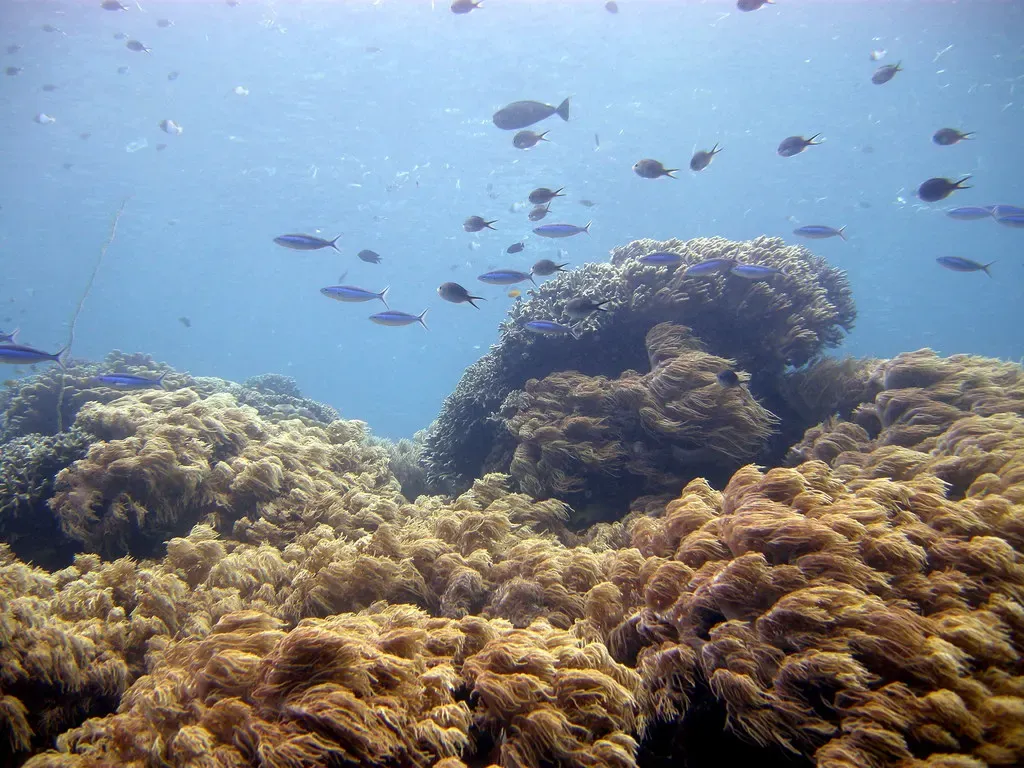
A reef so long one dive doesn't cover it
Wall
Fissured wall with pygmy seahorses, and a night-dive standby
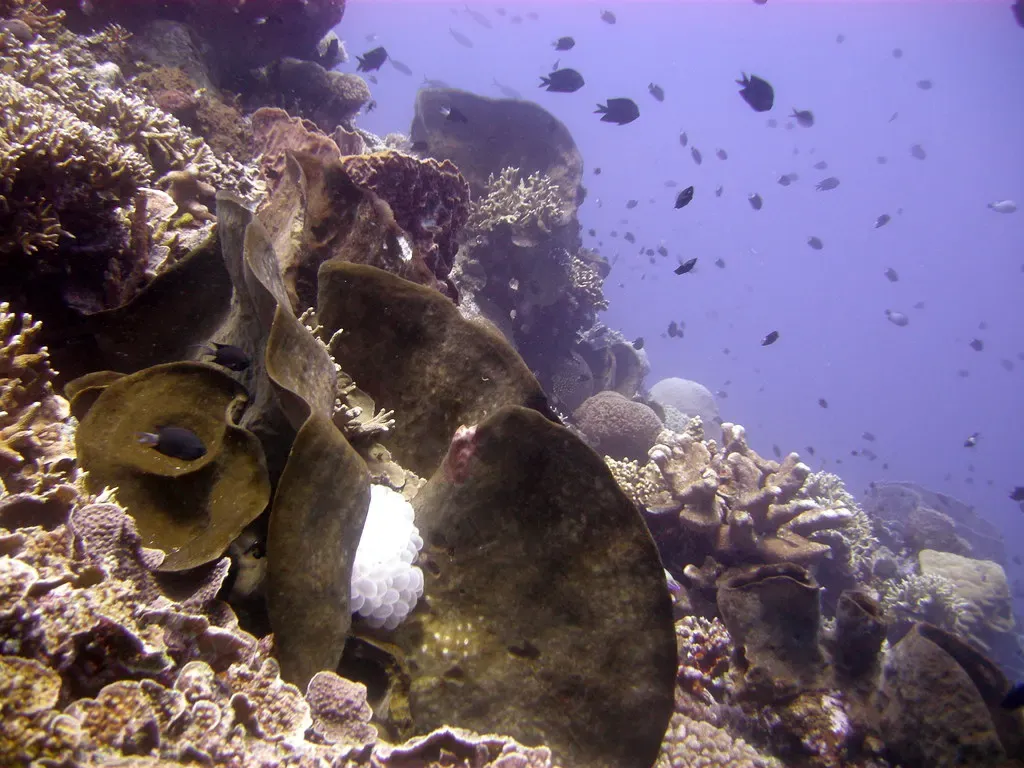
Five hefty giant clams lying in a row on the sand
Wall
The sheltered Lekuan site, and Bunaken's night dive
Perhaps ten green turtles live on this wall alone
Wall
Whip corals along a drifted wall, with bumpheads passing
An amphitheatre-shaped wall worked by reef sharks
Wall
Turtle city: greens and hawksbills on the wall off the village
Wall
Whitetip sharks resting in caves down the wall
Wall
Hundreds of batfish and jacks holding in the current
How to get to Bunaken
Manado is the gateway; boats run out to the park from the city waterfront and from small resorts on Bunaken and Siladen island. All diving is day-boat based, and a marine park entry fee is collected locally, usually handled through the resort. Most trips pair the walls with the black-sand diving of Lembeh Strait, a road transfer away on the opposite coast.
Photos from Bunaken
kikofjl · CC BY 3.0
Bernard DUPONT · CC BY-SA 2.0
Bernard DUPONT · CC BY-SA 2.0
Bernard DUPONT · CC BY-SA 2.0
Dive videos
Scuba Diving Bunaken National Park - Indonesia in 2022 · North Sulawesi Underwater - by Pim van Schendel on YouTube
Exploring Bunaken's Best: Scuba Diving The Lekuan and Tanjung Walls #scubadiving #northsulawesi · Scuba Diving and Dogs on YouTube
Photo credits
- A quiet mangrove-fringed bay on Bunaken Island with a small outrigger boat on clear turquoise water by kikofjl, CC BY 3.0, via Wikimedia Commons
- Clown anemonefish sheltering among the waving tentacles of a magnificent sea anemone by Bernard DUPONT, CC BY-SA 2.0, via Wikimedia Commons
- Close-up of a hawksbill turtle's beaked head and patterned shell against the reef by Bernard DUPONT, CC BY-SA 2.0, via Wikimedia Commons
- A blue and yellow spotted boxfish resting on coral rubble near a reef ledge by Bernard DUPONT, CC BY-SA 2.0, via Wikimedia Commons
- Two bluestreak cleaner wrasses hovering over the open mouth of a pink barrel sponge by Bernard DUPONT, CC BY-SA 2.0, via Wikimedia Commons
Embed
Run a dive centre, club or blog? Embed this map of 12 dive sites near Bunaken on your own page.
In The Logbook
- Where to see reef sharks on your first divesBig animals · 14 min read
- Where to dive with sea turtlesBig animals · 15 min read
- The best wall dives in the worldWalls & drop-offs · 11 min read
- Bioluminescence: why the sea glows at nightNight diving · 7 min read
- Cheapest places to scuba dive, and the catchTrip planning · 15 min read
- Drift diving: how to read and ride a currentDrift & current · 8 min read
Similar destinations

Soft coral grows so thick on Sahaung's pinnacles the rock disappears

Drift dives through some of the richest marine life on Earth

Strong straits sweep past pristine coral cover between remote volcanic islands.

_(8478788258).jpg)

_with_Western_Clown_Anemonefishes_(Amphiprion_ocellaris)_(8454170152).jpg)
_male_(8481007791).jpg)
_(8473254957).jpg)
The world's second-largest contiguous coral reef, closed to fishing