
Caribbean · Bahamas
Bimini
Great hammerhead sharks patrol sandy shallows within sight of shore each winter
Photo: mattk1979 · CC BY-SA 2.0
Bimini sits at the edge of the Gulf Stream just 80 kilometers from Miami, drawing great hammerhead sharks into the shallows every winter and Atlantic spotted dolphins onto the nearby sandbanks year-round. The famous Bimini Road formation and the Sapona wreck sit in shallow, easy water, while offshore drop-offs give divers a quick taste of blue-water pelagic diving.
About diving in Bimini
Bimini is two main islands and the channel between them, and the diving is shaped by which side of them you are on. North Bimini holds the operators and most of the rooms, clustered around Alice Town, while the airstrip is on South Bimini with a shuttle boat running across. Nothing is far. The sites sit close in, so days are built from short runs rather than long crossings, and a blown-out morning can often still turn into a workable afternoon without changing base.
The islands sit on the western rim of the Great Bahama Bank, which is why everything here has an edge to it. West of them the seabed drops away into the Straits of Florida and the Gulf Stream runs past, bringing blue water, movement and the odd pelagic. East of them are shallow banks, mangrove creeks and sand flats that barely register on a depth gauge. Reef dives sit on that western fringe and are mostly low, easy structure, while the sand sites used for sharks are open ground with nothing to hold on to.
Two encounters define the place, and neither is a normal dive. The winter great hammerhead sessions are long, shallow, largely stationary immersions on sand off South Bimini, with a crew managing bait and hours of waiting broken by an animal arriving at eye level. Atlantic spotted dolphins are the other, met on the banks on snorkel rather than scuba, since they come in to a drifting boat and will not wait around for a descent. Bimini also hosts a shark research station that has worked here since 1990, which is part of why these populations are so well documented.
Beyond the shark work, the rest of the site list is quick and light. The Sapona, a First World War era concrete-hulled ship driven aground by a hurricane in the 1920s, still breaks the surface, which makes it a snorkel stop, a night dive or a check-out site depending on the hour. The slabs of Bimini Road, which most geologists read as naturally fractured beachrock, make a brief, curiosity-driven dive best saved for a calm day. The mix suits divers who want big animals without a long journey and will hold still on sand in cool water, and fits poorly for anyone after coral scenery. The exposed western side stops working when a front comes through.
Best time to dive Bimini
| Jan | Feb | Mar | Apr | May | Jun | Jul | Aug | Sep | Oct | Nov | Dec | |
|---|---|---|---|---|---|---|---|---|---|---|---|---|
| Season | Prime | Prime | Prime | Good | Good | Fair | Fair | Fair | Fair | Fair | Good | Good |
| Sea surface | 25°C77°F | 25°C77°F | 25°C77°F | 26°C79°F | 28°C82°F | 29°C84°F | 30°C86°F | 30°C86°F | 30°C86°F | 29°C84°F | 27°C81°F | 26°C79°F |
| Daytime high | 26°C79°F | 26°C79°F | 27°C81°F | 28°C82°F | 29°C84°F | 30°C86°F | 31°C88°F | 31°C88°F | 30°C86°F | 30°C86°F | 28°C82°F | 26°C79°F |
| Rain | 48 mm1.9 in | 33 mm1.3 in | 38 mm1.5 in | 65 mm2.6 in | 125 mm4.9 in | 170 mm6.7 in | 136 mm5.4 in | 143 mm5.6 in | 167 mm6.6 in | 127 mm5.0 in | 68 mm2.7 in | 48 mm1.9 in |
| Jan | Feb | Mar | Apr | May | Jun |
|---|---|---|---|---|---|
| Prime | Prime | Prime | Good | Good | Fair |
| Sea surface | |||||
| 25°C77°F | 25°C77°F | 25°C77°F | 26°C79°F | 28°C82°F | 29°C84°F |
| Daytime high | |||||
| 26°C79°F | 26°C79°F | 27°C81°F | 28°C82°F | 29°C84°F | 30°C86°F |
| Rain | |||||
| 48 mm1.9 in | 33 mm1.3 in | 38 mm1.5 in | 65 mm2.6 in | 125 mm4.9 in | 170 mm6.7 in |
| Jul | Aug | Sep | Oct | Nov | Dec |
|---|---|---|---|---|---|
| Fair | Fair | Fair | Fair | Good | Good |
| Sea surface | |||||
| 30°C86°F | 30°C86°F | 30°C86°F | 29°C84°F | 27°C81°F | 26°C79°F |
| Daytime high | |||||
| 31°C88°F | 31°C88°F | 30°C86°F | 30°C86°F | 28°C82°F | 26°C79°F |
| Rain | |||||
| 136 mm5.4 in | 143 mm5.6 in | 167 mm6.6 in | 127 mm5.0 in | 68 mm2.7 in | 48 mm1.9 in |
2011–2025 averages. Sea surface: NOAA Coral Reef Watch, measured at the surface, so deeper water can run colder. Daytime high and rain: NASA POWER.
Great hammerheads are most consistent December–March; September–October bring peak hurricane risk to the northern Bahamas.
Best months: January, February, March
Bimini water temperature and weather by month
The sea surface runs from 25 °C (77 °F) in January to 30 °C (86 °F) in August. Most rain falls from May to October, peaking at about 170 mm (6.7 in) in June; it stays largely dry from December to March. Daytime highs reach 31 °C (88 °F) in August and drop to 26 °C (79 °F) in January. The coldest water here is about 24 °C (75 °F), so pack a 3 mm full suit.
Dive types & marine life
Great hammerheads are the winter draw and most consistent from December to March, often with bull sharks on the same patch of sand. Lemon and Caribbean reef sharks are around through the year, and juvenile lemons use the mangrove creeks as a nursery. Eagle rays cross the flats, and a local community of Atlantic spotted dolphins uses the banks, though finding them depends on sea state.
- Pelagic & blue water
- Reef
- Wreck
- Hammerheads
- Bull sharks
- Lemon sharks
- Reef sharks
- Eagle rays
- Dolphins
Best dive sites in Bimini
Reef
Coral heads standing 8 m off the sand, full of swim-throughs
Wreck
A 60 m barge upright on sand at the Gulf Stream's edge
Reef
Rows of beachrock slabs in 6 m, argued over since 1968
Reef
Resident female reef sharks over a maze of coral heads
Sand slope
Great hammerheads on open sand at roughly 6 m
Reef
Coral patches worked as a mild north-bound drift
Wreck
A shallow seagrass wreck with resident loggerhead turtles
Reef
Research cables and old anchors scattered over white sand
Reef
A long reef drift on the lip of the Gulf Stream drop-off
Wall
Sloping Victory Reef wall with swim-throughs out of the current
Reef
Spur-and-groove ridges dropping from 13 m to 27 m
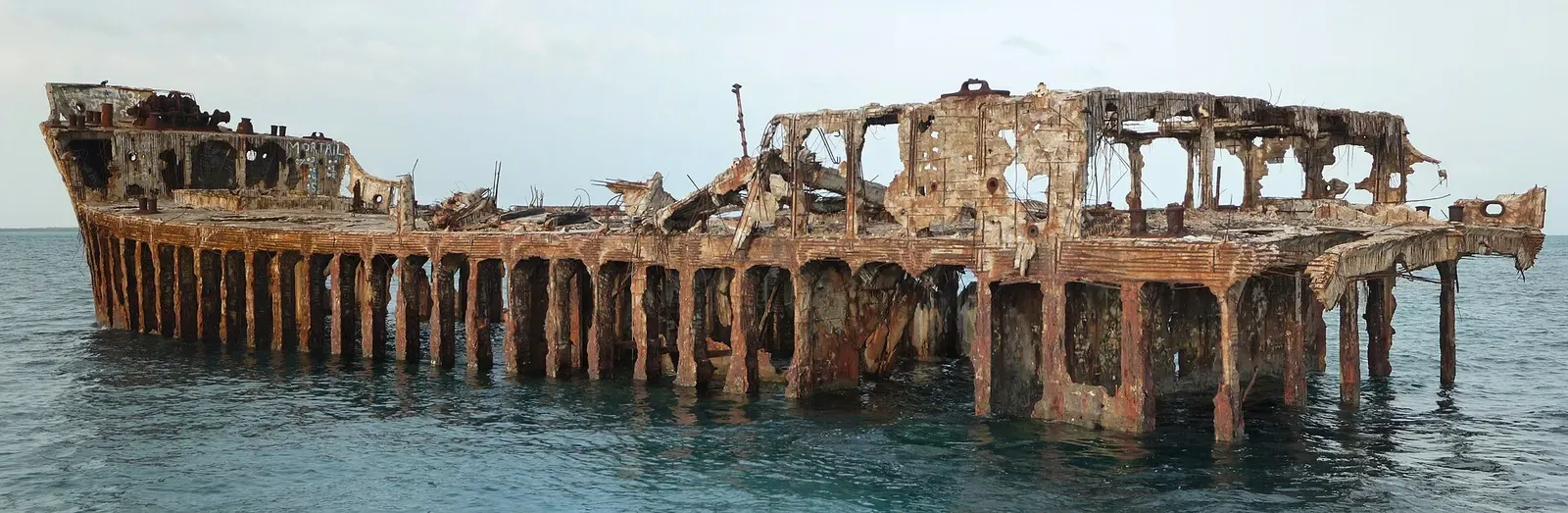
A concrete ship still standing above water in 6 m
Reef
Ledges and overhangs packed with grunts and snappers
Reef
Shallow ledges where the bank meets the open Atlantic
Reef
Sponge bank from 15 m to 35 m with pelagics off the edge
Rainbow Reef
Colorful shallow reef used for check-out and night dives
How to get to Bimini
Most divers fly from South Florida into the airstrip on South Bimini and take the shuttle boat across to Alice Town on North Bimini, where the operators and hotels are; others arrive on their own boats. Diving is all day-boat, with short runs from the harbour, and some Bahamas liveaboards include Bimini on northern itineraries.
Photos from Bimini
mattk1979 · CC BY-SA 2.0
mattk1979 · CC BY-SA 2.0
miamism · CC BY 2.0
Dennis from Atlanta · CC BY-SA 2.0
Dive videos
Face to Face with HUGE Hammerheads in Bimini · BonaFideWorldGuide on YouTube
GREAT HAMMERHEAD SHARK Dive in Bimini, The Bahamas · Romano Cevenini on YouTube
Photo credits
- A cluster of sharks bunches together near a baited line in sunlit blue water. by mattk1979, CC BY-SA 2.0, via Openverse
- Soft corals and sponges cover a reef ledge as a diver swims past in the background. by mattk1979, CC BY-SA 2.0, via Openverse
- A great barracuda hovers motionless in open blue water. by mattk1979, CC BY-SA 2.0, via Openverse
- Two divers trailing bubbles ascend along a line in green-blue water. by miamism, CC BY 2.0, via Openverse
- Divers load tanks and gear onto a dive boat tied up at a harbor dock. by Dennis from Atlanta, CC BY-SA 2.0, via Openverse
Embed
Run a dive centre, club or blog? Embed this map of 12 dive sites near Bimini on your own page.
In The Logbook
- Where to see reef sharks on your first divesBig animals · 14 min read
- Where to dive with sea turtlesBig animals · 15 min read
- Where to dive in every month of the yearTrip planning · 14 min read
- When and where to dive with hammerheadsBig animals · 16 min read
- Your first wreck dive: what to expect and whereFirst dives · 6 min read
Similar destinations
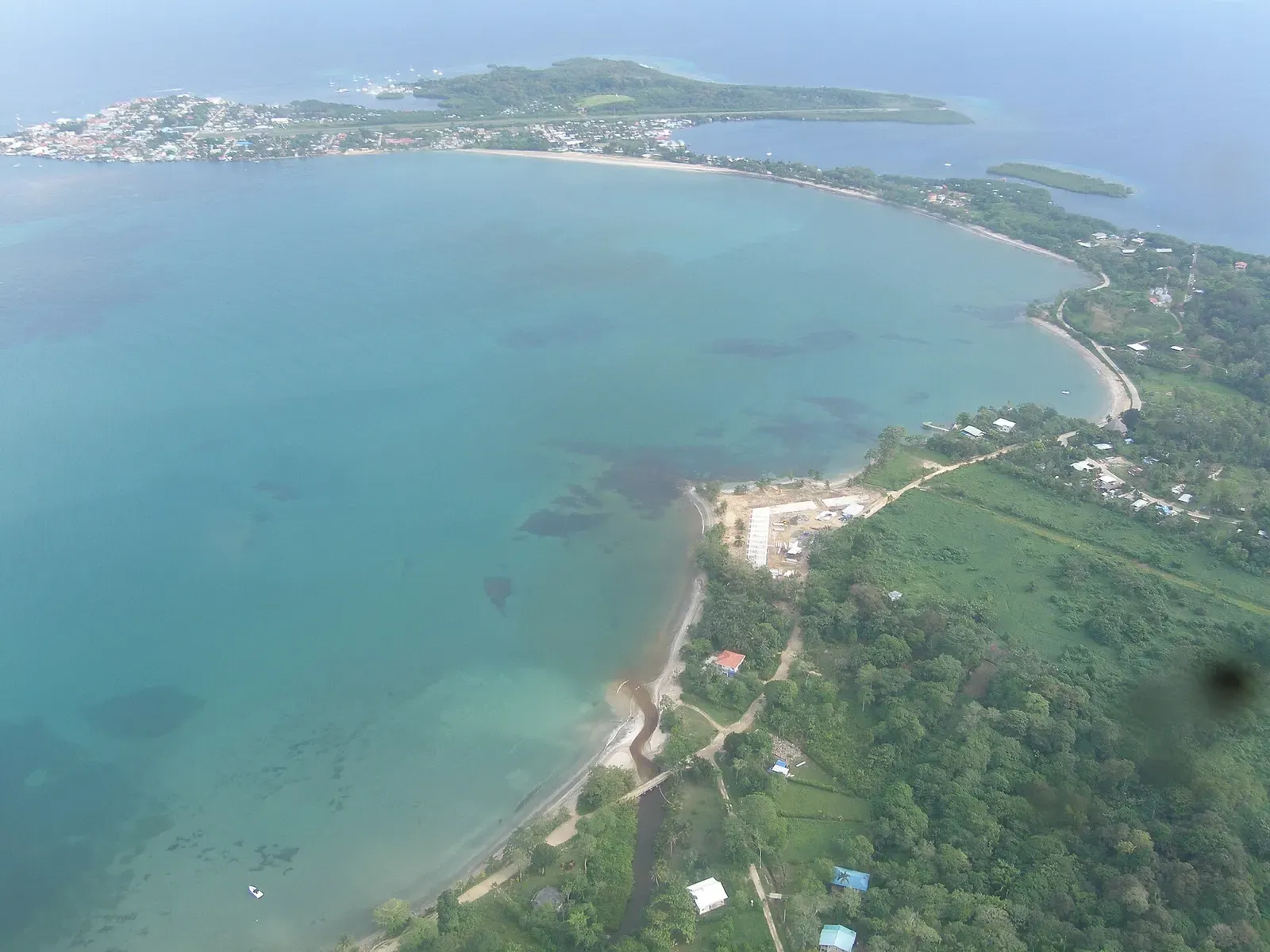
Panama's cheapest place to learn to dive, with a national marine park just offshore
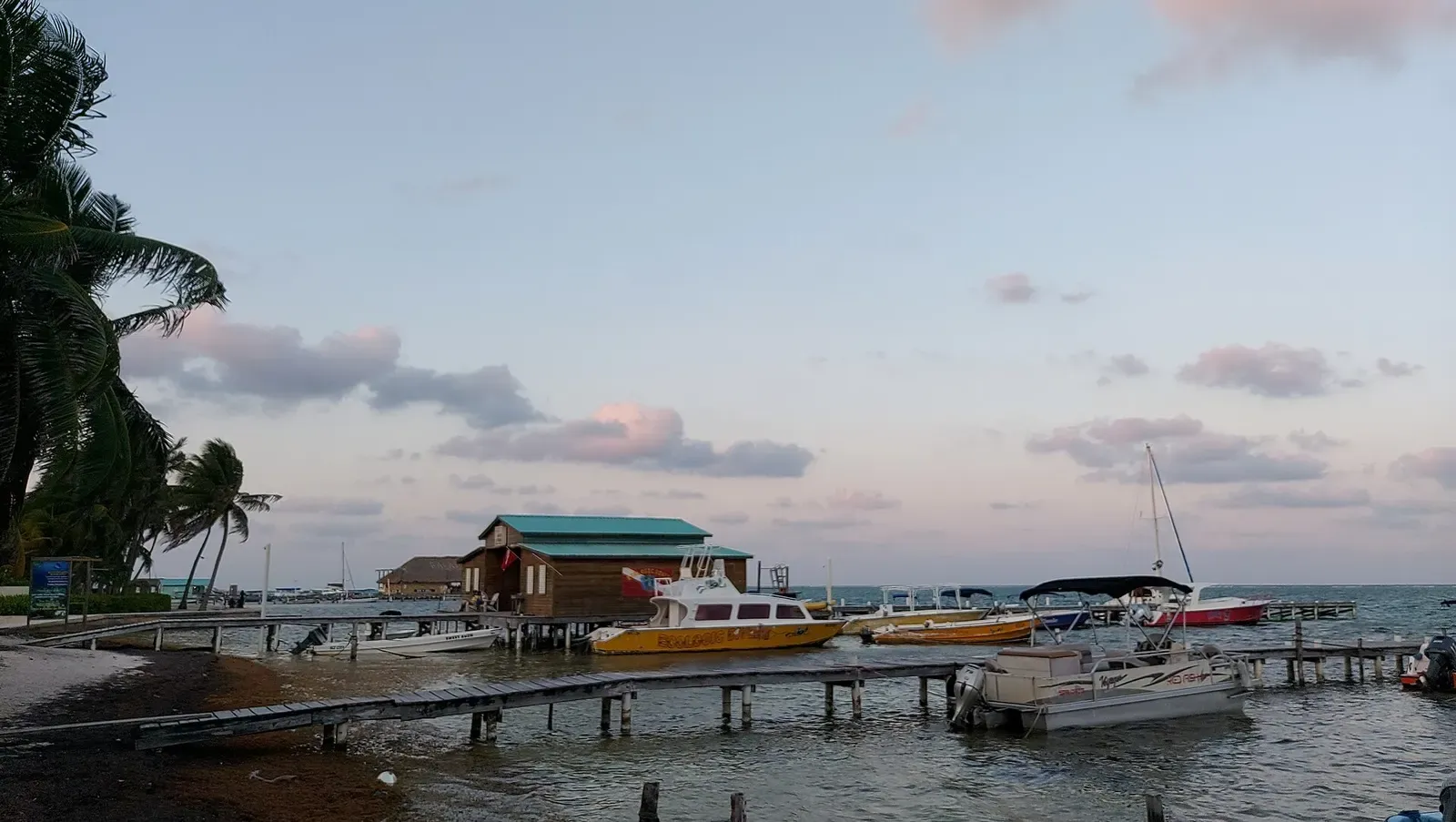
Spur-and-groove canyons and nurse sharks minutes from San Pedro's piers
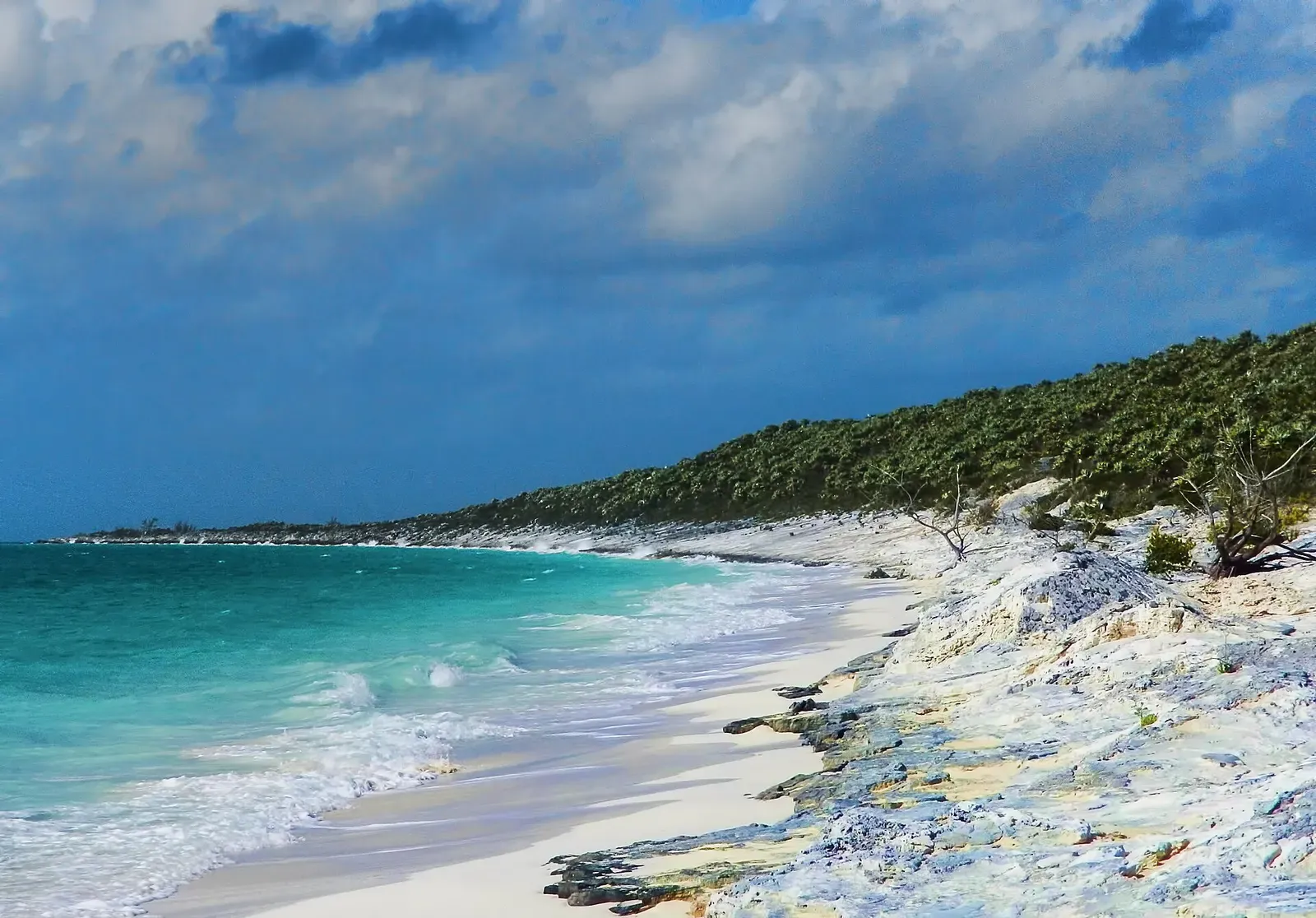
One of the few reliable places on earth to dive with oceanic whitetips

Hundreds of whale sharks feed shoulder to shoulder in open blue water