North America · United States
Blue Heron Bridge
Critter-dense muck diving in 5 m of water beneath a Florida road bridge
Photo: Pauline Walsh Jacobson · CC BY 4.0
Phil Foster Park sits under a road bridge in the Lake Worth Lagoon, and the sand, rubble and seagrass beneath it hold a density of odd animals that rivals anything in the tropics. Frogfish, batfish, flying gurnards, seahorses, octopus and juveniles of almost everything on the Florida reef live in under 6 m of water. The dive only works on the hour either side of high tide, when clean ocean water floods the inlet and the current briefly stops.
About diving in Blue Heron Bridge
The whole day is built around a tide table. Shops publish the window in advance, divers converge on the car park well before it, kit up at the rinse stations and walk down to the beach in a slow procession. On a weekend slack there can be dozens of people in the water at once, spread out between the two spans. Flags and floats are not optional here: a marked boat channel runs through the site, boats use it throughout, and divers are expected to stay well clear of it.
There is no reef to speak of. The bottom is sand and seagrass broken up by rubble, bridge pilings and dumped concrete, and everything worth finding is either sitting on that hard structure or buried in the sand beside it. The channel is scoured deeper and carries most of the flow, while the flats on either side sit in a few metres, shallow enough that air is rarely what ends the dive. Clarity swings with the tide, best on the flood and going milky once the ebb starts pulling lagoon water back out.
The diving itself is close to static. A good dive is measured in tens of metres covered rather than hundreds, working one rubble patch, one piling, one clump of grass at a time, and a guide who has been watching where the resident animals sit all week changes the dive entirely. Cameras dominate, along with the etiquette that comes with them: wait your turn at an animal, never move it, and keep your fins clear of the sand everyone behind you is about to search.
It rewards patience and a naturalist's eye, and is forgiving in every other respect: shallow, sheltered, walk-in, with showers, tables and shade at the top of the beach. Snorkellers see much of the same on the same tide. Anyone who came for structure, blue water or big fish will be bored quickly, and the reef and drift diving this coast is known for starts a boat ride offshore. Night diving is permit-controlled, so arrange it through a local shop rather than turning up after dark.
Best time to dive Blue Heron Bridge
| Jan | Feb | Mar | Apr | May | Jun | Jul | Aug | Sep | Oct | Nov | Dec | |
|---|---|---|---|---|---|---|---|---|---|---|---|---|
| Season | Good | Good | Good | Prime | Prime | Prime | Prime | Prime | Good | Good | Good | Good |
| Sea surface | 25°C77°F | 25°C77°F | 25°C77°F | 26°C79°F | 27°C81°F | 28°C82°F | 29°C84°F | 30°C86°F | 30°C86°F | 29°C84°F | 27°C81°F | 26°C79°F |
| Daytime high | 27°C81°F | 28°C82°F | 29°C84°F | 30°C86°F | 31°C88°F | 31°C88°F | 32°C90°F | 32°C90°F | 31°C88°F | 30°C86°F | 28°C82°F | 27°C81°F |
| Rain | 71 mm2.8 in | 52 mm2.0 in | 55 mm2.2 in | 80 mm3.1 in | 138 mm5.4 in | 233 mm9.2 in | 173 mm6.8 in | 185 mm7.3 in | 218 mm8.6 in | 142 mm5.6 in | 71 mm2.8 in | 63 mm2.5 in |
| Jan | Feb | Mar | Apr | May | Jun |
|---|---|---|---|---|---|
| Good | Good | Good | Prime | Prime | Prime |
| Sea surface | |||||
| 25°C77°F | 25°C77°F | 25°C77°F | 26°C79°F | 27°C81°F | 28°C82°F |
| Daytime high | |||||
| 27°C81°F | 28°C82°F | 29°C84°F | 30°C86°F | 31°C88°F | 31°C88°F |
| Rain | |||||
| 71 mm2.8 in | 52 mm2.0 in | 55 mm2.2 in | 80 mm3.1 in | 138 mm5.4 in | 233 mm9.2 in |
| Jul | Aug | Sep | Oct | Nov | Dec |
|---|---|---|---|---|---|
| Prime | Prime | Good | Good | Good | Good |
| Sea surface | |||||
| 29°C84°F | 30°C86°F | 30°C86°F | 29°C84°F | 27°C81°F | 26°C79°F |
| Daytime high | |||||
| 32°C90°F | 32°C90°F | 31°C88°F | 30°C86°F | 28°C82°F | 27°C81°F |
| Rain | |||||
| 173 mm6.8 in | 185 mm7.3 in | 218 mm8.6 in | 142 mm5.6 in | 71 mm2.8 in | 63 mm2.5 in |
2011–2025 averages. Sea surface: NOAA Coral Reef Watch, measured at the surface, so deeper water can run colder. Daytime high and rain: NASA POWER.
Divable year-round; Apr–Aug brings the warmest water and the widest range of juveniles, and every dive is tied to the high-tide window.
Best months: April, May, June, July, August
Blue Heron Bridge water temperature and weather by month
The sea surface runs from 25 °C (77 °F) in February to 30 °C (86 °F) in August. Most rain falls from May to October, peaking at about 230 mm (9.1 in) in June; it stays largely dry from November to March. Daytime highs reach 32 °C (90 °F) in August and drop to 27 °C (81 °F) in January. Below the surface the water can drop to about 21 °C (70 °F), so pack a 5 mm suit.
Dive types & marine life
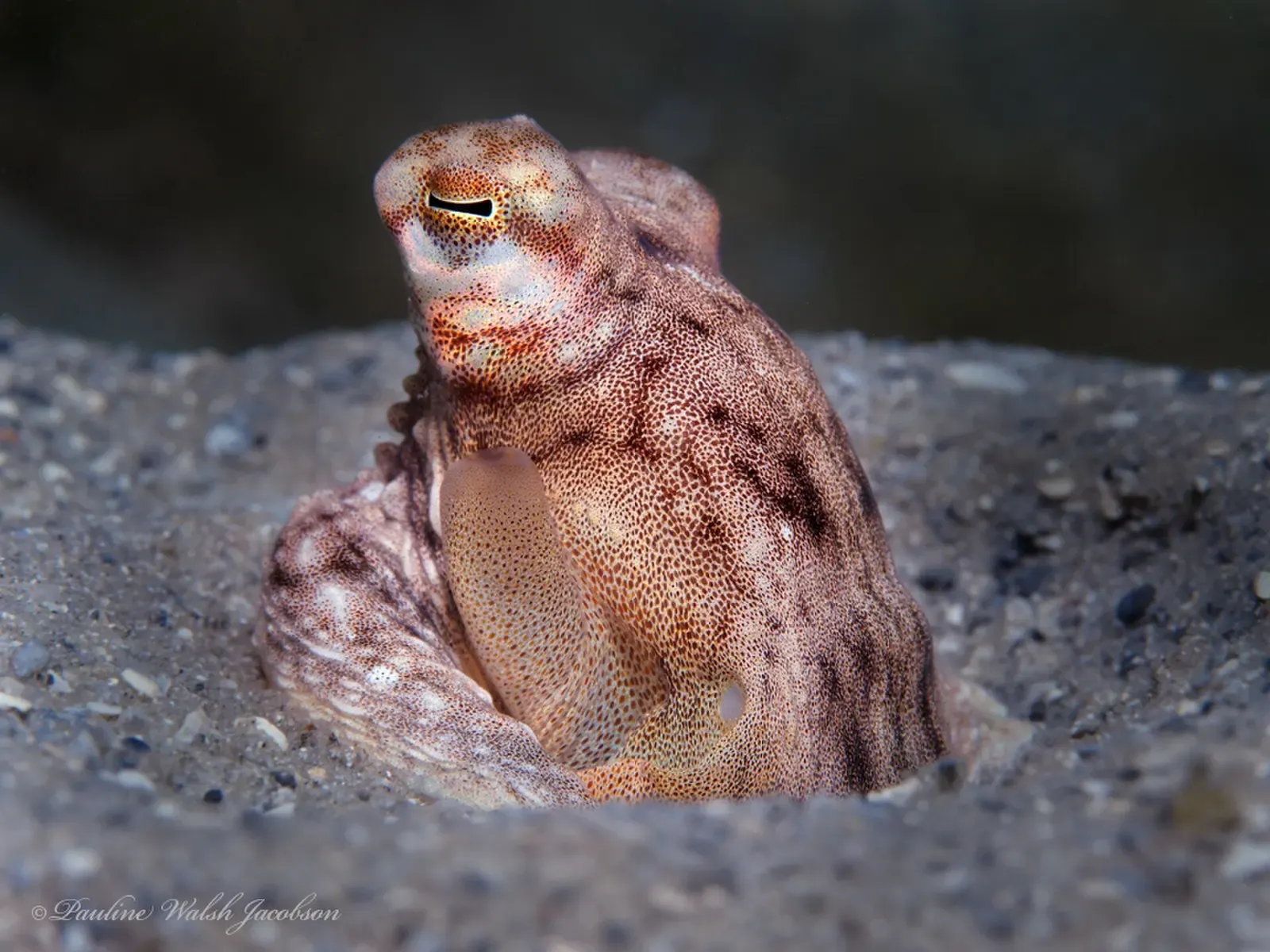
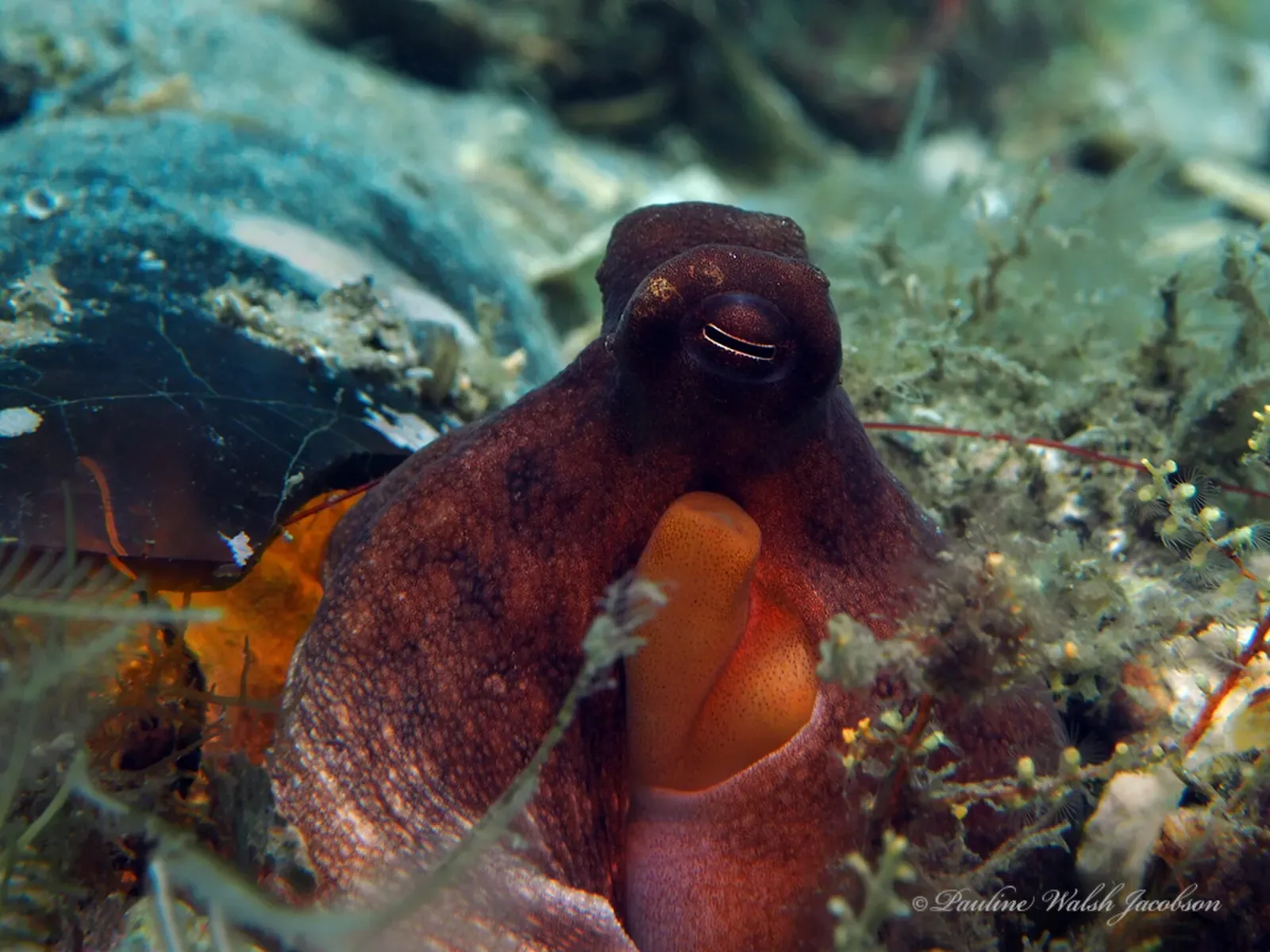
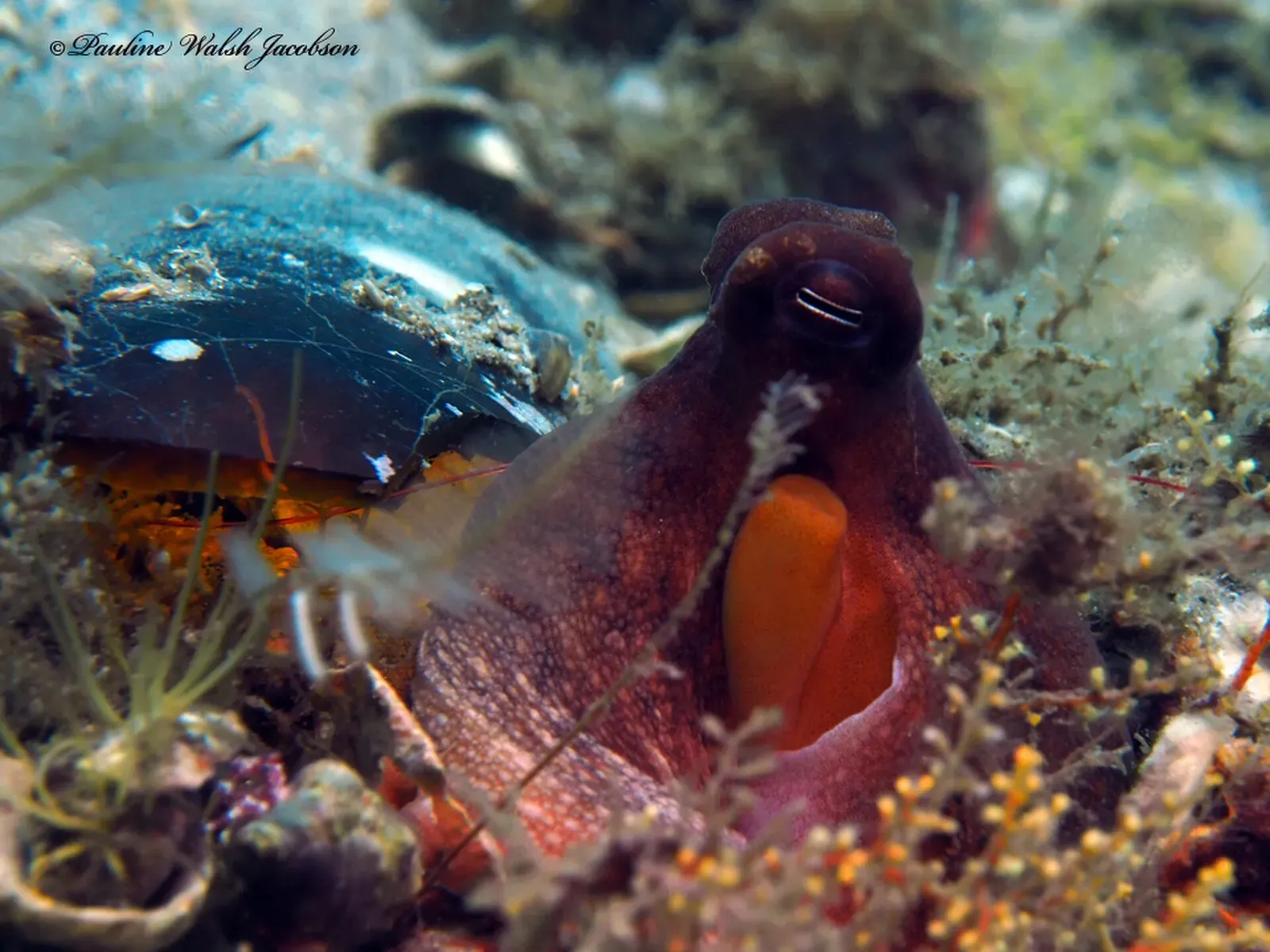
Octopus, nudibranchs, seahorses and stingrays hold on the rubble and the flats all year, which is why even the cool months dive well. April to August is the difference: warmest water, and the sand filling up with the year's juveniles. Turtles pass through, and manatees drift in from the wider lagoon, most often in the cool months.
- Muck & macro
- Night
- Macro critters
- Octopus & cuttlefish
- Frogfish
- Nudibranchs
- Stingrays
- Sea turtles
- Dugongs & manatees
Best dive sites in Blue Heron Bridge
A submerged sailboat and a resident school of spadefish
Reef balls, mini wrecks and hammerhead statues in a few feet of water
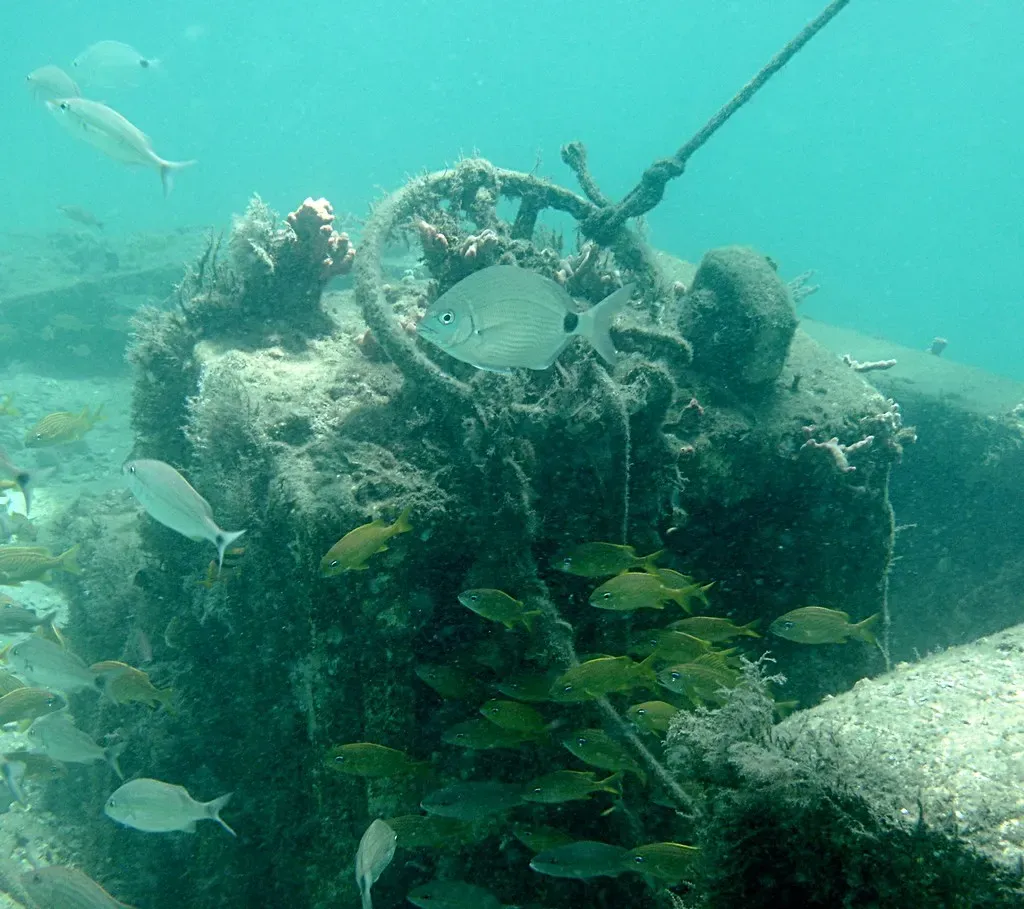
The Red Wall: the last column before the channel, thick with sponges
The Rubble Pile
Concrete debris off the beach, reliable for seahorses and juveniles.
Seagrass Flats
Shallow grass beds where pipefish and juvenile filefish shelter.
How to get to Blue Heron Bridge
Phil Foster Park is a Palm Beach County park in Riviera Beach, a short drive from Palm Beach International, with free parking that fills fast on a weekend slack. There are restrooms, showers and picnic shelters but nothing for divers, so tanks and fills come from shops in Riviera Beach and West Palm Beach.
Photos from Blue Heron Bridge
Pauline Walsh Jacobson · CC BY 4.0
Pauline Walsh Jacobson · CC BY 4.0
Dive videos
Scuba Diving the Blue Heron Bridge (What you need to Know!) · Triton's Realm on YouTube
Diving Florida’s Famous BLUE HERON BRIDGE! 😍 · Tyler Nolan on YouTube
Photo credits
- Atlantic longarm octopus sitting upright on pale sand, mottled brown and cream with one eye visible by Pauline Walsh Jacobson, CC BY 4.0, via Wikimedia Commons
- Red-ridged clinging crab tucked among yellow-orange cup coral polyps on a piling by Pauline Walsh Jacobson, CC BY 4.0, via Wikimedia Commons
- Giant hermit crab in a large shell on sand, with red-mottled claws and stalked eyes by Pauline Walsh Jacobson, CC BY 4.0, via Wikimedia Commons
Embed
Run a dive centre, club or blog? Embed this map of 9 dive sites near Blue Heron Bridge on your own page.
In The Logbook
- Nudibranchs: species, habits and where to diveMacro & muck · 13 min read
- Frogfish: species, behaviour and where to diveMacro & muck · 12 min read
- Night diving: the best night dives in the worldNight diving · 12 min read
- The best muck diving in the worldMacro & muck · 6 min read
- The best shore dives in the worldShore diving · 8 min read
Similar destinations

Goliath groupers over 200 kg mass on the wrecks to spawn each August

Market squid spawn in their millions over the sand on winter nights

Permit-limited giant kelp forest with sea otters working the shallows


Walk down the stairs at Casino Point straight into a giant kelp forest