Cold Water · Denmark
Bornholm
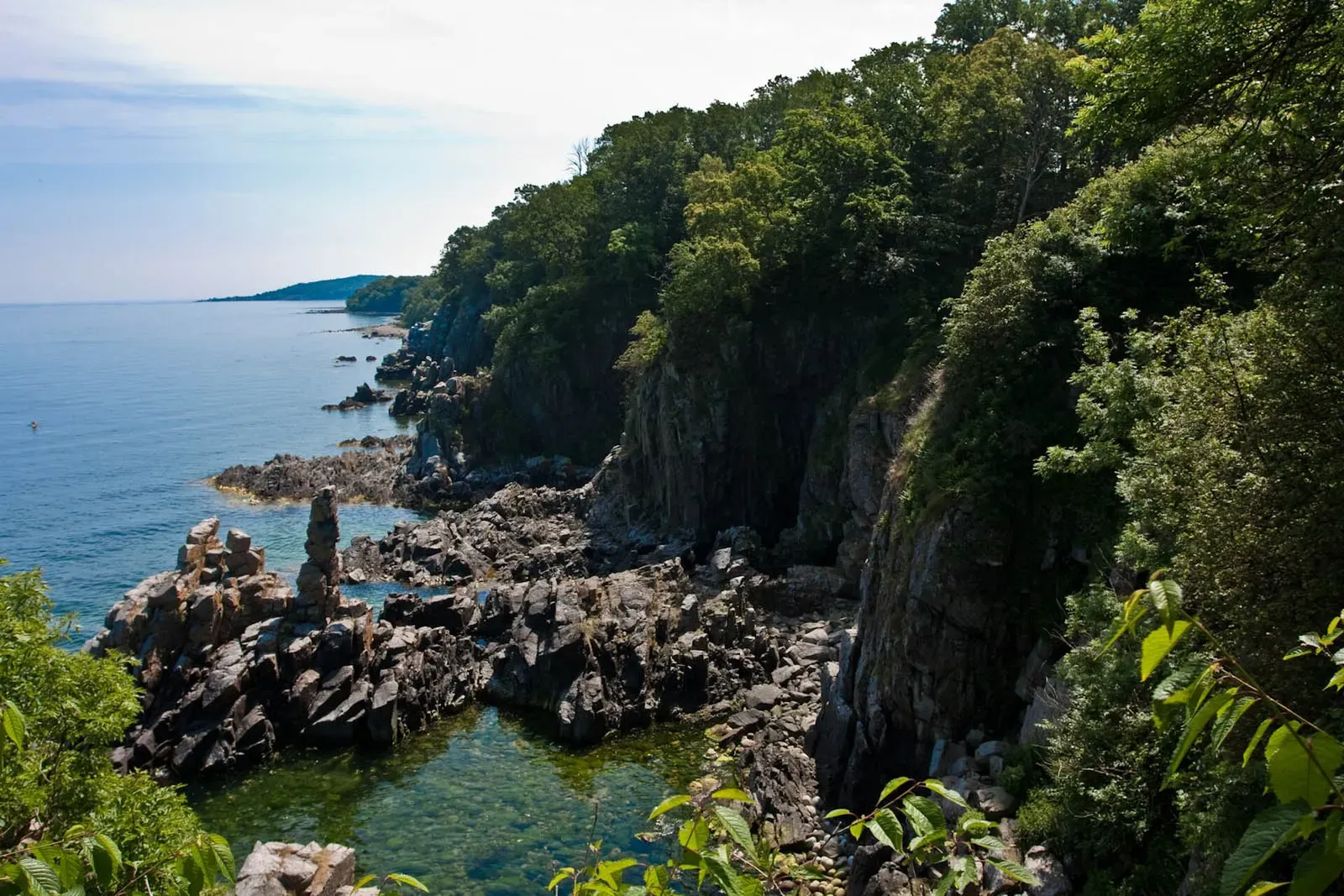
Granite walls and boulder fields — Denmark's only true rock diving
Photo: Andreas Lippelt from Wolfenbüttel, Deutschland · CC BY 2.0
Bornholm sits alone in the Baltic east of the Danish mainland, and it is geologically nothing like the rest of the country — granite and gneiss instead of sand and chalk, which underwater means boulder fields, walls and gullies rather than flat seabed. Brackish water preserves the wrecks scattered around the island, visibility runs clearer than most of the Baltic, and the northern cliffs at Hammeren give Denmark its only proper rock diving.
About diving in Bornholm
Most days start in a car park above the rock. Kit goes in the boot, you drive to whichever coast is in the lee, walk down over granite and swim out; the surface swim is part of the deal, and pairs often make two entries at different points around the island rather than repeat one. Boat days exist for the offshore wrecks and the run out to the Ertholmene islets, but they are the exception, and the island is small enough that a blown-out north coast means half an hour in the car to the east or west side instead.
The granite is old basement rock, and where it goes under it keeps its shape: slabs run on into vertical faces, cracks and boulder gullies with pale sand in the gaps. It is not spread evenly. The north and north-west, around Hammeren and Vang, hold the steepest rock, the east coast has lower reef, and the southern end of the island runs to sand. What grows on it is Baltic rather than North Sea, with wrack and mussel banding the shallows at roughly a fifth of ocean salinity in place of the sponge and anemone cover found further west.
There is no closed month, so the question is what you want from the water. June through September brings the warmest water, the longest light and the steadiest days for boat work, with April, May and October cooler but still workable. Late winter is dim and cold on the surface and the clearest of the year below it, which is when the shore sites look their sharpest, and in hard winters sheltered bays freeze enough for ice diving with proper cover and training. The mix suits pairs and clubs running their own days more than divers wanting a guide for every dive.
Best time to dive Bornholm
| Jan | Feb | Mar | Apr | May | Jun | Jul | Aug | Sep | Oct | Nov | Dec | |
|---|---|---|---|---|---|---|---|---|---|---|---|---|
| Season | Fair | Fair | Fair | Good | Good | Prime | Prime | Prime | Prime | Good | Fair | Fair |
| Sea surface | 5°C41°F | 4°C39°F | 4°C39°F | 5°C41°F | 9°C48°F | 14°C57°F | 18°C64°F | 19°C66°F | 17°C63°F | 13°C55°F | 10°C50°F | 7°C45°F |
| Daytime high | 7°C45°F | 6°C43°F | 8°C46°F | 10°C50°F | 16°C61°F | 20°C68°F | 22°C72°F | 23°C73°F | 20°C68°F | 16°C61°F | 12°C54°F | 9°C48°F |
| Rain | 78 mm3.1 in | 55 mm2.2 in | 45 mm1.8 in | 37 mm1.5 in | 36 mm1.4 in | 53 mm2.1 in | 76 mm3.0 in | 66 mm2.6 in | 58 mm2.3 in | 78 mm3.1 in | 67 mm2.6 in | 73 mm2.9 in |
| Jan | Feb | Mar | Apr | May | Jun |
|---|---|---|---|---|---|
| Fair | Fair | Fair | Good | Good | Prime |
| Sea surface | |||||
| 5°C41°F | 4°C39°F | 4°C39°F | 5°C41°F | 9°C48°F | 14°C57°F |
| Daytime high | |||||
| 7°C45°F | 6°C43°F | 8°C46°F | 10°C50°F | 16°C61°F | 20°C68°F |
| Rain | |||||
| 78 mm3.1 in | 55 mm2.2 in | 45 mm1.8 in | 37 mm1.5 in | 36 mm1.4 in | 53 mm2.1 in |
| Jul | Aug | Sep | Oct | Nov | Dec |
|---|---|---|---|---|---|
| Prime | Prime | Prime | Good | Fair | Fair |
| Sea surface | |||||
| 18°C64°F | 19°C66°F | 17°C63°F | 13°C55°F | 10°C50°F | 7°C45°F |
| Daytime high | |||||
| 22°C72°F | 23°C73°F | 20°C68°F | 16°C61°F | 12°C54°F | 9°C48°F |
| Rain | |||||
| 76 mm3.0 in | 66 mm2.6 in | 58 mm2.3 in | 78 mm3.1 in | 67 mm2.6 in | 73 mm2.9 in |
2011–2025 averages. Sea surface: NOAA Coral Reef Watch, measured at the surface, so deeper water can run colder. Daytime high and rain: NASA POWER.
Jun–Sep is warmest and calmest; late winter gives the clearest water, and the Baltic can ice over in hard years.
Best months: June, July, August, September
Bornholm water temperature and weather by month
The sea surface runs from 4 °C (39 °F) in March to 19 °C (66 °F) in August. Rain falls through the year, about 60 mm (2.4 in) a month on average, with January the wettest. Daytime highs reach 23 °C (73 °F) in August and drop to 6 °C (43 °F) in February. The coldest water here is about 2 °C (36 °F), so pack a drysuit.
Dive types & marine life
Small life on the rock is the mainstay: shrimp, gobies and other bottom-dwellers in the gullies and cracks, with shoals of small fish over the shallow reef through the June-to-September prime. Grey seals use the outlying islets and are an occasional encounter rather than a reliable one. Clear late-winter dives trade the fish for the visibility.
- Wreck
- Wall
- Reef
- Macro critters
- Reef fish swarms
- Seals & sea lions
Best dive sites in Bornholm
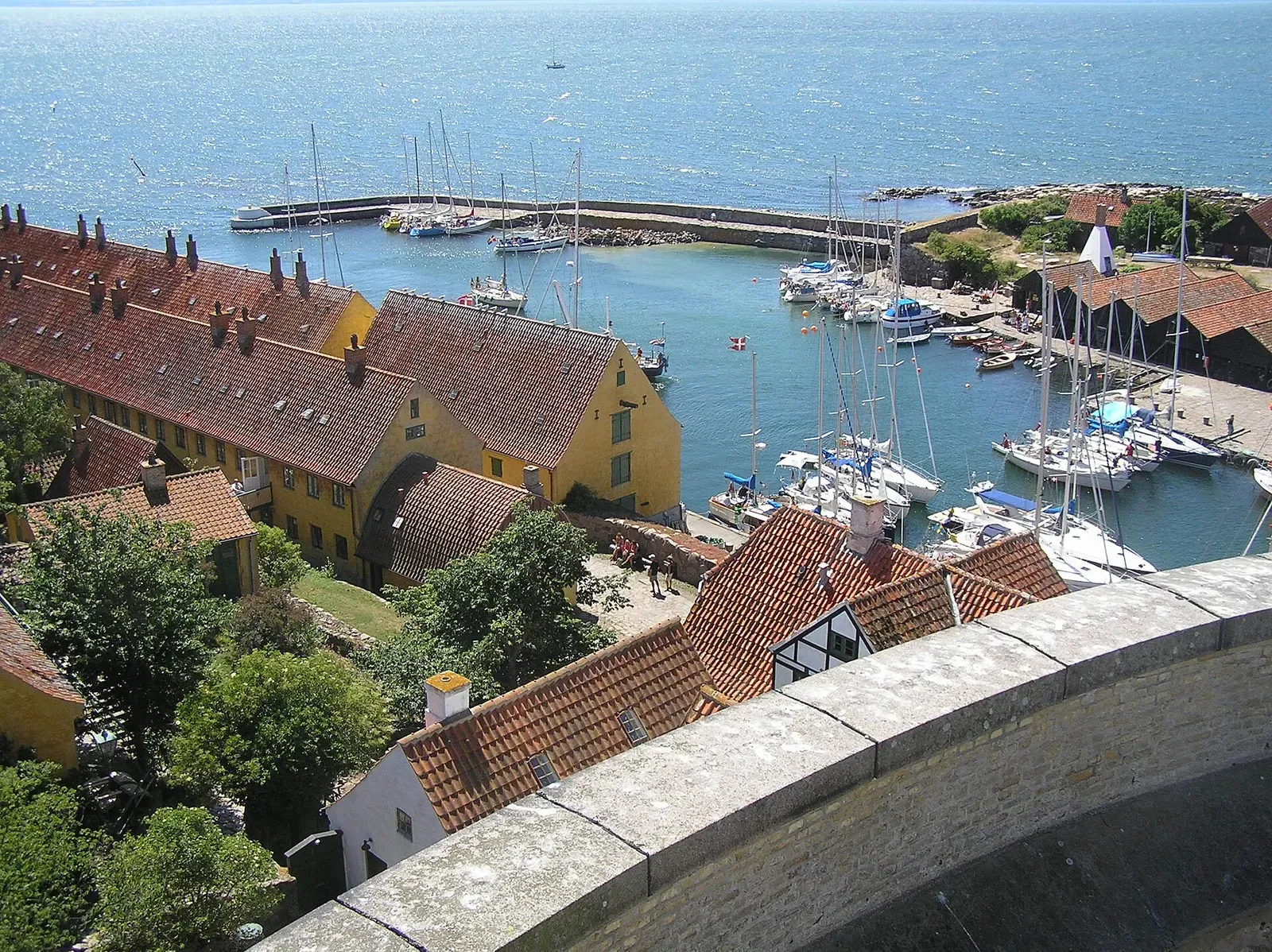
Baltic wall diving to 30 m, with a seal colony on the skerries
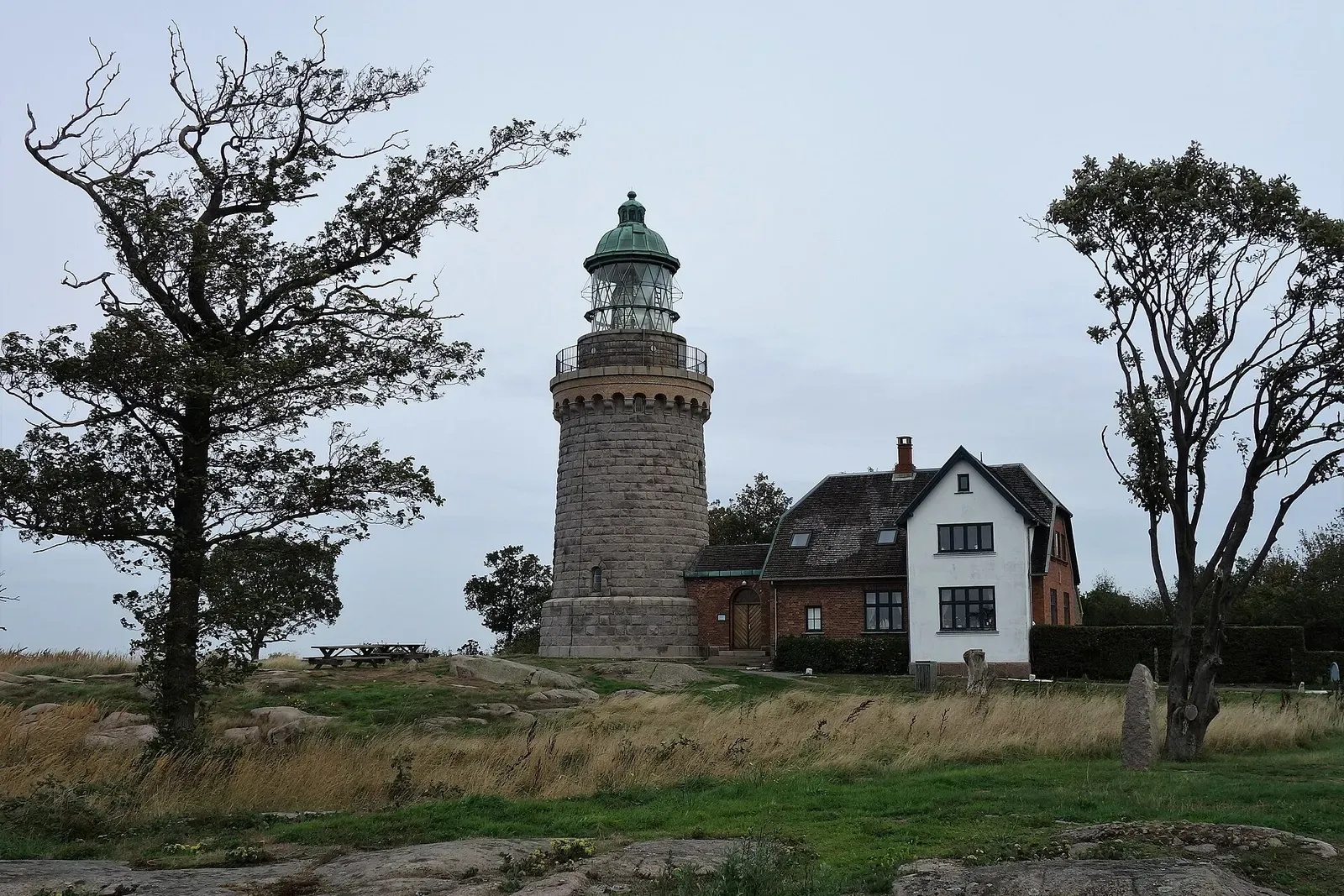
Granite that runs on underwater, dived as a coastal circuit
Svaneke
East-coast town with granite shore entries and shallow rock reef.
How to get to Bornholm
Rønne is the arrival point, with flights from Copenhagen and car ferries from Ystad in Sweden and Køge on Zealand. A car matters, since the entries are spread right around the coast; Rønne, Svaneke and the Allinge-Sandvig corner beside Hammeren all work as bases, and boats for the wrecks and the islets run from the northern and eastern harbours.
Photos from Bornholm
Algkalv (talk) · CC BY 3.0
Algkalv (talk) · CC BY 3.0
Photo credits
- Rocky cliffs dropping into clear green water on the north coast of Bornholm by Andreas Lippelt from Wolfenbüttel, Deutschland, CC BY 2.0, via Wikimedia Commons
- Ochre moss-covered granite boulders along the shoreline near Svaneke by Algkalv (talk), CC BY 3.0, via Wikimedia Commons
- Grass and low shoreline at Hasle beach with the Baltic beyond by Algkalv (talk), CC BY 3.0, via Wikimedia Commons
Embed
Run a dive centre, club or blog? Embed this map of 2 dive sites near Bornholm on your own page.
In The Logbook
- Where to dive with seals and sea lionsBig animals · 17 min read
- Cold-water diving: is it worth the drysuit?Cold water · 8 min read
Similar destinations

Sweden's only cold-water coral reefs, inside its first marine national park
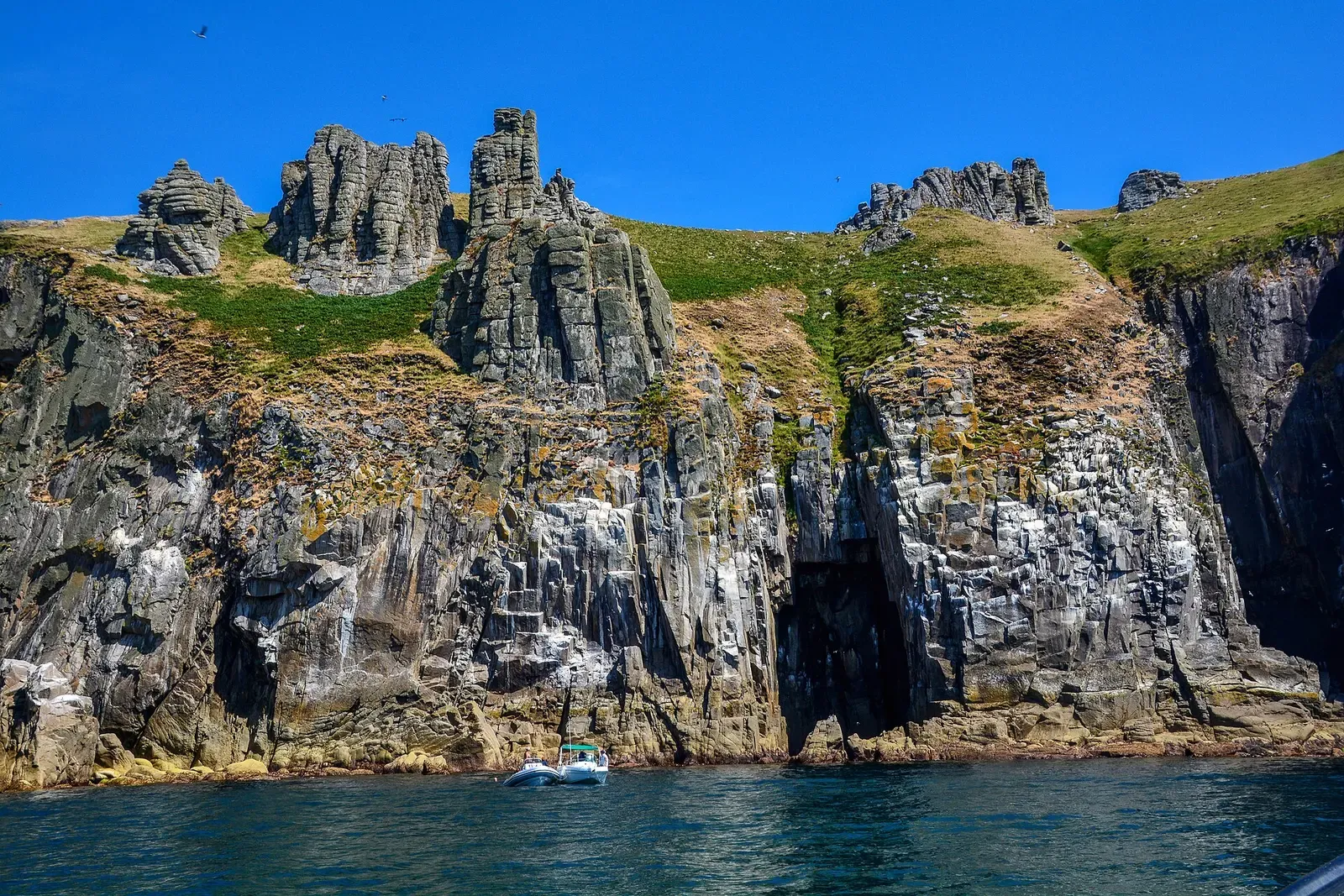
England's first marine reserve, and its grey seals follow divers around

Sherman tanks lie on the seabed beside the SS Empire Heritage


A German destroyer's bow rises to 10 m where she was run aground in 1940