
Cold Water · Norway
Narvik
A German destroyer's bow rises to 10 m where she was run aground in 1940
Photo: U.S. Navy UCT-1 / Petty Officer 3rd Class Hunter Dixon · Public domain
Two naval battles were fought in Ofotfjord in April 1940 and eight German destroyers went down with them, along with British and Norwegian vessels and the iron-ore ships they were fighting over. Several lie within recreational depth in cold, clear fjord water that has kept them largely intact — the Georg Thiele was run aground and her bow still points up out of Rombaksfjord at 10 m, walkable along the hull. Others sit deeper and are technical dives.
About diving in Narvik
Days run out of Narvik itself. The fjord arms are narrow, so boat rides are counted in minutes rather than hours and a two-dive morning still has you back on the quay by lunch; a few of the shallower sites sit close enough to the road to be walked into instead. Kit, not travel, is the limiting factor — drysuit, redundant gas for the deeper hulls and a torch even in high summer, because the light drops away faster here than the depth gauge suggests it should.
The wrecks sit on steep fjord slopes over fine silt, and they fall into two groups. Some lie bow-up or stern-up on the incline with one end inside sport limits and the other well below it, so the same hull can be a straightforward dive or a decompression one depending on how far down you follow it. The rest are on the bottom, upright or broken, and belong to teams carrying stage cylinders. Silt is the hazard both groups share: a careless fin stroke inside a hull closes the way out behind you.
What draws people is how legible the steel still is. Growth is there, but the cold and the low light keep it thin rather than smothering, so deck fittings, winches and, on some hulls, armament stay recognisable. Several of the German destroyers were scuttled or run aground by their own crews once ammunition ran out rather than being sunk outright, which is part of why they lie where they do; accounts of individual losses differ in the detail. Men died with these ships, they are treated locally as war graves, and the ethic on the boats is to look, photograph and take nothing.
It suits wreck divers with real cold-water hours and rewards technical teams most; mixed groups usually split the day, one team on a sport-depth hull while the other runs decompression on something deeper. Midsummer is the obvious window, since Narvik sits north of the Arctic Circle and the light barely stops in June and July, but only November and December fall away completely. March through May are workable and often clearer, and the dives that still happen in deep winter are for people who accept darkness at midday and ice along the fjord edges.
Best time to dive Narvik
| Jan | Feb | Mar | Apr | May | Jun | Jul | Aug | Sep | Oct | Nov | Dec | |
|---|---|---|---|---|---|---|---|---|---|---|---|---|
| Season | Fair | Fair | Good | Good | Good | Prime | Prime | Prime | Good | Fair | Off-season | Off-season |
| Sea surface | 5°C41°F | 3°C37°F | 2°C36°F | 3°C37°F | 6°C43°F | 9°C48°F | 12°C54°F | 13°C55°F | 11°C52°F | 9°C48°F | 7°C45°F | 6°C43°F |
| Daytime high | 1°C34°F | 2°C36°F | 1°C34°F | 3°C37°F | 13°C55°F | 19°C66°F | 22°C72°F | 21°C70°F | 16°C61°F | 9°C48°F | 3°C37°F | 1°C34°F |
| Rain | 106 mm4.2 in | 98 mm3.9 in | 123 mm4.8 in | 95 mm3.7 in | 85 mm3.3 in | 109 mm4.3 in | 122 mm4.8 in | 121 mm4.8 in | 103 mm4.1 in | 108 mm4.3 in | 102 mm4.0 in | 109 mm4.3 in |
| Jan | Feb | Mar | Apr | May | Jun |
|---|---|---|---|---|---|
| Fair | Fair | Good | Good | Good | Prime |
| Sea surface | |||||
| 5°C41°F | 3°C37°F | 2°C36°F | 3°C37°F | 6°C43°F | 9°C48°F |
| Daytime high | |||||
| 1°C34°F | 2°C36°F | 1°C34°F | 3°C37°F | 13°C55°F | 19°C66°F |
| Rain | |||||
| 106 mm4.2 in | 98 mm3.9 in | 123 mm4.8 in | 95 mm3.7 in | 85 mm3.3 in | 109 mm4.3 in |
| Jul | Aug | Sep | Oct | Nov | Dec |
|---|---|---|---|---|---|
| Prime | Prime | Good | Fair | Off-season | Off-season |
| Sea surface | |||||
| 12°C54°F | 13°C55°F | 11°C52°F | 9°C48°F | 7°C45°F | 6°C43°F |
| Daytime high | |||||
| 22°C72°F | 21°C70°F | 16°C61°F | 9°C48°F | 3°C37°F | 1°C34°F |
| Rain | |||||
| 122 mm4.8 in | 121 mm4.8 in | 103 mm4.1 in | 108 mm4.3 in | 102 mm4.0 in | 109 mm4.3 in |
2011–2025 averages. Sea surface: NOAA Coral Reef Watch, measured at the surface, so deeper water can run colder. Daytime high and rain: NASA POWER.
Jun–Sep is the main season with long daylight; winter diving happens but with polar night and heavy ice on the fjord edges.
Best months: June, July, August
Narvik water temperature and weather by month
The sea surface runs from 2 °C (36 °F) in March to 13 °C (55 °F) in August. Rain falls through the year, about 110 mm (4.3 in) a month on average, with March the wettest. Daytime highs reach 22 °C (72 °F) in July and drop to 1 °C (34 °F) in January. The coldest water here is about 2 °C (36 °F), so pack a drysuit.
Dive types & marine life
The steel carries anemones and hydroids with nudibranchs grazing over them, and shoals of small fish hang above the more intact hulls, thickest through the light months of midsummer. Seals are a chance encounter rather than a fixture. Clarity is usually better in the cold months before the spring plankton bloom, while summer trades some of that for daylight that never quite ends.
- Wreck
- Wall
- Reef
- Macro critters
- Nudibranchs
- Reef fish swarms
- Seals & sea lions
Best dive sites in Narvik
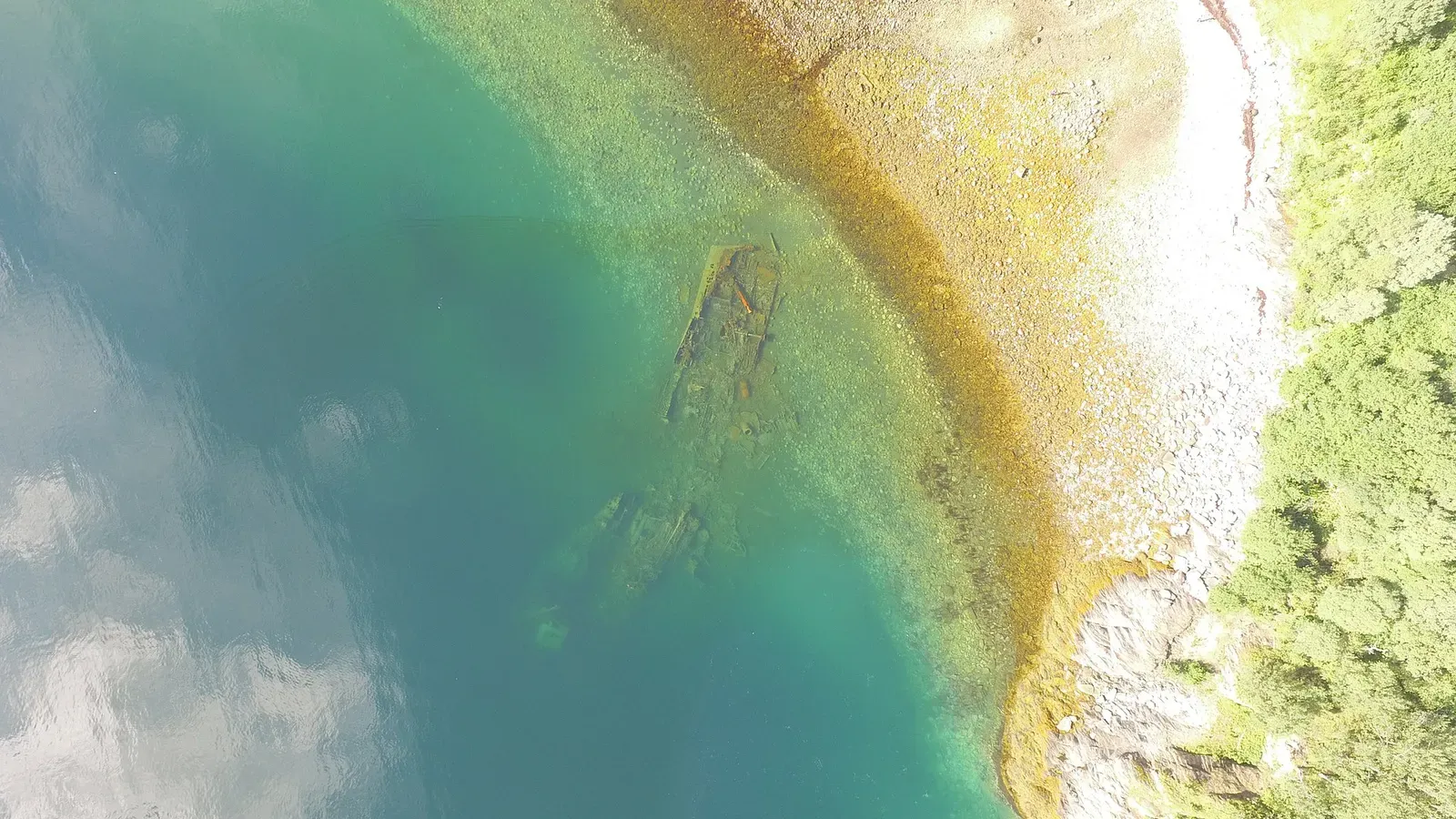
The propeller is gone but the rudder still stands out from her side
Wreck
Both propellers and the rudder still lie under her stern
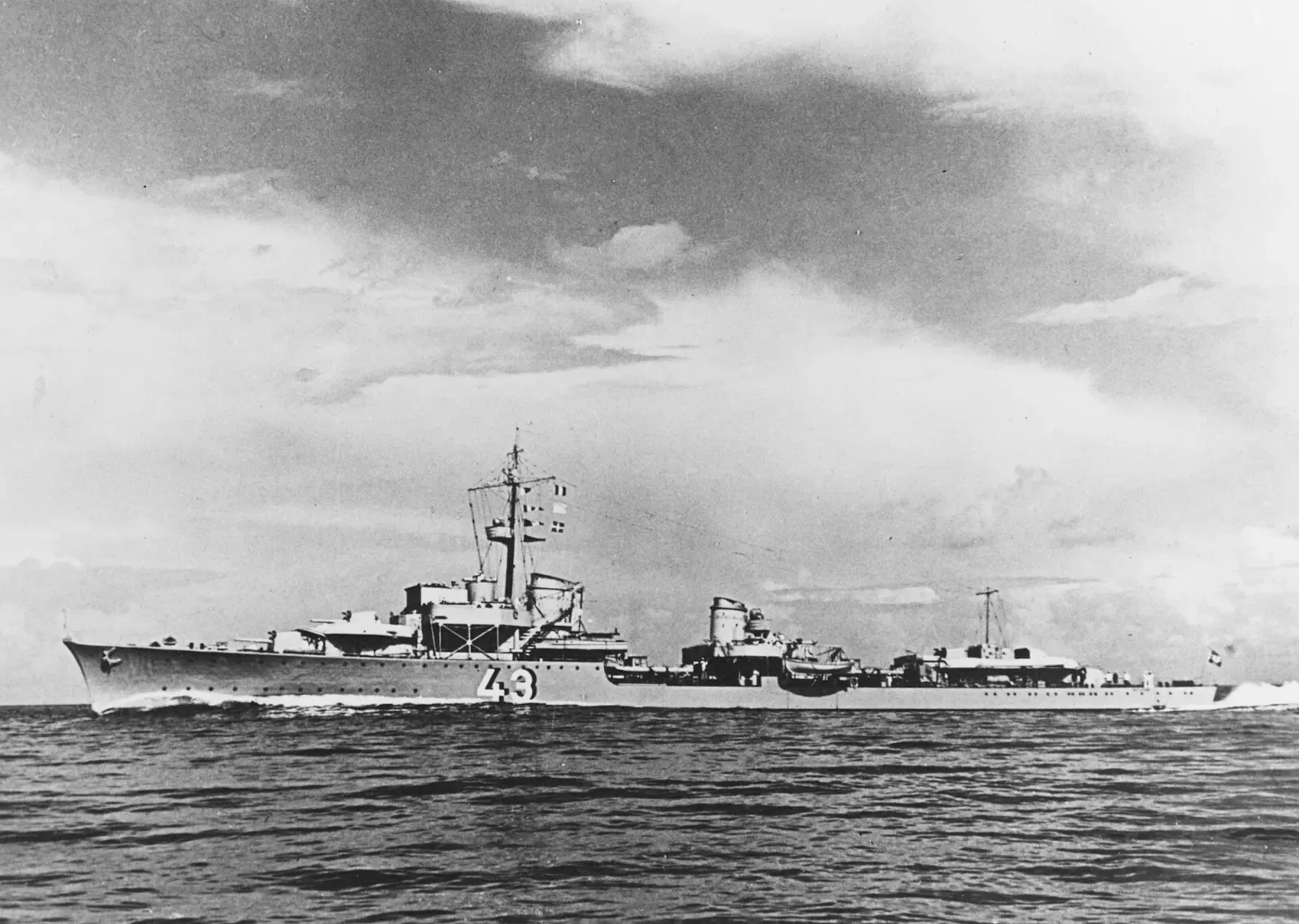
Three German destroyers in one dive, between 12 and 24 m
Georg Thiele
German destroyer run aground in 1940, bow at 10 m in Rombaksfjord.
Erich Giese
Destroyer sunk in the second battle, lying deeper in Ofotfjord.
Hans Lüdemann
Scuttled destroyer, broken but recognisable on the fjord floor.
Altona
Supply ship lost in the April 1940 fighting, upright and intact.
How to get to Narvik
Most divers fly into Harstad/Narvik Evenes and drive the last hour or so, or come in by rail on the Ofoten line from Kiruna in Sweden. Narvik is the base for everything: day boats work Ofotfjord and Rombaksfjord on short runs, and a couple of the shallower sites are reached from the shoreline as walk-in dives.
Photos from Narvik
U.S. Navy UCT-1 / Petty Officer 3rd Class Hunter Dixon · Public domain
U.S. Navy UCT-1 / Petty Officer 3rd Class Hunter Dixon · Public domain
Dive videos
Diving the Famous Narvik Wrecks | Scuba Diving in Norway · Global Underwater Explorers on YouTube
Episode 13: NARVIK Wreck Diving · Baltic Circle Diving on YouTube
Photo credits
- A drysuited diver pilots a boat across Narvik's fjord beneath snow-capped mountains by U.S. Navy UCT-1 / Petty Officer 3rd Class Hunter Dixon, Public domain, via Wikimedia Commons
- Divers gear up beside an inflatable boat before descending into Narvik's harbour waters by U.S. Navy UCT-1 / Petty Officer 3rd Class Hunter Dixon, Public domain, via Wikimedia Commons
- A support boat is lowered onto the water at Narvik's harbour pier, snowy peaks behind by U.S. Navy UCT-1 / Petty Officer 3rd Class Hunter Dixon, Public domain, via Wikimedia Commons
Embed
Run a dive centre, club or blog? Embed this map of 3 dive sites near Narvik on your own page.
In The Logbook
- Cold-water diving: is it worth the drysuit?Cold water · 8 min read
- Deep wreck diving: where recreational stopsWrecks · 8 min read
- WWII wrecks you can dive, by theatreWrecks · 7 min read
- The best shore dives in the worldShore diving · 8 min read
Similar destinations

Sweden's only cold-water coral reefs, inside its first marine national park
England's first marine reserve, and its grey seals follow divers around

Sherman tanks lie on the seabed beside the SS Empire Heritage

.jpg)
.jpg)
.jpg)
The Rondo stands almost vertical, stern at 15 m and bow at 50