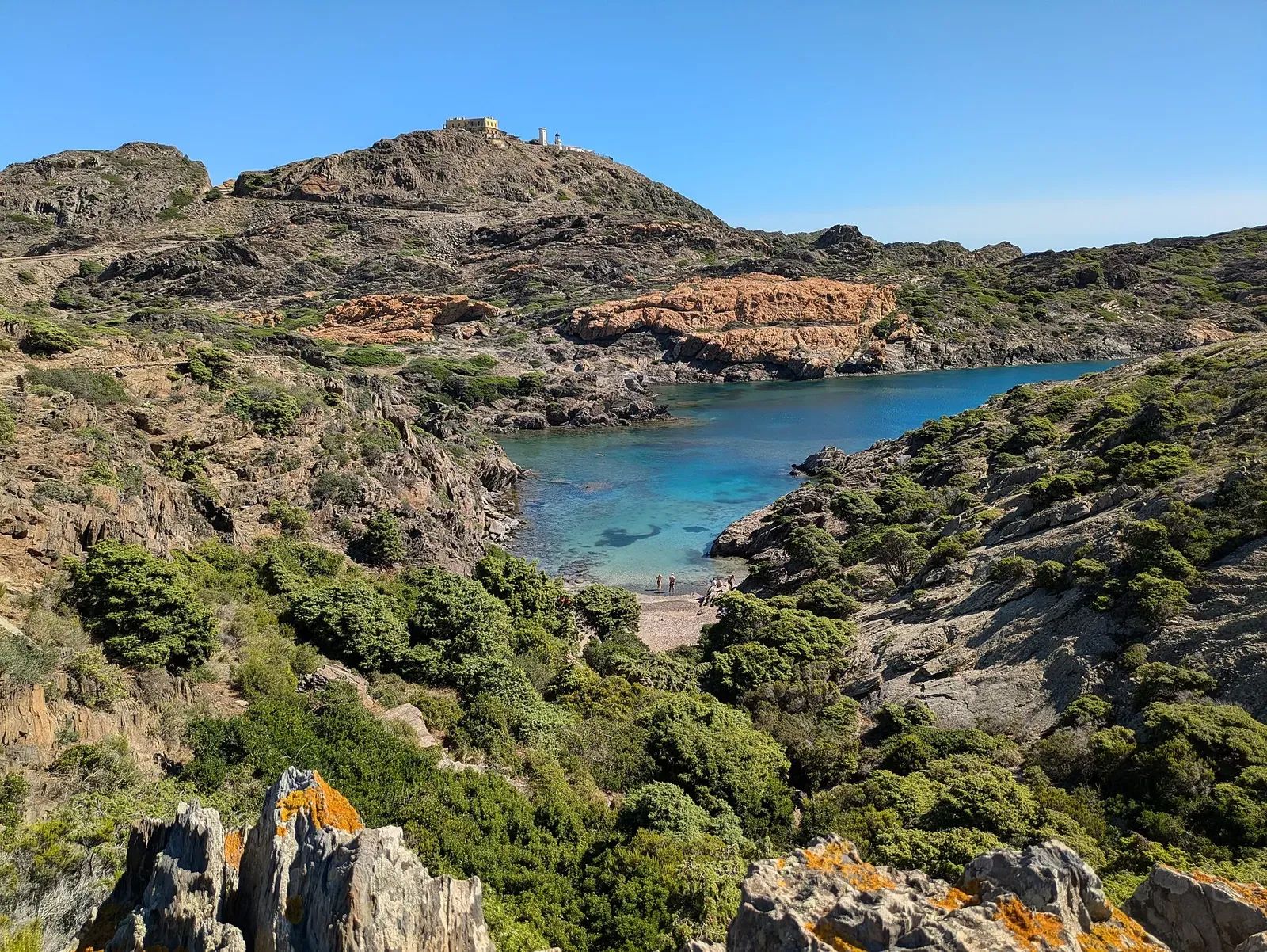
Cap de Creus · Spain · Reef
Cala Jugadora
A marine-reserve cove under the Cap de Creus lighthouse
Photo: Alan Mattingly · CC0
A rocky cove with clear water at the foot of the Cap de Creus lighthouse, protected by a marine reserve inside the natural park. The dive works rock, Posidonia meadows and tongues of sand at 24 to 30 m, and is graded advanced for that depth rather than for the conditions. The shallow edges of the cove have free shore access and are snorkelled as much as they are dived.
Where it is and how deep
42.3155° N, 3.3134° EPublished position for this site.
The dive
The cove sits at the foot of the Cap de Creus lighthouse and is protected by a marine reserve, so the dive starts in clear, shallow water over rock before the bottom steps away. The published profile runs 24 to 30 m across three kinds of ground, rock, Posidonia meadows and tongues of sand, and the edges between them are where the dive gets its interest, since each holds a different set of animals and none of it looks the same as the last stretch.
Along the rocky shore of the cove, calcareous tubeworms grow in the shallows and are worth a slow pass on the way in or out. At the foot of the drop-off, in the scree, combers sit out in the open and are easy to approach, with sargo alongside them and small moray eels in the cracks from time to time. Salema, ornate wrasse, painted combers and blennies fill the shallows in front of the two small beaches.
There is a small rocky islet off the western edge of the cove with a pass between it and the coast, and following that edge is the standard route for anyone staying shallow, snorkellers included: you can enter from either beach or off the surrounding rocks. Nothing about the cove is committing at that depth, and the advanced grade attaches to the 24 to 30 m version of the dive rather than to the water you can see from the surface.
Marine life and season
- Macro critters
| Jan | Feb | Mar | Apr | May | Jun | Jul | Aug | Sep | Oct | Nov | Dec |
|---|---|---|---|---|---|---|---|---|---|---|---|
| Fair | Fair | Fair | Good | Good | Prime | Prime | Prime | Prime | Good | Fair | Fair |
Season follows Cap de Creus: Jun–Sep is warmest and calmest; the Tramuntana blows hardest in winter and spring and regularly cancels boats for days at a time.
Photos from Cala Jugadora
Turol Jones, un artista de cojones · CC0
Jordi Carceller Comas · CC BY-SA 4.0
Dive videos
Cap Creus, Cala Jugadora · Thierry on YouTube
Questions divers ask
How do you get to Cala Jugadora?+
It is listed as a boat dive out of Cadaqués, and it also has free shore access: 8 km and about 20 minutes by road from Cadaqués towards the Cap de Creus lighthouse, a small car park, then roughly ten minutes down a path into the cove.
How deep is the dive at Cala Jugadora?+
The published profile is 24 to 30 m over rock, Posidonia meadows and sand, which is what earns the cove its advanced grade. The shallow edges are snorkelling ground and can be entered from the beaches.
Sources
- Snorkeling at Cala Jugadora, Cap de Creus Natural Park — Snorkeling Report
- Cala Jugadora eco-guided dive routes — Submarinisme Costa Brava
- Nominatim place search: Cala Jugadora — OpenStreetMap Nominatim
Photo credits
- Turquoise Cala Jugadora cove seen from above, with the Cap de Creus lighthouse on the hilltop behind it by Alan Mattingly, CC0, via Wikimedia Commons
- Close view of the turquoise cove at Cala Jugadora, with swimmers near the rocky shoreline by Turol Jones, un artista de cojones, CC0, via Wikimedia Commons
- Cala Jugadora cove viewed from the old coastal path between Cadaqués and the Cap de Creus lighthouse by Jordi Carceller Comas, CC BY-SA 4.0, via Wikimedia Commons
More dive sites in Cap de Creus
Reef
A giant anchor and its chain links lying at 21 m
Sand, coralligenous and rock between 12 and 30 m
Seamount
The park's only offshore seamount, 8 m to 60 m
Circle the reef from 18 to 32 m, with the Phedon's remains on it
Seamount
Seamount rock from 5 m to past 40 m, gorgonians throughout
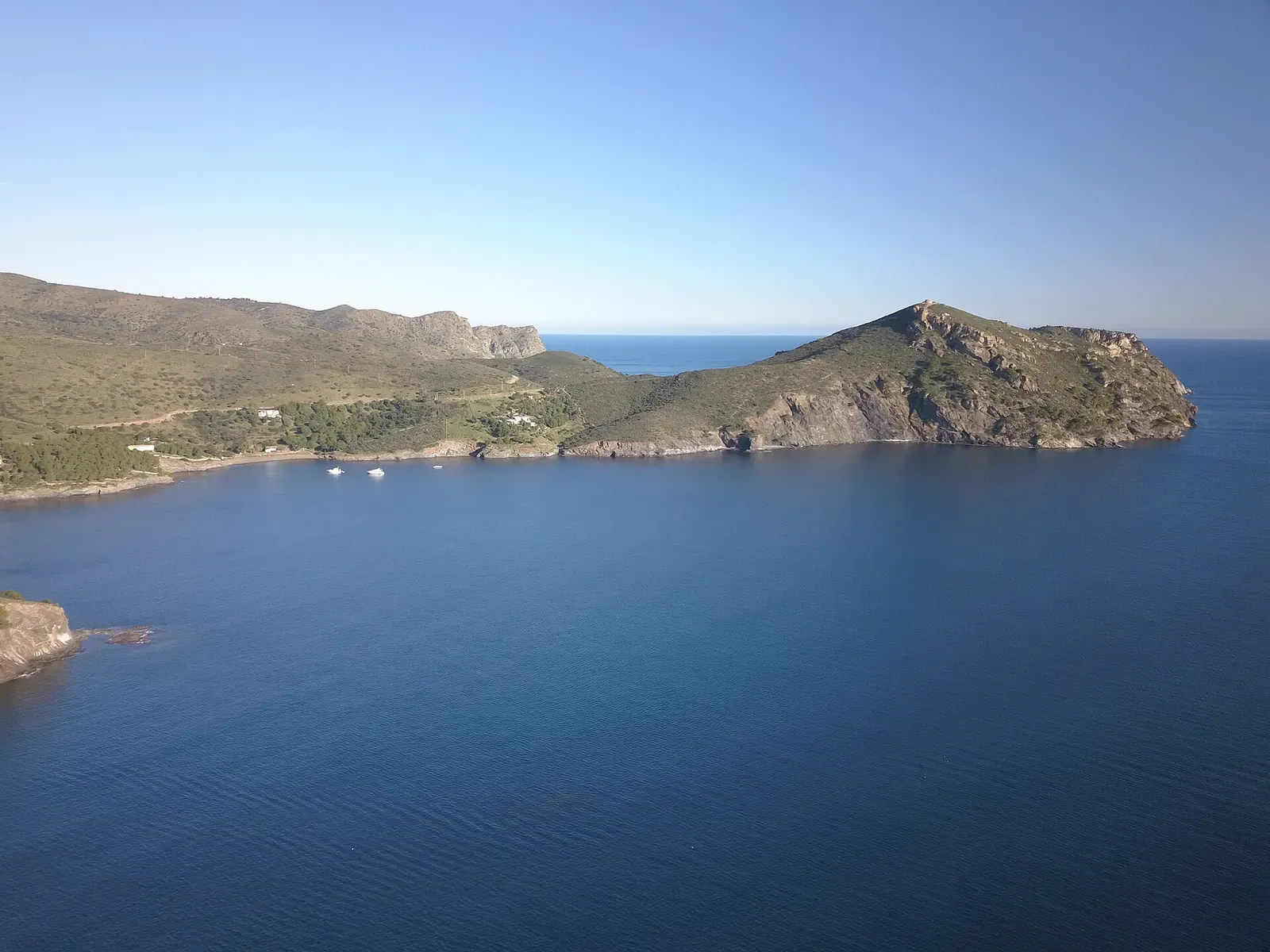
The park's best-known walls, and a cave with an air pocket
Reef
A 40 m canyon at the end of a 5 to 20 m drop-off
Pinnacle
Maze-like rock stacks full of red sea fans to 40 m
Similar dives elsewhere
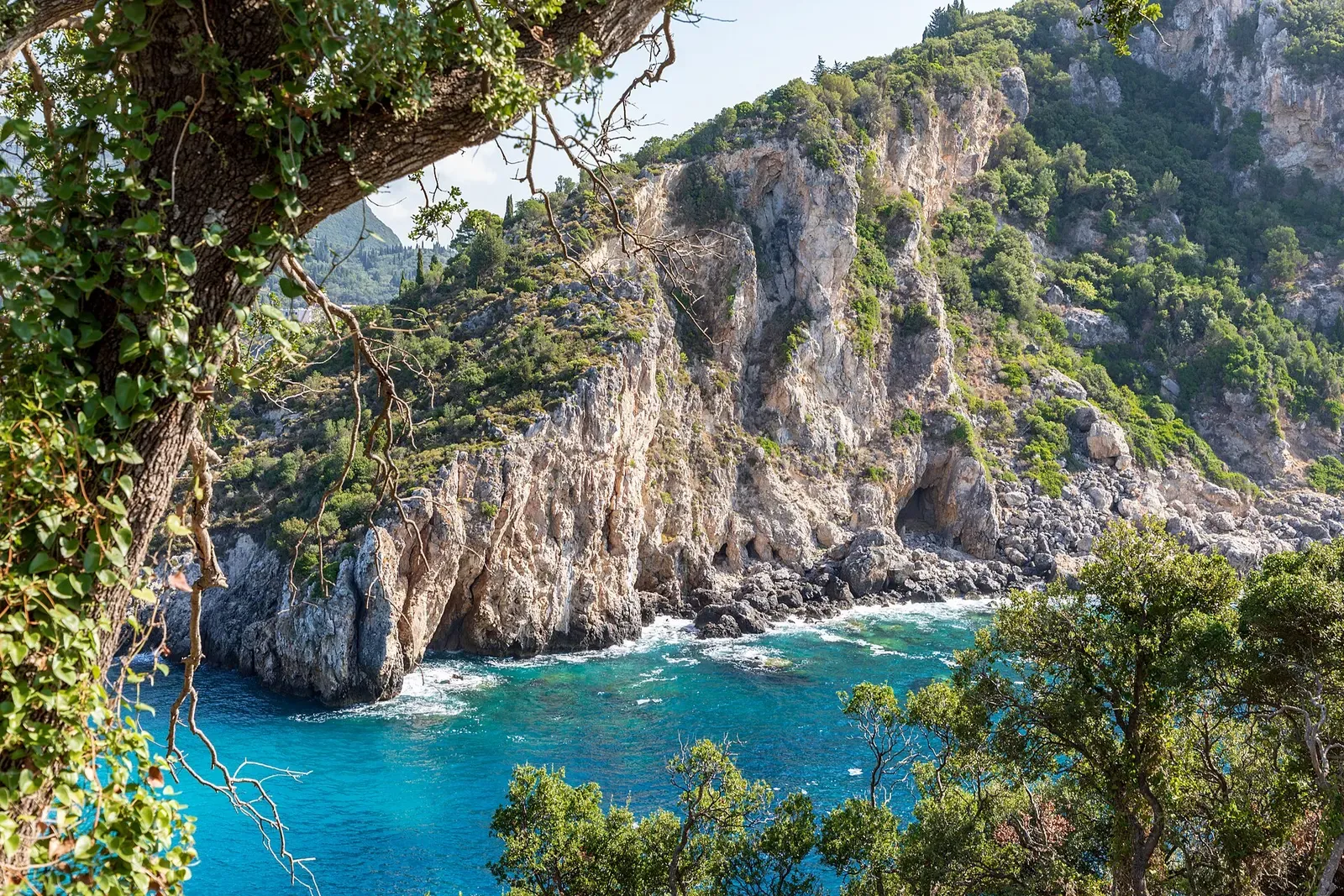
A reef from 1.5 to 30 m with a wreck at 40 m beyond, dived day and night
Reef
Armutlu Burnu
Datça & the Knidos Peninsula · Turkey
Very old amphorae at 30 m below a crevice-cut headland
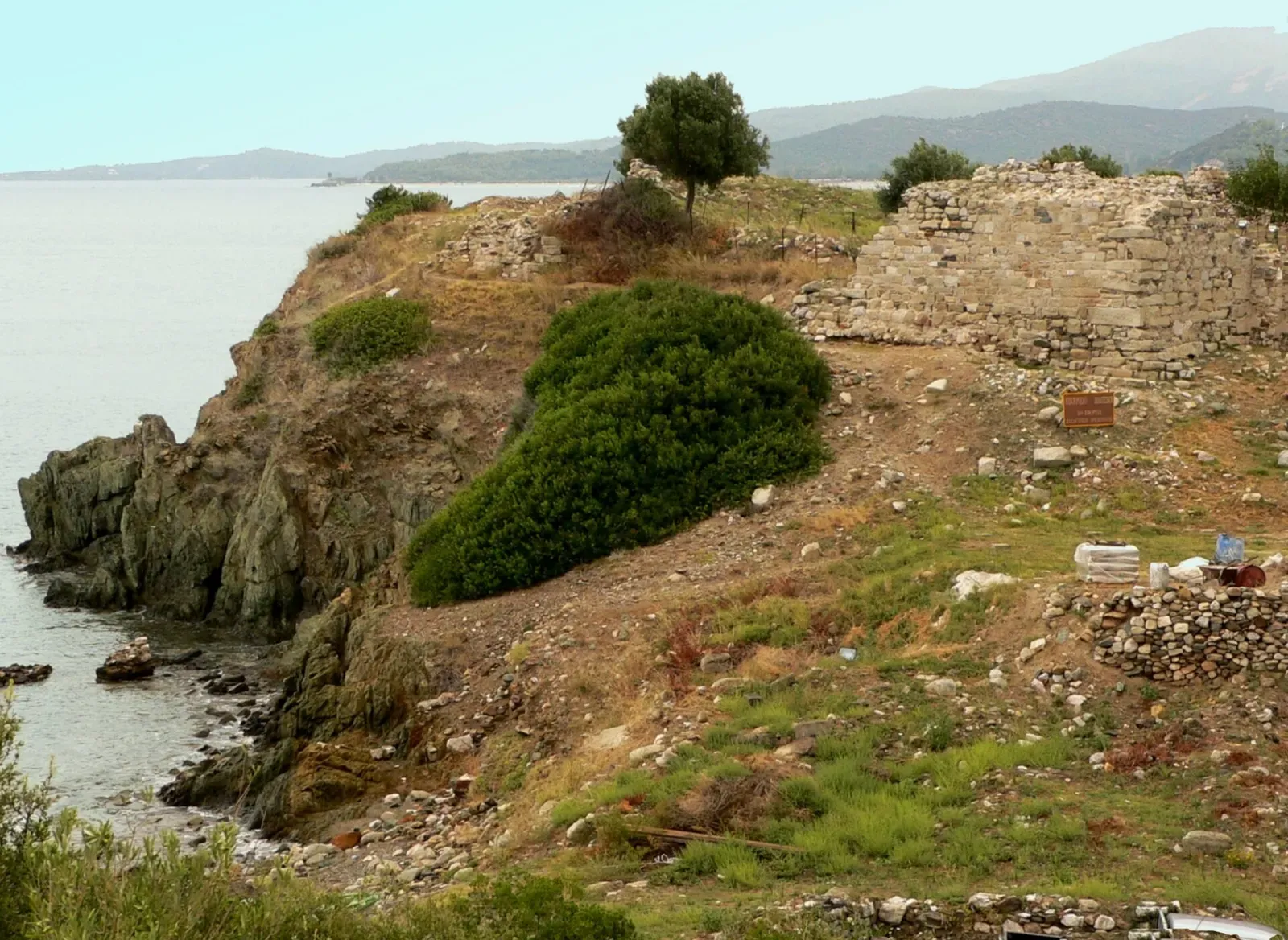
Old fishing nets turned into a reef, with congers and groupers underneath


23 m at the top, 35 m at the bottom, deep ticket required