
Coral Triangle · Indonesia
Gili Islands
Eighty human figures stand in a ring on the sand off Gili Meno
Photo: Magul · CC BY-SA 4.0
Three small sand islands off Lombok with no cars and no dogs, and an unusually high resident green and hawksbill turtle population — turtle sightings are close to guaranteed on any dive. The reef took heavy damage from blast fishing and bleaching, and much of what divers now see is recovery: Bio-Rock frames growing coral back, and The Nest, a ring of eighty human figures placed off Gili Meno that has become the islands' most photographed site.
About diving in Gili Islands
The three islands share one dive area, so where you sleep matters more than where you dive. Shops on Trawangan, Air and Meno run to the same ring of sites at fixed departure times through the day, and nothing sits far offshore; you roll off a wooden boat, dive, and are back on land within a couple of hours. Groups usually mix certified divers with students working through a course, and the popular sites can hold several boats at once.
Underwater the islands are gentle: coral slopes and scattered bommies running down onto white sand, rubble stretches in between, and inclines rather than sheer drop-offs whatever the site names suggest. Depth is easy to control, which is part of why so much training happens here. What varies is water movement. The channels between the islands can run hard on a big tide, turning a morning swim into an afternoon drift, and briefings are built around which way the water will be going.
Because conditions are forgiving, the shops here certify divers in volume, and that shapes the diving culture: multi-dive packages, freediving schools sitting alongside the scuba operations, and a steady programme of dusk and night dives on the shallow reefs. Those after-dark trips are worth planning around, since the sand and rubble that look plain in daylight are exactly where the hunting happens once the light goes.
This is a good place to learn, to log easy dives between other plans, or to spend a week without an itinerary at all: bicycles and horse carts are the only transport, and nothing stands between the boat and dinner. It is a weaker match for divers who measure a trip by coral cover or dramatic topography. The appeal is the animals, the ease of access and the pace on land.
Best time to dive Gili Islands
| Jan | Feb | Mar | Apr | May | Jun | Jul | Aug | Sep | Oct | Nov | Dec | |
|---|---|---|---|---|---|---|---|---|---|---|---|---|
| Season | Good | Good | Good | Prime | Prime | Prime | Prime | Prime | Prime | Prime | Good | Good |
| Sea surface | 29°C84°F | 29°C84°F | 29°C84°F | 30°C86°F | 30°C86°F | 29°C84°F | 28°C82°F | 28°C82°F | 28°C82°F | 29°C84°F | 30°C86°F | 29°C84°F |
| Daytime high | 31°C88°F | 31°C88°F | 31°C88°F | 31°C88°F | 31°C88°F | 30°C86°F | 30°C86°F | 31°C88°F | 32°C90°F | 33°C91°F | 33°C91°F | 32°C90°F |
| Rain | 319 mm12.6 in | 245 mm9.6 in | 226 mm8.9 in | 126 mm5.0 in | 71 mm2.8 in | 46 mm1.8 in | 24 mm0.9 in | 9 mm0.4 in | 29 mm1.1 in | 61 mm2.4 in | 171 mm6.7 in | 282 mm11.1 in |
| Jan | Feb | Mar | Apr | May | Jun |
|---|---|---|---|---|---|
| Good | Good | Good | Prime | Prime | Prime |
| Sea surface | |||||
| 29°C84°F | 29°C84°F | 29°C84°F | 30°C86°F | 30°C86°F | 29°C84°F |
| Daytime high | |||||
| 31°C88°F | 31°C88°F | 31°C88°F | 31°C88°F | 31°C88°F | 30°C86°F |
| Rain | |||||
| 319 mm12.6 in | 245 mm9.6 in | 226 mm8.9 in | 126 mm5.0 in | 71 mm2.8 in | 46 mm1.8 in |
| Jul | Aug | Sep | Oct | Nov | Dec |
|---|---|---|---|---|---|
| Prime | Prime | Prime | Prime | Good | Good |
| Sea surface | |||||
| 28°C82°F | 28°C82°F | 28°C82°F | 29°C84°F | 30°C86°F | 29°C84°F |
| Daytime high | |||||
| 30°C86°F | 31°C88°F | 32°C90°F | 33°C91°F | 33°C91°F | 32°C90°F |
| Rain | |||||
| 24 mm0.9 in | 9 mm0.4 in | 29 mm1.1 in | 61 mm2.4 in | 171 mm6.7 in | 282 mm11.1 in |
2011–2025 averages. Sea surface: NOAA Coral Reef Watch, measured at the surface, so deeper water can run colder. Daytime high and rain: NASA POWER.
Divable year-round; Apr–Nov brings the calmest crossings, and mola mola occasionally appear Aug–Oct on the deeper sites.
Best months: April, May, June, July, August, September, October
Gili Islands water temperature and weather by month
The sea surface stays between 28 and 30 °C (82–86 °F) all year. Most rain falls from November to March, peaking at about 320 mm (13 in) in January; it stays largely dry from May to October. Daytime highs sit around 31 °C (88 °F) all year. The coldest water here is about 26 °C (79 °F), so pack a 3 mm full suit.
Dive types & marine life
Turtles work the shallow coral tops and are as likely to turn up on the safety stop as at depth, while whitetips rest on the sand at the deeper sites. Octopus, cuttlefish, frogfish and nudibranchs come out on the dusk and night dives. Mola mola are an outside chance on deeper ground in the August-to-October window rather than something to plan around.
- Reef
- Drift
- Wreck
- Coral garden
- Night
- Muck & macro
- Sea turtles
- Reef sharks
- Reef fish swarms
- Nudibranchs
- Macro critters
- Octopus & cuttlefish
- Frogfish
- Mola mola
Best dive sites in Gili Islands
Wall
A vertical face dropping from 5 m to 30 m off Gili Air
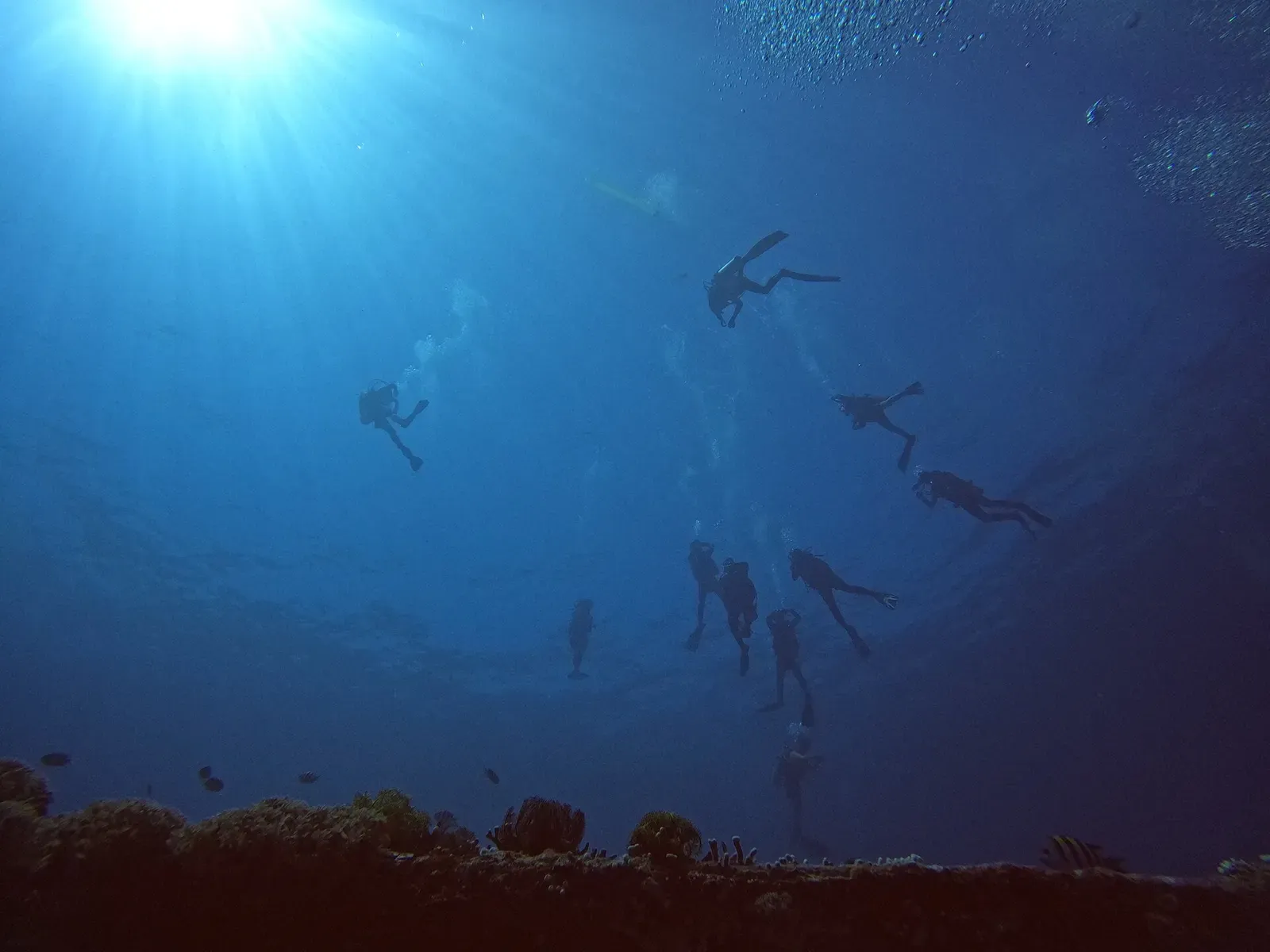
Old bicycles under coral on a pontoon that sank in 2003
Pinnacle
Sea mounds rising from sand at 30 m to about 18 m
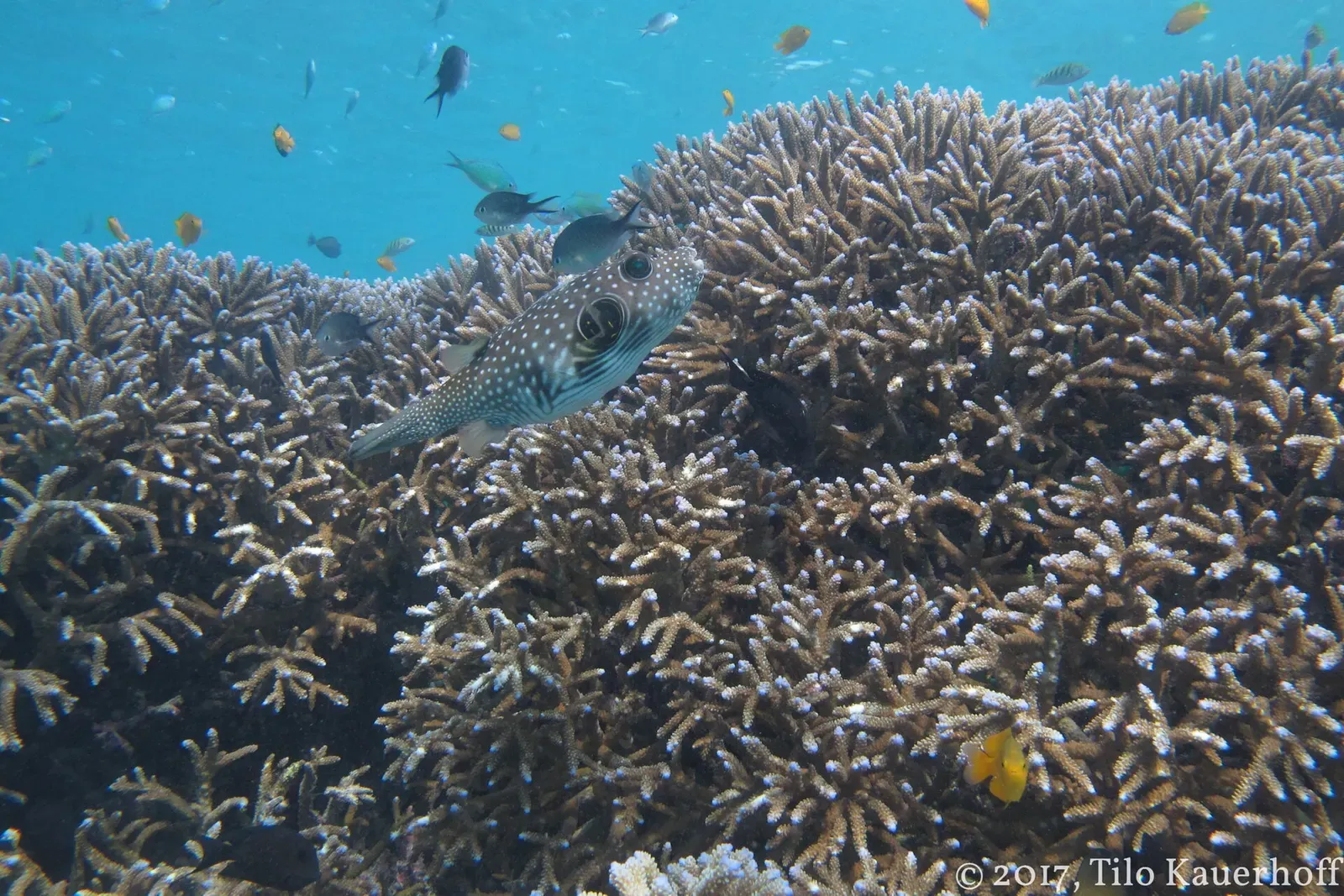
Juvenile whitetips tucked into small caves along a drifting slope
Sand slope
Broken rubble ground from 5 m to 16 m, then open sand
Sand slope
Macro life on bommies scattered down a sand slope
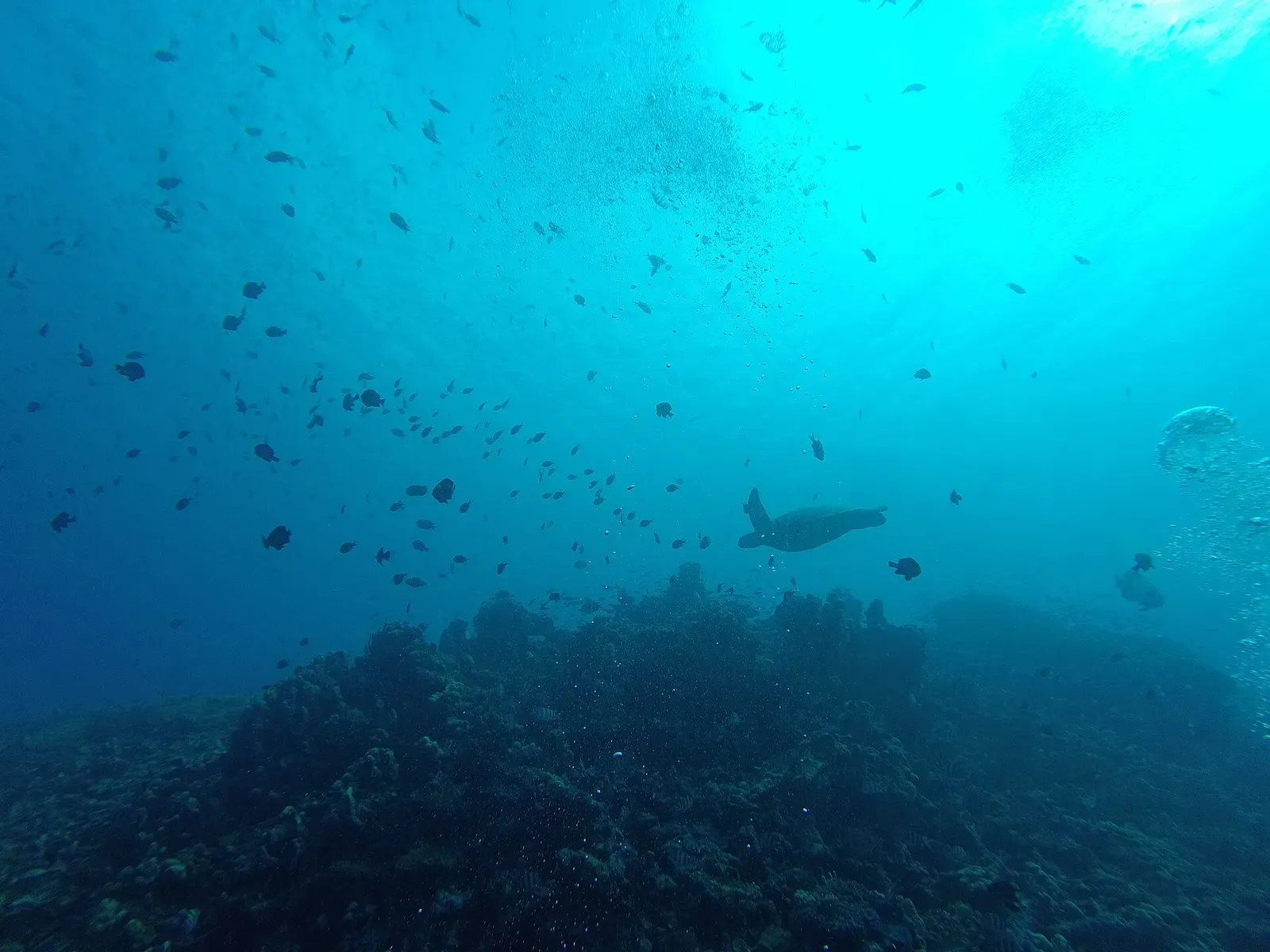
Turtles in numbers along a wall that bottoms out at 22 m
Reef
Whitetip sharks and turtles on three coral levels at 18-24 m
Reef
Deep reef meeting sand at 30 m off the northern Gilis
Reef
Bommies across the slope work as cleaning stations
Seamount
Sea mounts running from 7 m down to 40 m
Artificial reef
Forty-eight life-size figures in a circle on the seabed at 4 m
Pinnacle
A coral-covered pinnacle turtles live on year-round
How to get to Gili Islands
Fast boats cross from Bali — Padangbai, Serangan or Amed — in anything from ninety minutes to two and a half hours depending on the port. Coming through Lombok's airport, the route is by road to Bangsal harbour and then a short local crossing. Most diving is by boat, though a few reefs can be reached from the beach.
Dive videos
Shark Point Secrets: Diving into the Deep #gilitrawangan #scubadiving · Scuba Diving and Dogs on YouTube
DIVING in Gili Trawangan, Lombok | White Tips at Shark Point & Halik Reef · Travel with Pat on YouTube
Photo credits
- A lighthouse tower rises above palm trees and a beach lined with umbrellas on Gili Trawangan by Magul, CC BY-SA 4.0, via Wikimedia Commons
Embed
Run a dive centre, club or blog? Embed this map of 12 dive sites near Gili Islands on your own page.
In The Logbook
- Where to see reef sharks on your first divesBig animals · 14 min read
- Where to dive with sea turtlesBig animals · 15 min read
- Cheapest places to scuba dive, and the catchTrip planning · 15 min read
Similar destinations

The USAT Liberty wreck lies coral-encrusted just off a black-sand beach.
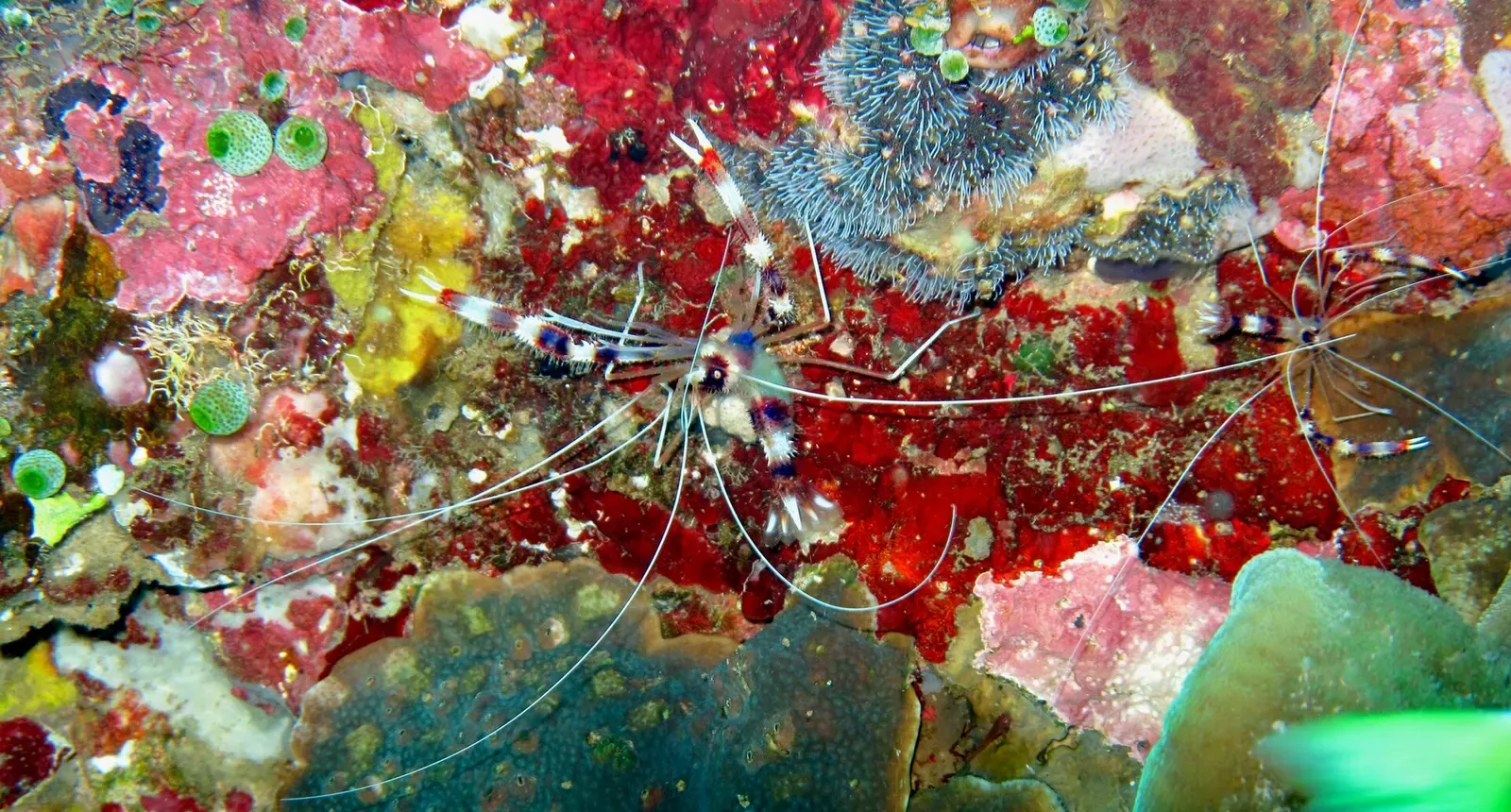
Easy beach entries onto walls, a small wreck and an artificial reef
Coral Triangle
Halmahera — Kusu & Sali Islands
Indonesia
Blacktip reef sharks by day and the endemic Halmahera walking shark after dark.

.jpg)
Soft coral grows so thick on Sahaung's pinnacles the rock disappears