
East Asia · Japan
Kerama Islands
Kerama Blue visibility over coral gardens with turtles on nearly every dive.
Photo: DavideGorla · CC BY 2.0
The Kerama Islands sit 40 km west of Naha inside a national park famed for 'Kerama Blue,' water so clear that visibility regularly exceeds 20 meters over healthy coral gardens. Sea turtles turn up on nearly every dive, and the channels between islands shelter one of Okinawa's largest hawksbill and green turtle populations alongside dense staghorn and table coral. Humpback whales pass offshore in winter, though divers mostly encounter them from the boat rather than underwater.
About diving in Kerama Islands
There are two ways to dive the Keramas and they make for different trips. Day boats leave Naha early, cross the open channel, fit in two or three dives around Zamami, Aka and Tokashiki, and are back in the city by evening. Staying out on the islands changes the rhythm completely: the village shops run a few minutes to their sites, come back in for lunch, and can add an afternoon or a night dive without anyone facing another crossing.
The topography is gentle and varied rather than dramatic. Shallow bommie fields and table-coral terraces sit on white sand that throws light back up, which is much of why the water reads so pale; the deeper edges fall away into rocky slopes and undercuts where soft coral takes over. The channels between the islands carry enough tidal flow to justify a drift plan and enough structure to hold fish, and guides pick the site on the day from the tide table and the wind.
Turtles are what brings people back, and the two common species behave differently: greens graze shallow flats and seagrass, hawksbills pick at sponges around the coral heads. Both are used to divers, so the technique is to settle onto the sand and stay put rather than swim after them. Night dives from the island bases turn up hunting octopus, parrotfish asleep in their mucus cocoons, and the small animals that daytime dives pass straight over.
It works for mixed groups where half the party only snorkels, and for anyone who wants an easy week rather than a technical one. Conditions rather than marine life set the calendar: April to September is the calm, clear stretch, while winter northeasterlies push swell across the crossing, cancel ferries and shorten the site list without closing the season, and that is also when island boats give much of their time to whale-watching runs. Divers set on big pelagics or deep walls should treat this as a complement to somewhere else.
Best time to dive Kerama Islands
| Jan | Feb | Mar | Apr | May | Jun | Jul | Aug | Sep | Oct | Nov | Dec | |
|---|---|---|---|---|---|---|---|---|---|---|---|---|
| Season | Fair | Fair | Good | Prime | Prime | Prime | Prime | Prime | Good | Good | Good | Fair |
| Sea surface | 23°C73°F | 22°C72°F | 22°C72°F | 23°C73°F | 25°C77°F | 27°C81°F | 29°C84°F | 29°C84°F | 29°C84°F | 27°C81°F | 26°C79°F | 24°C75°F |
| Daytime high | 23°C73°F | 23°C73°F | 23°C73°F | 25°C77°F | 27°C81°F | 29°C84°F | 30°C86°F | 31°C88°F | 30°C86°F | 29°C84°F | 27°C81°F | 25°C77°F |
| Rain | 62 mm2.4 in | 48 mm1.9 in | 74 mm2.9 in | 119 mm4.7 in | 226 mm8.9 in | 265 mm10.4 in | 146 mm5.7 in | 171 mm6.7 in | 150 mm5.9 in | 126 mm5.0 in | 90 mm3.5 in | 73 mm2.9 in |
| Jan | Feb | Mar | Apr | May | Jun |
|---|---|---|---|---|---|
| Fair | Fair | Good | Prime | Prime | Prime |
| Sea surface | |||||
| 23°C73°F | 22°C72°F | 22°C72°F | 23°C73°F | 25°C77°F | 27°C81°F |
| Daytime high | |||||
| 23°C73°F | 23°C73°F | 23°C73°F | 25°C77°F | 27°C81°F | 29°C84°F |
| Rain | |||||
| 62 mm2.4 in | 48 mm1.9 in | 74 mm2.9 in | 119 mm4.7 in | 226 mm8.9 in | 265 mm10.4 in |
| Jul | Aug | Sep | Oct | Nov | Dec |
|---|---|---|---|---|---|
| Prime | Prime | Good | Good | Good | Fair |
| Sea surface | |||||
| 29°C84°F | 29°C84°F | 29°C84°F | 27°C81°F | 26°C79°F | 24°C75°F |
| Daytime high | |||||
| 30°C86°F | 31°C88°F | 30°C86°F | 29°C84°F | 27°C81°F | 25°C77°F |
| Rain | |||||
| 146 mm5.7 in | 171 mm6.7 in | 150 mm5.9 in | 126 mm5.0 in | 90 mm3.5 in | 73 mm2.9 in |
2011–2025 averages. Sea surface: NOAA Coral Reef Watch, measured at the surface, so deeper water can run colder. Daytime high and rain: NASA POWER.
Calmest seas and best clarity run April-September; winter brings choppier northeast winds and cooler water.
Best months: April, May, June, July, August
Kerama Islands water temperature and weather by month
The sea surface runs from 22 °C (72 °F) in February to 29 °C (84 °F) in August. It is 24 °C (75 °F) or warmer from May to December. Most rain falls from May to September, peaking at about 270 mm (11 in) in June; it stays largely dry from December to March. Daytime highs reach 31 °C (88 °F) in August and drop to 23 °C (73 °F) in February. The coldest water here is about 20 °C (68 °F), so pack a 5 mm suit.
Dive types & marine life
Green and hawksbill turtles are the constant, seen through the year on shore dives as well as boat sites. Reef sharks, usually whitetips, cruise the deeper edges, and reef-fish schools thicken over the coral across the calm April-to-September stretch. The choppier winter months are quieter underwater but still work for nudibranchs and macro subjects on shallow rock.
- Reef
- Coral garden
- Drift
- Night
- Sea turtles
- Reef sharks
- Nudibranchs
- Macro critters
- Pristine corals
- Reef fish swarms
Best dive sites in Kerama Islands
Coral garden
Coral shelves to 18 m with green turtles as the constant
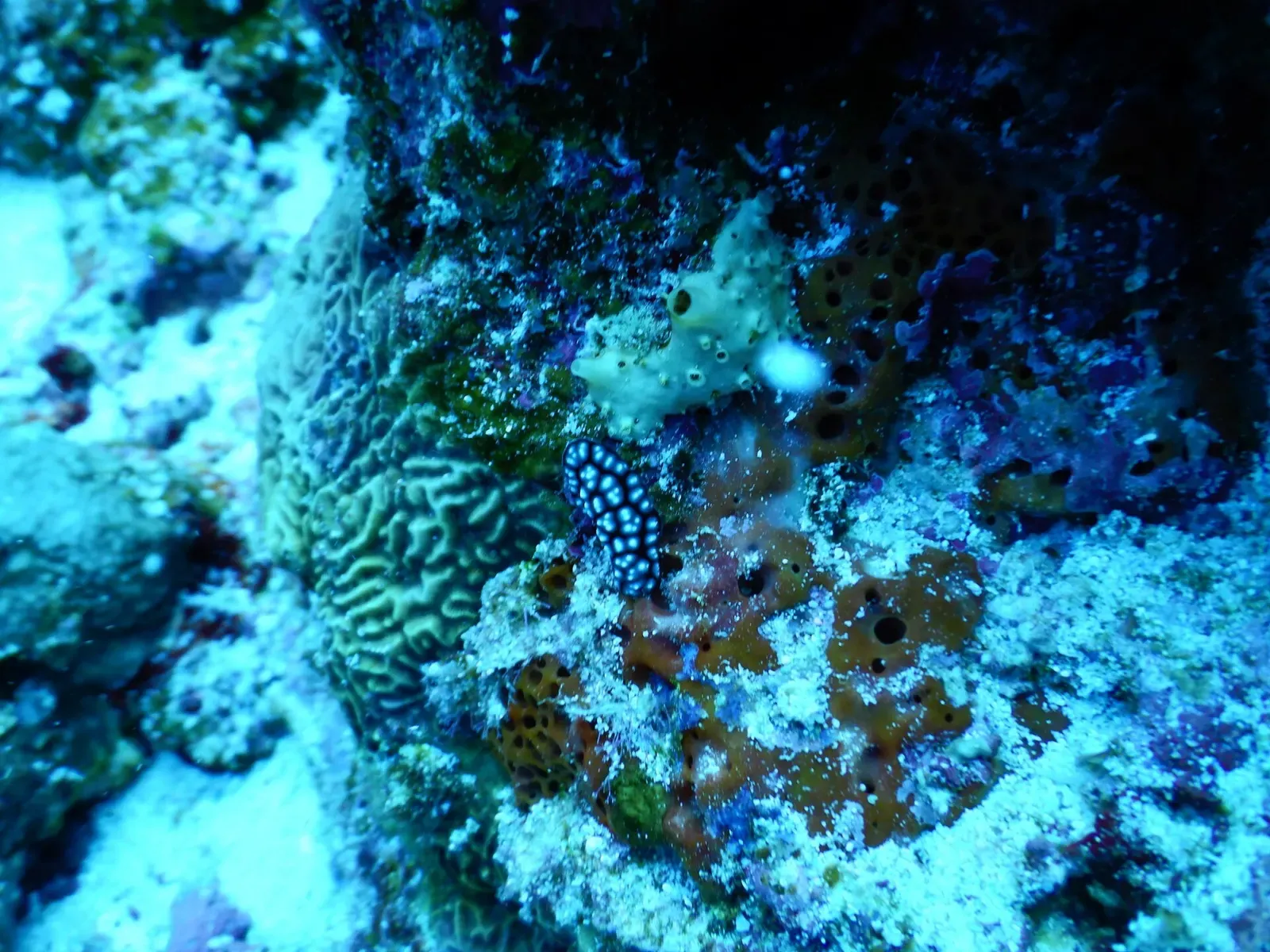
Coral colonies on white sand, boat access, down to 25 m
Pinnacle
Three rock heads with table coral, 5 m down to 30 m
Coral garden
Pastel coral garden at 11 m with a high turtle hit rate
Sunlit crevasses and caves in a rock wall from 3 to 22 m
Uchibanari
Tokashiki wall dive with massive coral bommies and dense schooling fish.
Nakadomari
Aka Island bay known as a reliable green turtle cleaning and feeding site.
Ama
Zamami Island site with table coral gardens in gentle, current-light water.
Furuzamami Beach
Shore-accessible reef off Zamami popular for turtles and easy entries.
How to get to Kerama Islands
Ferries from Naha's Tomari Port serve Zamami, Aka and Tokashiki, a fast boat and a slower car ferry, both of which stop running in strong wind and both worth booking ahead in summer. Many divers skip staying over and take a Naha day boat instead. The island-based shops sit in Zamami and Aka villages, alongside a few beaches usable as shore entries.
Photos from Kerama Islands
kfa · CC0
Maaike Verschueren · CC BY 4.0
B. P. White · CC BY-SA 4.0
TomazVajngerl · CC BY-SA 3.0
Dive videos
世界が恋するケラマブルー。慶良間諸島 渡嘉敷島でダイビング4K動画 ScubaDiving under the beautiful ocean, Okinawa · UminTube on YouTube
奇跡の青。慶良間諸島・渡嘉敷島ダイビングHD動画。Diving in kerama · baybreeze on YouTube
Photo credits
- A dive boat loaded with scuba gear heads toward rocky islets in bright turquoise water off Tokashiki. by DavideGorla, CC BY 2.0, via Wikimedia Commons
- An Ijima's sea snake winds across a coral reef near Zamami Island. by kfa, CC0, via Wikimedia Commons
- A whitemouth moray eel peers out from a coral ledge crowded with sponges. by Maaike Verschueren, CC BY 4.0, via Wikimedia Commons
- A bright orange sea star grips a sand-dusted coral head underwater. by B. P. White, CC BY-SA 4.0, via Wikimedia Commons
- White sand curves into pale turquoise shallows below a green headland on Aka Island. by TomazVajngerl, CC BY-SA 3.0, via Wikimedia Commons
Embed
Run a dive centre, club or blog? Embed this map of 5 dive sites near Kerama Islands on your own page.
In The Logbook
- Where to dive with sea turtlesBig animals · 15 min read
- Cavern and cenote diving without cave trainingCaves & caverns · 8 min read
Similar destinations
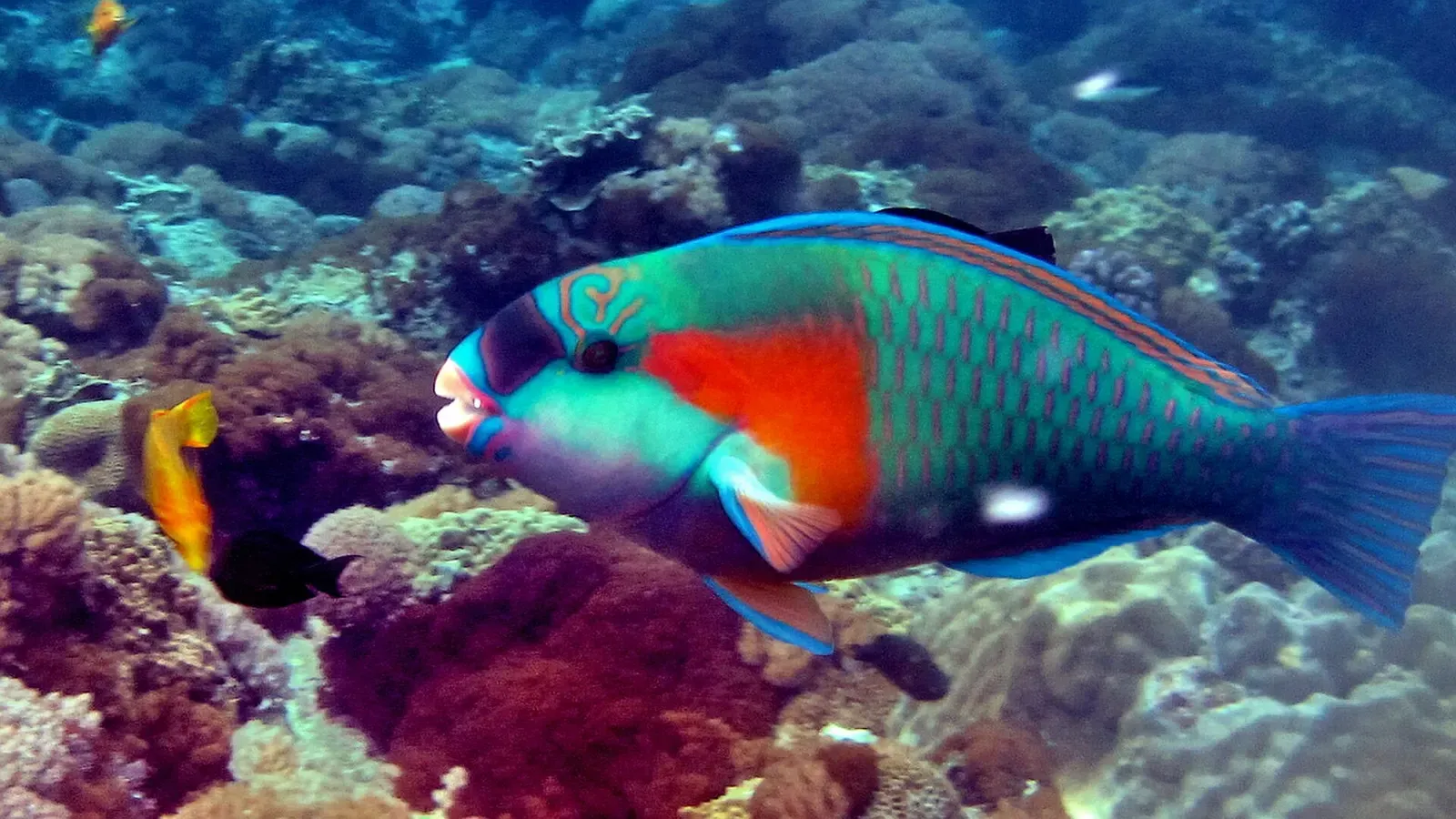
Kuroshio-fed reefs with resident green turtles off Taiwan's volcanic isle

Reef manta rays circle shallow cleaning stations in Kabira Bay most of the year.

Protected soft coral forests on volcanic rock off southern Jeju


.JPG)
Limestone arches and chambers with light shafts through the roof