Cold Water · Japan
Lake Shikotsu
Shore dives in a clear caldera lake, with ice dives in midwinter
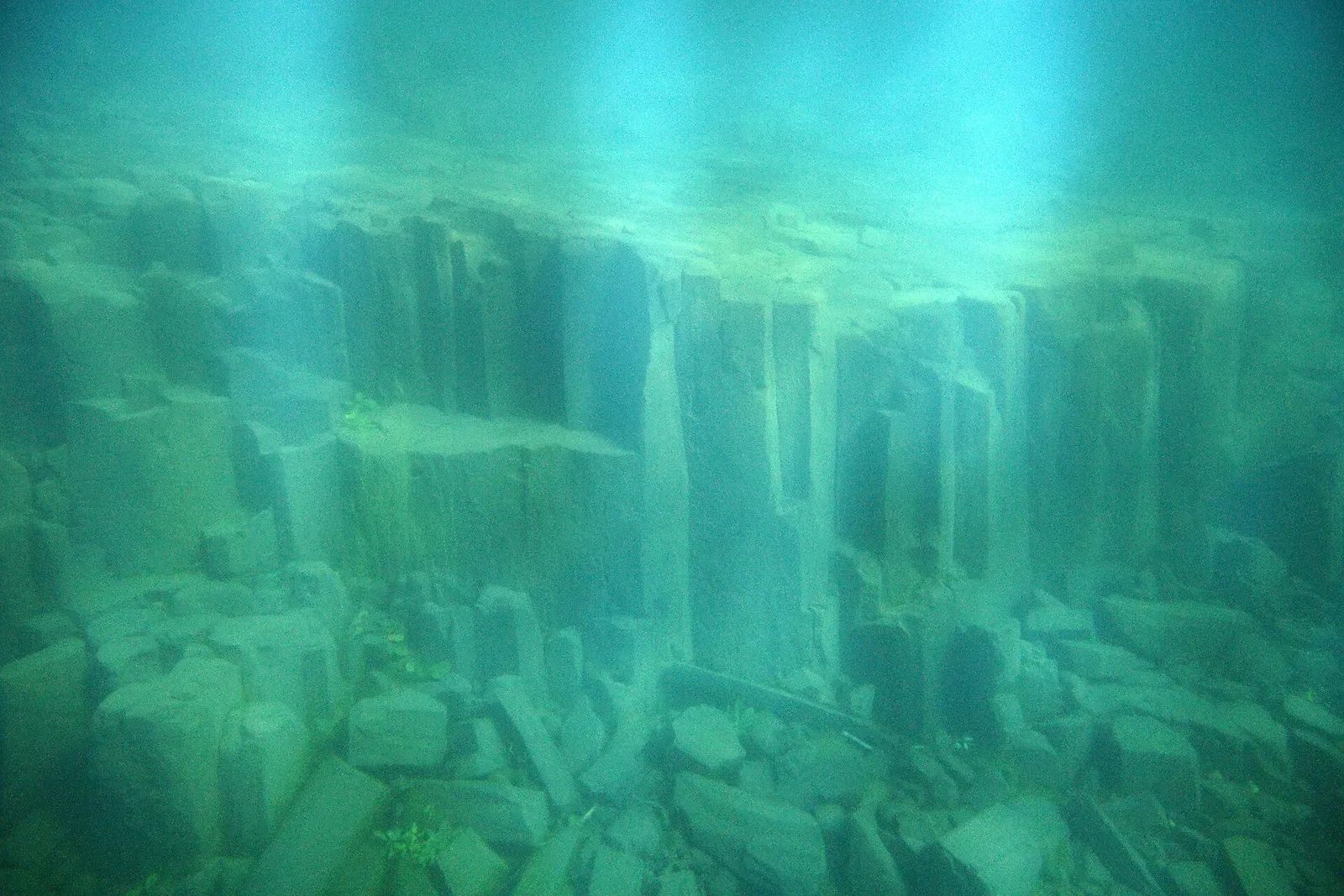
Photo: 663highland · CC BY 2.5
Lake Shikotsu is a caldera lake in Chitose, Hokkaido, inside Shikotsu-Toya National Park, and one of the few places in Japan to dive in fresh water. Dives are from the shore: Poropinai for clear water from 3 to 20 m, Taiko no Mori for ancient trees lying on the lake bed, Morappu for a volcanic drop-off and the Chitose River source for a shallow river drift. The draw is the clarity, which passes 50 m on some days between January and June.
About diving in Lake Shikotsu
Dives here start from the shore, at beaches and campsites around the lake. The day's entry is chosen by the weather and the wind direction, the Morappu and Mifue campsites both charge a usage fee per diver, and dives go ahead in the rain. Diving runs all year, and below 20 m the water stays under 10 °C in every season.
The lake fills a volcanic caldera that reaches 363 m at its deepest, and its water has ranked first in Japan for quality 11 years in a row. Its life is all freshwater: the endemic Chitose baikamo and other water plants, Ezo dace, kokanee, rainbow trout, gobies and freshwater shrimp, with brown trout over 60 cm hiding under the sunken wood.
The lake suits certified divers who want clear, cold fresh water and are at ease in a dry suit. Poropinai and Taiko no Mori are rated for beginners through advanced divers, while Morappu and the river drift at the Chitose River source call for intermediate experience. Night dives run outside winter, and a night drift in the river is offered only to divers whose morning dives show the skill for it.
Best time to dive Lake Shikotsu
| Jan | Feb | Mar | Apr | May | Jun | Jul | Aug | Sep | Oct | Nov | Dec |
|---|---|---|---|---|---|---|---|---|---|---|---|
| Good | Good | Good | Good | Good | Good | Prime | Prime | Good | Good | Good | Good |
From January to March the water at 10 m holds at 1 to 3 °C, and in January and February dives go under the frozen surface. January to June brings outstanding clarity, past 50 m on some days. The top season starts in late June with the endangered Chitose baikamo and runs through August, when the water at 10 m reaches 15 to 20 °C. In October and November kokanee in spawning colours move inshore, and by December the water is back to 4 to 8 °C.
Dive types & marine life
From July to September the endemic Chitose baikamo, Ezo dace, kokanee, rainbow trout and freshwater shrimp are all seen. Kokanee in spawning colours come inshore from October, and the run continues into December.
- Freshwater
- Wall
- Drift
- Ice
- Freshwater fish
Best dive sites in Lake Shikotsu
- 1
Poropinai
Shore site from 3 to 20 m that rarely turns cloudy in any season, for beginners to advanced divers.
- 2
Taiko no Mori
Trees that have lain on the lake bed since the lake formed, to 12 m, with brown trout hiding beneath.
- 3
Morappu
Volcanic rock drop-off pushed up by eruptions, dived from the campsite shore to 20 m.
- 4
Chitose River source
River drift dive at the head of the Chitose River, no deeper than 4 m, for intermediate divers and up.
Site guides
Drift
A river drift out of a caldera lake
Wall
A volcanic rock drop-off in a calm lake
Freshwater
Clear lake water and shoals under the jetty
Freshwater
Driftwood from the lake's formation on the bed
How to get to Lake Shikotsu
International and inter-island flights land at New Chitose Airport, 30 minutes from the lake, and Sapporo is 1 hour 10 minutes away. Hokkaido Chuo buses link Shikotsu-ko with Chitose Station and the airport.
Photos from Lake Shikotsu
663highland · CC BY 2.5
Dive videos
北海道の支笏湖でダイビングしてきた Diving at Lake Shikotsu in Hokkaido Scuba Diving in Japan · オバダイバーちゃんねる Obadiver Channel on YouTube
Scuba diving Lake Shikotsu 2 Hokkaido Japan divesite Club Kids Sapporo Padi Dive Shop · 札幌ダイビング【クラブキッズ】 北海道 スキューバ ダイビング YouTube on YouTube
Questions divers ask
What certification is needed to dive Lake Shikotsu?+
Open Water or higher from any agency. A dry-suit dive needs at least four logged dry-suit dives; with fewer, a dry-suit lecture comes first.
When is the best time to dive Lake Shikotsu?+
Late June to August is the top season, when the endangered Chitose baikamo grows. January to June has outstanding clarity, and October to November brings kokanee in spawning colours inshore.
Is ice diving possible at Lake Shikotsu?+
Yes. In January and February dives go under the frozen surface, into water at about 2 °C.
How is Lake Shikotsu reached?+
New Chitose Airport is 30 minutes away and Sapporo 1 hour 10 minutes. Hokkaido Chuo buses run from Chitose Station and the airport to Shikotsu-ko.
Sources
- Lake Shikotsu fun dive | Ocean Days — Ocean Days
- Diving menu | Ocean Days — Ocean Days
- 積丹半島・支笏湖・函館臼尻のダイビング見どころ — Diver Online
- Lake Shikotsu - Wikipedia — Wikipedia
- Chitose - Wikivoyage — Wikivoyage
- Hokkaido Lake Shikotsu Diving - Rakuten Travel Experiences — Rakuten Travel
Photo credits
- Grey-green columns of jointed rock stand in a row along a lake bed, with fallen blocks below and pale blue water above by 663highland, CC BY 2.5, via Wikimedia Commons
- A forested cone-shaped mountain rises behind dark blue choppy water under a blue sky with white cloud by 663highland, CC BY 2.5, via Wikimedia Commons
Embed
Run a dive centre, club or blog? Embed this map of 1 dive sites near Lake Shikotsu on your own page.
Similar destinations
Year-round freshwater diving on Baikal, with ice dives under the Olkhon floes
Cold Water
Marine ice diving over anemone walls beneath tide-broken hummocks


A 169 m alpine lake ringed with shore dives, a sunken forest and a notorious deep wall
Cold Water
Feldberger Seenlandschaft
Germany
Clear glacial lakes where freshwater sponges grow on fallen trees