Southeast Asia · Thailand
Similan Islands
Granite boulder swim-throughs on one coast, sloping coral reefs on the other
Photo: Reinhard Link · CC BY-SA 2.0
A chain of granite islands in the Andaman Sea, the Similans are widely rated the best diving in Thailand, and a national park that opens only from mid-October to mid-May. Two coasts dive differently: the west side is a maze of granite boulders and swim-throughs at sites like Elephant Head Rock, while the east side runs down gently sloping coral reefs like East of Eden and Breakfast Bend. Liveaboards work the whole chain, and exposed sites such as Boulder City draw manta rays and whale sharks.
About diving in Similan Islands
Liveaboards are the only way to reach all 25 or so sites at leisure. Dedicated cruises usually run four days and four nights or longer, moving between the islands and often opening with an easy check-out dive at Breakfast Bend. Many shorter trips use a large boat stationed at the islands, with speedboats ferrying divers out to it. Day trips from Khao Lak or Phuket give a shorter taste of the chain.
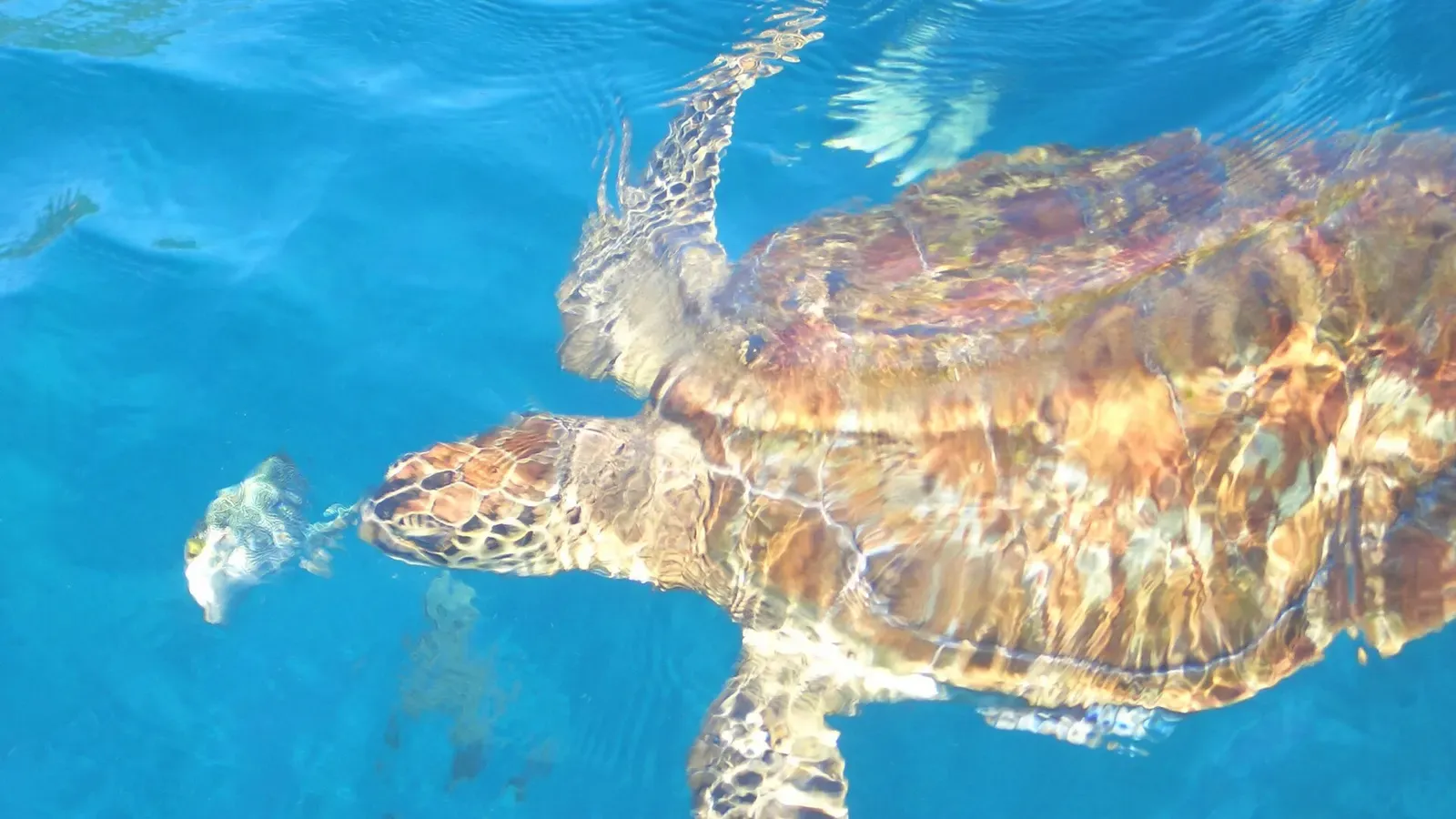
The two coasts make two kinds of dive. The east side has gently sloping coral reefs with sandy patches and the occasional boulder; at Breakfast Bend the reef reaches 18 m before steep banks drop to 34 m. The west side is known for huge granite boulders with numerous swim-throughs, and elsewhere steep drop-offs form walls covered in gorgonian sea fans and wire corals. Green and hawksbill turtles are often seen, Napoleon wrasse turn up at Christmas Point, and bluefin and giant trevally hunt the schools of fusiliers.
The mix suits divers comfortable in current who still want gentle reef dives between the harder sites. Boulder City is exposed and one of the more advanced sites, and currents can be strong at Deep Six, which suits intermediate to advanced divers, while Breakfast Bend suits all levels. Macro fans get frogfish, ribbon eels and nudibranchs at Christmas Point, and octopus and black-spot garden eels at Breakfast Bend.
Best time to dive Similan Islands
| Jan | Feb | Mar | Apr | May | Jun | Jul | Aug | Sep | Oct | Nov | Dec | |
|---|---|---|---|---|---|---|---|---|---|---|---|---|
| Season | Prime | Prime | Prime | Prime | Fair | Off-season | Off-season | Off-season | Off-season | Fair | Good | Prime |
| Sea surface | 29°C84°F | 29°C84°F | 30°C86°F | 30°C86°F | 30°C86°F | 30°C86°F | 29°C84°F | 29°C84°F | 29°C84°F | 29°C84°F | 29°C84°F | 29°C84°F |
| Daytime high | 29°C84°F | 30°C86°F | 30°C86°F | 30°C86°F | 31°C88°F | 30°C86°F | 29°C84°F | 29°C84°F | 29°C84°F | 29°C84°F | 30°C86°F | 29°C84°F |
| Rain | 73 mm2.9 in | 41 mm1.6 in | 87 mm3.4 in | 137 mm5.4 in | 285 mm11.2 in | 261 mm10.3 in | 280 mm11.0 in | 301 mm11.9 in | 332 mm13.1 in | 293 mm11.5 in | 246 mm9.7 in | 157 mm6.2 in |
| Jan | Feb | Mar | Apr | May | Jun |
|---|---|---|---|---|---|
| Prime | Prime | Prime | Prime | Fair | Off-season |
| Sea surface | |||||
| 29°C84°F | 29°C84°F | 30°C86°F | 30°C86°F | 30°C86°F | 30°C86°F |
| Daytime high | |||||
| 29°C84°F | 30°C86°F | 30°C86°F | 30°C86°F | 31°C88°F | 30°C86°F |
| Rain | |||||
| 73 mm2.9 in | 41 mm1.6 in | 87 mm3.4 in | 137 mm5.4 in | 285 mm11.2 in | 261 mm10.3 in |
| Jul | Aug | Sep | Oct | Nov | Dec |
|---|---|---|---|---|---|
| Off-season | Off-season | Off-season | Fair | Good | Prime |
| Sea surface | |||||
| 29°C84°F | 29°C84°F | 29°C84°F | 29°C84°F | 29°C84°F | 29°C84°F |
| Daytime high | |||||
| 29°C84°F | 29°C84°F | 29°C84°F | 29°C84°F | 30°C86°F | 29°C84°F |
| Rain | |||||
| 280 mm11.0 in | 301 mm11.9 in | 332 mm13.1 in | 293 mm11.5 in | 246 mm9.7 in | 157 mm6.2 in |
2011–2025 averages. Sea surface: NOAA Coral Reef Watch, measured at the surface, so deeper water can run colder. Daytime high and rain: NASA POWER.
The national park is closed from mid-May to mid-October, and boats that run trips to the islands in that period are breaking the law. Liveaboards start in early November and run until early May, so November and the first days of May sit at the edges of the season. High season runs from December to April, when the monsoon stays far away, and March brings calm winds and clear water. Currents pick up towards the end of February, which makes drift dives livelier.
Best months: January, February, March, April, December
Similan Islands water temperature and weather by month
The sea surface stays between 29 and 30 °C (84–86 °F) all year. Most rain falls from May to November, peaking at about 330 mm (13 in) in September; January to March are the driest. Daytime highs sit around 30 °C (86 °F) all year. The coldest water here is about 27 °C (81 °F), so pack a 3 mm, or even a 2 mm, suit.
Dive types & marine life
Manta rays and whale sharks are the headline visitors, drawn by the stronger currents that build from late February at exposed sites like Boulder City. Green and hawksbill turtles are often seen and breed from November to February, and big schools of barracuda are seen at Christmas Point.
- Reef
- Coral garden
- Wall
- Pelagic & blue water
- Manta rays
- Whale sharks
- Reef sharks
- Sea turtles
- Napoleon wrasse
- Barracuda
- Trevally & jacks
- Nudibranchs
- Octopus & cuttlefish
Best dive sites in Similan Islands
- 1
Elephant Head Rock
West-side maze of swim-throughs where currents can run in every direction
- 2
Boulder City
Exposed chain of granite boulders where strong currents draw whale sharks and mantas
- 3
Christmas Point
Large rocks and a drop-off where whitetip and blacktip reef sharks are seen
- 4
East of Eden
The best-known east-side site, off Island 7, known for its coral formations
- 5
Breakfast Bend
Easy check-out site, a shallow coral garden sloping to 25 m
Site guides
Reef
A coral-covered rock standing alone on the sand
Wreck
The 27 m liveaboard Atlantis X, bow at 16 m
Reef
Longest reef in the Similans, over 300 coral species
Reef
Big granite blocks with reef sharks and Napoleon wrasse
Coral garden
Morning light on a shallow coral garden off Ko Bangu
Reef
Granite boulder maze of swim-throughs, caverns and morays
Granite arches at the exposed north end of the chain
Drift
Strong-current ridge with soft coral gardens and big boulders
Reef
Shallow bay under the duck-shaped rock, with no current
Violet and blue corals on the site's main bommie
Pinnacle
Granite tunnels and arches between islands 6 and 7
Reef
Shallow coral bay used for snorkelling and night dives
Staghorn coral and garden eels on a long sandy slope
Pinnacle
Unmarked deep pinnacle where mantas and leopard sharks turn up
Soft-coral ridge where mantas pass overhead
Hard-coral slope better known as Leopard Shark Reef
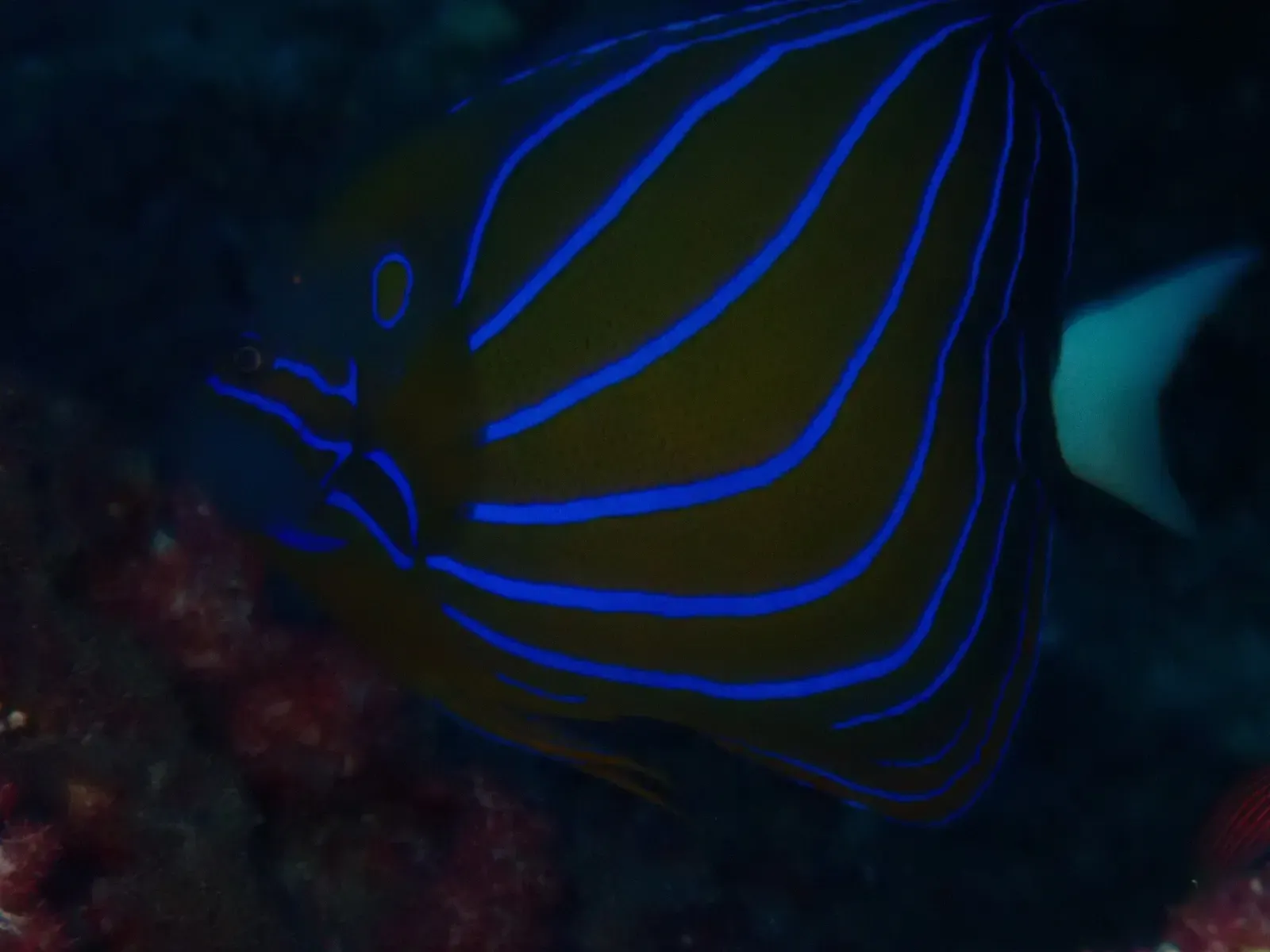
Mantas and a swirling barracuda vortex over a current-swept plateau
Reef
Granite arches and swim-throughs at the top of the chain
Reef
Gently sloping bay reef shared by courses and snorkellers
Reef
Boulder run with gorgonians and a large swim-through
Reef
Huge schools of snapper over large hard-coral tables
Pinnacle
Boulder field from 24 to 36 m with near-constant current
Reef
Morning light on the reef and leopard sharks resting on the sand
Wreck
Park-scuttled fishing boat ringed by schooling batfish
Reef
Canyons between the rocks, gorgonians below 20 m
Reef
Hard-coral slope of staghorn, table and brain corals
Reef
Three huge rocks with coral slopes, quieter than East of Eden
How to get to Similan Islands
Access is mainly through Tab Lamu Port, just south of Khao Lak in Phang Nga Province, and the Khao Lak area sits 76 km north of Phuket International Airport. Liveaboards depart from Tab Lamu, Ko Lanta, Phuket and Ranong; day trips run from Khao Lak and Phuket.
Photos from Similan Islands
KOSIN SUKHUM · CC BY-SA 4.0
KOSIN SUKHUM · CC BY-SA 4.0
KOSIN SUKHUM · CC BY-SA 4.0
Hanumanix · Public domain
Dive videos
Similan Islands Scuba Diving - 2025 (4K) · Zach Johnson on YouTube
Scuba Diving the Similan Islands on a Liveaboard || Whale Sharks & Manta Rays · Stephen Browne Travel on YouTube
Questions divers ask
Is there a park fee for diving the Similan Islands?+
Yes. The national park charges foreigners 500 baht per day, and 300 baht for children.
What certification is needed to dive the Similans?+
Breakfast Bend suits all levels of diver. The pinnacles off the southern tip of Elephant Head Rock can have strong surge and current and are among the more challenging dives in the chain.
How long is the boat ride to the Similan Islands?+
From Tab Lamu the crossing takes around three hours on a standard boat and about 70 minutes by speedboat.
What wetsuit is needed in the Similans?+
The water runs from 27 to 30 °C, so a full wetsuit is often more than needed.
Sources
- Similan Islands dive sites — Dive The World
- Similan Islands — Wikivoyage
- Similan Islands — Wikipedia
- Diving Similan Islands — Divezone
- Similan Divers — PADI
- Sea Dragon Dive Center — Sea Dragon
- Khao Lak — Wikivoyage
Photo credits
- Granite boulders frame a turquoise anchorage bay in the Similan Islands by KOSIN SUKHUM, CC BY-SA 4.0, via Wikimedia Commons
- A sea turtle swims near the surface over a reef at the Similan Islands by Reinhard Link, CC BY-SA 2.0, via Wikimedia Commons
- Smooth granite boulders rise from a shallow reef along a Similan Islands shoreline by KOSIN SUKHUM, CC BY-SA 4.0, via Wikimedia Commons
- Aerial view of a Similan Islands beach with a fringing coral reef visible through clear water by KOSIN SUKHUM, CC BY-SA 4.0, via Wikimedia Commons
- A liveaboard dive boat anchored in calm water near the Similan Islands by Hanumanix, Public domain, via Wikimedia Commons
Embed
Run a dive centre, club or blog? Embed this map of 12 dive sites near Similan Islands on your own page.
In The Logbook
- Where to see reef sharks on your first divesBig animals · 14 min read
- Where to dive in DecemberTrip planning · 10 min read
- Where to dive in every month of the yearTrip planning · 14 min read
- Why do you pee when diving, and tire after?Body & health · 12 min read
- How long should a surface interval be?Body & health · 8 min read
- Cheapest places to scuba dive, and the catchTrip planning · 15 min read
- Where to dive with whale sharks, month by monthBig animals · 16 min read
Similar destinations
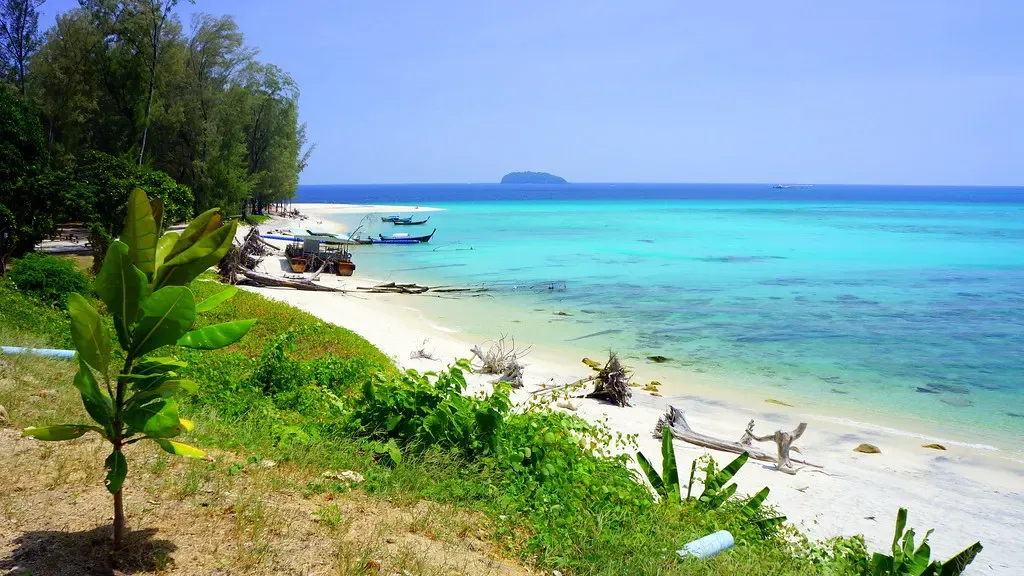
Granite pinnacles and intact park reefs off Thailand's far-southern border

Remote liveaboard-only archipelago with the shark-rich Burma Banks seamount

Sheer purple-coral wall with manta rays and occasional whale sharks

.jpg)


Volcanic gas bubbles through the sand off a current-swept island