Atlantic · Portugal
Berlengas & Peniche
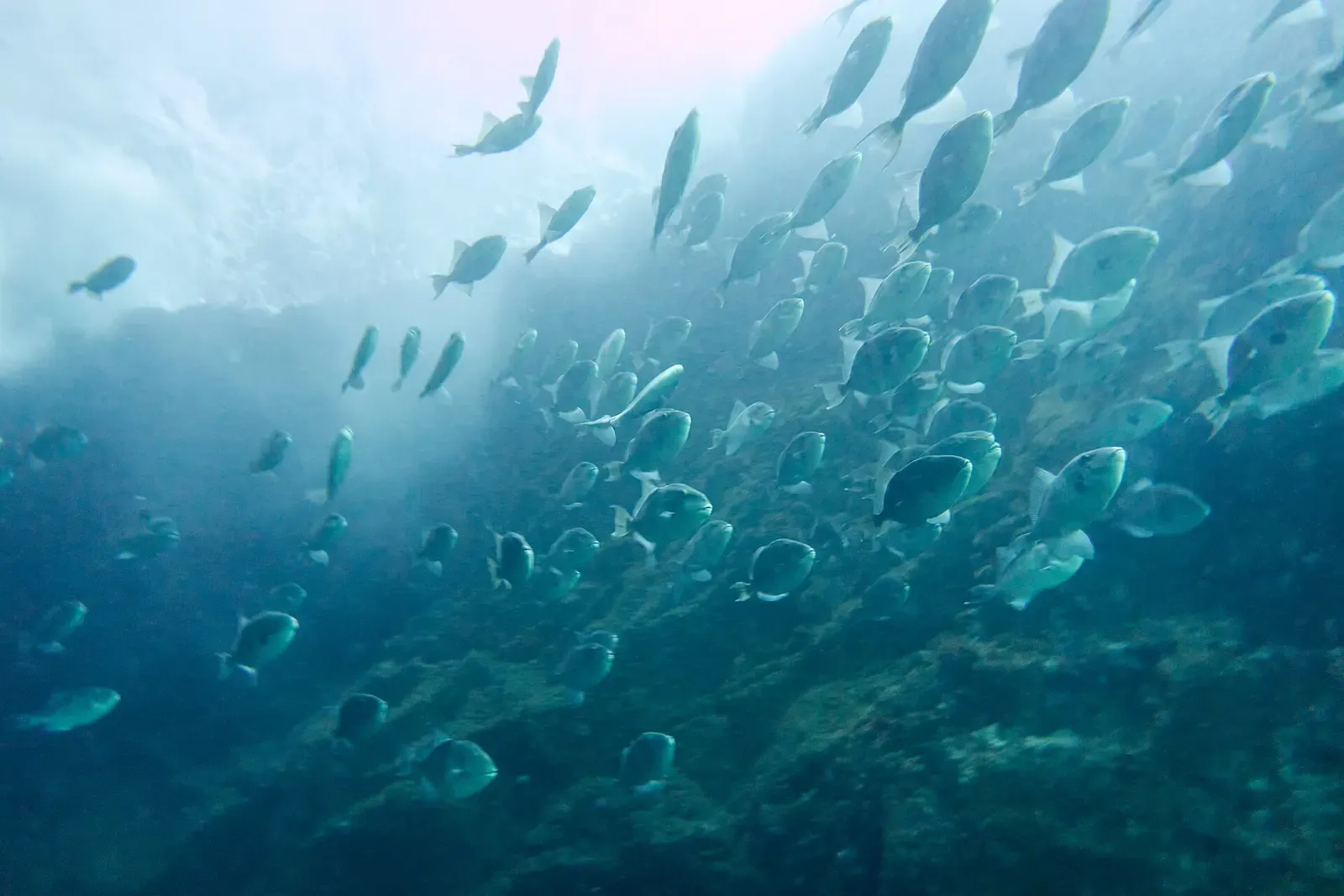
Pink granite caves and tunnels in cold Atlantic swell off Peniche
Photo: Tiago Thedim · CC BY-SA 4.0
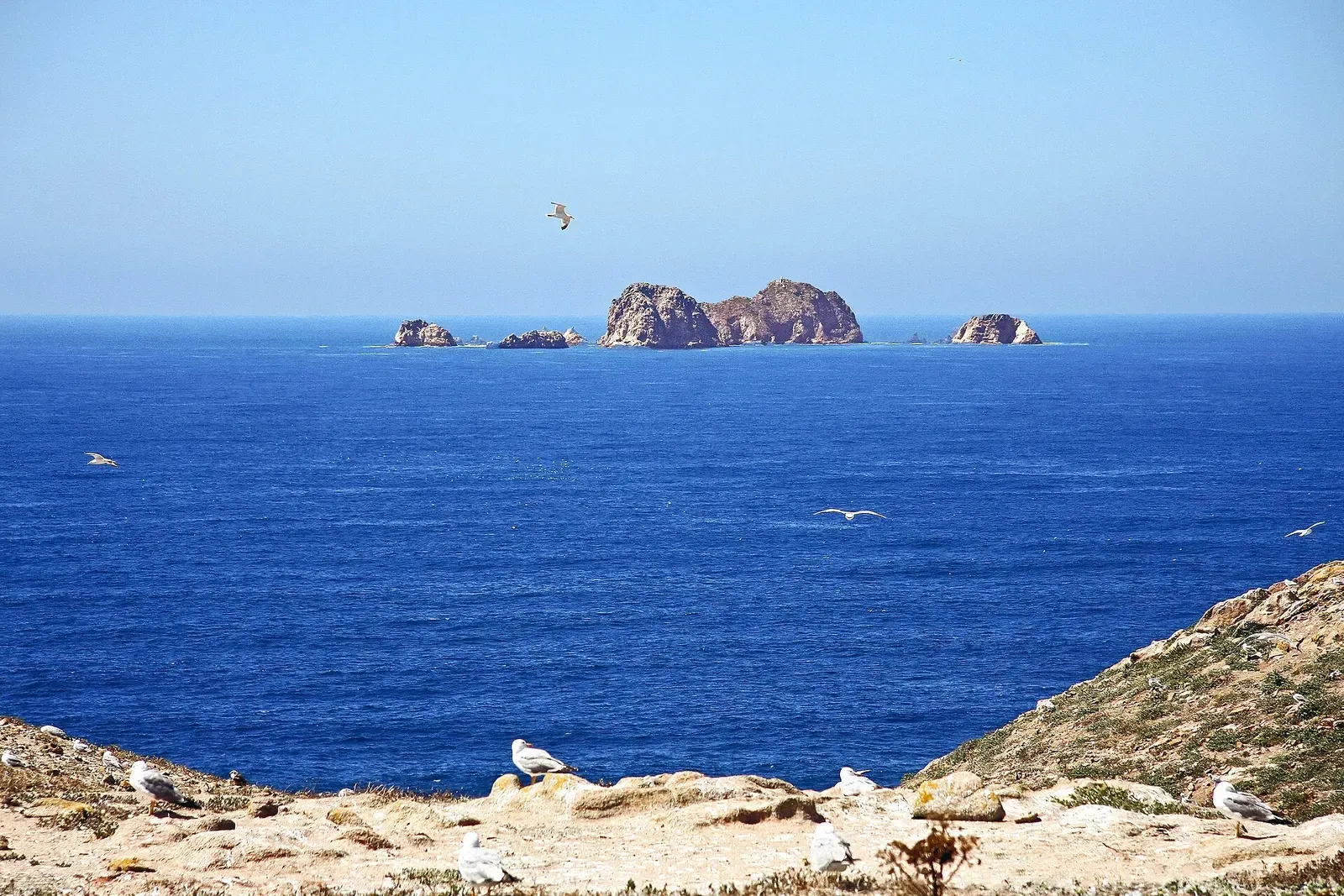
The Berlengas are a granite and gneiss archipelago 10 to 17 km off Peniche, a nature reserve since 1981 and a UNESCO biosphere reserve since 2011. This is cold, exposed Atlantic diving: pink granite cut into caves, tunnels and gullies around Berlenga Grande, and red-gorgonian walls in current on the outer Farilhões, where Parede de Rabo de Asno is the dive everybody wants. Steamers lost between 1902 and 1947 lie around the rocks, from the Primavera to the Riogrande.
About diving in Berlengas & Peniche
Every dive starts in Peniche harbour. The dive boats take about 30 minutes to reach Berlenga Grande and about 45 to the outer Farilhões, and there is no shore diving on the islands, so a day is two boat dives with the surface interval spent ashore on Berlenga Grande. Most of the best sites are exposed, with mild to strong currents, and the crossing can be rough enough that seasickness tablets are worth taking. The call to go is made on the forecast. When the swell is up, the centres fall back on sheltered wrecks such as the Primavera and the Andreos, which can be dived when nothing else can.
Berlenga Grande and the Estelas are pink granite, a rock rare in Europe, broken along fault lines into caves, tunnels and narrow gullies with near-vertical walls; the Furado Grande tunnel runs right through the main island. The Farilhões are different: older banded gneiss rising as sharp peaks from an underwater mountain. Sea caves are the signature habitat. Little light reaches inside, so the walls carry sea fans and tunicates rather than algae, and conger eels use them as nurseries. Outside, red gorgonians cover the walls at Rabo de Asno and Rinchão, and bream, sea bass and amberjacks shoal over the rock.
These rocks have wrecked ships for centuries: monks settled on Berlenga Grande in 1513 partly to help the victims of frequent shipwrecks. A string of steamers now lies around the archipelago, among them the Primavera of 1902, the Andreos of 1926, the Nelson liner Highland Hope, which ran onto Farilhão Grande in fog in 1930 with all 550 aboard rescued, the Henri Mori of 1931 and the Riogrande of 1947. The whole area has been a nature reserve since 1981, covering about 9,560 ha, almost all of it sea, and the reserve's fish life is what the diving rests on.
Conditions sort the divers. The water is cold, the outer rocks carry current, and Rabo de Asno and the deeper wrecks sit near 30 m, where Advanced Open Water is expected. It suits experienced divers at ease in a thick suit, and photographers after cave light and gorgonians. Newer divers still get the sheltered bays, Cova do Sono and Flandres, and the Primavera. Anyone who needs warm water or a guaranteed number of dives should plan spare days or look elsewhere. Sesimbra, on the Arrábida coast south of Lisbon, is the nearest alternative, with a marine park and the River Gurara wreck.
Best time to dive Berlengas & Peniche
| Jan | Feb | Mar | Apr | May | Jun | Jul | Aug | Sep | Oct | Nov | Dec | |
|---|---|---|---|---|---|---|---|---|---|---|---|---|
| Season | Off-season | Off-season | Fair | Fair | Good | Prime | Prime | Prime | Prime | Good | Fair | Off-season |
| Sea surface | 15°C59°F | 14°C57°F | 14°C57°F | 15°C59°F | 16°C61°F | 18°C64°F | 18°C64°F | 19°C66°F | 19°C66°F | 18°C64°F | 17°C63°F | 16°C61°F |
| Daytime high | 17°C63°F | 17°C63°F | 19°C66°F | 21°C70°F | 24°C75°F | 27°C81°F | 27°C81°F | 27°C81°F | 26°C79°F | 25°C77°F | 20°C68°F | 18°C64°F |
| Rain | 79 mm3.1 in | 56 mm2.2 in | 76 mm3.0 in | 73 mm2.9 in | 43 mm1.7 in | 18 mm0.7 in | 5 mm0.2 in | 7 mm0.3 in | 33 mm1.3 in | 82 mm3.2 in | 103 mm4.1 in | 79 mm3.1 in |
| Jan | Feb | Mar | Apr | May | Jun |
|---|---|---|---|---|---|
| Off-season | Off-season | Fair | Fair | Good | Prime |
| Sea surface | |||||
| 15°C59°F | 14°C57°F | 14°C57°F | 15°C59°F | 16°C61°F | 18°C64°F |
| Daytime high | |||||
| 17°C63°F | 17°C63°F | 19°C66°F | 21°C70°F | 24°C75°F | 27°C81°F |
| Rain | |||||
| 79 mm3.1 in | 56 mm2.2 in | 76 mm3.0 in | 73 mm2.9 in | 43 mm1.7 in | 18 mm0.7 in |
| Jul | Aug | Sep | Oct | Nov | Dec |
|---|---|---|---|---|---|
| Prime | Prime | Prime | Good | Fair | Off-season |
| Sea surface | |||||
| 18°C64°F | 19°C66°F | 19°C66°F | 18°C64°F | 17°C63°F | 16°C61°F |
| Daytime high | |||||
| 27°C81°F | 27°C81°F | 26°C79°F | 25°C77°F | 20°C68°F | 18°C64°F |
| Rain | |||||
| 5 mm0.2 in | 7 mm0.3 in | 33 mm1.3 in | 82 mm3.2 in | 103 mm4.1 in | 79 mm3.1 in |
2011–2025 averages. Sea surface: NOAA Coral Reef Watch, measured at the surface, so deeper water can run colder. Daytime high and rain: NASA POWER.
June to October is the high season, when the water runs 16 to 20 °C and a 7 mm wetsuit or a semi-dry suit is the standard. September is the warmest month, at about 19.5 °C on average. Through the summer the north wind, the Nortada, drives an upwelling of colder, nutrient-rich water and brings frequent fog to this coast, so the sea stays cool under hot air and the exposed outer rocks still need a flat forecast. From November to May the water sits near 15 °C, March being the coldest at about 14 °C, and a semi-dry suit or a drysuit is recommended; boats go out on the calmer days. From December to February the sea state allows diving only when it can, so a winter trip needs spare days.
Best months: June, July, August, September
Berlengas & Peniche water temperature and weather by month
The sea surface runs from 14 °C (57 °F) in March to 19 °C (66 °F) in September. Most rain falls from October to April, peaking at about 100 mm (3.9 in) in November; June to August are the driest. Daytime highs reach 27 °C (81 °F) in August and drop to 17 °C (63 °F) in January. The coldest water here is about 14 °C (57 °F), so pack a 7 mm suit with a hood, or a semi-dry.
Dive types & marine life
Sea bream, cow bream and sea bass shoal over the rock, amberjacks work the shallower walls, and conger and moray eels, forkbeards and lobsters hold in the caves. Red gorgonians cover the walls at Rabo de Asno and Rinchão. Sunfish turn up around the wrecks and current points, and pelagics show in summer.
- Reef
- Wall
- Cave & cavern
- Wreck
- Kelp forest
- Octopus & cuttlefish
- Macro critters
- Nudibranchs
- Reef fish swarms
- Groupers
- Mola mola
Best dive sites in Berlengas & Peniche
- 1
Parede de Rabo de Asno
Red-gorgonian wall and cave on the Farilhões at 27 to 32 m, in current; the dive everybody wants here.
- 2
Primavera
Italian steamer lost in 1902, ruins at 16 to 24 m in a sheltered spot; the archipelago's easiest dive.
- 3
Vapor do Trigo (Andreos)
Greek wheat steamer lost in 1926, largely intact at 28 to 30 m and sheltered enough for rough seas.
- 4
Rinchão
Reef head north of Berlenga sloping to 30 m, with red gorgonians, an old steamer's boiler and big fish shoals.
- 5
Highland Hope Wreck
Nelson Line liner driven onto Farilhão Grande in fog in 1930; wreckage at 15 to 22 m, calm seas only.
- 6
Quebradas
Abrupt granite canyons on Berlenga's north-west side at 16 m, with shoaling bream; flat days only.
- 7
Baía do Cerro do Cão
Bay cut by parallel canyons and arches to 25 m beside the rock shaped like a lying dog.
- 8
Cova do Sono
Sheltered bay to 12 m with cave galleries, reached through the Furado Grande tunnel; the simplest dive.
Site guides
Canyons and underwater arches beside a dog-shaped rock
Reef
A platform at 25 m on the north side before the drop to 40 m
Cave & cavern
The archipelago's simplest dive, 6 m average in a sheltered bay
Cave & cavern
Two caves and a wall, with fresh water on the ceiling
Wall of blue and purple gorgonians to 32 m on the outer islets
Reef
Sand, a small cavern and a broken wreck, all inside 15 m
Wreck
Boilers of a 1931 French steamer at 22 m
Wreck
The 1930 Nelson Line liner lost on Farilhão Grande
Red wall of soft coral where the current pulls pelagics in
Wall
Gorgonian wall from 13 m to 35, conger in the cracks
Wreck
The fallback dive of the Berlengas: 1902 steamer ruins at 16–24 m
Reef
Abrupt granite canyons at 16 m on Berlenga's exposed side
Reef
A reef head that breaks at high tide, walls to 32 m
Wreck
A 1947 coal steamer, largely intact from 15 m to 30
A 1901 Greek steamer, still intact at 28–30 m
How to get to Berlengas & Peniche
Lisbon is the nearest airport, roughly 90 km south of Peniche and about an hour and a half by road, with buses running up the coast. Dive centres and their boats work out of the harbour and everything on the islands is boat-only, so most people stay in Peniche or in Baleal next door. Build spare days into the trip for cancellations.
Photos from Berlengas & Peniche
Silas Szwarcberg Cunha · CC BY-SA 4.0
Tiago Thedim · CC BY-SA 4.0
Alexkom000 · CC BY 4.0
Alexkom000 · CC BY 4.0
Dive videos
Mergulho nas Berlengas | Primavera & Cova do Sono | Cinemático · Carlos Delgado on YouTube
Questions divers ask
How cold is the water at the Berlengas?+
Cold for southern Europe: 16 to 20 °C from June to October and about 15 °C from November to May, with March the coldest month. A 7 mm wetsuit or a semi-dry suit is the summer standard, and a semi-dry suit or drysuit the rest of the year.
What certification do I need to dive the Berlengas?+
Open Water covers the sheltered bays and the Primavera wreck. Rabo de Asno, whose cave and wall run to about 32 m, and the deeper wrecks call for Advanced Open Water, and experience with current and cold water matters as much as the card.
How long is the boat ride from Peniche to the Berlengas?+
About 30 minutes to Berlenga Grande and about 45 minutes to the Farilhões, the outer group. Every dive leaves from Peniche harbour, and the crossing can be rough on exposed days, so seasickness tablets are worth packing.
Can I dive the Berlengas in winter?+
Only on calm days. Diving is possible all year, but from December to February the Atlantic swell means boats go only when the sea allows, and the water is around 15 °C. June to October is the reliable season.
Can I stay on Berlenga Grande between dives?+
Yes. The surface interval is usually spent on the island, which has a restaurant and a campsite, and it is possible to spend the night there rather than return to Peniche in the afternoon.
Sources
- Diving in Berlenga — Centro de Portugal Tourism
- Diving Peniche — PADI
- Berlengas — Wikipedia
- Peniche dive centre: the Berlengas Nature Reserve — Haliotis
- Diving — AcuaSubOeste
- Uma visita às Berlengas e Farilhões — Scuba Miguel
- Best Dives in Portugal — Portugal Dive
- Highland Hope Wreck — Portugal Dive
- Peniche Sea Temperature: monthly averages — Sea Temperatures
Photo credits
- A school of triggerfish swims over the rocky seabed in the Berlengas marine reserve by Tiago Thedim, CC BY-SA 4.0, via Wikimedia Commons
- A school of silvery fish swims over a seabed of pink granite pebbles at the Berlengas by Silas Szwarcberg Cunha, CC BY-SA 4.0, via Wikimedia Commons
- A small blenny peers out from red algae on a rock face at the Berlengas by Tiago Thedim, CC BY-SA 4.0, via Wikimedia Commons
- Turquoise water winds between pink granite arches and sea stacks on Berlenga Grande's coast by Alexkom000, CC BY 4.0, via Wikimedia Commons
- Sea caves cut into pink granite cliffs above clear blue water, with small boats offshore by Alexkom000, CC BY 4.0, via Wikimedia Commons
Embed
Run a dive centre, club or blog? Embed this map of 10 dive sites near Berlengas & Peniche on your own page.
In The Logbook
- Sunfish diving: where and when to see a molaBig animals · 11 min read
Similar destinations
Atlantic
Rock walls carpeted in jewel anemones, plus wrecks in the bay
Atlantic
Azores — São Miguel
Portugal
The WWII Liberty ship Dori in 21m, minutes off Ponta Delgada

Around three hundred charted wrecks, most of them shallower than 20 m


.jpg)


Kelp and granite in cold Atlantic water at the mouth of the Ría de Vigo