Costa Brava · Spain · Reef · Night
Mar Menuda
Pre-coralligenous rock from 17 to 30 m, dived day and night
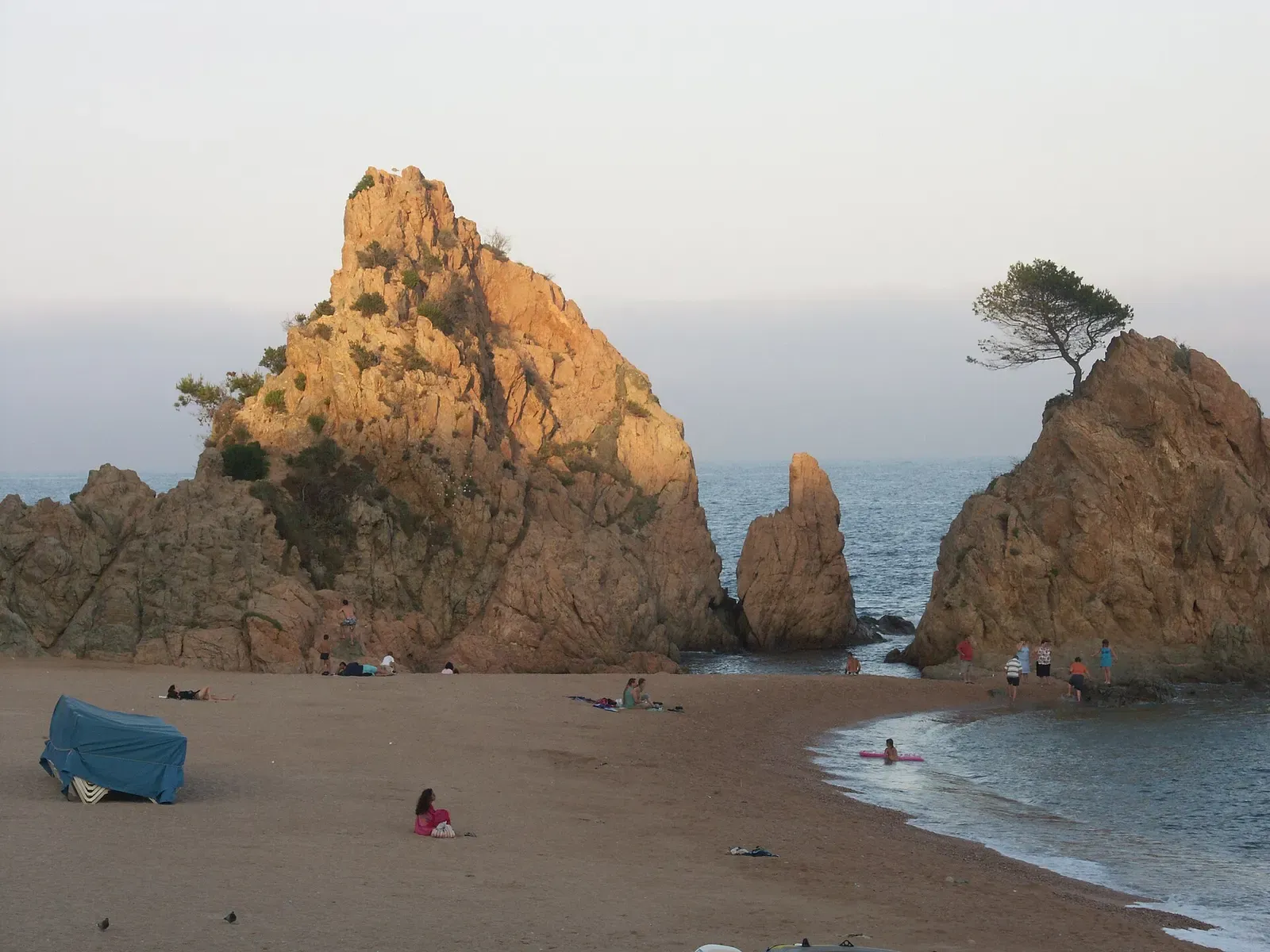
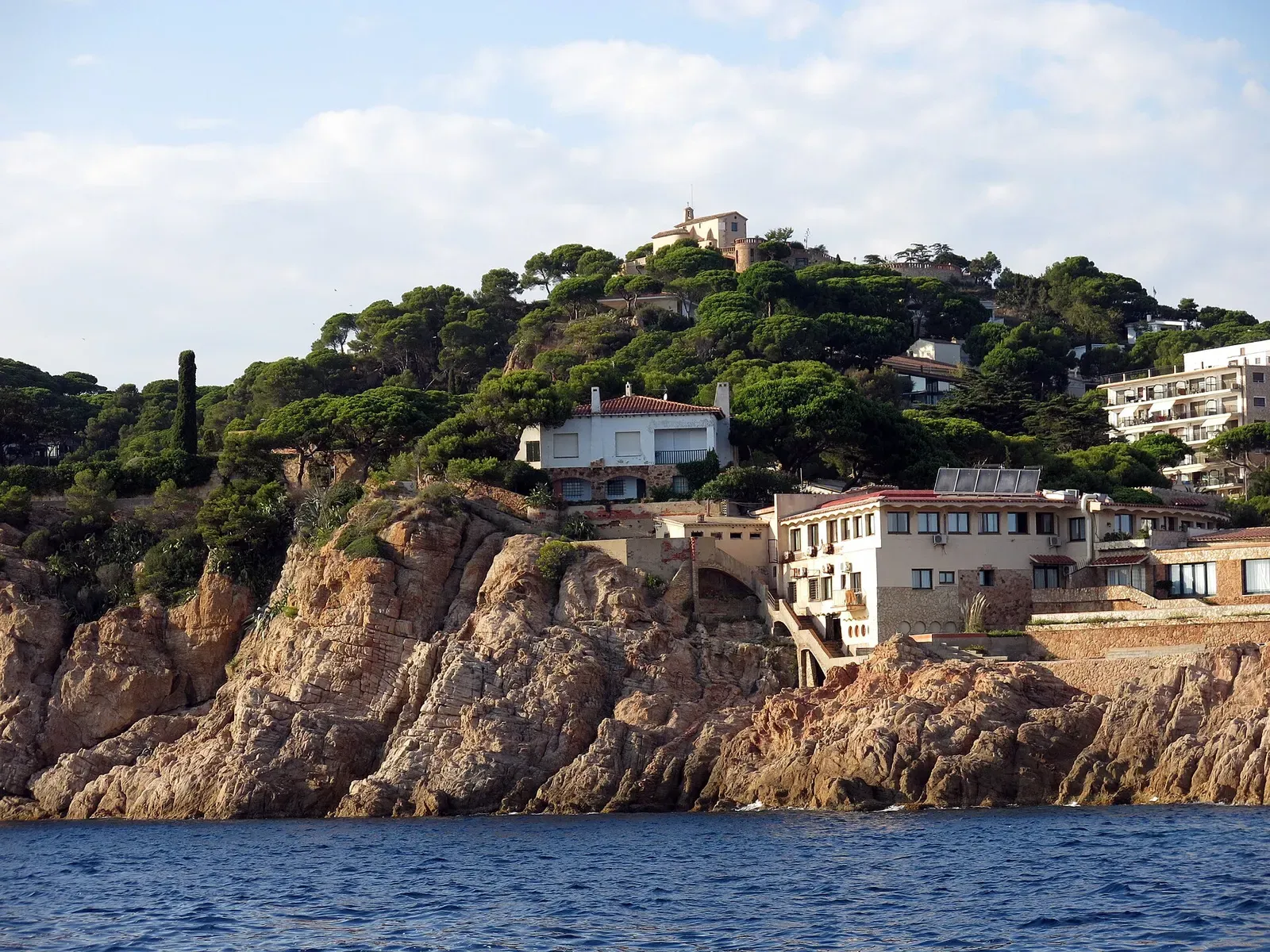
Photo: Shesmax · CC BY-SA 4.0
Mar Menuda is the beach at Tossa de Mar and the name of the diving worked off it, where routes cross pre-coralligenous rock between 17 and 30 metres. Groupers, congers and morays hold the rock while bream and salps pass overhead in schools, and the site is run after dark as well as by day.
Where it is and how deep
41.7212° N, 2.9398° EPublished position for this site.
The dive
There is no single fixed route here. The catalogue describes different itineraries over pre-coralligenous rock running from 17 metres down to 30, so what you dive depends on the centre, the group and the day. The shallower lines sit at the top of that band; the deeper ones take you out over the pre-coralligenous growth that gives the place its character, and that is where the profile ends up closest to a full recreational depth.
The life is the resident Mediterranean set rather than anything passing through. Groupers hold station on the rock, conger and moray eels sit back in the cracks, and seahorses are on the catalogue's list for the site. Schools of bream and salps drift over the top, with damselfish and gobies down among the stone, nudibranchs and flatworms on the rock faces and gorgonians on the pre-coralligenous growth. Rays cross the open ground, and barracuda are listed here too.
Mar Menuda is rated by the catalogue for night dives as well as day dives, and the shape of the site suits that: the departure is from a town beach with a diving centre at the foot of it, the depth band is familiar and the same rock reads differently once the torches are on. Congers and the nudibranchs that are easy to miss in daylight are the reason to come back after dark rather than dive somewhere new.
Marine life and season
- Groupers
- Barracuda
- Nudibranchs
- Reef fish swarms
- Macro critters
| Jan | Feb | Mar | Apr | May | Jun | Jul | Aug | Sep | Oct | Nov | Dec |
|---|---|---|---|---|---|---|---|---|---|---|---|
| Fair | Fair | Fair | Fair | Good | Prime | Prime | Prime | Prime | Good | Fair | Fair |
Season follows Costa Brava: Water holds above 20 °C from June to October and tops out around 25–26 °C in August; winter dives run at 12–14 °C.
Photos from Mar Menuda
Merdaseca · CC BY-SA 3.0
Shesmax · CC BY-SA 4.0
Karsten11 · Public domain
Questions divers ask
How deep is the dive at Mar Menuda?+
Routes over the pre-coralligenous rock run from 17 to 30 metres. The shallow end sits inside a standard recreational profile, while the deeper lines are better suited to a diver with a deep qualification.
Can you night dive at Mar Menuda?+
Yes. The site is rated for both day and night dives, and the Tossa de Mar beach at its foot, with a diving centre on it, makes an after-dark dive straightforward to organise.
Sources
- Mar Menuda - Scubago — Scubago
- Tossa de Mar - Wikivoyage — Wikivoyage
Photo credits
- Rock arch and pinnacle rising from the sand at Mar Menuda beach, Tossa de Mar, lit at sunset. by Shesmax, CC BY-SA 4.0, via Wikimedia Commons
- A pine tree growing atop the reddish rock outcrop at Mar Menuda beach, above a clear cove. by Merdaseca, CC BY-SA 3.0, via Wikimedia Commons
- Wide view of Mar Menuda beach and its rocky headland at Tossa de Mar. by Shesmax, CC BY-SA 4.0, via Wikimedia Commons
- Swimmers and a small sailboat on the sand at Mar Menuda beach, with the rocky point behind. by Karsten11, Public domain, via Wikimedia Commons
More dive sites in Costa Brava
Reef
23 m at the top, 35 m at the bottom, deep ticket required
Beach entry along the jetty to about 7 m
Two route options from a 19 m anchorage down to 24 m
Reef
Low granite at 30 m, half a mile off Sa Palomera
Reef
Rock steps from an 18 m anchorage down to 25 m
Three granite arches on a 12 m shore route
Anchor line into the canyon between two rocks
Pinnacle
Underwater mountain five minutes out of Blanes port
Similar dives elsewhere
A reef from 1.5 to 30 m with a wreck at 40 m beyond, dived day and night
Alicia mirabilis anemones out on the boulders at night
A protected cove at 5–20 m with passages to swim


Old fishing nets turned into a reef, with congers and groupers underneath