North America · United States
Long Island Wreck Valley
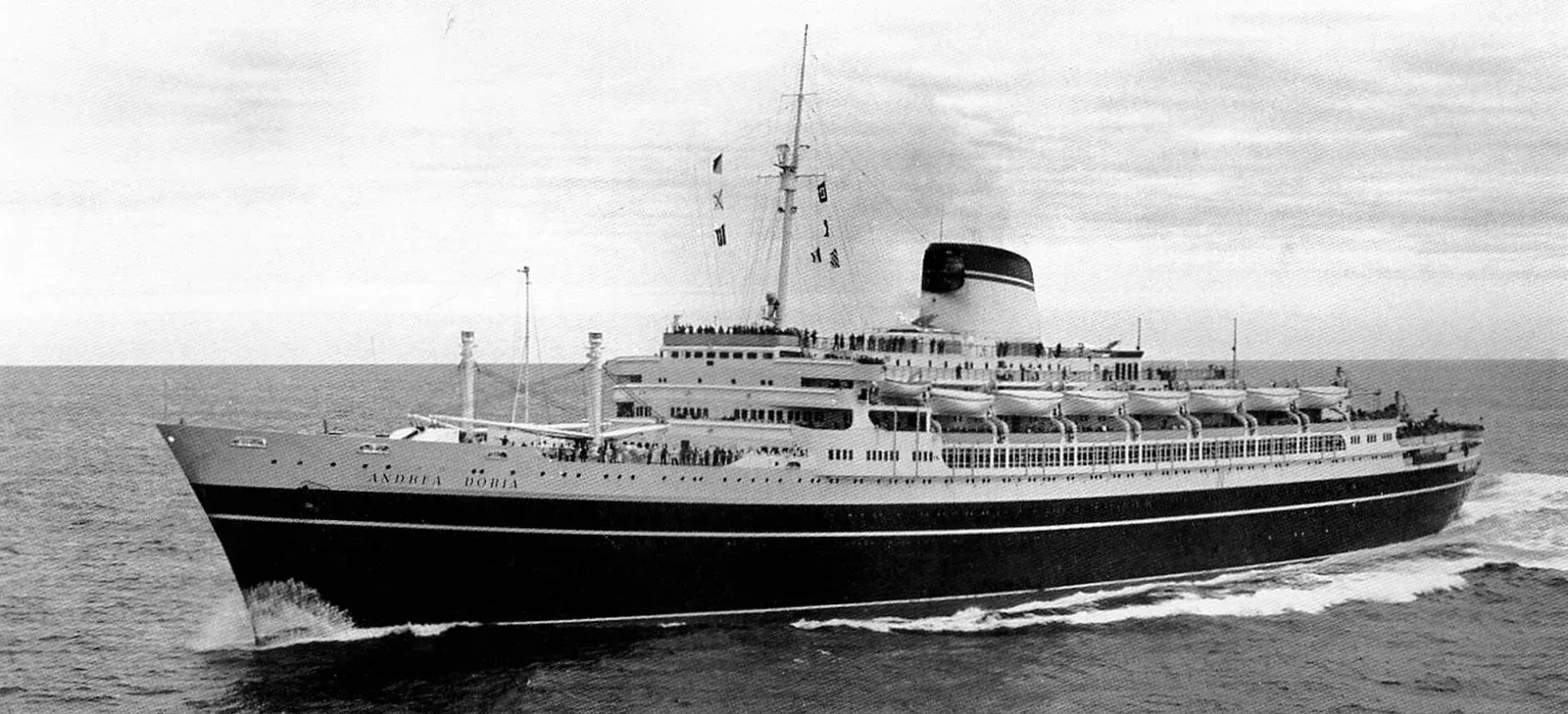
The Andrea Doria, scuba's 'Mount Everest,' lies 100 nm off Montauk in 58-73 m of water
Photo: Unknown photographer · Public domain
South of Long Island and out past Montauk, the Atlantic holds one of the densest and most storied wreck grounds on the U.S. East Coast. At the deep end sits the SS Andrea Doria, the Italian liner lost in a 1956 collision that divers call the 'Mount Everest of scuba diving'; closer to shore lie the mined WWI cruiser USS San Diego and the 1886 liner SS Oregon, both well within recreational trimix range. Every dive here is a boat charter into open Atlantic water, planned around tide and gas.
About diving in Long Island Wreck Valley
Every wreck here is a boat charter into open Atlantic water, and the boat decides more than the diver does. Crews hook the wreck and drop a line, and the shot is the only fixed reference once you are down: current, tide and the state of the Atlantic swell decide whether a trip runs at all, let alone what gets dived once it does. Nothing here is walked to from a beach, and nothing is a liveaboard; it is day-boat diving, sometimes with an overnight steam built into the schedule, out of Long Island's South Shore ports and Montauk.
The Andrea Doria sits apart from everything else on this ground. She is roughly 100 nautical miles offshore, a ten-hour-plus run each way, and every diver going down is on trimix with staged decompression planned before the boat leaves the dock. Currents of two to three knots are routine, sediment can drop visibility to nothing without warning, and old fishing net still drapes sections of the hull. At least 22 divers have died working this wreck since 1956; it is treated as an expedition, not an outing.
USS San Diego and SS Oregon are a different proposition. Both sit within recreational trimix range rather than expedition depth, both are reached on a single-day charter, and both reward divers with real wreck experience rather than years of technical training. San Diego lies inverted with her highest structure at 20 metres; Oregon's engine and boilers stand clear of the collapsed hull at a similar depth. Neither is a first open-water dive, but either is a reasonable next step for a diver who has handled deep, current-swept water before.
None of this ground forgives poor planning. Cold water, real current and gear left behind three hours from the dock have ended more trips here than weather has. Divers who want a guaranteed, scheduled week are in the wrong place: charters here are cancelled for sea state as often as they run, especially early and late in the season, and the paperwork for some of the wrecks has to be sorted before anyone gets wet.
When to dive Long Island Wreck Valley
| Jan | Feb | Mar | Apr | May | Jun | Jul | Aug | Sep | Oct | Nov | Dec |
|---|---|---|---|---|---|---|---|---|---|---|---|
| Off-season | Off-season | Off-season | Fair | Good | Good | Prime | Prime | Prime | Good | Fair | Off-season |
Offshore charters run roughly April through November, picking up from mid-June; winter Atlantic swell, cold and short daylight shut the fleet down from December to March.
Dive types & marine life
The wrecks themselves are bare steel and mussel shell rather than reef life. What draws people offshore in summer is pelagic: mako and blue sharks, ocean sunfish, dolphins and sea turtles all show up on the same Gulf Stream water that warms the wreck season, and Montauk boats run dedicated trips for them alongside the wreck charters.
- Wreck
- Drift
- Blue & mako sharks
- Mola mola
- Dolphins
- Sea turtles
Notable dive sites in Long Island Wreck Valley
Wreck
Keel timbers of a 1776 ship of the line, 46 m off the beach in 3 m of water
Wreck
Called the 'Mount Everest of scuba diving' since a 1983 televised expedition
Wreck
Held the transatlantic speed record in 1884; her engine still stands clear of the wreck
Wreck
Nicknamed the 'Lobster Hotel,' the only major U.S. warship lost in WWI
Getting there
Long Island MacArthur Airport (Islip) is closest to the charter docks; most flyers use JFK or LaGuardia and drive two to three hours east. Boats leave from Montauk, Freeport and other South Shore ports; there is no shore diving and no liveaboard on this ground.
Photos from Long Island Wreck Valley
Harry A. Trask · Public domain
National Photo Company · Public domain
Nathaniel Currier and James Merritt Ives · Public domain
Photo credits
- The Italian ocean liner SS Andrea Doria steaming at sea, passengers lining her open decks. by Unknown photographer, Public domain, via Wikimedia Commons
- Aerial view of the Andrea Doria capsized and half-submerged, listing hard with debris scattered on the water. by Harry A. Trask, Public domain, via Wikimedia Commons
- The armoured cruiser USS San Diego at anchor, her four tall funnels and cage mast visible against open water. by National Photo Company, Public domain, via Wikimedia Commons
- A color print of the four-masted steamship Oregon under sail and steam, cutting through green ocean swells. by Nathaniel Currier and James Merritt Ives, Public domain, via Wikimedia Commons
In The Logbook
- How a rebreather works, and what it buys youGear & kit · 6 min read
- How deep can you actually dive?Body & health · 13 min read
- The oxygen clock: why 1.4 is the numberBody & health · 13 min read
Similar destinations
North America
North Carolina Wrecks
United States
Sand tiger sharks aggregate around WWII wrecks in the Graveyard of the Atlantic.

A recovered coral reef with dense jack schools and seasonal bull sharks.

Warm shallow reefs and famous wrecks a short boat run from Key Largo and Islamorada


-_Currier%26Ives_(1883).jpg)
A 159 m missile-tracking ship sunk off Key West, 12 m on top and 45 m at the sand