
Atlantic · Portugal
Madeira
Boulder swim-throughs at Garajau, monk seals and mantas off the Desertas
Photo: Alberto-g-rovi · CC BY 3.0
Madeira's diving centers on the Garajau Marine Reserve, a sheltered bay of huge volcanic boulders and swim-throughs on the south coast near Funchal, where grouper, moray eels, amberjack, and octopus turn up on nearly every dive. Further offshore, the uninhabited Desertas Islands offer permit-only trips to pristine volcanic walls, the world's largest colony of endangered Mediterranean monk seals, and Atlantic manta rays that visit from June to October. Visibility is consistently good and the water stays mild year-round.
About diving in Madeira
Most divers base in Funchal or in Caniço de Baixo just along the coast, and the diving tends to fit around the rest of the island rather than dominate the day. Boat runs are short, the usual shape being two dives in a morning from a small harbour with the afternoon free. Shore entries are the local habit but they are not soft ones: the beaches are steep, rounded volcanic cobbles that shift underfoot, so centres run trolleys, and getting in and out cleanly in any swell is the real skill.
Madeira is a steep-sided island and the ground underwater behaves the same way, shelving off quickly so that useful depth sits close to the entry. The south-coast boulders run to the size of cars, piled into gullies and overhangs with sand patches between them and encrusting growth rather than coral on the stone; the Garajau reserve has been closed to fishing since the 1980s, which is why the grouper there ignore divers. Sites shelter or expose depending on which side of a headland they sit, and the north coast takes the prevailing swell and is dived far less often.
The offshore day is a different proposition from the coastal diving: a long, exposed crossing to the Desertas, permits arranged in advance, only a few operators running it and a settled forecast needed, so it is worth booking with slack around it. A separate option is Porto Santo, a couple of hours away by ferry, where a sand seabed and two purposely scuttled ships, a retired ferry and a decommissioned naval corvette, give the archipelago its wreck diving, often in clearer water than the main island.
It suits divers travelling with people who do not dive, and divers who want the diving to be one thread of a week that also takes in levada walks and mountain weather. The site list is not long, though: anyone planning three dives a day for a fortnight will run through it, and repeat visits tend to be about conditions rather than new ground. Winter trips are still worth taking, but settled days are fewer and the water is at its coolest.
Best time to dive Madeira
| Jan | Feb | Mar | Apr | May | Jun | Jul | Aug | Sep | Oct | Nov | Dec | |
|---|---|---|---|---|---|---|---|---|---|---|---|---|
| Season | Fair | Fair | Fair | Good | Good | Prime | Prime | Prime | Prime | Good | Fair | Fair |
| Sea surface | 19°C66°F | 19°C66°F | 18°C64°F | 19°C66°F | 20°C68°F | 21°C70°F | 23°C73°F | 24°C75°F | 24°C75°F | 23°C73°F | 22°C72°F | 20°C68°F |
| Daytime high | 20°C68°F | 19°C66°F | 20°C68°F | 21°C70°F | 22°C72°F | 24°C75°F | 25°C77°F | 26°C79°F | 26°C79°F | 25°C77°F | 23°C73°F | 21°C70°F |
| Rain | 30 mm1.2 in | 26 mm1.0 in | 26 mm1.0 in | 21 mm0.8 in | 17 mm0.7 in | 9 mm0.4 in | 5 mm0.2 in | 9 mm0.4 in | 15 mm0.6 in | 41 mm1.6 in | 42 mm1.7 in | 46 mm1.8 in |
| Jan | Feb | Mar | Apr | May | Jun |
|---|---|---|---|---|---|
| Fair | Fair | Fair | Good | Good | Prime |
| Sea surface | |||||
| 19°C66°F | 19°C66°F | 18°C64°F | 19°C66°F | 20°C68°F | 21°C70°F |
| Daytime high | |||||
| 20°C68°F | 19°C66°F | 20°C68°F | 21°C70°F | 22°C72°F | 24°C75°F |
| Rain | |||||
| 30 mm1.2 in | 26 mm1.0 in | 26 mm1.0 in | 21 mm0.8 in | 17 mm0.7 in | 9 mm0.4 in |
| Jul | Aug | Sep | Oct | Nov | Dec |
|---|---|---|---|---|---|
| Prime | Prime | Prime | Good | Fair | Fair |
| Sea surface | |||||
| 23°C73°F | 24°C75°F | 24°C75°F | 23°C73°F | 22°C72°F | 20°C68°F |
| Daytime high | |||||
| 25°C77°F | 26°C79°F | 26°C79°F | 25°C77°F | 23°C73°F | 21°C70°F |
| Rain | |||||
| 5 mm0.2 in | 9 mm0.4 in | 15 mm0.6 in | 41 mm1.6 in | 42 mm1.7 in | 46 mm1.8 in |
2011–2025 averages. Sea surface: NOAA Coral Reef Watch, measured at the surface, so deeper water can run colder. Daytime high and rain: NASA POWER.
Jun–Sep brings the warmest water and best odds of manta rays around the Desertas; diving continues year-round but cooler and rougher in winter.
Best months: June, July, August, September
Madeira water temperature and weather by month
The sea surface runs from 18 °C (64 °F) in March to 24 °C (75 °F) in September. It is 24 °C (75 °F) or warmer from August and September. Most rain falls from October to March, peaking at about 50 mm (2 in) in December; June to August are the driest. Daytime highs reach 26 °C (79 °F) in August and drop to 19 °C (66 °F) in February. The coldest water here is about 18 °C (64 °F), so pack a 5 mm suit.
Dive types & marine life
The reserve's draw is residents rather than passage: grouper and morays hold territory on the same boulders, and octopus turn up for anyone looking into cracks. Amberjack and barracuda arrive in bigger numbers as the water warms. Mantas are the reason to cross to the Desertas, a summer-into-October possibility rather than a fixture, and monk seals live out there but are rarely seen by divers.
- Reef
- Wall
- Cave & cavern
- Manta rays
- Groupers
- Barracuda
- Trevally & jacks
- Octopus & cuttlefish
Best dive sites in Madeira
Reef
Amphitheatre reef in the underwater park, 10–24 m
Reef
Volcanic caves and coral blocks inside 18 metres
Reef
An entrance at 8 metres, an exit at 18
Pinnacle
A 3-metre peak that drops to 35 on sand
Reef
Three minutes from Santa Cruz to 25-metre rock
Steps at the Lido to a 5-to-18-metre fall
Pinnacle
Twin volcanic pinnacles from 30 m up to 12 m
Wall
A wall that reaches the surface, sloping to 25 m
Cave & cavern
A tunnel in at 8 metres, out at 18
Easy 2-metre entry, small wreck off the point
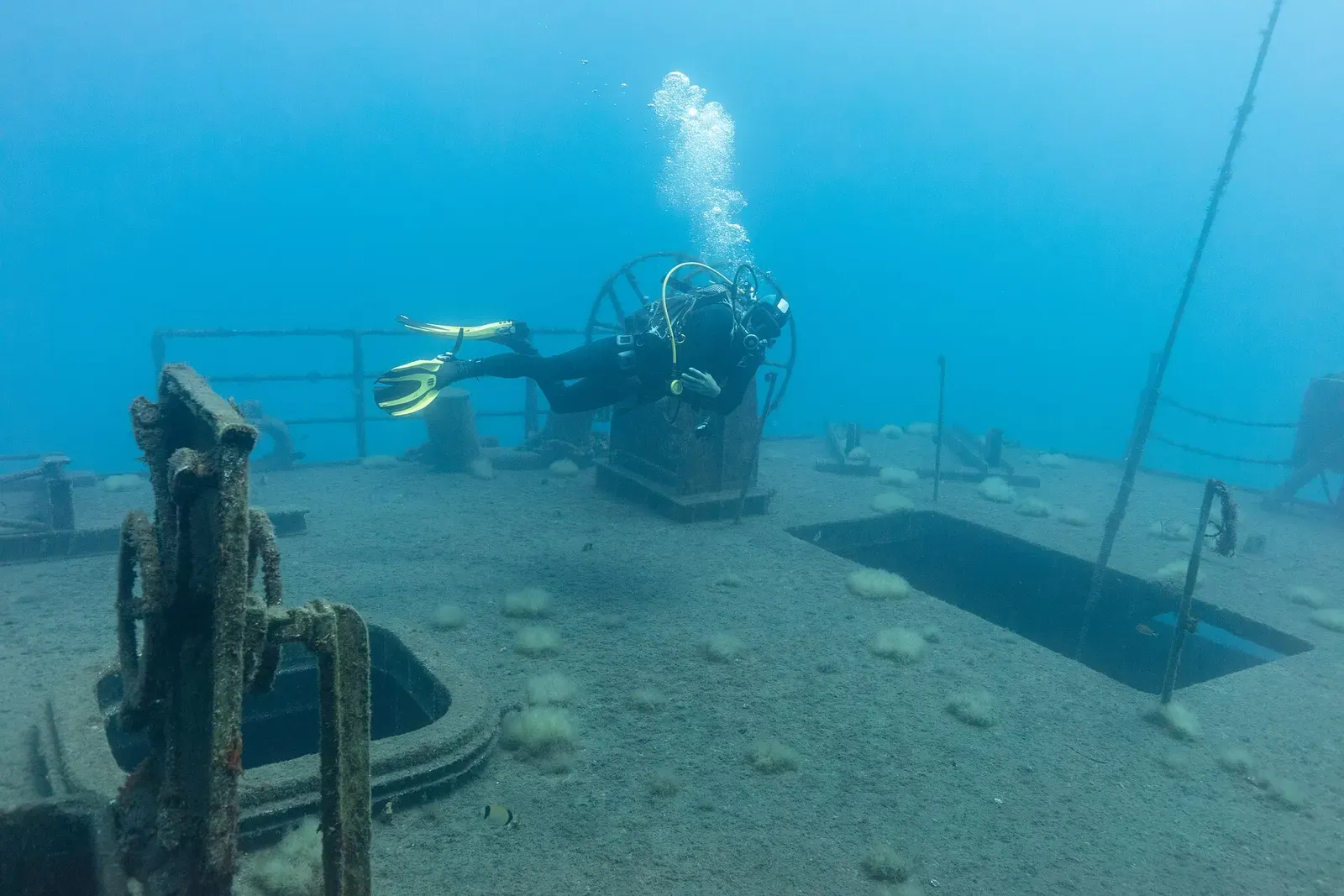
An 85 m navy corvette sunk as a reef at 30 m
Praia do Garajau
Marine reserve shore entry over volcanic boulders
Pináculo
Namesake pinnacle of its own small special conservation zone
Desertas Islands
Permit-only nature reserve islands with resident Mediterranean monk seals
How to get to Madeira
Madeira's airport above Santa Cruz takes direct flights from across Europe and sits a short drive from Funchal. Divers base in Funchal or Caniço de Baixo, where centres are attached to seafront hotels; coastal diving is short boat runs and shore entries, while the Desertas are a full-day trip booked ahead.
Photos from Madeira
Alberto-g-rovi · CC BY 3.0
Dive videos
Scuba Diving Madeira - Reis Magos & Marine Reserve Garajau (2016) · Frank Ullrichskötter on YouTube
Scuba Diving @ Madeira Island - Garajau Nature Reserve - Mero Diving Center 12 07 2022 · Sergio Toscano on YouTube
Photo credits
- Open Atlantic water leads to Funchal's harbour and hillside town beneath clear skies by Alberto-g-rovi, CC BY 3.0, via Wikimedia Commons
- Funchal's amphitheatre of white buildings climbs the green hillside above its seafront and breakwater by Alberto-g-rovi, CC BY 3.0, via Wikimedia Commons
Embed
Run a dive centre, club or blog? Embed this map of 11 dive sites near Madeira on your own page.
In The Logbook
- Ships sunk on purpose, and where to dive themWrecks · 14 min read
- Frogfish: species, behaviour and where to diveMacro & muck · 12 min read
Similar destinations
Atlantic
Azores — São Miguel
Portugal
The WWII Liberty ship Dori in 21m, minutes off Ponta Delgada

Around three hundred charted wrecks, most of them shallower than 20 m
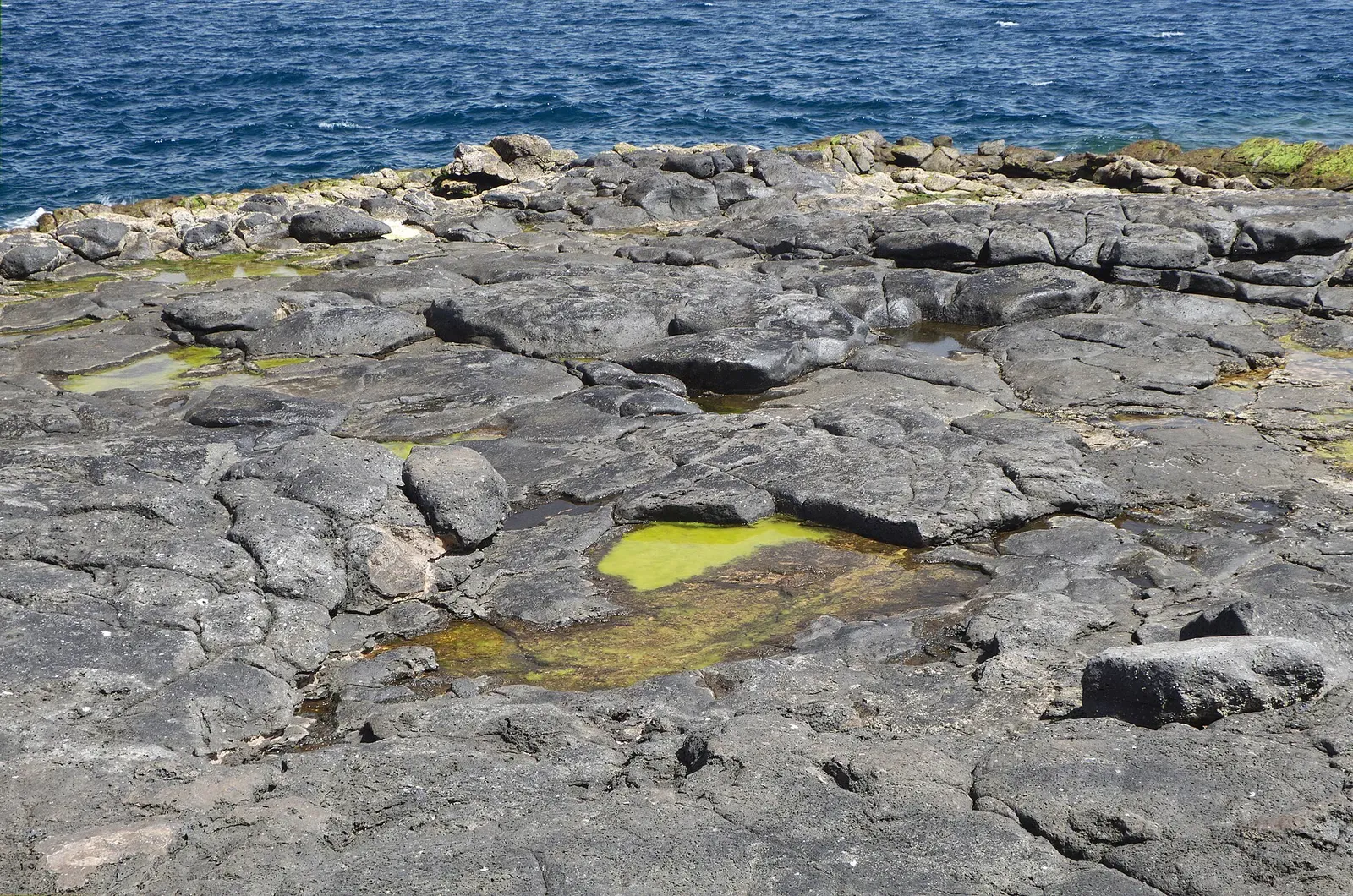
A 1.5 km volcanic reef stepping from 7 m to past 40 m off Caleta de Fuste
.jpg)
.jpg)
Fish-packed volcanic labyrinths in one of Europe’s largest marine reserves