Mediterranean · Greece
Rhodes
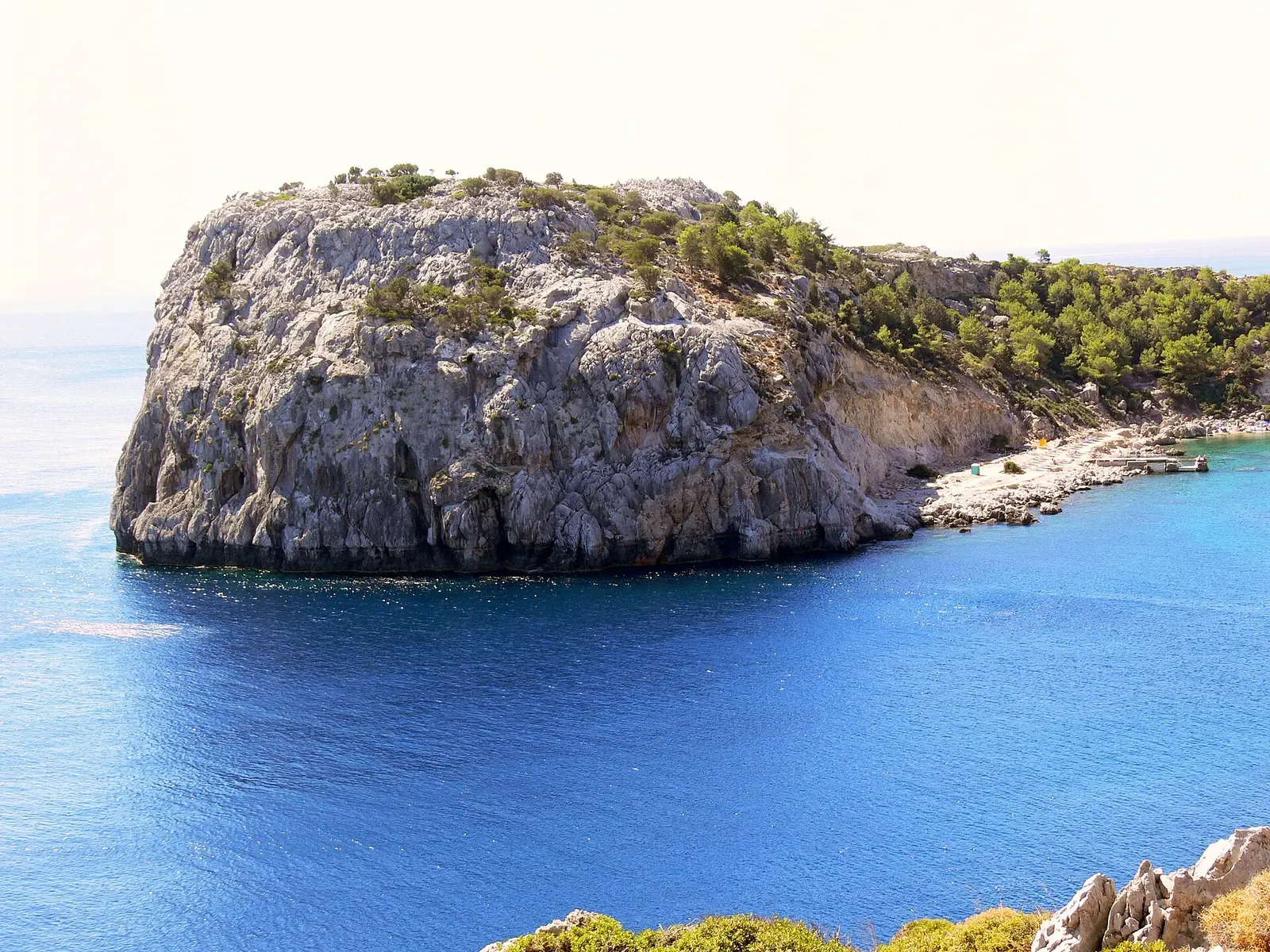
Shore-entry walls and caverns at Ladiko and Anthony Quinn Bay, amphora on the seabed
Photo: PawełMM · CC BY-SA 4.0
Rhodes is the Dodecanese's main dive island, worked from centres in Rhodes Town, Kolymbia and Pefkos. Most of it is shore diving on the north-east coast: the wall at Kallithea Bay from 10 to 22 m, the twin walls at Ladiko from 6 to 30 m with ancient amphora scattered on the seabed, and the Cave of the Seal at Anthony Quinn Bay to 30 m and beyond. Boats add Paola Cavern at the foot of a drop-off and the Kamiros wreck on the west coast at 15 m, and Psaropoula is dived as an open-water drift.
About diving in Rhodes
Rhodes is unusual among Greek islands in that most of its diving is done from the beach. The house reefs at Kallithea, Ladiko and Anthony Quinn Bay are walk-ins on the north-east coast, a short drive from the centres in Rhodes Town, Kolymbia and Pefkos, so a day is two shore dives on nearby bays rather than a boat crossing. Waterhoppers, the island's PADI 5 Star IDC centre, works from all three towns; Trident Diving School runs from Rhodes Town, takes boats along the coast and teaches through to technical diving. Boat days go to the west-coast Kamiros wreck, which is advanced-only and depends on the weather; Psaropoula, off Rhodes Town, is dived as a drift.
The island's bedrock is limestone and the terrain underwater is walls and caverns. Ladiko Wall South starts at 6 m and drops to 30 m, and Ladiko Wall North is arranged between 24 and 30 m; Kallithea Bay's wall runs from 10 to 22 m. The Cave of the Seal at Anthony Quinn Bay is a marine cave that opens onto a deep reef past 30 m. Paola Cavern sits at the end of a steep drop-off, with a light display at its deepest point. Ancient amphora and pottery lie on the seabed at Ladiko and Anthony Quinn Bay. Lionfish have arrived from the Red Sea, and the fish list runs to grouper, octopus, cuttlefish, squid, seahorses and pipefish, with tuna and barracuda passing Psaropoula and Plimiri.
Ghost Net, a fishing net lying on a wall from 18 m up to 3 m, and Anchor Forest, a dumping ground of lost anchors, are named sites with entanglement hazards. Current runs just outside the bays and changes often, and Kolymbia harbour and the Tsambika amphitheatre are windy and choppy enough that they are not offered to beginners. Greek antiquities law reaches these waters: survey and photography dives on shipwrecks and other architectural remains need permission from the Ephorate of Underwater Antiquities. Whether that touches an ordinary recreational dive over the Ladiko amphora is not settled by the sources here; the centre's briefing is the reference and nothing on the seabed gets handled.
It suits divers who want shore entries and long bottom times on walls without a boat, and Open Water divers, for whom Ladiko Wall South and the house reefs are within reach. Advanced Open Water opens Ladiko Wall North, Paola Cavern and Ghost Net, and technical divers have the 80 m wall at Psaropoula. Anyone after wrecks should look elsewhere: the Kamiros vessel is a 15 m storm casualty and the island has no marquee steel. Crete offers caves and a WWII fighter, and Paros and Naxos have two wrecks in the strait between them.
When to dive Rhodes
| Jan | Feb | Mar | Apr | May | Jun | Jul | Aug | Sep | Oct | Nov | Dec |
|---|---|---|---|---|---|---|---|---|---|---|---|
| Fair | Fair | Fair | Fair | Good | Prime | Prime | Prime | Prime | Good | Fair | Fair |
May to October is the season, peaking July to September; centres still run in October, charter flights stop after October, and very little is dived from November to March.
Dive types & marine life
Rock and cavern life: grouper, octopus, cuttlefish, squid, squat lobsters, seahorses and pipefish at Kallithea Bay, with migrating tuna, sea bass, lobster and barracuda off Psaropoula and Plimiri, and turtles at Plimiri. Waterhoppers lists amberjacks, stingrays and monk seals as lucky sightings; count on the small stuff and treat the rest as a bonus. Invasive lionfish are present at several sites.
- Wall
- Cave & cavern
- Reef
- Wreck
- Drift
- Groupers
- Octopus & cuttlefish
- Squid
- Macro critters
- Barracuda
- Tuna
- Sea turtles
Notable dive sites in Rhodes
Reef
A seabed installation of lost boat anchors, 18 m maximum
A marine cave to 19 m opening onto a reef that drops past 30 m
Reef
A statue of Eros on a reef of cavities and a steep drop-off
Wall
An abandoned fishing net at the foot of a wall from 18 m to 3 m
Reef
The entry-level reef dive: 18 m and a surprise ending
Reef
Cavern formations in a shallow bay, 10 to 22 m
Flat reef, drop-off and wall in one 18 m dive
A stiff wall and a deeper reef cut with cavities, arranged to 24 or 30 m
A stiff wall from 6 m to 30 m with an Open Water minimum
Reef
A reef tour ending at a spot full of lionfish, 18 m maximum
Ladiko Wall
Two wall dives, north and south, from 6 to 30 m, plus a shallow cove; amphora and pottery on the bottom.
Paola Cavern
Cavern at the foot of a steep drop-off; penetration for experienced divers, Advanced Open Water minimum.
Psaropoula
Open water with no caves or tangles, dived as a drift from 10 m; the wall continues to 80 m for technical divers.
Getting there
Diagoras International Airport (RHO) is 14 km south-west of Rhodes Town at Paradisi. Dive centres are in Rhodes Town, Kolymbia and Pefkos, all on the east coast, with the main shore sites at Kallithea, Ladiko and Anthony Quinn Bay between the first two. Ferries also run to Marmaris and Fethiye in Turkey.
Photos from Rhodes
Ferengi · CC BY-SA 3.0
Ferengi · CC BY-SA 3.0
Photo credits
- Rocky pine-covered headland sheltering the turquoise cove of Anthony Quinn Bay by PawełMM, CC BY-SA 4.0, via Wikimedia Commons
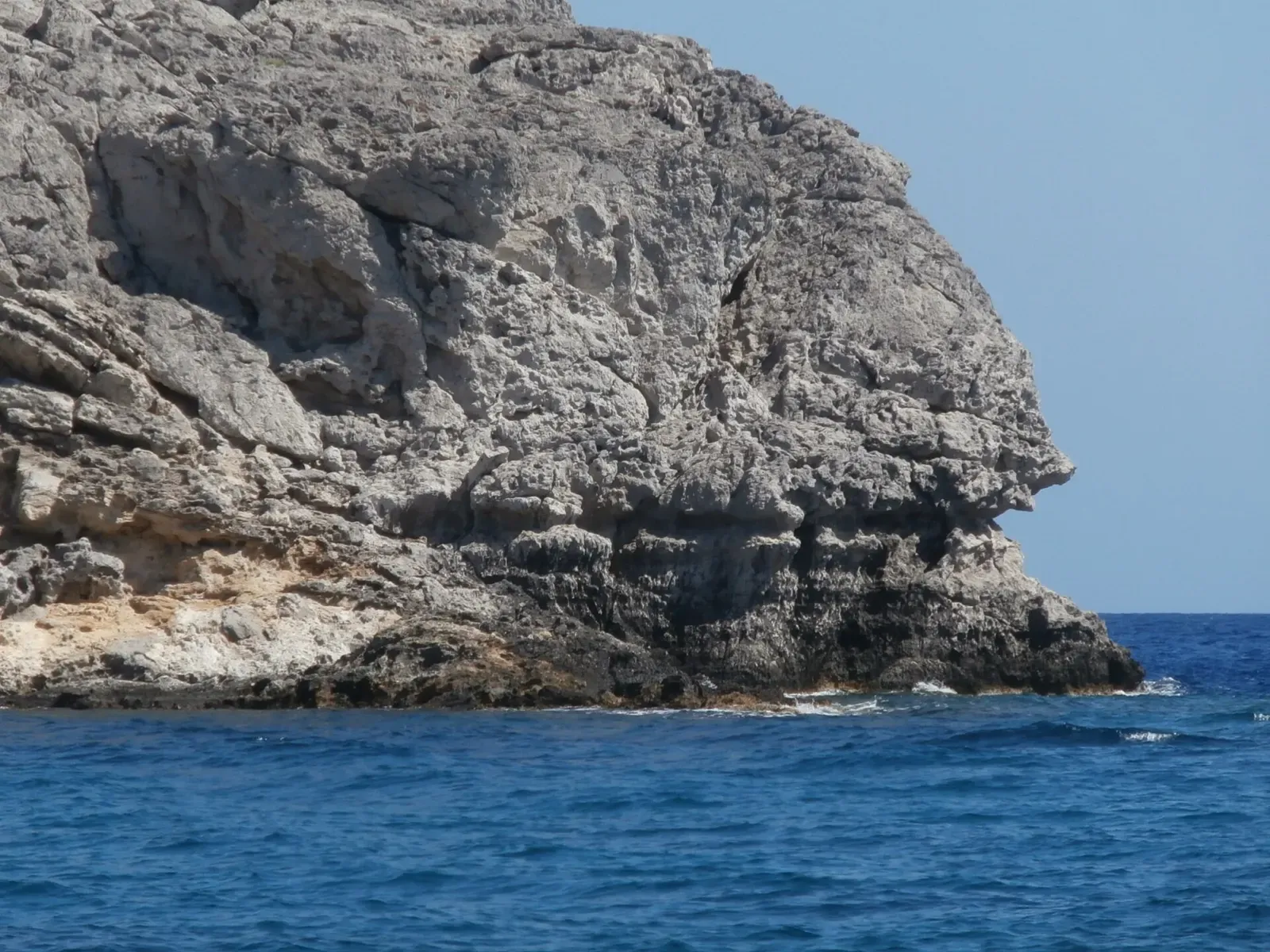
- Aerial view of Anthony Quinn Bay's rocky cove with boats anchored in clear water by Ferengi, CC BY-SA 3.0, via Wikimedia Commons
- Cliffside view over Anthony Quinn Bay's turquoise water toward the open sea by Ferengi, CC BY-SA 3.0, via Wikimedia Commons
Similar destinations

Granite seamounts rising to the surface off Sardinia's south-east corner

A hot spring vents into the sea off Karaada's caves
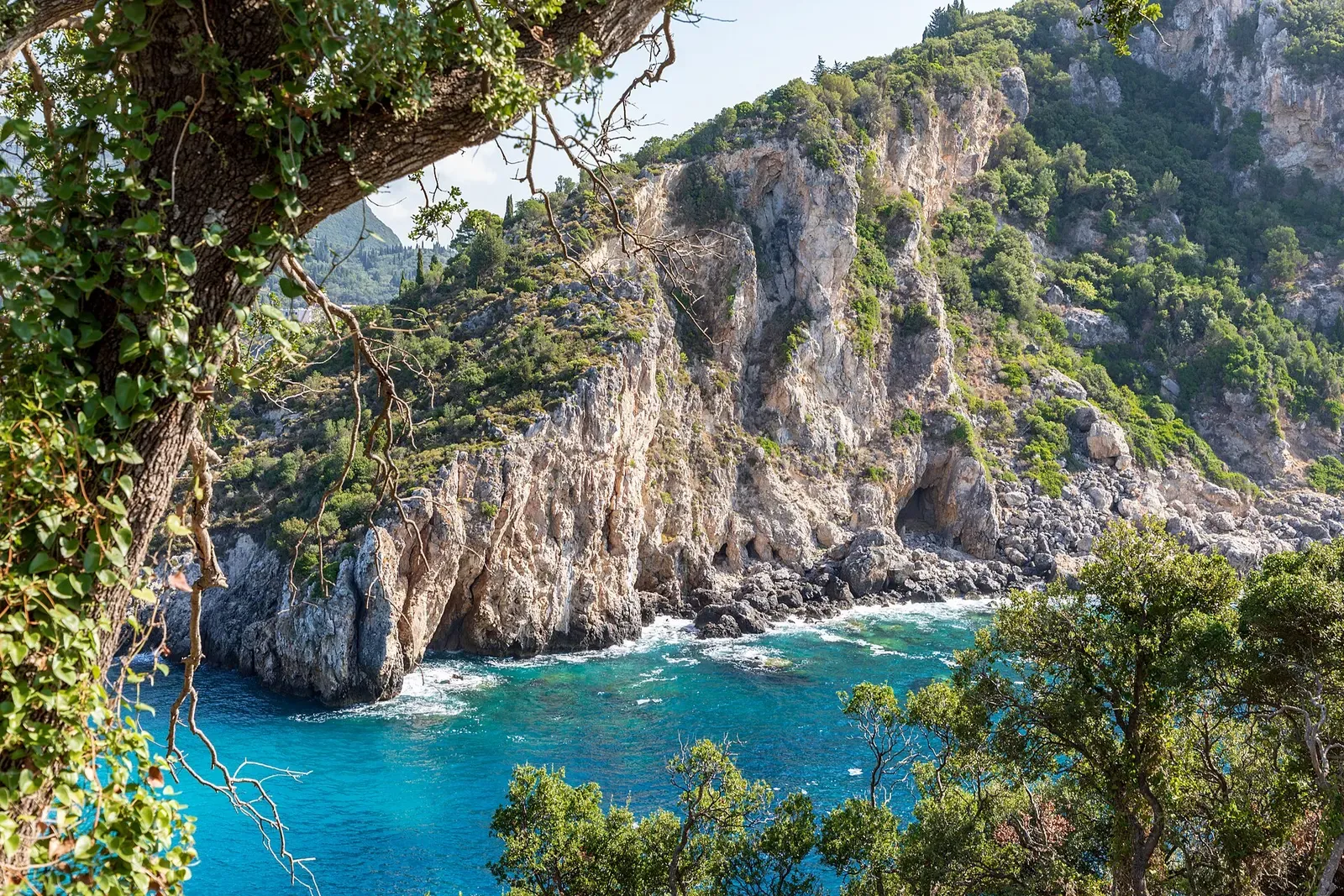
A cluster of cavern dives at Paleokastritsa, wrecks and reefs off the north-east coast


A sunken DC-3 and a replica Bronze Age ship on the Lycian coast