Indian Ocean · Seychelles
Seychelles — Inner Islands
Granite boulders stack into swim-throughs found nowhere else in the ocean
The granite coast and outlying rocks of Mahé give Seychelles diving a look unlike anywhere else in the Indian Ocean: giant round boulders stacked underwater into swim-throughs and overhangs, carpeted with soft coral and sponges. Reef sharks, hawksbill and green turtles, and napoleon wrasse are regular sightings on the granite pinnacles, and whale sharks pass through the inner-island channels between August and October. The Ennerdale wreck off Mahé adds an artificial-reef dive to the boulder topography.
About diving in Seychelles — Inner Islands
Diving here fits around an island holiday rather than taking it over. Centres sit on the beaches and beside the hotels of north-west Mahe, around Beau Vallon and the Bel Ombre marina, boats are small, and the run out to most sites is short: eight minutes to the Twin Barges, twenty to Baie Ternay. A two-tank morning is the standard offering, with courses and refreshers sharing the boat with certified groups. Briefings deal with navigating between boulders and keeping track of which side of a pinnacle you are on, rather than with timing a channel.
Underwater the granite behaves much as it does on land: rounded boulders the size of houses stacked at odd angles, sand channels running between them, and gaps wide enough to swim through. Growth is sponge, soft coral, gorgonian and algae on bare rock rather than a hard-coral reef, and hard coral cover on the shallow flats varies site to site after the 1998 and 2016 bleaching years. The water is greener and more plankton-rich than the atolls further east, so visibility runs moderate, roughly 10 to 25 m.
Sites sort into three rough groups. Offshore pinnacles rise from deeper water and gather the fish schools and anything passing through. Sheltered boulder reefs closer to the islands are shallow, undemanding and good for turtles and for photography in the light shafts between rocks. The Ennerdale, a Royal Fleet Auxiliary tanker that sank off Mahe in 1970 after striking an uncharted rock, is the one dive with real structure; it was later demolished with explosives as a hazard to shipping, so it lies broken at around 30 m and goes ahead when the sea allows rather than on request.
The calendar matters more than the certification level. The inter-monsoon windows around March and April, then September and October, bring the flattest water and the best visibility, while the southeast trades of June and July push swell onto exposed sites and knock the clarity down, though inshore diving carries on. It suits newly qualified divers, mixed-ability groups and anyone photographing structure and light; divers who measure a trip in sharks and current will find it quiet.
Best time to dive Seychelles — Inner Islands
| Jan | Feb | Mar | Apr | May | Jun | Jul | Aug | Sep | Oct | Nov | Dec | |
|---|---|---|---|---|---|---|---|---|---|---|---|---|
| Season | Good | Good | Prime | Prime | Good | Fair | Fair | Good | Prime | Prime | Good | Good |
| Sea surface | 28°C82°F | 29°C84°F | 30°C86°F | 30°C86°F | 30°C86°F | 28°C82°F | 26°C79°F | 26°C79°F | 27°C81°F | 28°C82°F | 29°C84°F | 29°C84°F |
| Daytime high | 28°C82°F | 29°C84°F | 29°C84°F | 30°C86°F | 29°C84°F | 28°C82°F | 27°C81°F | 27°C81°F | 28°C82°F | 28°C82°F | 29°C84°F | 29°C84°F |
| Rain | 210 mm8.3 in | 108 mm4.3 in | 101 mm4.0 in | 111 mm4.4 in | 123 mm4.8 in | 72 mm2.8 in | 56 mm2.2 in | 77 mm3.0 in | 118 mm4.6 in | 110 mm4.3 in | 134 mm5.3 in | 194 mm7.6 in |
| Jan | Feb | Mar | Apr | May | Jun |
|---|---|---|---|---|---|
| Good | Good | Prime | Prime | Good | Fair |
| Sea surface | |||||
| 28°C82°F | 29°C84°F | 30°C86°F | 30°C86°F | 30°C86°F | 28°C82°F |
| Daytime high | |||||
| 28°C82°F | 29°C84°F | 29°C84°F | 30°C86°F | 29°C84°F | 28°C82°F |
| Rain | |||||
| 210 mm8.3 in | 108 mm4.3 in | 101 mm4.0 in | 111 mm4.4 in | 123 mm4.8 in | 72 mm2.8 in |
| Jul | Aug | Sep | Oct | Nov | Dec |
|---|---|---|---|---|---|
| Fair | Good | Prime | Prime | Good | Good |
| Sea surface | |||||
| 26°C79°F | 26°C79°F | 27°C81°F | 28°C82°F | 29°C84°F | 29°C84°F |
| Daytime high | |||||
| 27°C81°F | 27°C81°F | 28°C82°F | 28°C82°F | 29°C84°F | 29°C84°F |
| Rain | |||||
| 56 mm2.2 in | 77 mm3.0 in | 118 mm4.6 in | 110 mm4.3 in | 134 mm5.3 in | 194 mm7.6 in |
2011–2025 averages. Sea surface: NOAA Coral Reef Watch, measured at the surface, so deeper water can run colder. Daytime high and rain: NASA POWER.
Inter-monsoon periods (Mar-May, Oct-Nov) are calmest with the best visibility; whale sharks pass through the inner-island channels August through October.
Best months: March, April, September, October
Seychelles water temperature and weather by month
The sea surface runs from 26 °C (79 °F) in July to 30 °C (86 °F) in April. Most rain falls from November to January, peaking at about 210 mm (8.3 in) in January; July is the driest. Daytime highs sit around 28 °C (82 °F) all year. The coldest water here is about 26 °C (79 °F), so pack a 3 mm full suit.
Dive types & marine life
Hawksbill and green turtles, reef sharks, napoleon wrasse, groupers and eagle rays make up the year-round cast on the granite, joined by fusilier and jack schools over the offshore pinnacles and nudibranchs for anyone diving slowly. Whale sharks move through the inner-island channels from August into October, usually snorkelled from the boat rather than dived.
- Reef
- Wall
- Wreck
- Drift
- Whale sharks
- Sea turtles
- Reef sharks
- Napoleon wrasse
- Eagle rays
- Groupers
- Trevally & jacks
- Nudibranchs
- Reef fish swarms
Best dive sites in Seychelles — Inner Islands
Protected marine park reef, nothing deeper than 20 m
Pinnacle
The current is the point here, and it is dived September to May
Pinnacle
Granite drift at 20 m with white tip reef sharks
Wreck
Wreck on sand at 24 m, white tips passing now and then
Wreck
Three sections of a Royal Fleet Auxiliary tanker in 55 metres
Pinnacle
Granite boulders and small caves to a maximum of 30 m
Drift
Drift a 200 m passage where eagle rays school
Pinnacle
Grey and whitetip reef sharks over an offshore pinnacle
Wreck
Two barges on one mooring, at 22 m and 19 m
Pinnacle
Shallow granite at 17 m with rays over the sand
Seamount
A seamount that tops out at 13 m
How to get to Seychelles — Inner Islands
International flights land on Mahe a few kilometres from Victoria, and Beau Vallon on the north-west coast is the usual dive base, with the Bel Ombre marina the other departure point. Boats reach most sites in eight to twenty minutes: the Twin Barges in eight, Baie Ternay in twenty. Diving is mostly by boat, with a handful of beach entries.
Photos from Seychelles — Inner Islands
Diego Delso · CC BY-SA 4.0
Dive videos
Top Seychelles diving 🇸🇨 - Praslin - La Digue - Mahé -- WhaleSharks!! · BlueDreaming on YouTube
Underwater Landscape of the Seychelles - Franck Fougère · PADI on YouTube
Photo credits
- Cluster of orange cup coral polyps with extended tentacles on encrusted granite by Diego Delso, CC BY-SA 4.0, via Wikimedia Commons
Embed
Run a dive centre, club or blog? Embed this map of 12 dive sites near Seychelles on your own page.
In The Logbook
- Where to see reef sharks on your first divesBig animals · 14 min read
- Where to dive in every month of the yearTrip planning · 14 min read
- Deep wreck diving: where recreational stopsWrecks · 8 min read
- Where to dive with whale sharks, month by monthBig animals · 16 min read
Similar destinations
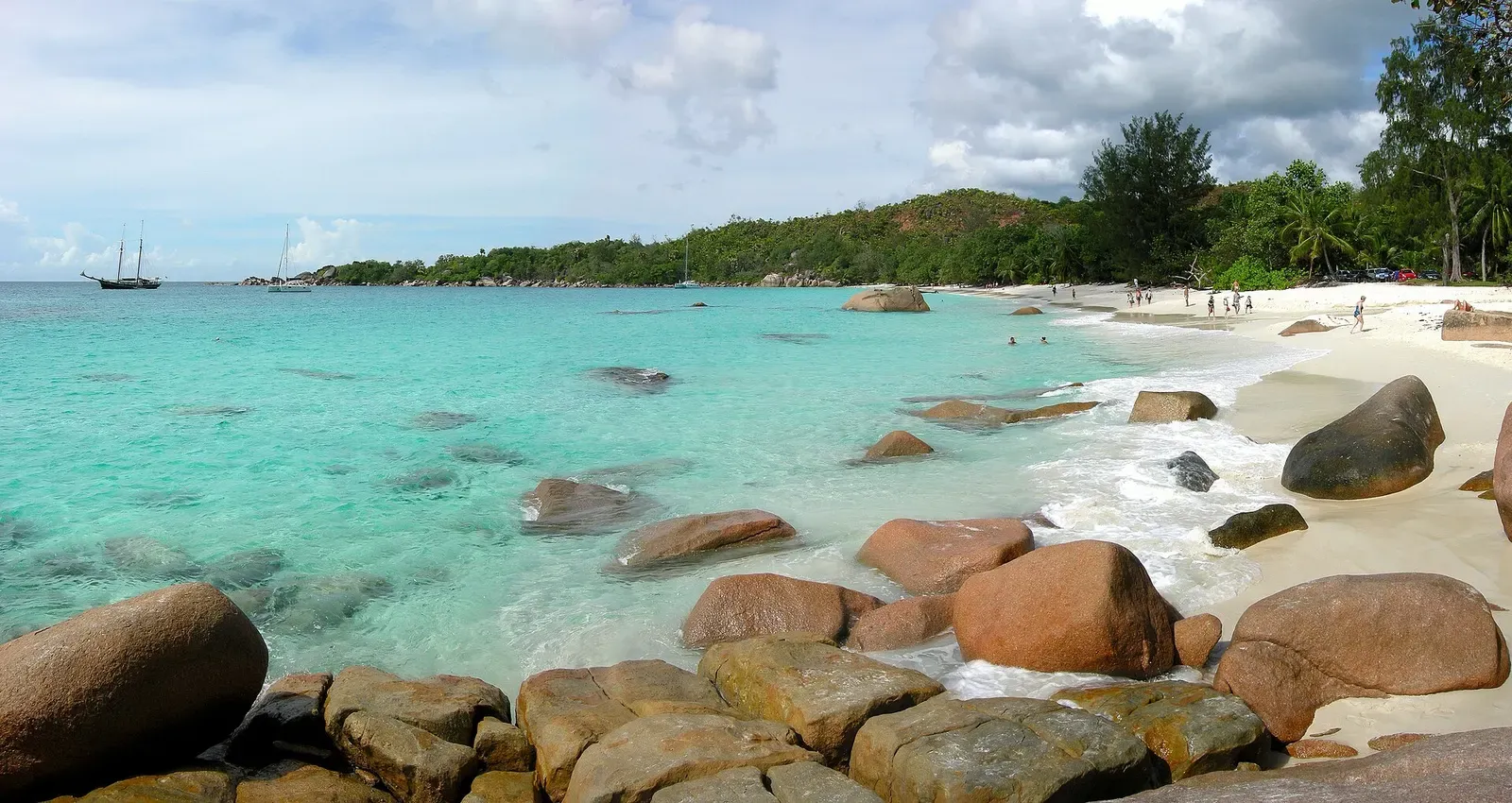
Submerged granite boulders and swim-throughs off Praslin and La Digue
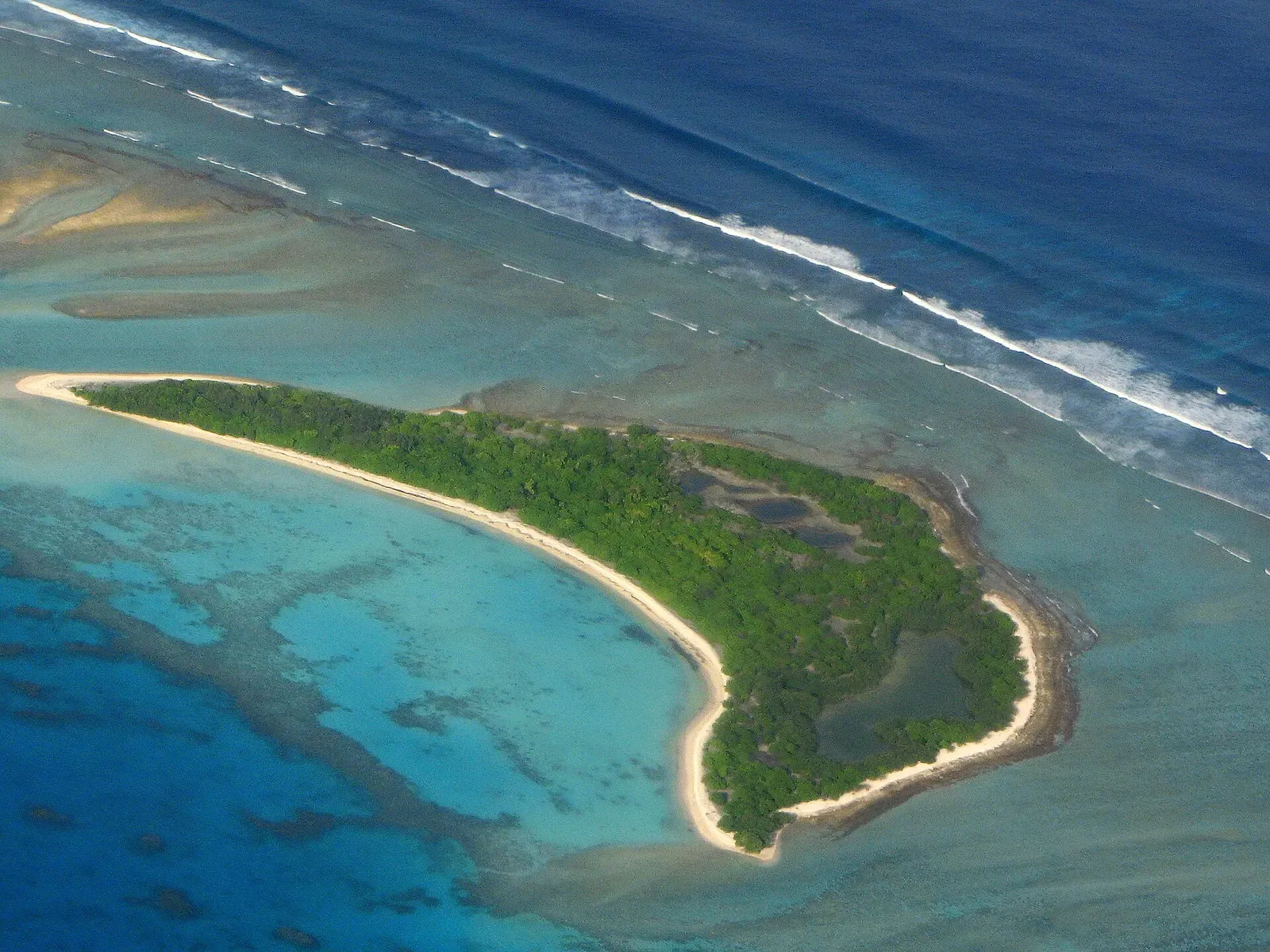
A manta cleaning station dived all year and a wartime tanker on her side at 33 m

Whale sharks live year-round on the South Ari reef shelf
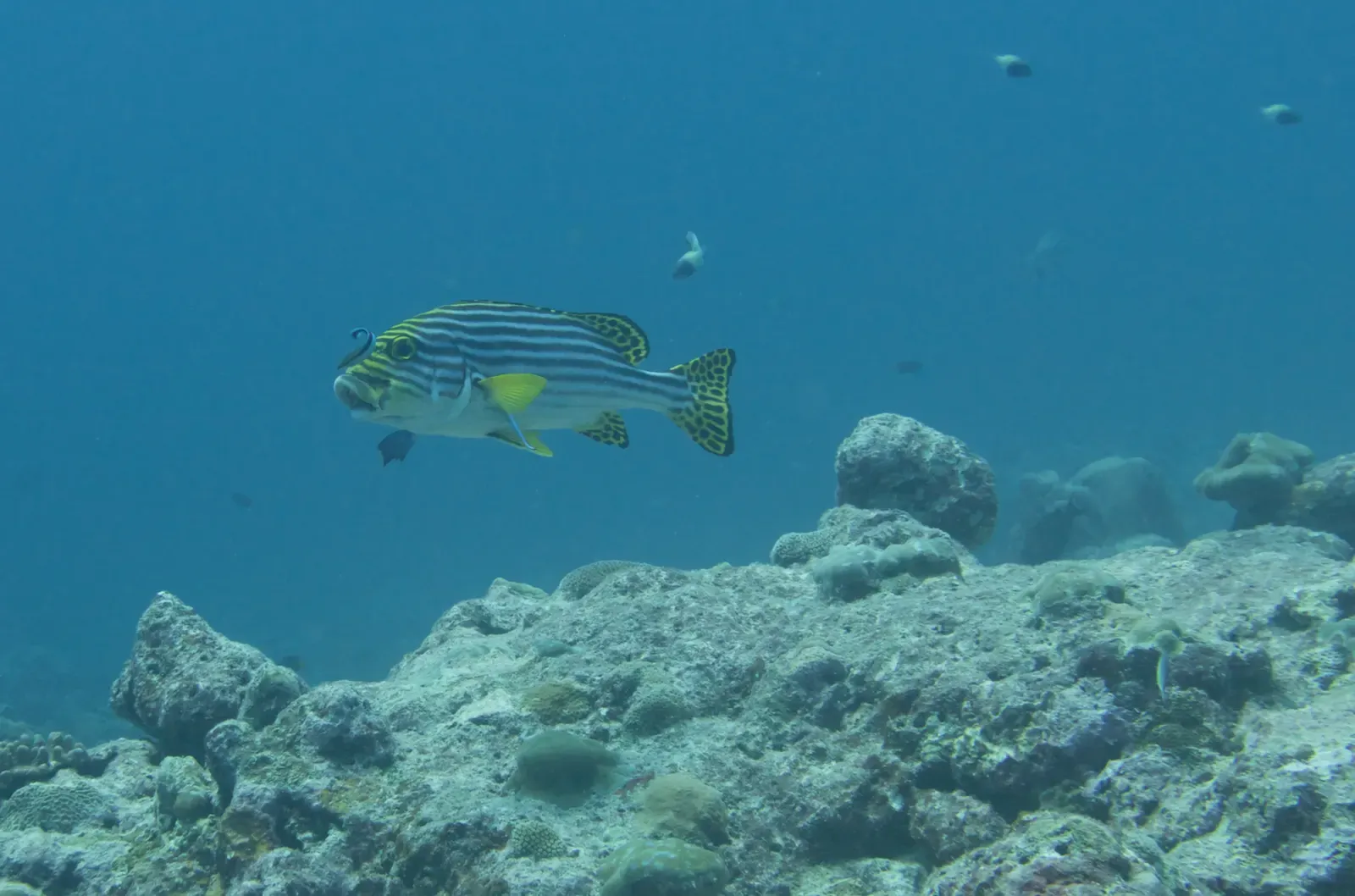
,_Mah%C3%A9,_Seychelles,_2025-09-08,_DD_181.jpg)
Permit-only Indian atolls with 30 m visibility and almost no divers